Spring Testing Machines for Manufacturing and Quality Control
Connect the performance of your spring to the conditions in which it works. DAK testing systems help spring manufacturers and laboratories investigate force, displacement and torque, with the machine, tooling and measurement arrangement selected around the spring and the required test.
Load the spring along its working axis and examine how force changes as its height reduces. Spring dimensions, end geometry and locating requirements shape the platen arrangement and the usable compression travel.
Extension springs
Apply tension through the spring's ends and measure its response as it extends. End-loop geometry and the required extension determine the holding arrangement. DAK's HJ-679 Hook Fixture engages formed hooks on suitable tension springs.
Disc and wave springs
These components bring their own contact geometry and load-deflection behaviour. Define whether the specimen is an individual spring or an assembly, how it is supported, and the working travel over which its response matters.
Torsion springs
Measure torque against angular movement rather than treating twisting as a straight-line compression or extension test. Spring-arm geometry, angular range and the required torque define the loading and measurement discussion.
A working-point result answers how much force the spring develops at a specified position. Define the reference height or length, the loading direction and the point at which the result is evaluated, so supplier and production measurements describe the same condition.
Spring rate over a defined interval
Spring rate describes the change in force for a change in deflection. A near-linear working range can be described by its slope; a changing response calls for clearly defined evaluation points or intervals. The interval is part of the result, not an afterthought.
Recovery and permanent set
Where the product requirement includes recovery after loading, compare the specified reference dimension before and after the loading sequence. Keep the loading history and measurement conditions with the result. This answers a different question from the force measured during compression.
Configuration
Build the configuration around the working test
Force range and available travel
Consider the smallest working force as well as the maximum load. Allow space for the spring, hooks or platens and the required movement. Load-cell selection and usable test space should be considered together.
Define how the spring sits in the fixture and where the height or displacement measurement begins. Seating, fixture movement and the measurement reference influence a force-deflection result. Agree these details when the test programme is specified.
Contact surfaces and spring ends
DAK's published range includes TJ-146 Compression Anvils and the HJ-679 Hook Fixture. Choose the contact or end engagement around the actual component geometry, rather than selecting a fixture from force capacity alone.
State whether you need individual loading tests, loading and unloading sequences or an endurance programme. Include the required test rate, reporting and daily workload. These requirements help define the control, measurement and system configuration.
Connect the result on your drawing to the way the spring is held, loaded and measured. Start with the loading direction, then bring the working position and required output into the configuration.
Compression spring testing
Measure force at a specified working height, spring rate over a defined interval, or recovery after loading. Locate the spring consistently between suitable contact surfaces.
Setup guidanceStart with an axial UTM, a force range suited to the working loads and compression tooling matched to the spring geometry. DAK's TJ-146 Compression Anvils are one published fixture option.
Useful details to shareSpring outside diameter, free and working heights, expected force range, end geometry and measurement reference.
Measure force at a specified extension and examine the force-deflection response. The spring's end loops and the starting reference are part of the setup.
Setup guidanceStart with an axial UTM and end engagement suited to the spring. DAK's HJ-679 Hook Fixture is a published option for suitable formed-hook ends.
Useful details to shareFree and working lengths, expected force range, hook or loop dimensions, extension and measurement reference.
Assess behaviour under repeated loading. Define the loading direction, working range and endpoint before choosing the system.
Setup guidanceDiscuss the repeated-loading programme with DAK and explore the fatigue testing range. A static force-deflection result is not an endurance-life result.
Useful details to shareAxial or torsional loading, force or torque range, travel or angle, cycles, frequency and the result required.
Result choices for compression and extension springs
Force at a working position
State the specified working height or extension and the reference from which it is measured. Report the force at that position.
Spring rate
State the two evaluation points or the working interval. Report the change in force per change in deflection over that interval.
Recovery or permanent set
State the reference dimension, loading and unloading sequence, and when the final dimension is measured. Compare the specified dimensions before and after the sequence.
Prepare your spring-testing enquiry
Choose the closest requirement. You can leave unknown values for discussion with our team.
Setup guidance
Start with an axial UTM, a force range suited to the working loads and compression tooling matched to the spring geometry. DAK's TJ-146 Compression Anvils are one published fixture option.
Force at a working position
State the specified working height or extension and the reference from which it is measured. Report the force at that position.
Useful details to share
Spring outside diameter, free and working heights, expected force range, end geometry and measurement reference.
Dimensions, end geometry and the measurement reference, as far as you know them.
Force, torque, travel, angle or cycles, where known.
Country, and city if you wish.
DAK systems
Choose the DAK system for your spring testing
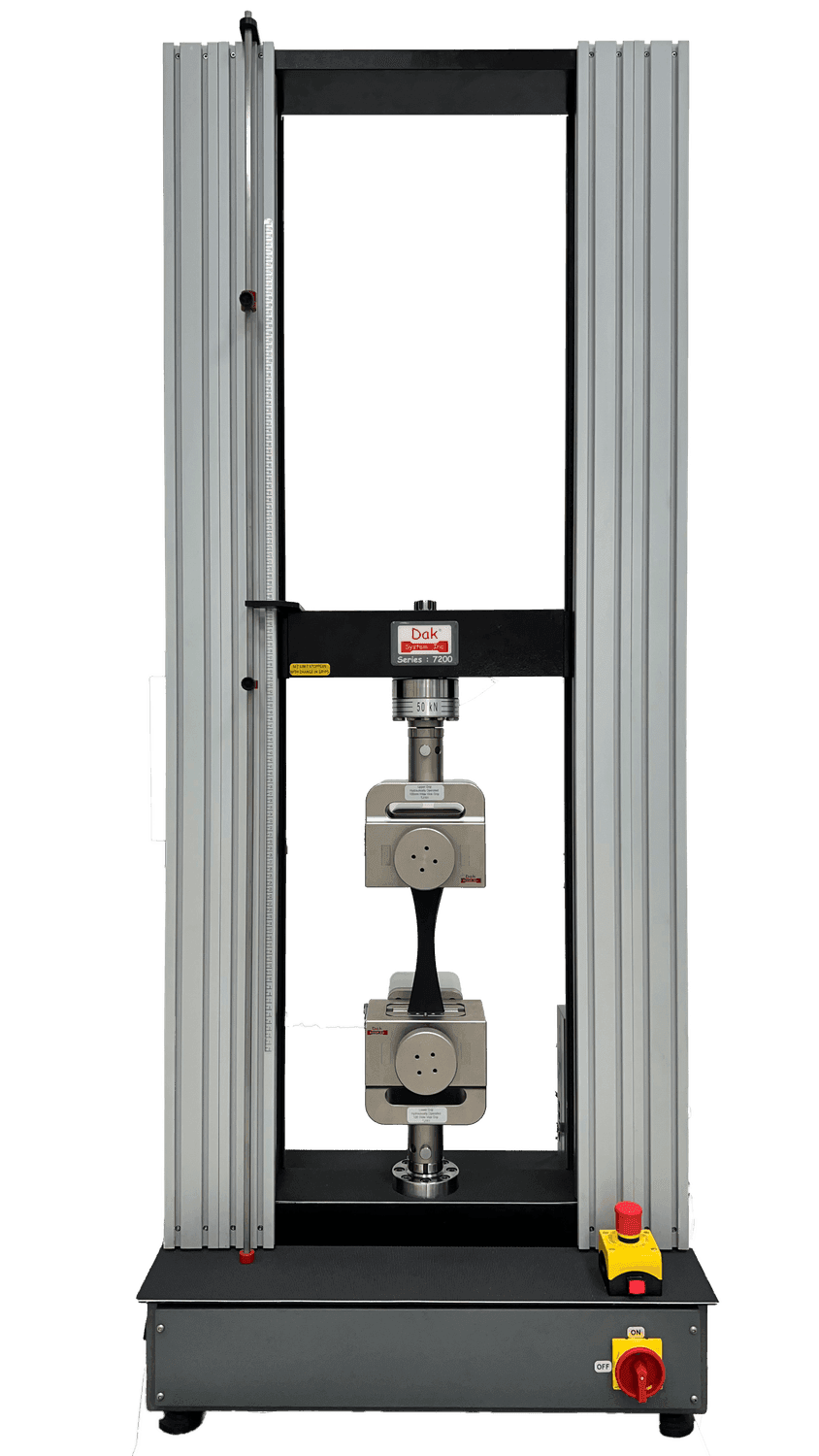
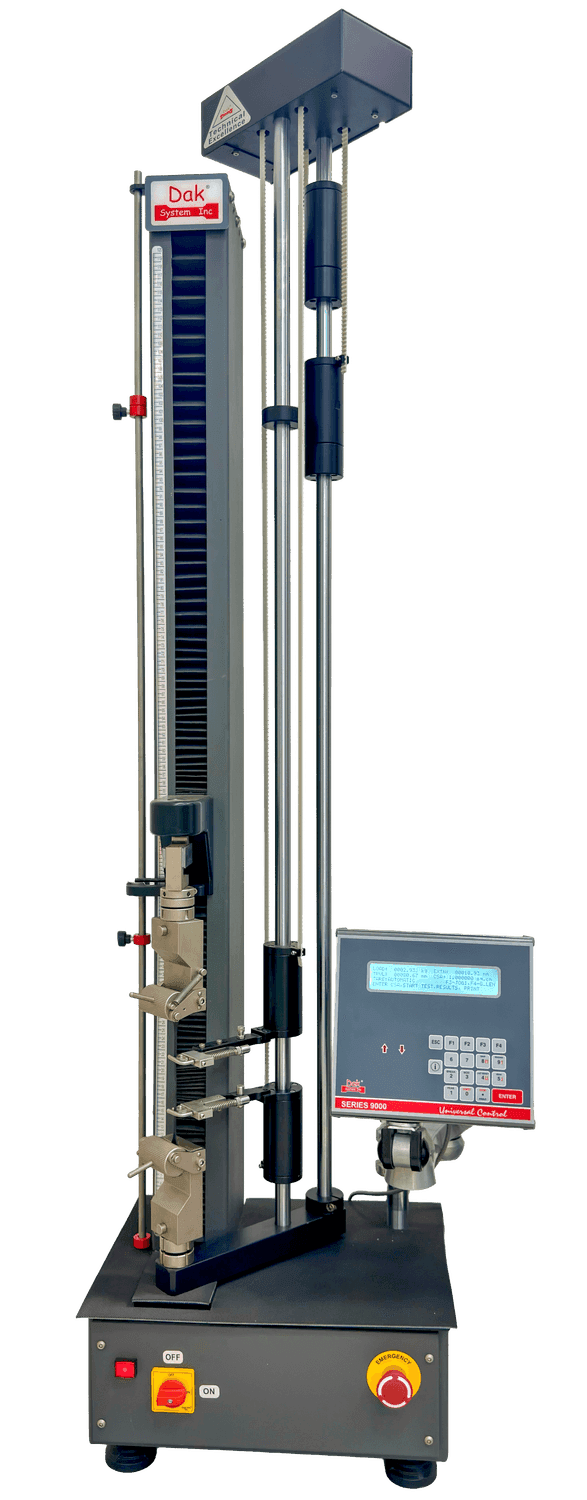
For axial compression and extension work, explore the DAK universal testing range. Series 7200 is our flagship starting point for a broader testing programme; Series 9000 offers a focused route for routine quality control.
Series 7200 - DAK's flagship UTM
Combine flexible test programming, detailed analysis and intuitive specimen setup in DAK's flagship platform. Follow Me mode, Safe Jog and sample protection support setup, while live displays and synchronised video connect test behaviour with the recorded results.
Run routine mechanical tests through standalone console operation or PC-based testing, analysis and reporting. Choose the frame, specimen holding and measurement arrangement around your laboratory's working range and methods.
DAK's torsion range includes spring testing applications. If your requirement involves repeated loading or service-life assessment, describe the duty and desired result so the system discussion includes that loading programme.
Use the spring library to find requirements for finished springs and spring wire. A wire material test and a finished-spring performance test answer different questions; start with the specimen and the property your drawing, customer or specification requires.
Finished helical compression springs
ASTM A125 addresses heat-treated helical steel springs, including dimensional and permanent-set requirements.
ASTM A938 concerns torsion testing of wire. It is a wire-assessment route, not a substitute for measuring a finished torsion spring's torque-angle characteristic.
Send DAK Engineering the spring type, a drawing or dimensions, and the result you need: force at a working position, spring rate, recovery, torque-angle behaviour or another specified property.
Include the working force or torque range, required travel or angle, loading sequence and applicable method where known. Add your laboratory location and expected workload so the quotation can address the complete testing requirement.