
Metal Testing Machines for Production and Quality Control
From incoming material checks to production release and development testing, the value of a result starts with the right setup. DAK universal testing machines bring together the load frame, grips, strain measurement and software around your metal specimen and test method.
Start with the specimen you actually test
Sheet, strip and flat coupons
Define the material, thickness, width and specimen geometry. The gripping arrangement must hold the specimen securely while leaving the required test length available for measurement.
Bar, rod and round specimens
Consider the specimen diameter, gripping ends and required results together. The test space must accommodate the specimen, grips and strain-measurement arrangement, not just the nominal specimen length.
Wire and strand
Fine wire and multi-wire strand place different demands on gripping and measurement. Identify whether the test is on a single wire, a strand or a completed rope assembly, then define the length, expected force and required extension result.
Fasteners and metal components
Testing a finished bolt or component answers a different question from testing a coupon taken from its material. Start with the component drawing, grade and specified test so the load can be applied through the intended engagement or contact points.
DAK universal testing systems for your laboratory
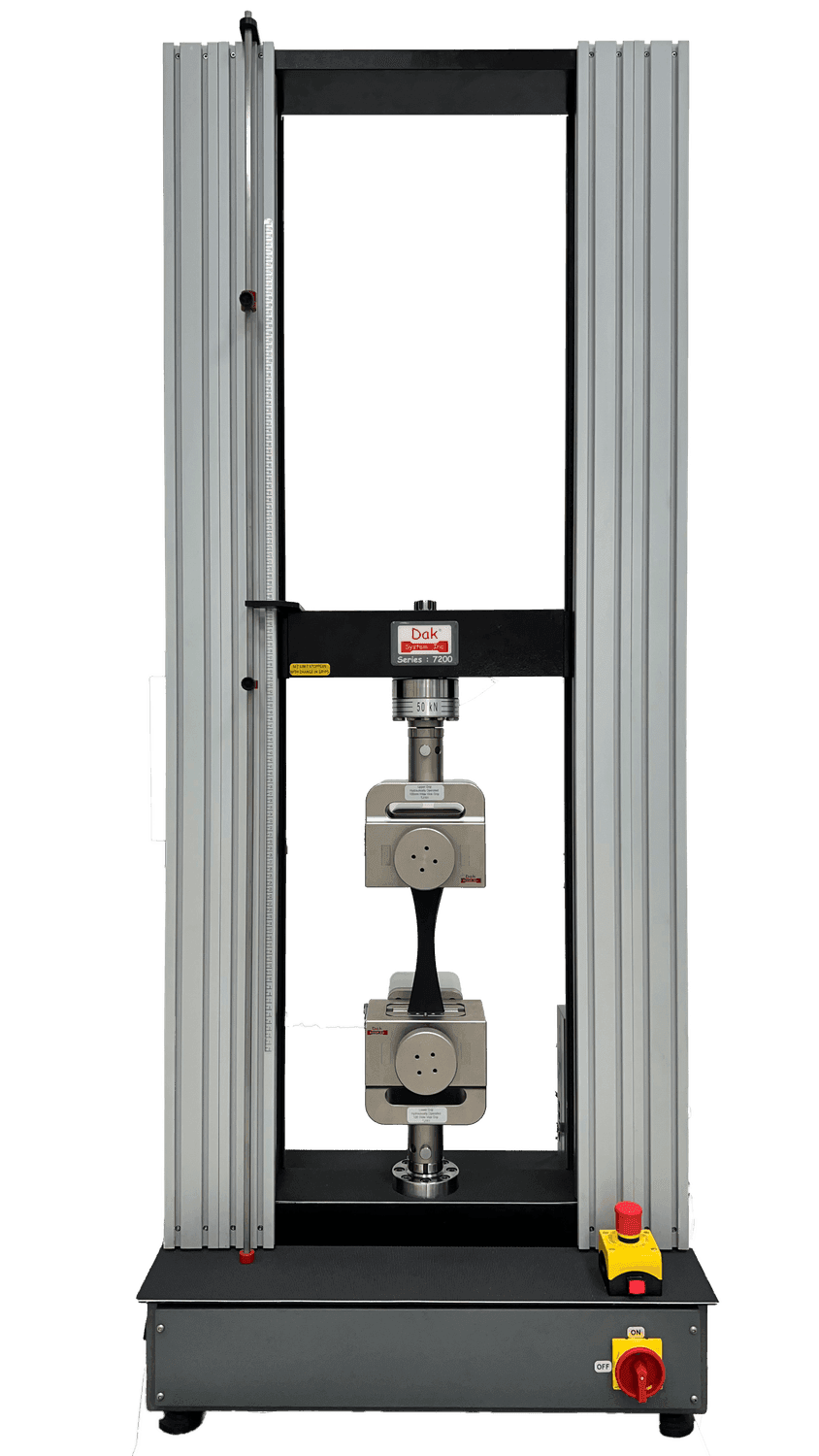
Series 7200 · Our flagship UTM
Precision measurement, flexible test programming and intuitive specimen setup in one platform. Series 7200 brings together features including Follow Me, Safe Jog and sample protection with a choice of load frames, grips and strain-measurement options for your testing work.
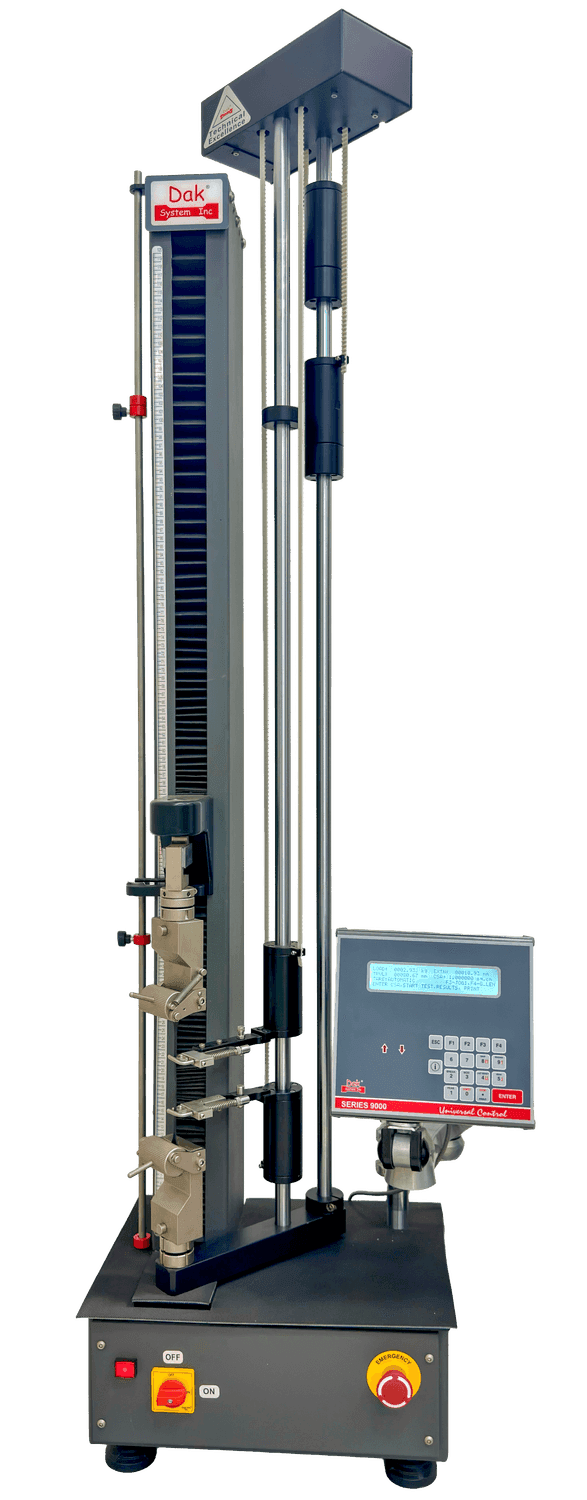
Series 9000 · Routine laboratory testing
A universal testing platform for the tests your laboratory runs every day, with standalone console or PC operation. Configure Series 9000 around your specimen, with contact or video extensometry and the appropriate grips and fixtures.
Specify the complete test setup
Force range and working space
Consider the lowest force you need to measure as well as the highest expected test load. Include the space taken by grips and fixtures, the specimen length and the movement required during the test.
Gripping and specimen handling
Flat and round specimens need contact surfaces suited to their geometry. DAK's published range includes manual and hydraulic wedge grips, alongside other holding arrangements. Choose the grip, jaw faces and operating arrangement around the specimen and daily testing workflow.
Strain measurement and required results
Define the properties your report must contain, including the required strength and elongation results. Match the extensometer's gauge length, travel and measurement performance to the specimen and method. Crosshead movement and extension measured directly on the specimen are different measurements.
Give wire and fastener tests the setup they need
Wire and strand: consider how the load enters the specimen
The holding arrangement matters as much as the machine capacity. Share the wire or strand construction, dimensions and test length, together with the required force and extension results. DAK's accessory range includes different gripping approaches; the appropriate arrangement depends on the specimen you intend to test.
Fasteners: define the required test, not just the bolt size
Axial tensile, proof-load and wedge-tensile tests address different requirements. Include the component grade, thread and head geometry, engagement arrangement and the applicable product specification when discussing your testing system.
Connect your test requirement to the relevant guide
Metallic tensile specimens
Fasteners
Wire-rope breaking force
See DAK equipment in use
Steel strand wire · Tensile test
Explore the steel-strand tensile-testing demonstration already featured in DAK's video library.
Series 7200 in published metals research
A published study of low-alloy weathering steel reports using a DAK UTM-7200 for tensile testing. Jena et al., Mechanical Properties of Low Alloy High Phosphorus Weathering Steel, Journal of Mining and Metallurgy, Section B: Metallurgy, 2015.
Turn your testing requirement into a system specification
Tell us what you test and what your report needs to show. Include:
- Material or component, with grade where relevant.
- Specimen drawing or dimensions and the intended test.
- Applicable standard or customer specification.
- Expected force range and required strain or elongation results.
- Daily test volume and any special test conditions.
- Installation country and the support arrangements you need.
Your quotation can then address the frame, load measurement, grips, extensometry, software and installation requirements as a complete testing system.