5 to 400 kNTJ-125
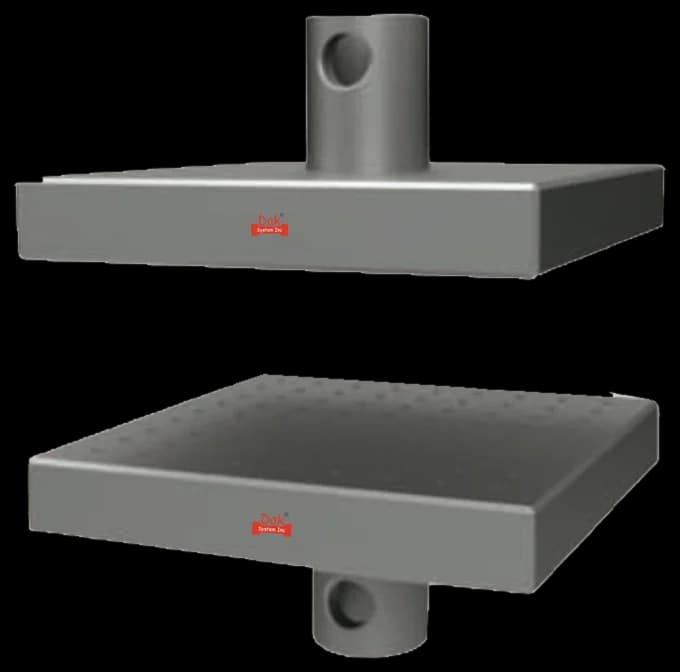
Direct Compression Fixture
A direct compression arrangement carries the plunger on the moving crosshead; the clamping ring holding the specimen is the part that has to be made or bought to the standard's dimensions.
Specifications
Testing standard
Geosynthetics — Static puncture test (CBR test)
Written and technically reviewed by Dak System Inc. engineeringLast reviewed
ISO 12236 is the static puncture test for geosynthetics, known as the CBR test because the plunger matches the one used in California Bearing Ratio soil testing. A flat-ended 50 mm plunger is pushed perpendicularly through a clamped specimen and the force required is recorded.
From the test method to your testing system
Explore the DAK machines already listed for ISO 12236, then review the grips, measurement and setup requirements below.
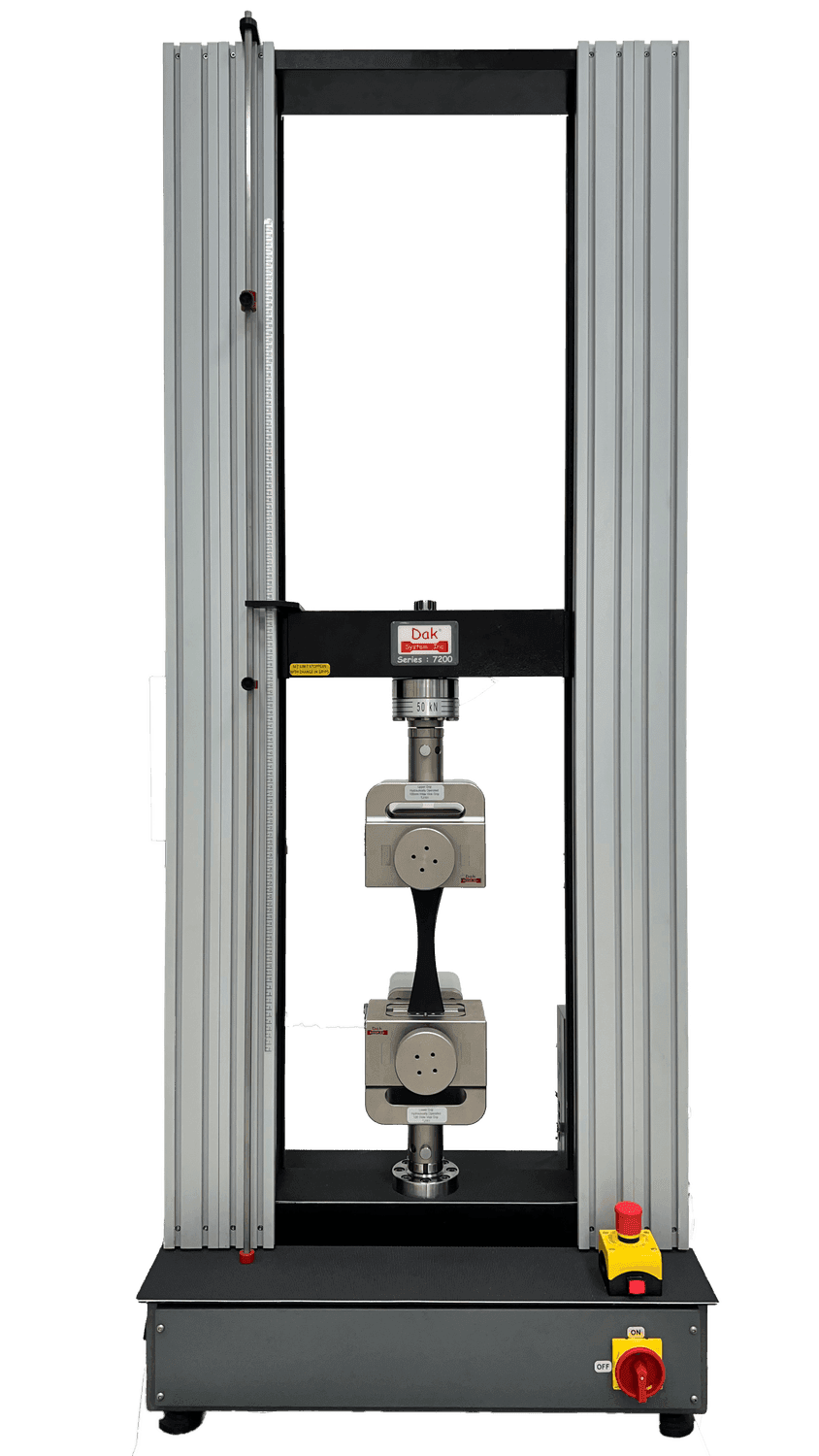 Universal Testing MachineSeries 7200Explore the machine →
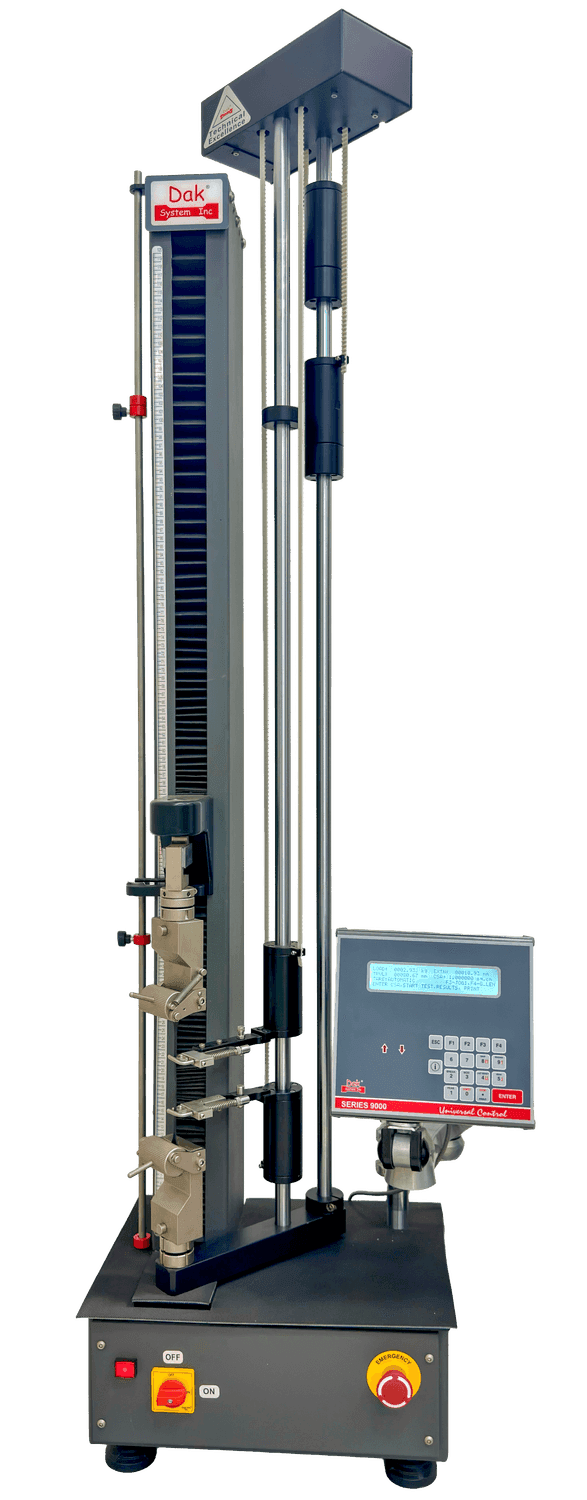 Universal Testing MachineSeries 9000Explore the machine →
01Understand the method
A specimen is conditioned, seated flat in a circular clamping ring without pre-tension, and the clamp tightened uniformly in stages around its circumference with a torque wrench. A flat-ended plunger 50 mm in diameter, with a chamfered edge, is then driven perpendicularly through the centre of the clamped opening at (50 ± 5) mm/min. The rate is fixed outright rather than derived from a gauge length: nothing is being strained over a defined length, so the figure stands on its own, and the machine has to be capable of holding it. Two values are recorded: the maximum force required to push the plunger through, and the plunger displacement at that force. Specimens are normally tested dry, with a saturated procedure available where the application demands it.
Resistance to blunt, multidirectional puncture — the load case of a rounded stone pressing into a geosynthetic from below or above. The plunger is large and its edge chamfered so that the specimen is stretched rather than cut, which averages over the weave or web and gives a repeatable index instead of a figure that depends on where a point happened to land. Force and displacement are reported together because they describe different risks: a product that reaches a high force only after deforming a long way has still allowed the stone to travel that distance into what it was protecting.
02Prepare the specimen and test settings
A 50 mm flat plunger with a chamfered edge, through a circular clamp. Both dimensions set the answer.
The name is borrowed. CBR here refers to the plunger geometry taken from soil bearing-ratio testing, not to any bearing ratio being measured on the geosynthetic.
03Build the test setup on a DAK machine
Moderate force in compression — CBR puncture values commonly run from a few hundred newtons to several kilonewtons — with a crosshead able to hold (50 ± 5) mm/min and a load cell chosen for that range. The fixture carries the requirement: a chamfered 50 mm plunger running true, and a ring assembly to the standard's dimensions, since the result scales directly with the size of the clamped opening. The plunger is set central to the ring at the start of a series rather than assumed from the last assembly.
A direct compression arrangement carries the plunger on the moving crosshead; the clamping ring holding the specimen is the part that has to be made or bought to the standard's dimensions.
SpecificationsDak verifies against whichever standard the method names, and where a class applies our frames sit a class tighter than it asks.
| The method asks for | Dak supplies | |
|---|---|---|
| Capacity | Moderate — CBR puncture forces commonly run from a few hundred newtons to several kilonewtons | Load cells from 1 kg to 60 ton on the Series 7200, and 0.5 to 100 kN on the Series 9000 |
| Force accuracy | ISO 7500-1 Class 1 over the working range | ISO 7500-1 Class 0.5 — a class tighter than the method asks |
| Gripping | A 50 mm flat-ended plunger with a chamfered edge, and a circular clamping ring assembly | Our compression anvils, built to the specimen |
| Environment | 23 ± 2 °C standard laboratory atmosphere | 3009 series chambers, −150 °C to +400 °C — temperature only |
04Run the test
05Calculate, report and interpret
The maximum force recorded as the plunger passes through
Reported as a force in newtons, with the plunger and ring geometry stated alongside.
The plunger travel at the maximum force
Reported with the force. A high force reached only after large deformation may still allow a stone to reach the layer beneath.
An off-centre plunger, which loads one sector of the clamped circle first and reads low while leaving no obvious trace in the data. Clamping by feel rather than by torque, which makes results move between operators. Slippage at the ring, invisible unless the specimen was marked. And reporting a puncture force without the displacement, which discards the half of the result that tells you whether the material actually kept the stone out.
06Compare methods and find answers
| ISO 12236 | ASTM D6241 | |
|---|---|---|
| Name | CBR static puncture test | Static puncture, 50 mm probe |
| Plunger | 50 mm flat with chamfer | 50 mm flat-ended |
| Reported | Force and displacement | Force, displacement where recorded |
| Interchangeable | No — clamp geometry differs | No |
The same idea in two families, with the same plunger diameter and different clamp details. Run the designation the specification names; converting between them is not something either standard supports.
It is the ISO static puncture test for geosynthetics. A specimen is clamped in a circular ring and a flat-ended plunger 50 mm in diameter, with a chamfered edge, is driven perpendicularly through its centre at (50 ± 5) mm/min. The force required to push it through, and the plunger displacement at that force, are recorded.
Because the plunger is the one used in California Bearing Ratio testing of soils, which has the same 50 mm diameter. The name refers to borrowed geometry, not to a bearing ratio being measured — nothing in this method computes a ratio, and the result is a puncture force. The nickname is entrenched enough that specifications use it, so it is worth knowing what it does and does not mean.
Because a sharp square corner on a 50 mm face would cut the specimen at the rim rather than stretch it. The chamfer keeps the loading blunt and multidirectional, which is what makes the test an index of resistance to rounded objects rather than a measurement of how easily a particular edge slices a particular fabric.
Because they describe different failure risks and a product can be good at one and poor at the other. A geosynthetic that reaches a high puncture force only after deforming a long way has still let a stone travel that distance into the layer it was protecting. A liner or a separation layer is specified on both counts, which is why the method records the displacement at maximum force rather than the force alone.
Because otherwise the clamping force is whatever the operator's hand delivered that morning, and puncture results move with it — a loosely held specimen draws fabric in from under the ring, and an over-tightened one is pre-stressed before the plunger arrives. A defined torque, applied in stages around the circumference, is what makes results repeatable between operators and between laboratories.
The clamped circle loads unevenly, one sector reaches its limit first, and the puncture starts there at a force below the material's real capability. Because the specimen is symmetrical the error leaves no obvious trace in the data — it simply reads low and widens the scatter — so centring the plunger is checked at the start of a series rather than assumed from the last time the fixture was assembled.
No. Both are static puncture index tests using a 50 mm flat-ended plunger, but the clamp geometry and specimen details differ, and puncture force scales with the size of the clamped opening. Geosynthetic specifications name one designation deliberately, and a result from the other will be queried even though the principle is shared.
Discuss your specimen, test requirements and reporting needs with DAK engineering.
This page describes the method as practised. The governing text is the current edition from the issuing body. Tell us what you are testing and we will answer with the machine, the fixture and a quotation.