ISO 13954/13955 — read the full explanation
Peel & adhesionPE electrofusion assemblies — peel decohesion and crushing decohesion tests.

Connect material performance to the decisions your laboratory makes. DAK testing systems support mechanical testing across reinforcing steel, geosynthetics, timber, building products and bonded materials, with the load frame, fixtures and measurement selected around your specimen and test method.
Start with the materials and results you need, then choose the working range, test space, grips and measurement. The complete setup matters alongside the machine’s maximum capacity.
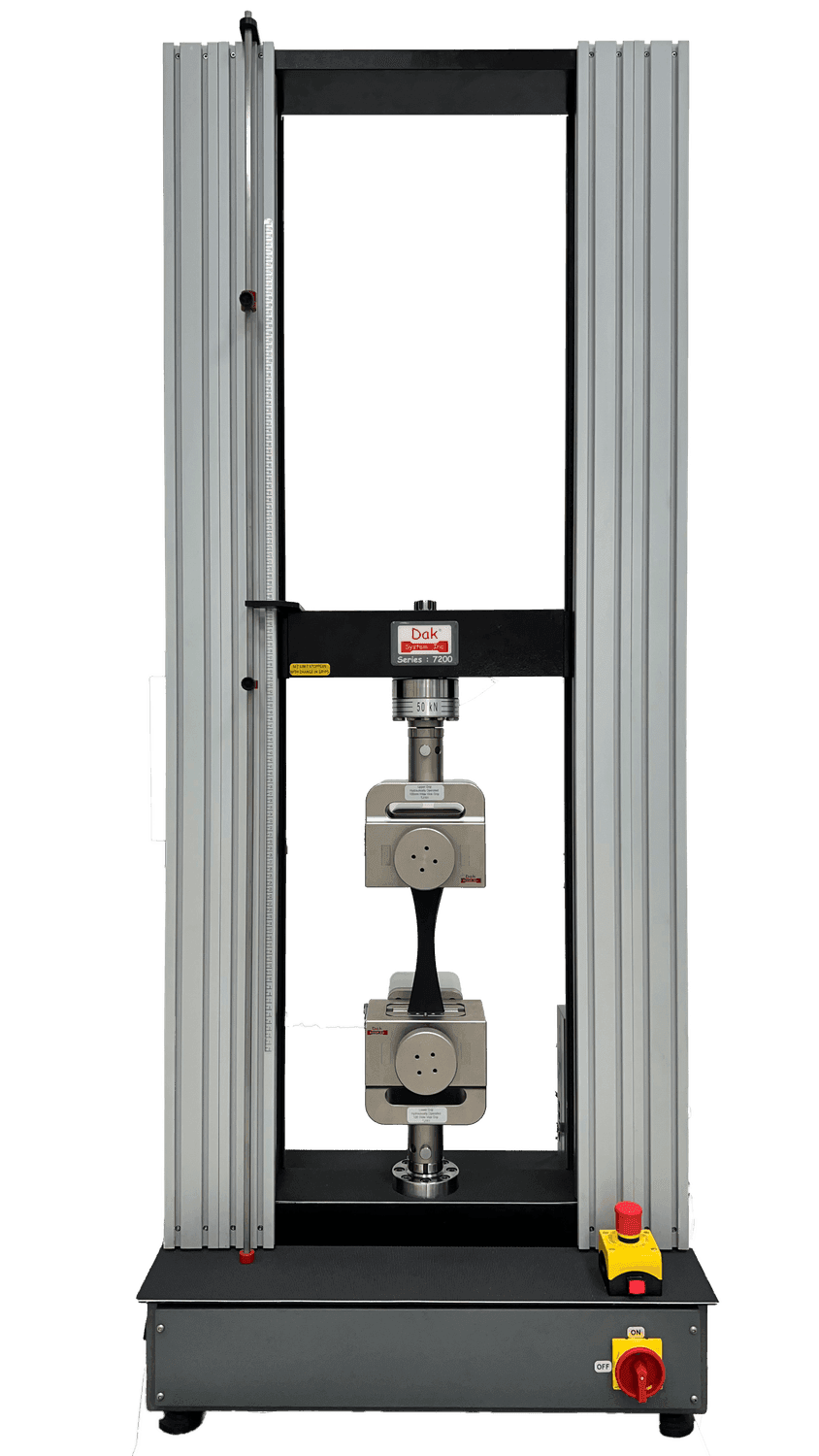
Flagship platform
DAK’s flagship platform for demanding material testing, combining flexible method programming, precise specimen setup, measurement and analysis. Explore the range for laboratories working across different construction materials and testing programmes.
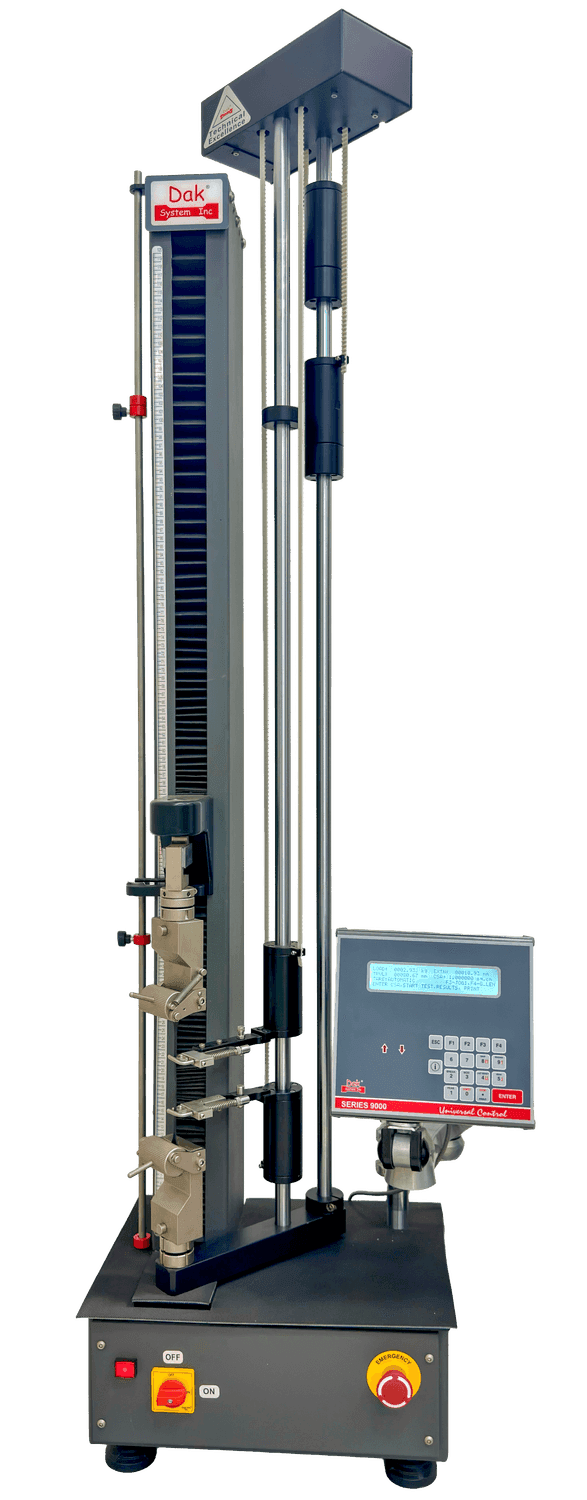
Established laboratory methods
Travel-controlled testing with standalone Console operation or a PC-connected workflow. Explore Series 9000 for established testing programmes, configured around the required specimen, force range and measurement.
For programmes that also assess wire under twisting, explore DAK’s dedicated torsion testing machine alongside the tensile testing setup.
For TMT bars, reinforcing wire and prestressing strand, identify the grade, section and required tensile or bend result. Grip geometry, test length and the chosen elongation measurement are important parts of the specification.
Define the specimen shape, dimensions, age and conditioning alongside the required compression or flexural method. Cylinder, cube and beam tests call for their own loading arrangements and reporting requirements.
Plan bending, compression or bond testing around the material direction, specimen thickness and support geometry. Keep material-specimen testing distinct from a test on a full-sized structural member or assembled product.
Specify the product construction, test direction and method. Wide-width tension, grab testing, puncture and seam testing measure different aspects of performance and require different specimen-holding arrangements.
Distinguish tensile tests on prepared specimens, pipe-ring stiffness and joint testing. Include the pipe material, diameter, wall thickness and joint preparation so the setup matches the required result.
For bonded materials, define the substrates, joint geometry, conditioning and loading direction. Anchor testing adds the installed connection and concrete test element to the setup; it is a different question from testing the strength of a loose steel bar.
Testing tile adhesives, sealants, mortars or grouts? Explore a multi-test UTM setup for construction-chemical laboratories.
| Required result | What to specify | Explore |
|---|---|---|
| Steel strength and elongation | State the tensile method and required yield, strength and elongation results. Select the gauge length and extensometer arrangement accordingly; crosshead movement and extension measured directly on the specimen are different measurements. | |
| Geotextile tensile performance | Wide-width and grab tests use different gripping arrangements and produce different forms of tensile information. Carry the specified method through specimen preparation, grip selection and the report instead of treating the results as interchangeable. | |
| Flexural strength or bending response | Include the specimen section, support span, loading-point arrangement and required force or deflection result. A three-point fixture and a four-point fixture create different loading conditions. | |
| Pipe-ring stiffness | State the pipe-ring dimensions, conditioning and required load–deflection measurement. Ring-stiffness testing assesses the pipe section under compression; it is distinct from a tensile test on material cut from the pipe. |
State the tensile method and required yield, strength and elongation results. Select the gauge length and extensometer arrangement accordingly; crosshead movement and extension measured directly on the specimen are different measurements.
Wide-width and grab tests use different gripping arrangements and produce different forms of tensile information. Carry the specified method through specimen preparation, grip selection and the report instead of treating the results as interchangeable.
Include the specimen section, support span, loading-point arrangement and required force or deflection result. A three-point fixture and a four-point fixture create different loading conditions.
State the pipe-ring dimensions, conditioning and required load–deflection measurement. Ring-stiffness testing assesses the pipe section under compression; it is distinct from a tensile test on material cut from the pipe.
The applicable method also defines the specimen preparation and reporting needed for a meaningful result. Use the linked guides to develop the test specification, with the full standards library below.
DAK’s accessory range includes different holding arrangements for rigid bars and wide flexible materials. Specify the grip and machine together, including the specimen dimensions and working load.
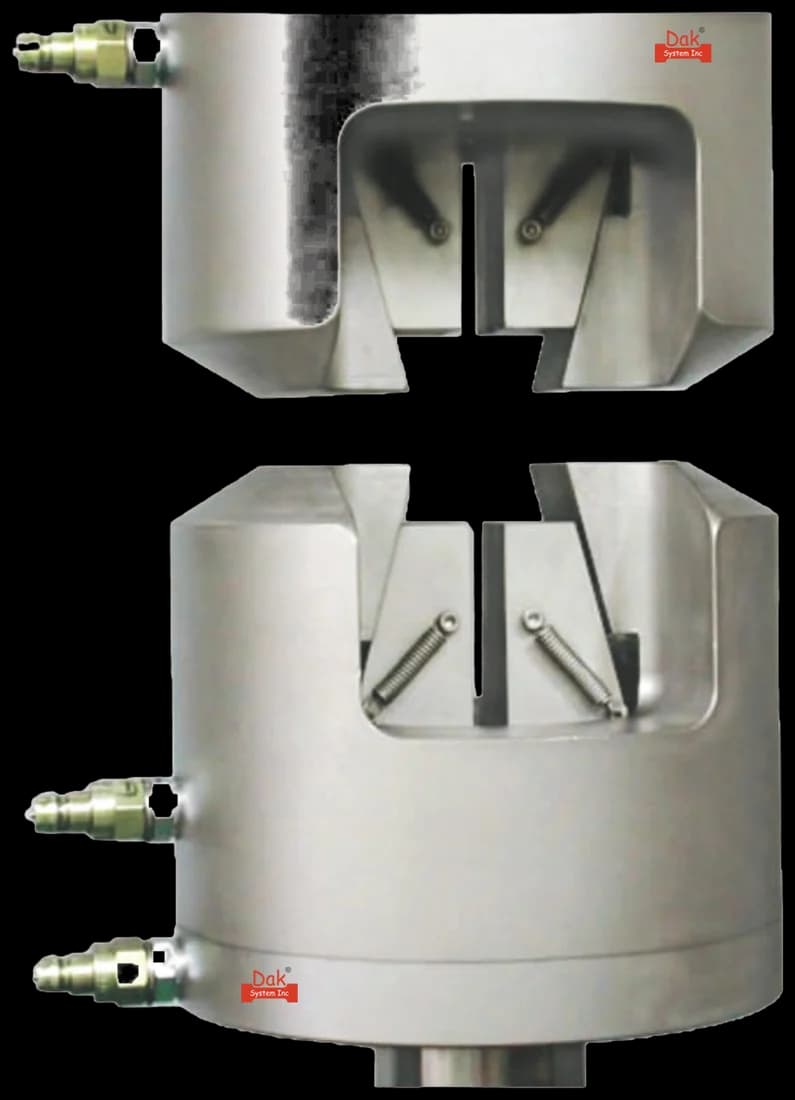
Heavy Duty Circular Hydraulic Wedge Grips accept round bar from 6 to 38 mm and flat specimens from 0 to 25 mm thick, with capacities from 25 to 400 kN by model. Select the grip model and jaw arrangement for the material and load.
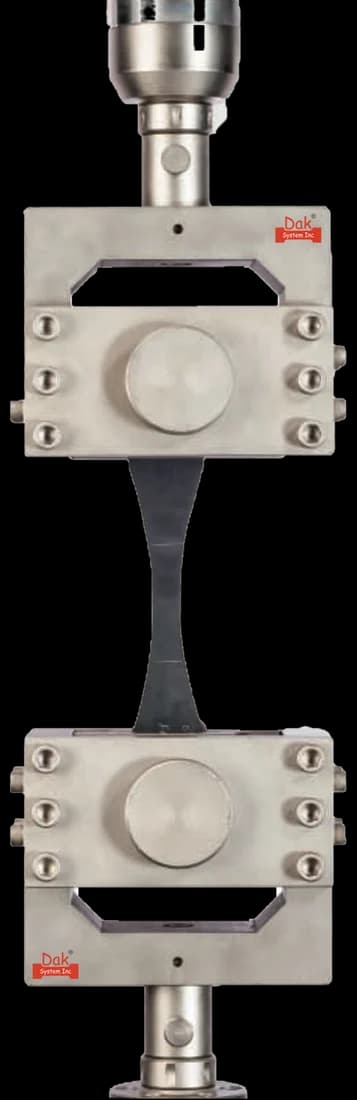
Heavy Duty Hydraulic Grips accommodate specimens up to 200 mm wide and loads up to 200 kN. The square-housing arrangement is designed for heavy-duty belts and geo-fabrics, giving the laboratory a specific gripping option to consider for wide specimens.
For compression, bending and joint tests, specify the loading surfaces, alignment, support geometry and available working space. Frame, load cell and fixture ratings should be considered as one test setup.
Define the sample identifiers and context your report needs: material grade or batch, specimen dimensions, test direction, conditioning and preparation. For cementitious specimens, include age and curing history in the laboratory record.
Dyna Desk – Test Bench supports saved test methods, graphing and reporting, with spreadsheet, PDF and CSV exports. Plan the required results and report format alongside the machine and measurement setup.
Share the laboratory location, available space, utilities, expected workload and service requirements. Include the installation, training and calibration scope in the quotation discussion for an Indian or overseas laboratory.
Use these shortcuts for common starting points, then explore the complete construction and civil-engineering library. Search by designation, material or test type to find the relevant guide.
PE electrofusion assemblies — peel decohesion and crushing decohesion tests.
Test methods for ceramic tile adhesives, including tensile adhesion strength after several conditioning regimes.
Torsion testing of wire — twists to fracture, counting turns, for ductility and surface soundness. Equivalent to: ISO 7800
Comprehensive mechanical testing (tension, bend, hardness) of steel products including rebar, plate, tube, fasteners.
Pre-stressing steel strand — tensile, 0.2% proof force and elongation.
TMT rebar — proof stress, elongation, bend and rebend for site and mill certification.
Tension testing of wire ropes and strand (breaking force determination).
Compressive strength of hydraulic cement mortars (50 mm cubes).
Flatwise compressive properties of sandwich cores.
Compressive strength of cylindrical concrete specimens.
Concrete cubes, cylinders and beams — compressive and flexural strength.
Splitting tensile strength of cylindrical concrete specimens — withdrawn 2026 with no ASTM replacement; IS 5816 and EN 12390-6 cover the same test and remain current.
Flexural strength of concrete beams — C78/C78M third-point loading is current; C293/C293M centre-point loading was withdrawn in 2025 with no replacement.
Adhesion-in-peel of elastomeric joint sealants (construction sealants).
Small clear specimens of timber — static bending, compression parallel/perpendicular, shear, tension.
Tensile and tensile-adhesion properties of rigid cellular plastics.
Static tests of lumber in structural sizes.
Parallel-plate loading of plastic pipe — pipe stiffness and ring deflection.
Durability of adhesive lap-shear joints under sustained static load.
Tensile, compressive and flexural creep and creep-rupture of plastics (long-duration static load).
Trapezoid tearing strength of geotextiles.
Pull-off strength of coatings (adhesion testers; also performed on UTM with suitable fixtures).
Wide-width strip tensile testing of geotextiles and geosynthetics.
Geotextiles and geogrids for roads, embankments and landfills.
Grab breaking load and elongation of geotextiles.
Performance strength of geomembranes by wide-width strip tensile method.
Tensile properties of reinforced thermosetting plastics using straight-sided specimens.
Static puncture strength of geotextiles using 50 mm probe (CBR puncture).
Tensile properties of geogrids by single- or multi-rib method.
Tensile properties of nonreinforced polyethylene and flexible polypropylene geomembranes.
Tensile properties of FRP matrix composite bars (FRP rebar).
Tensile (butt-joint) strength of adhesive bonds — bar and rod specimens.
Strength of adhesive bonds in shear by compression loading (wood block shear).
Bearing strength of plastics (pin bearing, tension or compression loading).
Guided bend test for ductility of welds.
Bend testing of materials for ductility (guided, semi-guided and free bend).
Strength of anchors in concrete elements (cast-in and post-installed anchor pull-out).
Post-installed mechanical and chemical anchors — tension and shear capacity.
Compression testing of metallic materials at room temperature.
Threaded fastener proof-load and wedge-tensile verification.
Mechanical properties of externally and internally threaded fasteners, washers and rivets (wedge tensile, proof load, axial tension).
Tile adhesive tensile adhesion strength classification.
Bituminous and polymeric waterproofing membranes — tensile, peel and shear of joints.
Bituminous and polymeric waterproofing membranes — tensile, peel and shear of joints.
Bituminous and polymeric waterproofing membranes — tensile, peel and shear of joints.
Testing hardened concrete (European suite) — compressive and flexural strength of specimens.
Adhesives for tiles — tensile adhesion (pull-off) strength of cementitious adhesives.
Wood-based panels — modulus of elasticity in bending and bending strength.
Particleboards and fibreboards — internal bond (tensile strength perpendicular to plane).
Slip, tensile and pull-out testing of scaffolding couplers and construction anchors.
Pre-stressing steel strand — tensile, 0.2% proof force and elongation. Equivalent to: ASTM A416-adjacent
Indian Standard bend test for metallic materials. Equivalent to: ISO 7438
Indian Standard for tensile testing of metallic materials at room temperature (aligned to ISO 6892-1).
High-strength deformed steel bars (rebar) for concrete reinforcement — 0.2% proof stress, elongation, bend and rebend tests. Equivalent to: —
Reinforcement and structural steel for railway civil works — tensile and bend certification.
Steel wire for ropes and steel wire ropes for general engineering — breaking load verification. Equivalent to: ISO 2408 / 1835-adjacent
Rebar-to-concrete bond strength by pull-out test.
Indian Standard — compressive and flexural strength of hardened concrete (cubes, beams).
Wide-width strip tensile testing of geotextiles and geosynthetics.
Ceramic tiles — modulus of rupture and breaking strength (3-point bend).
Measured breaking force of steel wire ropes by tensile test to destruction.
Longitudinal tensile test on weld metal in fusion welded joints.
Tensile test on welded cruciform and lapped joints.
Compressive, flexural and split tensile strength of hardened concrete.
Compressive strength of burnt clay building bricks.
Geosynthetics — static puncture test (CBR test, 50 mm plunger).
PE butt-fusion pipe joints — tensile strength and failure mode of test specimens.
PE electrofusion assemblies — peel decohesion and crushing decohesion tests.
Rubber- or plastics-coated fabrics (belt carcass materials) — tensile strength and elongation.
Test methods for reinforcing steel bars, rods and wire.
Coated fabrics — coating adhesion (peel of coating from substrate).
Tear resistance of rubber- or plastics-coated fabrics.
Tensile properties of thermoplastics pipes (PE, PP, PVC pipe specimens).
Bend test of metallic materials. Equivalent to: IS 1599
Building sealants — tensile properties at maintained extension.
Threaded fastener proof-load and wedge-tensile verification. Equivalent to: IS 1367-3
Ring stiffness of thermoplastics pipes.
Showing 1–8 of 77 standards
Share your testing requirements with DAK so the quotation can cover the complete setup, from the machine and specimen holding to measurement and reporting.