AS/NZS 2111.16
Peel & adhesionTextile floor coverings — bond strength determination (delamination of backing).

Connect material strength, extension and joint performance to the decisions your laboratory makes. DAK universal testing systems support mechanical testing across textile materials and products, with gripping, measurement and analysis selected around the specimen and required method.
Start with the fabric construction, test direction and the specified strip or grab method. For sewn specimens, identify the seam and the required result alongside the fabric itself.
Fine or flexible specimens need holding arrangements suited to their form. Define the yarn or cord construction, gauge length, expected force and extension as part of the test requirement.
Construction, coating and direction can change both the way the specimen is held and the property being measured. Identify whether the test concerns the base material, a tear, a seam or the bond between layers.
The force range, specimen width or diameter, and load-transfer arrangement guide the configuration. Include end preparation or connections when testing an assembly rather than a length of material.
Wide specimens and puncture or tear requirements bring different loading and holding needs. Define the material form and required test so the fixture, working space and measurement match the application.
Leather, uppers, sole bonds, seams and fasteners each have their own test question. Send the material or assembly details and the required loading direction to help define the appropriate holding arrangement.
Choose a system around the working force range, specimen extension, gripping and results you need. Plan the materials and methods together so one configuration supports the laboratory’s intended workload.
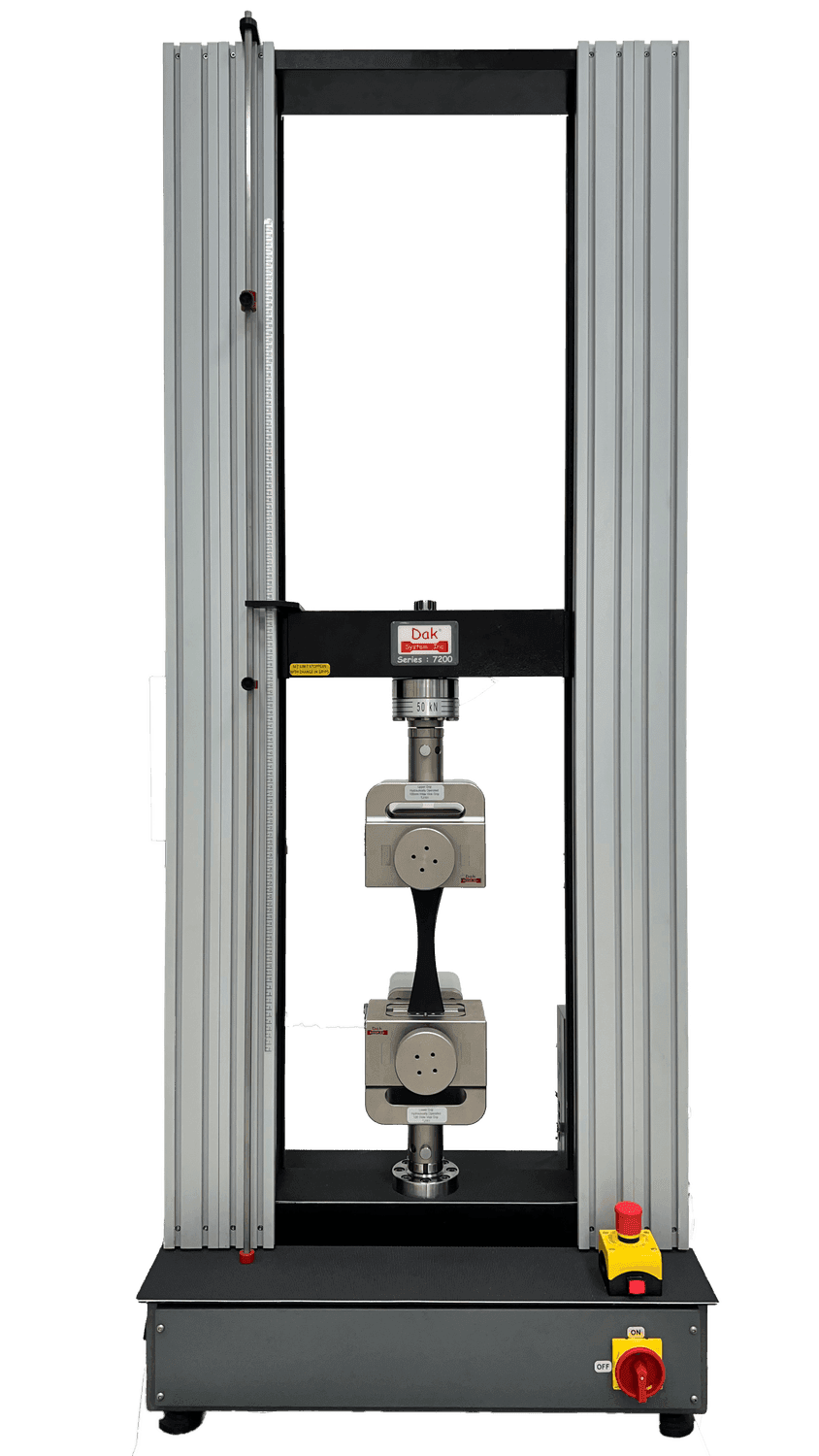
DAK’s flagship UTM
Flexible test programming, intuitive specimen setup and integrated measurement and analysis for laboratories working across materials and methods. Configure the platform around routine quality checks, development work and more demanding test programmes.
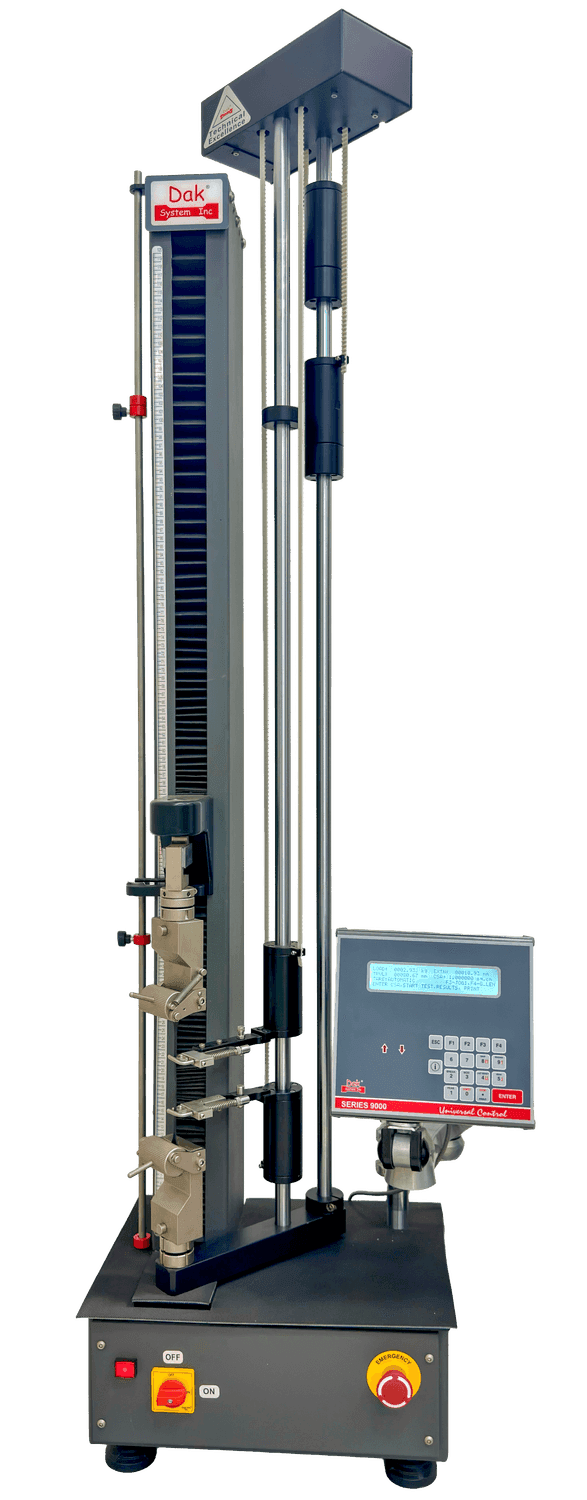
Precision for everyday testing
Travel-controlled testing with standalone Console operation or PC-connected analysis and reporting. A practical option for established test methods, with the frame, gripping and measurement selected around your textile specimens.
| Testing question | What to define | Explore |
|---|---|---|
| Fabric breaking force and extension | Strip and grab tests use different gripping arrangements. Keep the specified method and specimen direction with the result when comparing materials or batches. | |
| Tear resistance | Identify the tear procedure and specimen geometry. A tensile-machine tongue tear examines a different loading arrangement from a pendulum tear test. | |
| Seam and joint performance | State whether the requirement concerns seam breaking force, seam opening or movement of yarns near the seam. Keep the seam construction and evaluation method with the test result. | |
| Yarn, webbing and cord strength | Specify the specimen form, holding arrangement, reference length and required force-extension results. A yarn and a broad webbing specimen place different demands on gripping and test space. | |
| Coating, laminate and footwear bonds | Define the joined layers, separation direction and required bond test. The loading geometry and the observed separation help explain what the recorded force represents. |
Strip and grab tests use different gripping arrangements. Keep the specified method and specimen direction with the result when comparing materials or batches.
Identify the tear procedure and specimen geometry. A tensile-machine tongue tear examines a different loading arrangement from a pendulum tear test.
State whether the requirement concerns seam breaking force, seam opening or movement of yarns near the seam. Keep the seam construction and evaluation method with the test result.
Specify the specimen form, holding arrangement, reference length and required force-extension results. A yarn and a broad webbing specimen place different demands on gripping and test space.
Define the joined layers, separation direction and required bond test. The loading geometry and the observed separation help explain what the recorded force represents.
Fabric width, yarn construction, surface finish and expected load shape the holding arrangement. DAK offers flat-faced, pneumatic, bollard, capstan and hydraulic gripping options for different specimen forms.
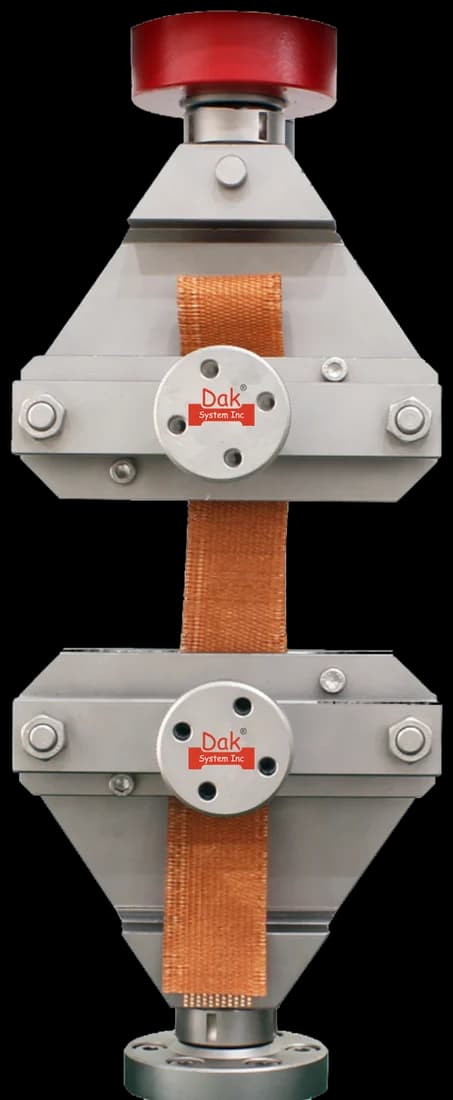
Choose jaw width, face texture and clamping action around the specimen and method. DAK’s wide vice-action grips offer interchangeable faces for suitable textile specimens.
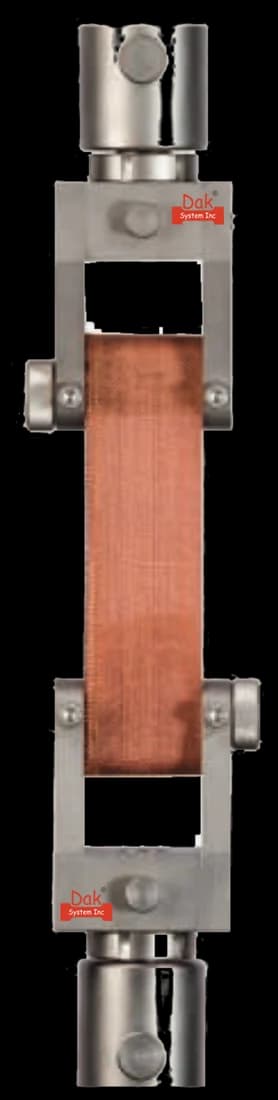
DAK’s quick-release bollard grip distributes the holding load around a curved contact surface. The grip and specimen reference length should be considered together when specifying the yarn test.
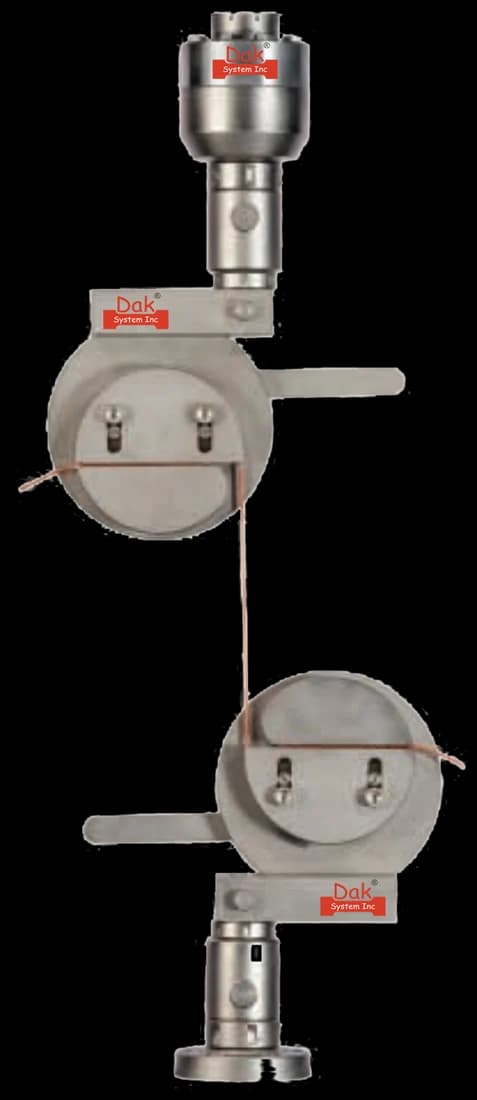
DAK’s split-capstan grips transfer force through a curved holding arrangement for suitable flexible specimens. Specify the construction, dimensions and expected force when selecting the setup.
For wider, higher-force belts and geo-fabrics, explore the hydraulic gripping range. Alongside the grips, define the working load-cell range, available specimen travel, conditioning, reference length and how extension is to be measured and reported.
Browse the existing textile, apparel and footwear methods below, or use the material library for related fibres, ropes and geosynthetics. Search by designation and filter the results to match your test programme.
Textile floor coverings — bond strength determination (delamination of backing).
Sewn seam strength and maximum force to seam rupture of woven fabrics.
Strength tests for zippers — crosswise strength, slider lock holding, pull-off of puller.
Single-strand yarn tensile: breaking force and elongation, plus breaking tenacity, initial modulus, chord modulus and breaking toughness.
Tearing strength of fabrics by the tongue (single rip) procedure (CRE machine).
Bursting strength by ball-burst attachment on CRT/CRE tensile machines.
Trapezoid tearing strength of geotextiles.
Wide-width strip tensile testing of geotextiles and geosynthetics.
Grab breaking load and elongation of geotextiles.
Breaking force and elongation of textile fabrics — Grab test.
Woven fabric grab and strip tensile for apparel and home textiles.
Breaking force and elongation of textile fabrics — Strip method.
Hook-and-loop touch fasteners — shear strength and 180° peel strength.
Static puncture strength of geotextiles using 50 mm probe (CBR puncture).
Breaking strength and elongation of textile webbing, tape and braided material.
Coated fabrics — breaking strength, tear, adhesion of coating, puncture.
Shock-attenuation of athletic footwear midsoles.
Heel attachment strength of women's footwear.
Fall-arrest lanyards, harnesses and anchors — static strength verification.
Fall-arrest lanyards, harnesses and anchors — static strength verification.
Fall-arrest lanyards, harnesses and anchors — static strength verification.
Strip tensile strength and elongation at break of nonwovens.
BIS strip tensile method for fabrics, identical with ISO 13934-1:1999.
Trapezoid tearing strength of textile fabrics.
Double edge (Baumann) tear load of leather.
Leather — adhesion of surface finish coating.
Geosynthetics — static puncture test (CBR test, 50 mm plunger).
Woven fabric grab and strip tensile for apparel and home textiles.
Tensile properties of fabrics — strip method and grab method. Equivalent to: IS 1969-1 / -2
Seam strength and seam slippage of garments and upholstery.
Sewn seam strength and maximum force to seam rupture of woven fabrics.
Tongue and trouser tear of fabrics.
Tear properties of fabrics — trouser, wing and tongue-shaped specimens.
Hydraulic/pneumatic diaphragm bursting (reference; ball-burst on UTM used as alternative).
Rubber- or plastics-coated fabrics (belt carcass materials) — tensile strength and elongation.
Footwear uppers — tensile strength and elongation.
Whole-shoe sole adhesion (peel) testing.
Safety footwear — toe cap compression, penetration resistance, sole bond.
Single-end breaking force and elongation at break of yarn from packages, on a CRE tester, with breaking tenacity in cN/tex.
Heel attachment strength of women's footwear.
Fibre ropes — determination of linear density, breaking force and elongation.
Leather — stitch tear resistance (upholstery and footwear seam design).
Coated fabrics — coating adhesion (peel of coating from substrate).
Leather — tensile strength and percentage elongation.
Tear resistance of rubber- or plastics-coated fabrics.
Nonwovens — breaking strength and elongation by grab method.
Showing 1–8 of 46 standards
Flat fabric, fine yarn, cord and webbing have different holding needs. Select grip geometry and faces around the specimen rather than assuming a shared machine capacity means a shared gripping arrangement.
The test programme may also require extension, a force trace or a defined seam, tear or bond result. Agree which outputs matter and keep the specimen direction, reference length and method with the report.
Include the installation country and the relevant customer or test-method requirement, together with the specimen details and workload. State installation, training and support needs as part of the equipment discussion.
Share the material, test requirement and specimen details. Our engineers can specify the frame, load cell and gripping arrangement around your laboratory’s work.