Testing standard

ASTM C365

Standard Test Method for Flatwise Compressive Properties of Sandwich Cores

Written and technically reviewed by Dak System Inc. engineeringLast reviewed

ASTM C365 measures the flatwise compressive properties of a sandwich core — how much load honeycomb or foam carries through the panel thickness before its cells buckle. A specimen is compressed between flat parallel platens at about 0.5 mm/min, giving compressive strength and, where required, compressive modulus.

At a glance

Test type
Compressionthe specimen is squeezed
Published by
ASTM
Edition
C365/C365M-22

What the test does

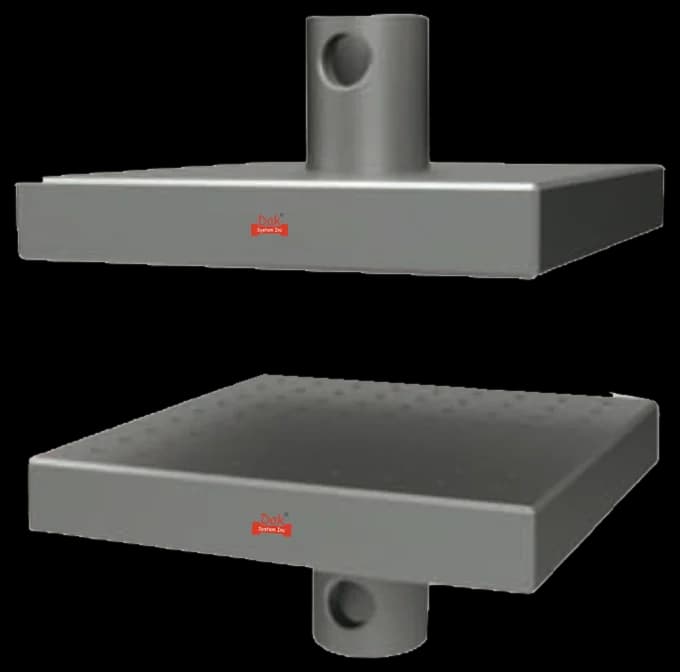
A specimen of sandwich core — honeycomb, foam or another cellular material — is stood between two flat parallel platens with the upper one free to self-align. The platens close at a nominal 0.50 mm/min and compress the specimen through its thickness, in the direction the core works in a panel. Force is recorded against platen separation. The test may be run bare, with the cell ends free, or stabilised, with thin facings bonded to both faces to restrain the cell ends as a real panel would. The maximum force at or before cell buckling gives the strength; where modulus is required, it comes from the initial linear part of the curve.

What it measures, and why it matters

The result is flatwise compressive strength and, optionally, flatwise compressive modulus. These govern everything that presses on a sandwich panel locally. Fixings and inserts crush the core beneath them; clamped joints compress it; footfall, impact and handling loads reach the core through the facing; and the pressure applied during vacuum-bagging or pressing can crush the core before the panel is finished. In many designs it is the core's compressive strength rather than anything about the facings that sets the limit, particularly around hard points and attachments. The modulus feeds directly into predicting how much a panel will dent under a local load.

Specimen and platens

Honeycomb fails by cell buckling, which is a stability problem. That makes specimen preparation — squareness, flatness and edge quality — more consequential here than in most compression tests.

Common section
50 × 50 mm, or larger for coarse cellsEnough whole cells across the section that the specimen behaves as a core rather than as a few cells.
Thickness
Core thickness, commonly with facings removedStabilised and bare configurations both exist and give different results.
Faces
Flat and parallelA wedge-shaped specimen loads one edge first and buckles there early.
Upper platen
Self-aligning
Ribbon direction
RecordedHoneycomb is not isotropic in plan, and although flatwise compression is the least direction-sensitive of the core properties, the orientation still belongs in the report.
Do not sand the faces flat
Machine or grind themDakSanding a honeycomb face rolls the cell walls over and closes the cells, which stiffens the specimen locally and produces a false result.

A bare-core result and a stabilised result — where thin facings are bonded on to restrain the cell ends — are different numbers. Bare cores fail earlier because the free cell ends are unrestrained, and the two must not be pooled.

Test speed

Crosshead speed
0.50 mm/min nominal
Strength
Maximum force before or at cell bucklingAfter buckling the load falls to a crush plateau; that plateau is an energy-absorption property, not the strength.
Modulus
From the initial linear region where requiredNeeds the platen displacement corrected for frame compliance, which on a stiff core is a large share of the measured travel.
Seat under a small preload
Then zeroDak

Calculations

Flatwise compressive strengthFᶜ

Fᶜ = Pmax / A

Pmax
maximum force, N
A
specimen cross-sectional area, mm²
Flatwise compressive modulusEᶜ

Eᶜ = (ΔP / A) / (Δδ / t)

ΔP
force increment in the linear region, N
Δδ
corresponding displacement, mm
t
specimen thickness, mm

Displacement must be corrected for the compliance of the frame and platens. Uncorrected, the modulus of a stiff honeycomb can be understated substantially.

How the test runs

  1. 01Cut specimens with a fine blade or water jet, noting the ribbon direction.
  2. 02Machine or grind the faces flat and parallel — do not sand honeycomb.
  3. 03Measure the section and thickness.
  4. 04Decide and record whether the test is bare-core or stabilised.
  5. 05Check platen parallelism and that the upper platen self-aligns.
  6. 06Centre the specimen and close to a small preload.
  7. 07Zero force and displacement at that preload.
  8. 08Compress at 0.50 mm/min, recording force against platen separation.
  9. 09Take the maximum force at or before cell buckling.
  10. 10Where modulus is required, correct the displacement for frame compliance before fitting a slope.
  11. 11Examine the specimen and record how the cells failed.

The fixture this method needs

Direct compression fixture platens
5 to 400 kNTJ-125

Direct Compression Fixture

Direct compression platens with a self-aligning upper face. Self-alignment is what lets a core specimen with faces that are not perfectly parallel still load evenly rather than buckling early at one edge.

Specifications

What the report has to contain

  • Reference to ASTM C365 and the edition
  • Core identification — material, density, cell size
  • Whether the test was bare-core or stabilised
  • Specimen dimensions and area
  • Ribbon direction
  • Conditioning and test atmosphere
  • Crosshead speed
  • Maximum force and flatwise compressive strength
  • Compressive modulus where determined, with the compliance correction described
  • Failure mode observed
  • Number of specimens, mean and standard deviation

What the machine must be capable of

Force measurement to ASTM E4 over a range that runs from a couple of kilonewtons for light honeycomb to tens of kilonewtons for dense foam, and a crosshead that holds 0.50 mm/min steadily. Platens must be flat, parallel and larger than the specimen, with the upper one self-aligning — a core specimen whose faces are slightly out of parallel will otherwise load one edge first and buckle there early. Where compressive modulus is required, frame compliance becomes a first-order concern: displacement is measured between the platens, so everything elastic in the load string is included, and on a stiff honeycomb an uncorrected slope understates the modulus substantially.

What goes wrong in practice

The commonest preparation error is sanding honeycomb faces flat, which closes the cells and inflates the result. The commonest analysis error is quoting the post-buckling crush plateau as the compressive strength; the plateau is a genuine energy-absorption property but it is well below the peak, and confusing the two understates the core badly. The commonest reporting error is omitting whether the test was bare or stabilised, since the two are not comparable. And where modulus is reported, failing to correct for frame compliance is close to universal in laboratories that have not calibrated for it, and it biases every figure in the same direction.

ASTM C365 bare or stabilised

Bare coreStabilised
FacingsNoneThin facings bonded to both faces
Cell endsFreeRestrained
Typical resultLowerHigher
RepresentsThe core aloneThe core as it works in a panel

Both configurations are legitimate and both are used. They are not the same measurement, and a specification that names one is not satisfied by the other. Bare-core figures are conservative for panel design; stabilised figures are the ones that describe the core in service.

Questions we are asked about this test

What is ASTM C365?

It is the ASTM test method for the flatwise compressive properties of sandwich cores. A core specimen is compressed through its thickness between flat parallel platens at about 0.5 mm/min, giving flatwise compressive strength and, where required, compressive modulus. It applies to honeycomb, foam and other core materials.

What is the difference between bare-core and stabilised testing?

In a stabilised test thin facings are bonded to both faces of the core, restraining the cell ends as they are restrained in a real panel. In a bare-core test the cell ends are free. Free ends buckle earlier, so bare-core results are lower. Both are legitimate and both are specified, but they are different measurements and a specification calling for one is not satisfied by the other.

Why should honeycomb faces never be sanded?

Because sanding rolls the thin cell walls over and closes the cell mouths, creating a locally stiffened and thickened layer at exactly the surface that carries the load. The specimen then reads high for a reason that has nothing to do with the core. Faces should be machined or ground so the cell walls are cut cleanly rather than deformed.

Why is my modulus lower than the supplier's data?

Almost certainly frame compliance. Displacement is taken between the platens, so everything elastic in the load string — the load cell, the platens, the frame itself — is included in the measured travel. On a stiff honeycomb that compliance can be a substantial share of the total, and an uncorrected slope understates the modulus considerably. Correcting with a compliance calibration, or measuring displacement close to the specimen, removes it.

What happens after the cells buckle?

The load falls away and settles into a roughly constant crush plateau as the cells fold progressively. That plateau is a real and useful property — it is what makes honeycomb an energy-absorbing material — but it is not the compressive strength. The strength is the maximum force at or before buckling, and quoting a plateau stress instead understates the core badly.

How large does the specimen need to be?

Large enough to contain a representative number of whole cells. For a fine-celled honeycomb 50 mm square is comfortable; for a coarse core it may not be, and the specimen has to grow accordingly. A specimen only a few cells across is measuring those particular cells rather than the core, and it shows as scatter that no amount of care elsewhere will reduce.

What does this property govern in a panel?

Everything that presses on the panel locally. Fixings and inserts crush the core beneath them, clamped joints compress it, footfall and impact load it through the facing, and vacuum-bag or press pressure during manufacture can crush it before the panel is even finished. Flatwise compressive strength is the number that decides all of those, and it is often the limiting property rather than anything about the facings.

Running ASTM C365 on the Series 7200 and Series 9000

Dak verifies against whichever standard the method names, and where a class applies our frames sit a class tighter than it asks.

The method asks forDak supplies
CapacityModerate — a 50 mm square honeycomb specimen commonly fails between 2 and 30 kN depending on densityLoad cells from 1 kg to 60 ton on the Series 7200, and 0.5 to 100 kN on the Series 9000
Force accuracyASTM E4Verified to ASTM E4, and to ISO 7500-1 Class 0.5
GrippingFlat parallel platens, one self-aligning, larger than the specimenOur compression anvils, built to the specimen
EnvironmentStandard laboratory atmosphere unless the specification calls for conditioning3009 series chambers, −150 °C to +400 °C — temperature only

This page describes the method as practised. The governing text is the current edition from the issuing body. Tell us what you are testing and we will answer with the machine, the fixture and a quotation.

Materials tested to it

The test it standardises

Other standards explained