ASTM A931 — read the full explanation
TensileTension testing of wire ropes and strand (breaking force determination).

Marine manufacturing brings together structural metals, composite panels, bonded joints and flexible load-bearing materials. DAK testing systems help laboratories examine their strength and deformation, with the specimen, loading arrangement and measurement selected around the engineering question.
Tensile specimens taken from parent material or across a welded joint address different regions. Bend tests add information about deformation of the selected material or joint. Record specimen orientation and weld position with the result.
Marine laminates are evaluated through loading modes such as tension, bending and shear. Reinforcement direction and laminate construction belong in the test definition so results can be compared meaningfully across materials.
Core compression, flatwise tension and panel bending investigate different parts of a sandwich construction. Identify whether the test concerns the core, the face-to-core bond or the response of the panel specimen.
Bonded substrates and coated specimens need a loading arrangement that matches the bond being assessed. Joint geometry, substrate preparation and failure location help make a strength result useful for material and process comparisons.
Breaking force and extension describe different aspects of rope behaviour. Steel and fibre ropes also differ in construction, gripping and end preparation. Include the termination and free test length when planning the test.
Strength, tear and layer adhesion address different performance questions for coated textiles. Identify the material direction, coating and joint or seam being assessed before selecting the gripping and test method.
Metal grips, laminate tabs, sandwich loading blocks and rope terminations create different load paths. Include these interfaces in the specimen drawing so the configuration addresses the intended failure region.
Specimen strain, panel deflection and rope extension are not interchangeable. Choose the measuring location, gauge length and movement range around the property you need to report.
Record whether the sample is dry, conditioned or tested after environmental exposure. Also distinguish preparation before a test from controlling the environment during loading when discussing your equipment needs.
A material-testing programme may cover several loading modes without using the same fixture for every specimen. Compare the UTM platform and accessories against your metals, composites, joints or flexible materials.
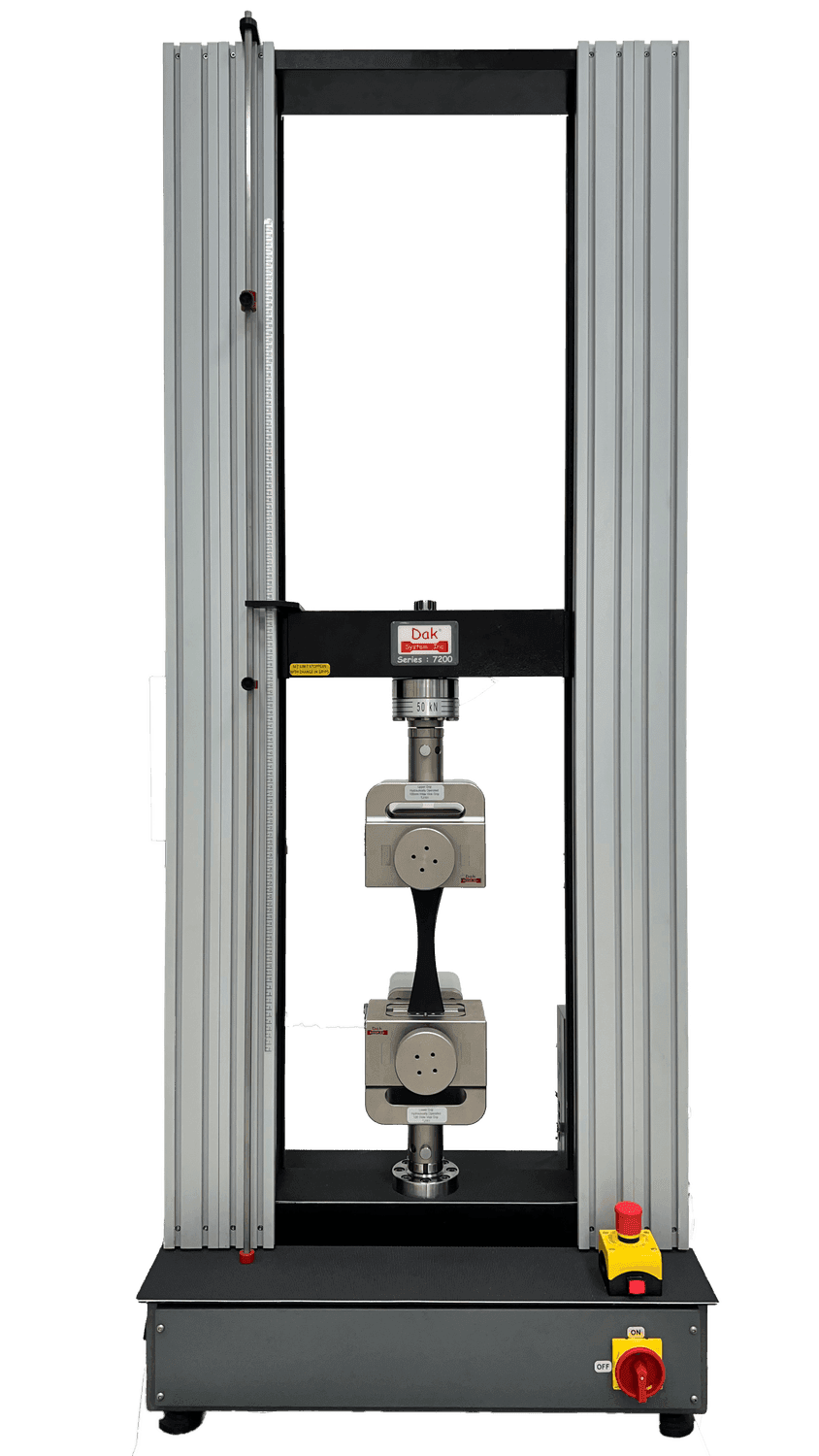
DAK flagship
Our flagship universal testing machine brings flexible programming, specimen setup and measurement together for a broad marine-materials laboratory, with tooling selected for the test at hand.
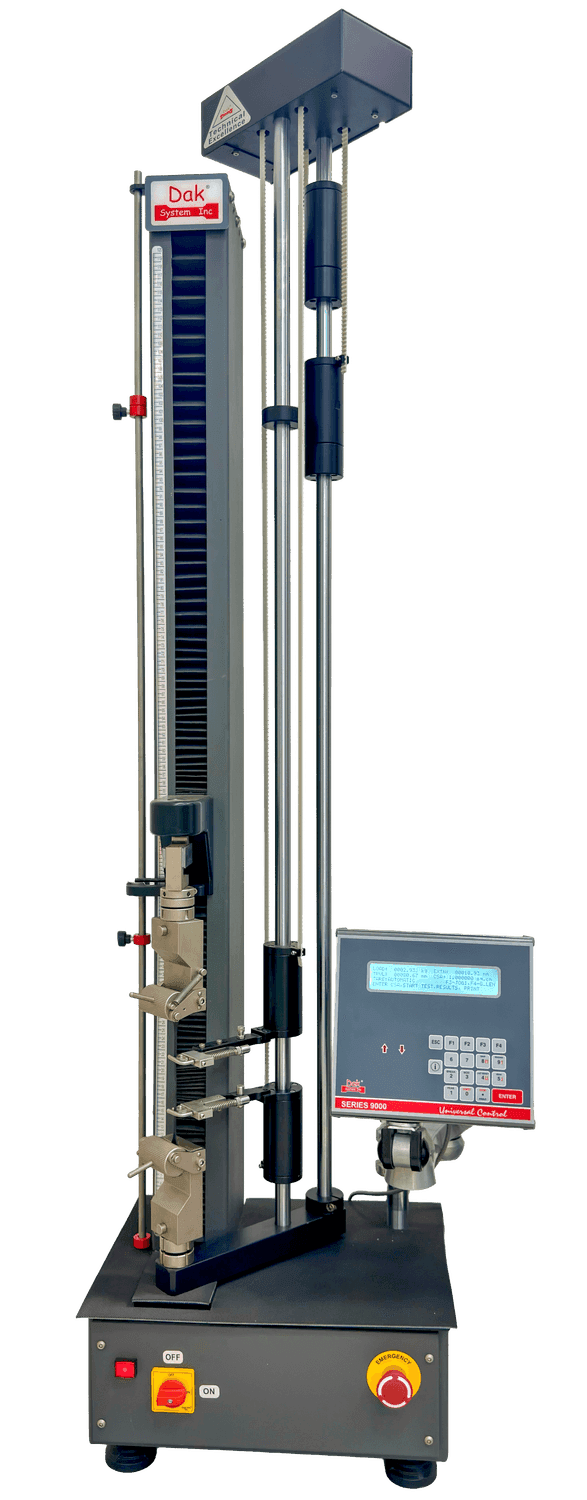
A universal testing platform for established material and component methods. Compare the published force range, working space and control approach with the requirements of your marine test programme.
If the programme includes fatigue, state the load history, cycle requirements and specimen configuration. This keeps a repeated-load study distinct from a one-time strength measurement.
Start with a relevant method shortcut or use the complete marine library. Match the reference to the material, specimen construction and required result, rather than treating a sector label as a single test.
Tension testing of wire ropes and strand (breaking force determination).
Flatwise tensile strength of sandwich constructions (core-to-facing bond).
Edgewise compressive strength of sandwich constructions.
Flatwise compressive properties of sandwich cores.
Core shear and facing properties of sandwich constructions by beam flexure.
Adhesion or cohesion strength of thermal spray coatings (tension pull-off).
Lap-shear strength of adhesively bonded plastic and FRP joints.
Pull-off strength of coatings (adhesion testers; also performed on UTM with suitable fixtures).
Tensile properties of reinforced thermosetting plastics using straight-sided specimens.
Mode I interlaminar fracture toughness (GIc) — double cantilever beam (DCB).
Shear properties by V-notched rail shear method.
Compressive residual strength of damaged composite plates — Compression After Impact.
Tensile properties of FRP matrix composite bars (FRP rebar).
Coated fabrics — breaking strength, tear, adhesion of coating, puncture.
Guided bend test for ductility of welds.
Bend testing of materials for ductility (guided, semi-guided and free bend).
Short-link lifting chain — proof force and breaking force verification.
Measured breaking force of steel wire ropes by tensile test to destruction.
Longitudinal tensile test on weld metal in fusion welded joints.
Tensile test on welded cruciform and lapped joints.
FRP hull laminate coupon verification per ASTM D3039 / ISO 527-4 and core shear per ASTM C393.
Flexural properties of fibre-reinforced plastic composites.
Stud-link anchor chain cables — proof load and breaking load testing (very-high-capacity frames).
Mooring ropes and hawsers — linear density, breaking force and elongation.
Steel wire ropes — minimum breaking force requirements and verification testing.
Transverse tensile test of butt-welded joints in metallic materials.
Bend tests on welds in metallic materials (root, face and side bend).
Bend test of metallic materials. Equivalent to: IS 1599
Showing 1–8 of 28 standards
A short rope specimen and a complete mooring or rigging assembly can require very different test lengths and fixtures. Describe the actual assembly and loading plan, not only its nominal breaking load.
A sandwich panel can be examined at several levels. Decide which part of the construction is under investigation before choosing a compression, tensile or bending fixture.
Bring the material and specimen details together with the result your laboratory needs.