ISO 527-4 — read the full explanation
TensileTensile test conditions for isotropic and orthotropic fibre-reinforced plastic composites.

From metallic coupons and composite laminates to bonded joints and fasteners, DAK testing systems support mechanical characterisation for aerospace laboratories. Bring the specimen, loading method, measurement and reporting requirements together in a complete test configuration.
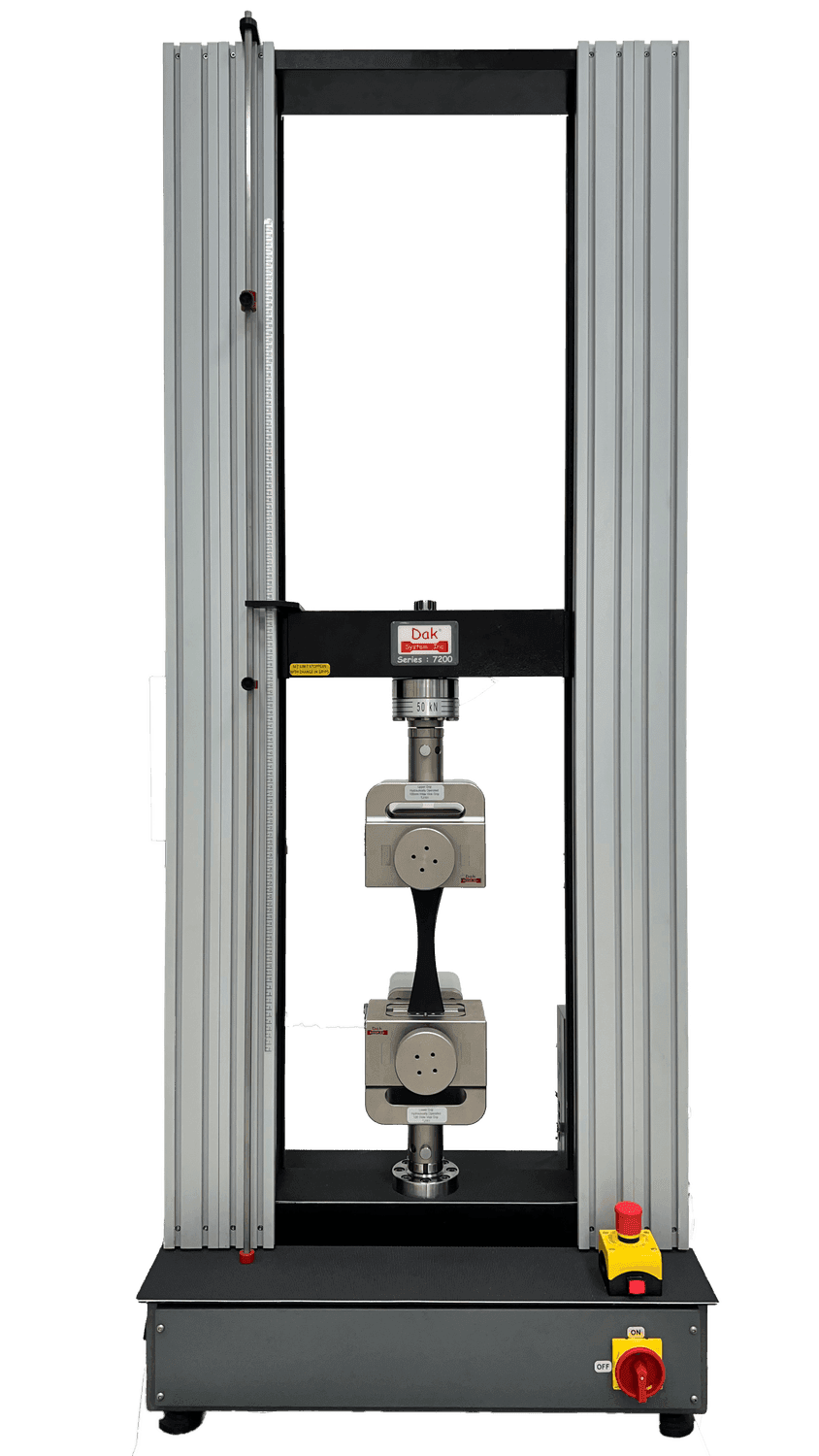
Flagship platform
Our flagship universal testing platform brings together specimen handling, force and strain measurement, flexible test programming and analysis. Configure the frame and accessories around the materials, components and test methods in your laboratory.
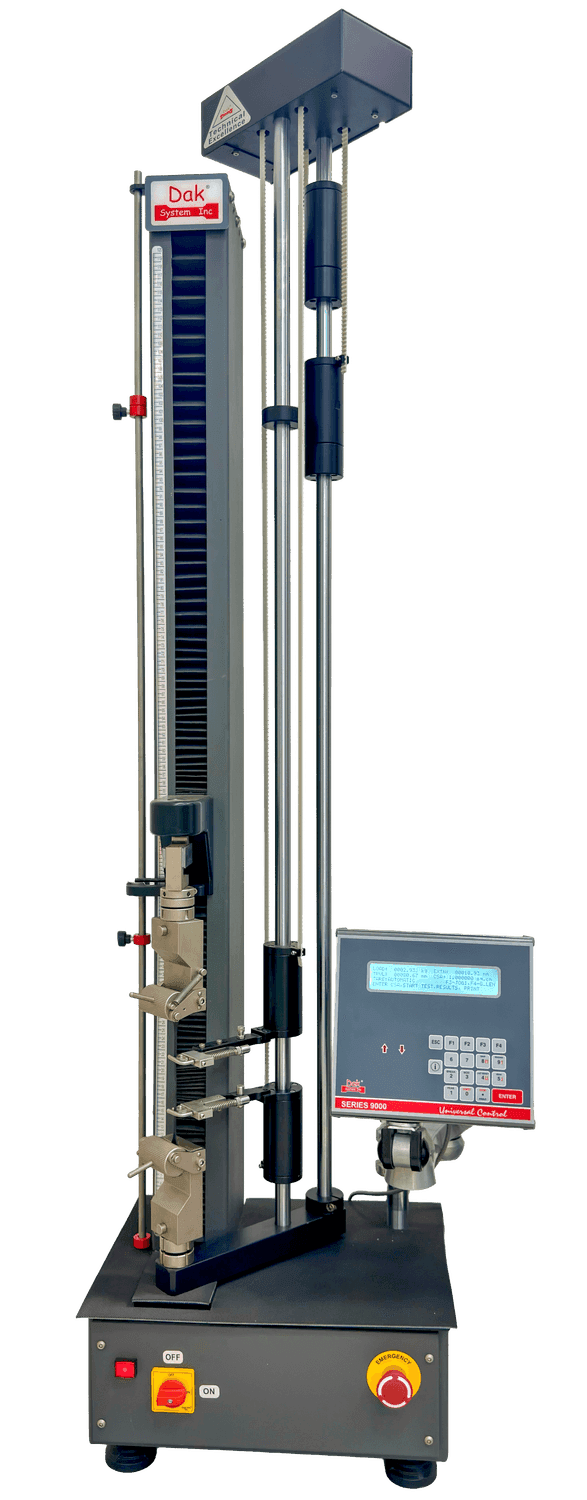
A universal testing platform for routine laboratory and production checks, with standalone Console or PC operation. Select the frame, grips and measurement arrangement for your defined test workflow.
When the requirement concerns repeated loading, define the waveform, control mode, force range, frequency and specimen arrangement. DAK fatigue systems provide a separate platform for cyclic testing of coupons and components.
For alloy sheet, bar and machined specimens, define the material condition, test direction and required tensile or compression properties. Include the measurement length and any specified test temperature.
Fibre direction, lay-up and specimen preparation influence the test configuration. Tensile, compression, flexural and shear methods use distinct loading arrangements to characterise the laminate.
Core compression, flatwise tension and sandwich flexure examine different aspects of the construction. Specify whether the test concerns the core, a facing, their bond or the assembled sandwich.
Joint geometry and adherend stiffness influence the way load enters a bond. Define the required peel or shear arrangement and the interface being evaluated.
A fastener specimen, cable and terminated assembly each need their own load-transfer arrangement. Include the dimensions, end details and required tensile, proof-load or other mechanical test.
For flexible specimens used in aerospace applications, define the construction, test direction, gripping length and expected extension. The material or seam test determines the holding arrangement.
| Requirement | Configuration focus | Explore the method |
|---|---|---|
| Composite tensile properties | Specimen orientation and preparation, secure gripping, alignment and the specified strain-measurement approach. | |
| Composite compression | The method-specific loading fixture, specimen geometry and strain measurement used for the required compression result. | |
| Metallic tensile properties | Material condition, specimen dimensions, required strength/elongation results and the applicable measurement arrangement. | |
| Repeated loading | A fatigue test specification covering loading mode, waveform, force range, frequency and the reported result. |
Specimen orientation and preparation, secure gripping, alignment and the specified strain-measurement approach.
The method-specific loading fixture, specimen geometry and strain measurement used for the required compression result.
Material condition, specimen dimensions, required strength/elongation results and the applicable measurement arrangement.
A fatigue test specification covering loading mode, waveform, force range, frequency and the reported result.
For a component or assembly test, include the drawing and the intended load path. A material coupon and a complete assembly answer different engineering questions, even when they use the same base material.
Identify gripping surfaces, tabs, fixture contacts or end fittings. The arrangement must introduce the intended load while leaving the required specimen region available for measurement.
Define the force range, specimen dimensions and required travel. Select the load cell and specimen-strain measurement around the properties and accuracy requirements of the method.
Include test temperature and conditioning, specimen identification, required outputs and your laboratory's calibration/documentation requirements. These belong in the configuration discussion alongside the hardware.
Use a defined specimen, orientation and test method so results can be compared on the same basis. Include the identification and report fields your team uses to connect each result with its material or batch.
List the immediate test programme and the additional materials or loading methods you expect to introduce. This helps define the frame, fixtures, measurement options and software workflow as one system.
Explore the full set of aerospace and defence method references below. Use your required designation, edition and programme-specific requirements when preparing the testing specification.
Tensile test conditions for isotropic and orthotropic fibre-reinforced plastic composites.
Breaking strength of aircraft control cables, wire rope and swaged terminals.
Tension testing of wrought and cast aluminium- and magnesium-alloy products.
Monotonic compressive strength of advanced ceramics.
Flatwise tensile strength of sandwich constructions (core-to-facing bond).
Honeycomb sandwich panels — flatwise tension, beam flexure and core compression.
Edgewise compressive strength of sandwich constructions.
Flatwise compressive properties of sandwich cores.
Core shear and facing properties of sandwich constructions by beam flexure.
Adhesion or cohesion strength of thermal spray coatings (tension pull-off).
Apparent shear strength of single-lap-joint adhesively bonded metal specimens.
Tensile and tensile-adhesion properties of rigid cellular plastics.
Climbing drum peel for adhesives — sandwich facings and laminated assemblies (aerospace).
T-peel resistance of adhesives (flexible-to-flexible adherends).
Durability of adhesive lap-shear joints under sustained static load.
Carbon-fibre laminate qualification — tension, compression (CLC) and interlaminar shear.
Lap-shear strength of adhesively bonded plastic and FRP joints.
Floating roller peel resistance of adhesives (metal-to-metal bonds).
Compressive properties of composites by shear loading (IITRI fixture).
In-plane shear strength of reinforced plastics — withdrawn 2024, superseded in practice by ASTM D5379. Equivalent to: ASTM D5379
In-plane shear response by tensile test of a ±45° laminate.
In-plane shear properties by rail shear method. Withdrawn 2025 — replaced by ASTM D7078.
Tensile properties of reinforced thermosetting plastics using straight-sided specimens.
Shear properties by V-notched beam (Iosipescu) method.
Mode I interlaminar fracture toughness (GIc) — double cantilever beam (DCB).
Interlaminar fracture toughness (GIc, GIIc, mixed-mode) for damage-tolerance certification.
Open-hole tensile strength of polymer matrix composite laminates.
Open-hole tension, open-hole compression and bearing strength — notched design allowables.
Bearing response of polymer matrix composite laminates (bolted-joint design data).
Curved-beam strength — interlaminar tensile strength of curved composite laminates.
Open-hole compressive strength of composite laminates.
Compressive properties of polymer matrix composites — Combined Loading Compression (CLC) fixture.
Mixed-Mode I/II interlaminar fracture toughness — MMB fixture.
Shear properties by V-notched rail shear method.
Damage tolerance — drop-weight impact followed by Compression After Impact (CAI) on UTM.
Compressive residual strength of damaged composite plates — Compression After Impact.
Flexural properties of composites — 3-point and 4-point bending.
Mode II interlaminar fracture toughness (GIIc) — end-notched flexure (ENF).
Tensile (butt-joint) strength of adhesive bonds — bar and rod specimens.
Peel or stripping strength of adhesive bonds (180° peel).
Bearing strength of plastics (pin bearing, tension or compression loading).
Elevated-temperature tension tests of metallic materials.
Tension testing of metallic foil.
Force-controlled constant-amplitude axial fatigue tests of metallic materials (servo-hydraulic UTM).
Axial force-controlled and strain-controlled fatigue of airframe materials (servo-hydraulic systems).
Plastic strain ratio (r-value) of sheet metal (deep-drawing quality).
Tensile strain-hardening exponent (n-value) of metallic sheet materials (formability).
Fundamental tension testing of metallic materials (bars, tubes, sheets, castings).
Compression testing of metallic materials at room temperature.
Threaded fastener proof-load and wedge-tensile verification.
Mechanical properties of externally and internally threaded fasteners, washers and rivets (wedge tensile, proof load, axial tension).
OEM-specific composite coupon test methods run on calibrated UTMs per customer approval.
European aerospace CFRP coupon methods — tensile, flexure and interlaminar shear.
European aerospace CFRP coupon methods — tensile, flexure and interlaminar shear.
European aerospace CFRP coupon methods — tensile, flexure and interlaminar shear.
Calibration and verification of a testing machine's force-measuring system.
Force calibration and verification of testing machines.
Calibration and classification of extensometer systems for uniaxial testing.
Verification of testing frame and specimen alignment by measured bending.
Flexural properties of fibre-reinforced plastic composites.
In-plane compressive properties of fibre-reinforced plastic composites.
Tensile lap-shear strength of rigid-to-rigid bonded assemblies.
Tensile testing of metallic materials at elevated temperature.
Threaded fastener proof-load and wedge-tensile verification. Equivalent to: IS 1367-3
Aerospace fasteners — tension, double shear, fatigue and stress-durability test methods.
Showing 1–8 of 65 standards
Share the specimen, test method and required result so we can focus the discussion on the machine, fixtures and measurement your programme needs.
For laboratories in India and international markets, include the installation location and your training, calibration and service requirements.