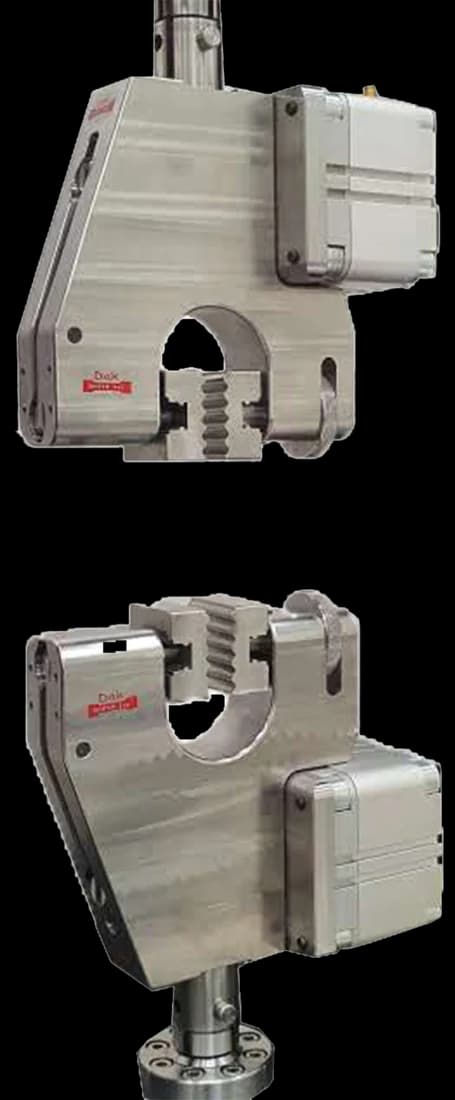
Standard 25 mm
Pneumatic Vice Action Grip
Holding the peeled tape end across its full width at constant pressure, without cutting into a thin backing or letting it slip as the force builds.
Specifications
Testing standard
Standard Test Method for Peel Adhesion of Pressure-Sensitive Tape
Written and technically reviewed by Dak System Inc. engineeringLast reviewed
ASTM D3330 measures the peel adhesion of pressure-sensitive tape. A strip is applied to a clean panel and rolled down under a standard roller, left for a defined dwell, then peeled back at a controlled rate. Method A peels at 180° and Method F at 90°, and the two give different numbers — so the letter is part of the result.
From the test method to your testing system
Explore the DAK machines already listed for ASTM D3330, then review the grips, measurement and setup requirements below.
 Universal Testing MachineSeries 7200Explore the machine →
 Universal Testing MachineSeries 9000Explore the machine →
01Understand the method
A strip of tape is applied to a clean rigid panel — stainless steel as standard — and rolled down under a specified roller mass to remove operator variation from the application. After a defined dwell, the free end is peeled back and the force to keep the peel front advancing is recorded. Method A peels at 180°, method F at 90°, and the angle changes the number.
The result is peel adhesion in force per unit width, and it is the primary lot-release and formulation figure for pressure-sensitive tapes and labels. It captures how the adhesive wets the surface during dwell and how it resists being pulled off afterwards. Dwell time is part of the result because a pressure-sensitive adhesive continues to flow into the surface after application, so a twenty-minute figure and a twenty-four-hour figure describe different states of the same product.
Peel adhesion is one of three properties a pressure-sensitive tape is judged on, alongside tack and shear holding power, and the three do not move together. A tape can peel strongly and creep under sustained shear, or grab instantly and peel poorly. A specification that names only peel adhesion has characterised one third of the behaviour, which is why tape datasheets carry all three and why a substitution decided on peel alone frequently disappoints.
02Prepare the specimen and test settings
03Build the test setup on a DAK machine
Low forces and a long, steady peel, so the requirement is clean resolution and a constant rate over a considerable travel. The peel angle must be held as the tape is consumed, which for a 90° method means the panel moves laterally as the peel advances. Data capture must average the running portion rather than the initial peak.
The frame needs a constant rate held over a long travel at low force, and for the 90° variant a means of moving the panel laterally as the peel advances so the angle does not change while tape is consumed. Data capture has to run for the whole peel rather than sampling it, because the running average is taken over a defined length and a sparse record biases whichever part of the trace it happens to catch.
Holding the peeled tape end across its full width at constant pressure, without cutting into a thin backing or letting it slip as the force builds.
Specifications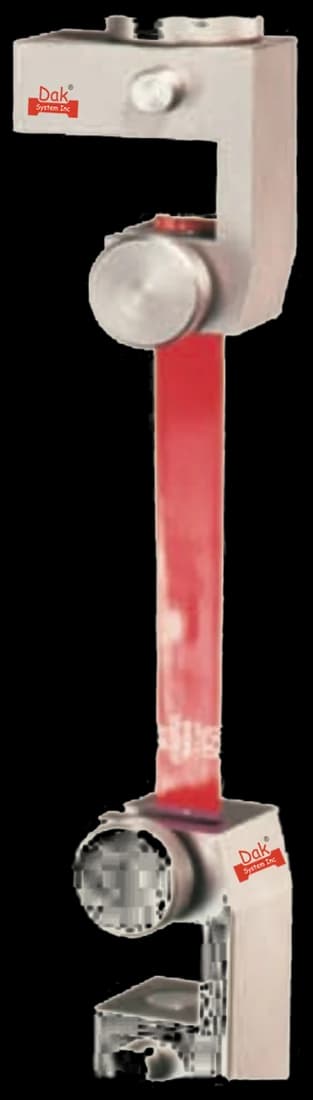
A narrow flat-faced grip suited to standard tape widths, gripping squarely so the peel front stays straight across the strip.
SpecificationsDak verifies against whichever standard the method names, and where a class applies our frames sit a class tighter than it asks.
| The method asks for | Dak supplies | |
|---|---|---|
| Capacity | Low — a few newtons across a standard tape width. Steady rate over a long peel matters more than capacity. | Load cells from 1 kg to 60 ton on the Series 7200, and 0.5 to 100 kN on the Series 9000 |
| Force accuracy | unknown — ASTM E4 is not among this method's referenced documents, which name no force-verification standard and no accuracy class | ISO 7500-1 Class 0.5 — the method sets no class of its own |
| Gripping | A cleaned stainless steel panel, the standard application roller, and a 180° or 90° peel arrangement. | Our peel and adhesion fixtures, built to the specimen |
| Environment | Ambient: standard laboratory atmosphere, before application and at test. | 3009 series chambers, −150 °C to +400 °C — temperature only |
04Run the test
05Calculate, report and interpret
P = F_avg / w
Force per unit width, in N/mm or N per 25 mm. Reporting the peak instead of the running average inflates the result and is the commonest arithmetic error in the method.
Panel contamination is the dominant error — a fingerprint or a solvent residue changes the answer substantially. Applying the tape by hand rather than with the standard roller varies the wet-out. Reporting the peak instead of the average running force inflates the result. And comparing a 180° figure with a 90° one, which happens whenever the method letter is dropped from a specification, compares two different tests.
Applying the tape with tension stored in it is a frequent fault: the strip relaxes against the panel over the dwell and the recorded force includes that recovery. Rolling more than the specified number of passes increases wet-out and raises the result. And a panel reused without the full cleaning procedure carries adhesive residue that the next specimen bonds to rather better than it would to steel.
06Compare methods and find answers
| ASTM D3330 | ASTM D903 | ASTM D1876 | |
|---|---|---|---|
| System | Tape on a panel | Rigid plus flexible adherend | Two flexible adherends |
| Angles | 180° or 90° | 180° | T-peel |
| Dwell is part of the result | Yes | Less so | Less so |
| Used for | Tape and label release | Adhesive lot release | Adhesive screening |
All three report force per unit width and none is comparable with another. Within D3330 itself, a 180° figure and a 90° figure are also not comparable — which is why dropping the method letter from a specification quietly makes it unspecifiable.
It is the ASTM test method for peel adhesion of pressure-sensitive tape. A strip is applied to a clean panel, rolled down under a standard roller, left for a defined dwell and then peeled back at a controlled rate, giving peel adhesion as force per unit width.
Because a pressure-sensitive adhesive continues to flow into the surface after it is applied. Peel adhesion measured twenty minutes after application and twenty-four hours after are genuinely different states of the same tape, and both are legitimate results. The dwell is therefore fixed by the specification and reported with the figure.
The peel angle — 180° for A, 90° for F — and they give different numbers on the same tape. A 90° test also requires the panel to move laterally as the peel advances, so the angle stays constant while tape is consumed. Dropping the method letter from a specification makes the requirement untestable.
Because the adhesive bonds to whatever is on the surface, not to the steel. A solvent residue, a fingerprint or an incompletely dried panel changes the answer substantially, and the effect is systematic rather than random. The cleaning procedure is part of the method for the same reason the roller is.
The average over the running portion, excluding the initial peak. The peak reflects starting the peel at one point, which depends on how cleanly the free end was lifted rather than on the adhesive. Reporting it instead of the running average inflates the result and is the commonest arithmetic error in the method.
Because a pressure-sensitive adhesive keeps flowing into the surface after application. Over the dwell it wets more of the microscopic roughness, so more of the adhesive is genuinely in contact and the peel force rises. That is normal behaviour rather than a defect, and it is why dwell time is fixed by the specification and reported with the figure.
No. Tack, peel adhesion and shear holding power are three different properties that do not move together — a tape can peel strongly and creep under a sustained load, or grab instantly and peel poorly. A substitution decided on peel alone is the usual reason a replacement tape disappoints in an application it appeared to match.
Discuss your specimen, test requirements and reporting needs with DAK engineering.
This page describes the method as practised. The governing text is the current edition from the issuing body. Tell us what you are testing and we will answer with the machine, the fixture and a quotation.