
ASTM D1894 — read the full explanation
ShearStatic and kinetic coefficients of friction of plastic film and sheeting.

Test the part of your packaging that matters to the decision. DAK universal testing machines support mechanical testing across packaging materials and products, with the frame, grips, fixtures and measurement configured around your specimen and required result.
Assess the material before it becomes a finished pack. Tensile, tear and friction tests answer different questions about a film's behaviour. Include thickness, material direction and the required property when selecting the test and measurement arrangement.
Measure the force needed to separate a defined section of seal. Record where the specimen came from, how it was supported and how separation occurred, so the result can be used to compare production batches or sealing conditions.
Investigate the bond between the layers or between a label and its surface. The materials, flexibility and peel geometry shape the result. Use the bonding question to select the arrangement rather than treating every peel test as the same measurement.
A paper tensile specimen and a finished package under compression answer different quality questions. Define whether you need a material property or the response of the assembled package. Package dimensions, loading faces and available test space are part of the equipment specification.
Define the result and evaluation region required by your method. Maximum force and an average over a selected region describe different features of the test. Record whether the seal separates, a layer delaminates or the material tears, alongside the specimen width and support arrangement.
Seal-strength testing measures resistance to separation. Leak testing, barrier measurements and hot-tack testing address different aspects of packaging performance. Identify the question your laboratory needs to answer so the equipment and report match the intended assessment.
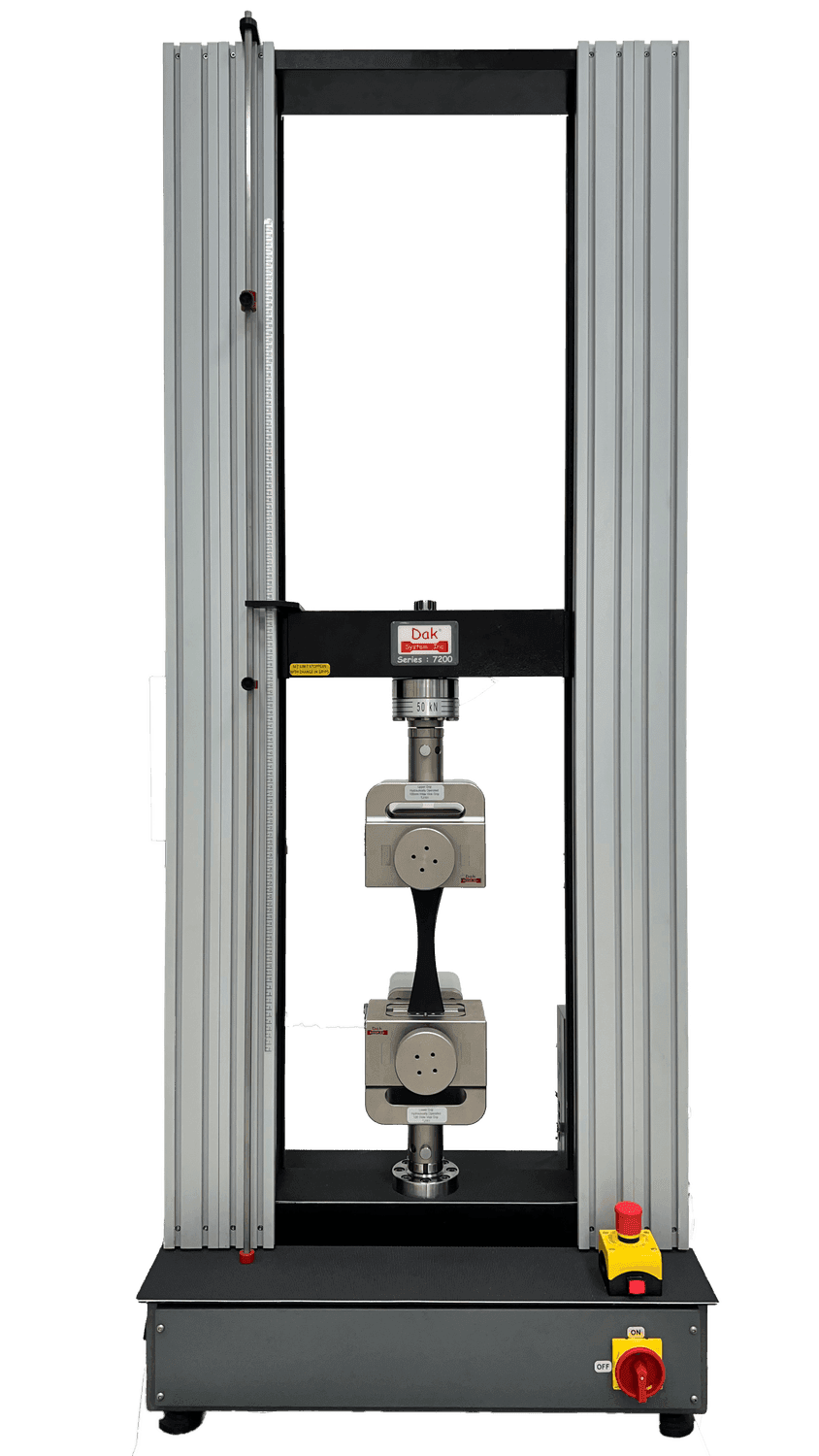
Our flagship UTM
Bring varied packaging tests, flexible test programming and detailed analysis into one platform. Follow Me, Safe Jog and sample protection support specimen setup, while the choice of load frames and accessories lets you build around your laboratory's testing programme.
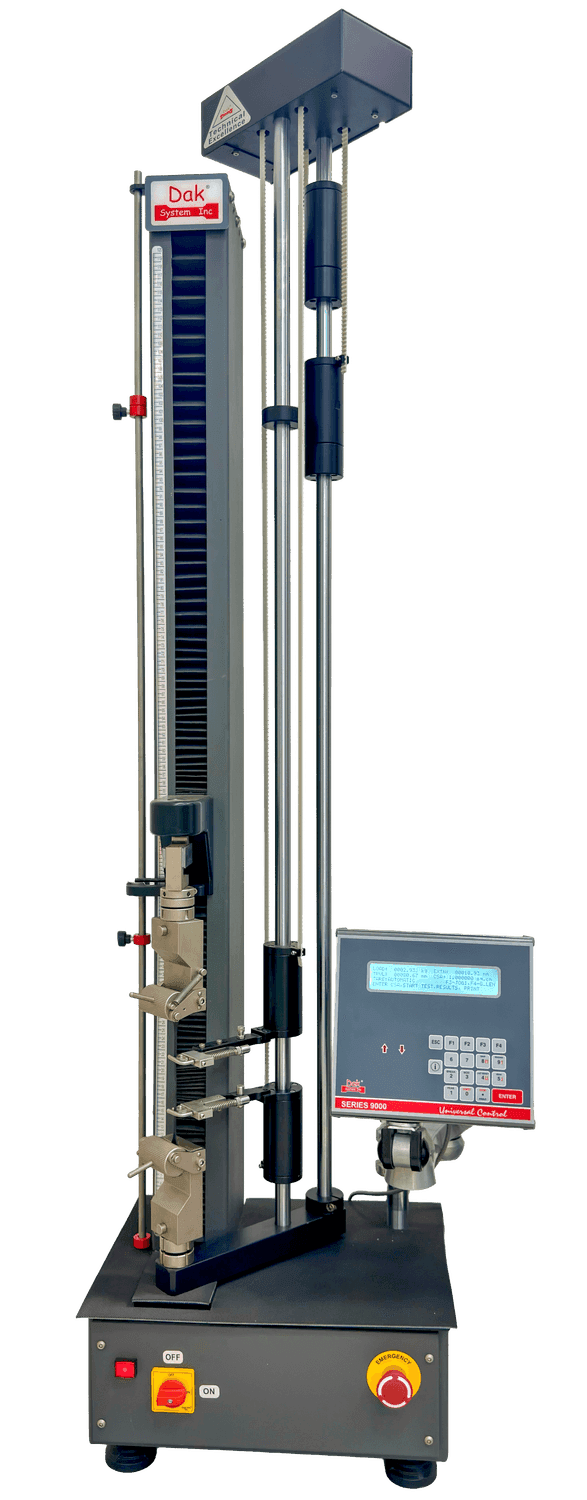
Routine quality control
Run everyday testing with standalone console operation or PC-based testing, analysis and reporting. Select the frame, load cell and holding arrangement around your packaging specimens and required methods.
A laboratory focused on one repeated seal test has different requirements from one assessing films, bonded layers and package compression. Compare quotations against the complete test programme, including gripping, measurement, analysis and future testing needs—not only the machine's maximum capacity.
State the forces you expect during normal testing, including the lower end of the range. Match load measurement to those working forces and define whether extension or strain measurement is needed for the result you want to report.
Describe the surfaces being held, specimen width and thickness, and the seal or peel support arrangement. Thin films, paper strips and bonded layers need contact suited to the specimen; package compression requires the intended loading faces and support.
Allow for specimen extension or separation as well as the space occupied by grips and fixtures. For complete packages, provide the full dimensions and the direction of loading so the working envelope can be considered from the start.
Include material identification, specimen preparation, test direction, conditioning and the required analysis. Add your daily workload and reporting needs so the configuration reflects how the system will be used in production quality control or development.
Pulling a closure open and measuring its opening torque are different loading arrangements. Share the closure drawing, how it is engaged and whether you need force, torque or both when discussing the required testing system.
Search the existing library by designation, material or test type. Use the relevant guide for specimen preparation, test arrangement and reporting details.
Static and kinetic coefficients of friction of plastic film and sheeting.
Tear resistance (Graves tear) of plastic film and sheeting — initiation tear.
T-peel resistance of adhesives (flexible-to-flexible adherends).
Tear propagation resistance (trouser tear method) of plastic films.
Peel adhesion of pressure-sensitive tape (180°, 90° and adhesion-to-liner methods).
Protrusion puncture resistance of stretch wrap films (slow-rate probe).
Box compression test — compressive resistance of shipping containers (requires large-platen UTM/compression tester).
90° peel resistance of adhesives.
Tensile properties of paper and paperboard using CRE apparatus.
Tensile properties of thin plastic sheeting and films (<1 mm thick).
Peel or stripping strength of adhesive bonds (180° peel).
Tension testing of metallic foil.
Plastic strain ratio (r-value) of sheet metal (deep-drawing quality).
Tensile strain-hardening exponent (n-value) of metallic sheet materials (formability).
Internal pressurization failure resistance of unrestrained packages (companion to F88).
Slow-rate penetration resistance of flexible barrier films and laminates.
Puncture resistance of barrier films and lidding.
Sterile barrier packaging — seal peel strength validation.
Child-resistant packaging opening-force evaluation and blister push-through force.
180 degree peel test for a flexible adherend bonded to a rigid one.
Short-span compressive strength of paper and board.
90 degree peel adhesion of pressure-sensitive label stocks.
Edgewise crush test of corrugated fibreboard by short column.
T-peel test for flexible-to-flexible bonded assemblies.
Packaging for terminally sterilized medical devices — seal strength verification (references F88-type peel).
Box compression test — compressive resistance of shipping containers (requires large-platen UTM/compression tester).
Paper and board — compressive strength by ring crush method.
Tissue paper and tissue products — tensile strength, stretch and wet tensile strength.
Tensile strength of paper, tissue and board.
Paper — tearing resistance (Elmendorf reference; trouser tear on UTM as supplementary).
Corrugated fibreboard — flat crush resistance.
Corrugated fibreboard — edgewise crush resistance.
Stress-strain characteristics in compression of flexible cellular polymers (low- and high-density).
Tensile lap-shear strength of rigid-to-rigid bonded assemblies.
Tensile properties of plastic films and sheets.
Tear propagation of film packaging; easy-open feature validation.
Trouser tear and Elmendorf tear resistance for plastic films and sheeting.
Tear strength of flexible cellular polymeric materials.
Tensile properties of paper and paperboard using CRE apparatus.
Corrugated fibreboard — edgewise crush resistance.
Paper and board — compressive strength by ring crush method.
Corrugated fibreboard — flat crush resistance.
Short-span compressive strength of containerboard.
Showing 1–8 of 43 standards
Share the packaging material or product, specimen dimensions, required test and expected force range. For seals and laminates, include the layers and support arrangement; for finished packs, include the package dimensions and loading direction. Add your reporting needs, daily workload and installation country.
These details help us specify the machine, grips, fixtures and measurement as a complete testing system.