

Composite Testing Machines for Laminates and Sandwich Structures
Understand how your composite performs under the loads that matter. DAK universal testing systems bring together specimen holding, force measurement, strain measurement and test analysis for reinforced laminates, sandwich materials and bonded structures.
Start with the structure you are testing
Reinforced laminates and coupons
Fibre reinforcement, lay-up and specimen direction shape the mechanical response. Define the laminate and the direction of loading alongside the property you need to measure, whether the programme concerns carbon-fibre, glass-fibre or another reinforced system.
Sandwich cores and panels
A core, a facing-to-core bond and a complete sandwich beam answer different questions. Core compression, flatwise tension and beam flexure use different specimen and loading arrangements; choose the result before choosing the fixture.
Bonded joints and components
A connection or finished component brings its own load path and holding geometry. Share the drawing, loading direction and required result so the test setup represents the feature you want to investigate.
Build your composite testing programme around the right UTM
Select the load frame, working force range, fixtures and measurement together. The required method and specimen determine the configuration—not the material name alone.
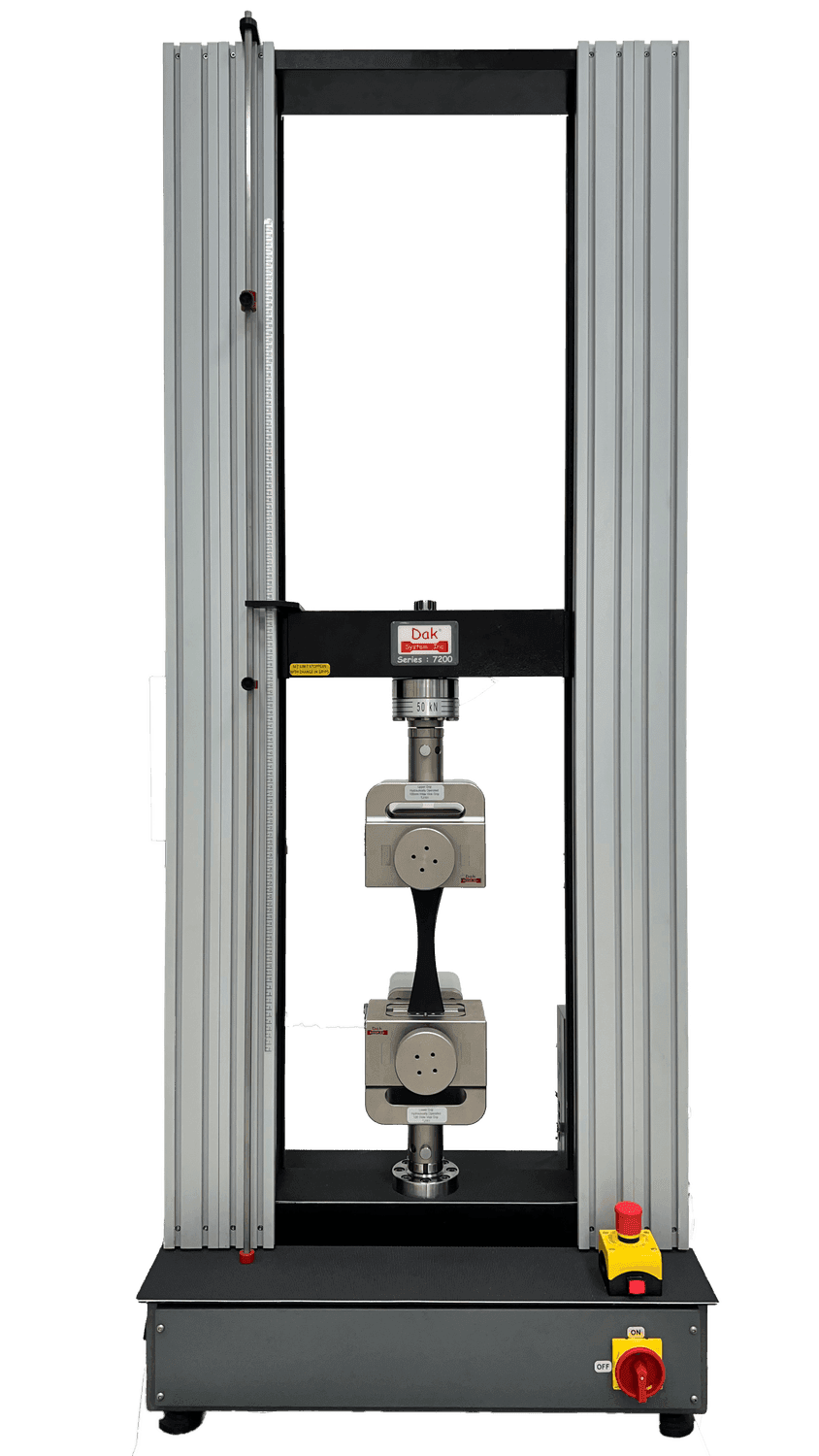
DAK’s flagship UTM
Series 7200 Universal Testing Machine
A versatile platform for composite development and demanding laboratory programmes. Flexible test programming, specimen setup, measurement and analysis support a configuration built around your materials and required results.
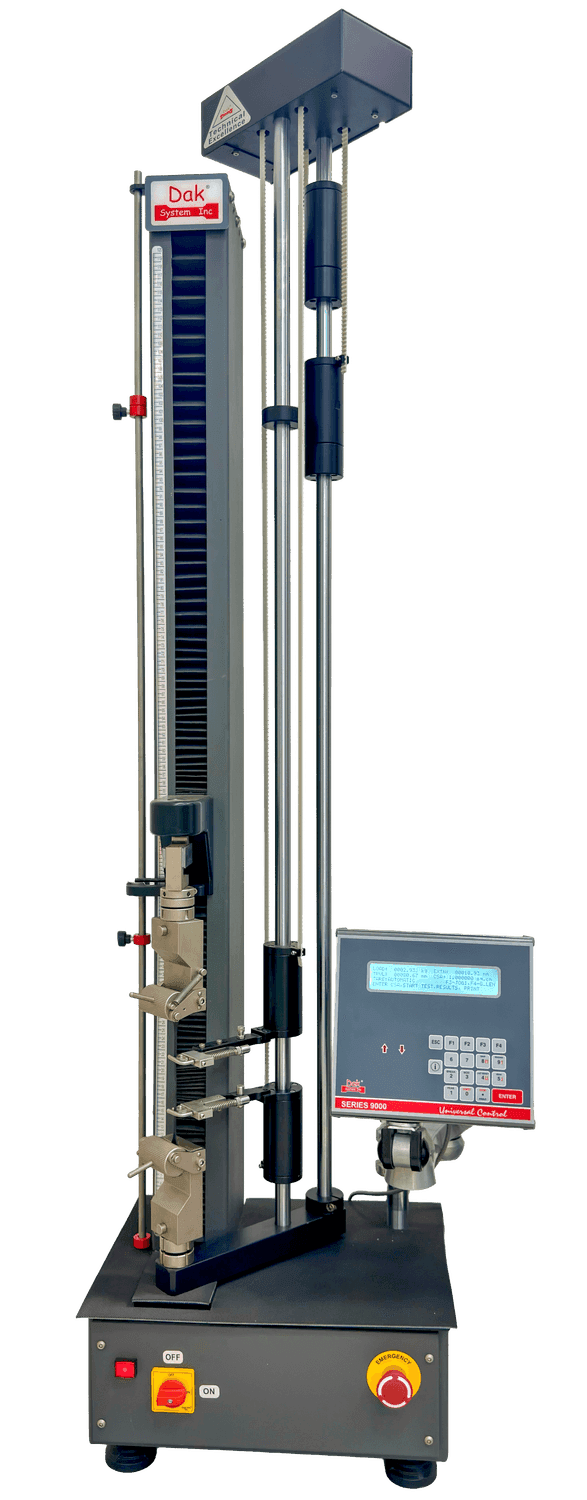
Precision for routine testing
Series 9000 Universal Testing Machine
Travel-controlled testing for established quality-control methods, with standalone Console operation or PC-connected analysis and reporting. Choose the load frame and accessories around the composite specimen and the test programme.
For repeated-load and endurance programmes, explore DAK fatigue testing systems alongside the static testing requirement.
Connect the required property to the loading arrangement
Tensile behaviour
Measure the laminate’s response along the specified loading direction. Specimen geometry, end preparation, grip alignment and strain measurement form part of the setup for strength and stiffness evaluation.
Compression behaviour
Composite compression depends on how force enters the specimen and how the test section is supported. Select the compression arrangement around the prescribed method, including combined loading where the programme calls for it.
Flexural behaviour
Bending tests connect the support span, loading arrangement and specimen dimensions to the reported response. Specify the required three-point or four-point configuration and how deflection is to be measured.
Shear and delamination
In-plane shear, interlaminar response and delamination resistance describe different aspects of a composite. Identify the property and method first so specimen preparation, loading and measurement follow the same test definition.
The details that make a test setup useful
Specimen and loading direction
Bring the material architecture, lay-up, coupon dimensions, tabs or end preparation, and intended loading direction into the enquiry. For a panel or component, include a drawing and the points through which the load is applied.
Force range and usable space
Specify the expected test loads, specimen size and required movement. The load cell’s working range and the space occupied by grips and fixtures matter alongside the frame’s rated capacity.
Holding and measurement
Plan gripping, alignment and the measurement of strain or deflection as one arrangement. DAK’s contact and video extensometry options can be considered around the required measurement, specimen access and test conditions.
Conditions and reporting
State any conditioning or test-temperature requirement and the results your team needs to compare. Include the required curves, evaluation points and specimen identification so the method and report serve the same engineering decision.
Find the method behind your composite test
Use these guides to move from the property you need to the relevant specimen and test arrangement. The composites library brings together further methods for laminates, sandwich structures, joints and specialised specimens.
Laminate tensile and compression
Follow the loading mode and the specimen defined by the test programme.
Bending and shear
Select the specified loading geometry and the property being evaluated.
Sandwich core, bond and beam
Keep core response, facing-to-core bond and sandwich-beam behaviour distinct in the test plan.
Questions to resolve before specifying the system
Can one UTM support several composite tests?
A universal testing platform can support different loading arrangements with the appropriate fixtures and measurement. Plan the complete set of methods together, including specimen access and fixture changeover, so the configuration supports the laboratory’s wider programme.
What changes between a laminate and a sandwich specimen?
The material architecture and loading path change. Testing the core, separating the facing-to-core bond and bending the complete sandwich examine different behaviour, so they require their own specimen and fixture choices.
What should an international enquiry include?
Send the test requirement, specimen information and installation country along with the quotation request. Include your installation, training and ongoing support needs so the equipment and delivery discussion can be considered together.
Specify your composite testing system
Tell us what you need to learn from the material. Our engineers can bring the frame, load cell, fixtures and measurement together around your composite testing programme.
- Material system, reinforcement and lay-up
- Specimen drawing, dimensions and loading direction
- Required test methods and properties
- Expected loads, movement and test conditions
- Reporting, workload and installation country