Testing standard

ASTM C393/D7249

ASTM C393/C393M, Standard Test Method for Core Shear Properties of Sandwich Constructions by Beam Flexure; ASTM D7249/D7249M, Standard Test Method for Facesheet Properties of Sandwich Constructions by Long Beam Flexure

Written and technically reviewed by Dak System Inc. engineeringLast reviewed

Two companion methods that bend a sandwich beam on the same fixture and differ by span. ASTM C393/C393M uses a short beam so the core shears, giving core shear strength and modulus. ASTM D7249/D7249M uses a long beam so the facesheets fail, giving facesheet compressive and tensile strengths. Current editions are C393/C393M-20 and D7249/D7249M-20.

At a glance

Test type
Flexure & bendthe specimen is bent
Published by
ASTM
Edition
C393/C393M-20

What the test does

A flat sandwich beam — two thin, stiff facesheets bonded to a thick, light core — is loaded in three- or four-point bending. The same physical arrangement is used by both documents, and the span is what separates them.

A short beam concentrates shear in the core and fails it: that is C393. A long beam generates high bending moments and low core shear, so the facesheets reach their compressive or tensile limit first: that is D7249. The standard practice is explicit about the division — facing strength is best determined in accordance with D7249/D7249M.

What it measures, and why it matters

A sandwich panel is an efficient structure precisely because it separates the jobs. The facesheets carry bending as tension and compression, the core carries shear and holds the facesheets apart, and the bond transfers load between them. Each of those can fail, and each has a test.

C393 gives core shear strength and core shear modulus, and the beam's flexural stiffness. Those are the numbers that size a floor panel, a bulkhead or a wind turbine shell against deflection and against core failure. D7249 gives the facesheet compressive and tensile strengths as developed in the actual sandwich, which is not the same as testing the facesheet material alone: in a real panel the facesheet is supported by the core, and a thin skin that would buckle on its own does not.

Permissible core forms include those with continuous bonding surfaces, such as balsa and foams, and those with discontinuous bonding surfaces, such as honeycomb.

Specimen, and the span that decides the answer

The specimen is not what separates these two methods. The span is. Choosing it wrongly produces a valid test of the wrong thing.

Specimen
A flat rectangular sandwich beam — two facesheets bonded to a core
Short beam
Concentrates shear in the core — ASTM C393
Long beam
Generates high bending moment and low core shear — ASTM D7249The standards are explicit that facing strength is best determined in accordance with D7249/D7249M.
Core forms permitted
Continuous bonding surfaces such as balsa and foams, and discontinuous such as honeycomb
Cutting
Facesheets and core intact, edges cleanPracticeA saw that tears honeycomb cell walls or crushes foam at the edge changes the core over a strip, and on a narrow beam that strip is a real fraction of the specimen.
Treat a wrong-mode failure as an invalid test
DakIf a facesheet test shears the core, adjust the span and repeat. The number obtained is real and answers a question nobody asked.

Loading, span and deflection

Loading
Three- or four-point bending
Span
Set for the failure mode wanted, from the tables in each methodSpan enters every calculation directly, so it is measured on the fixture rather than taken from the drawing.
Rate
As specified in each method; the figures sit in the purchased text
Deflection
From a deflectometer at mid-span where stiffness or core shear modulus is reportedPracticeCrosshead travel includes fixture and machine compliance, and both are significant on a compliant sandwich beam.

What each method yields

Core shear strength

From the failure load, the span and the sandwich geometry

failure load
the load at which the core shears, N
sandwich thickness
facesheet spacing, which sets the shear area

The C393 result, and the number that sizes a panel against core failure.

Core shear modulus

From the load-deflection slope, separating shear from bending deflection

Requires accurate mid-span deflection. ASTM D7250/D7250M is the practice that turns this data into flexural and shear stiffness.

Facesheet strength

From the bending moment at failure and the facesheet spacing

The D7249 result. It is the facesheet strength as developed in the sandwich, with the core supporting it — which is not the same as testing the facesheet material alone.

Why the sandwich is efficient

Facesheets carry bending; the core carries shear and holds them apart

Each job has its own failure mode and its own test. The bond that transfers load between them is tested separately, by ASTM C297.

How the tests run

  1. 01Decide which property is wanted: core shear, or facesheet strength.
  2. 02Choose the method and the span accordingly.
  3. 03Cut flat sandwich beams without tearing the core at the edges.
  4. 04Measure facesheet thickness, core thickness and beam width.
  5. 05Record core density, cell size where applicable, adhesive and cure.
  6. 06Set the loading and support noses of the specified radius, and measure the span.
  7. 07Fit a mid-span deflectometer where stiffness or modulus is required.
  8. 08Load in bending at the specified rate until failure.
  9. 09Identify the failure mode before recording anything.
  10. 10If the mode is wrong, change the span and repeat.
  11. 11Calculate the property the method defines.

Grips and fixtures for this method

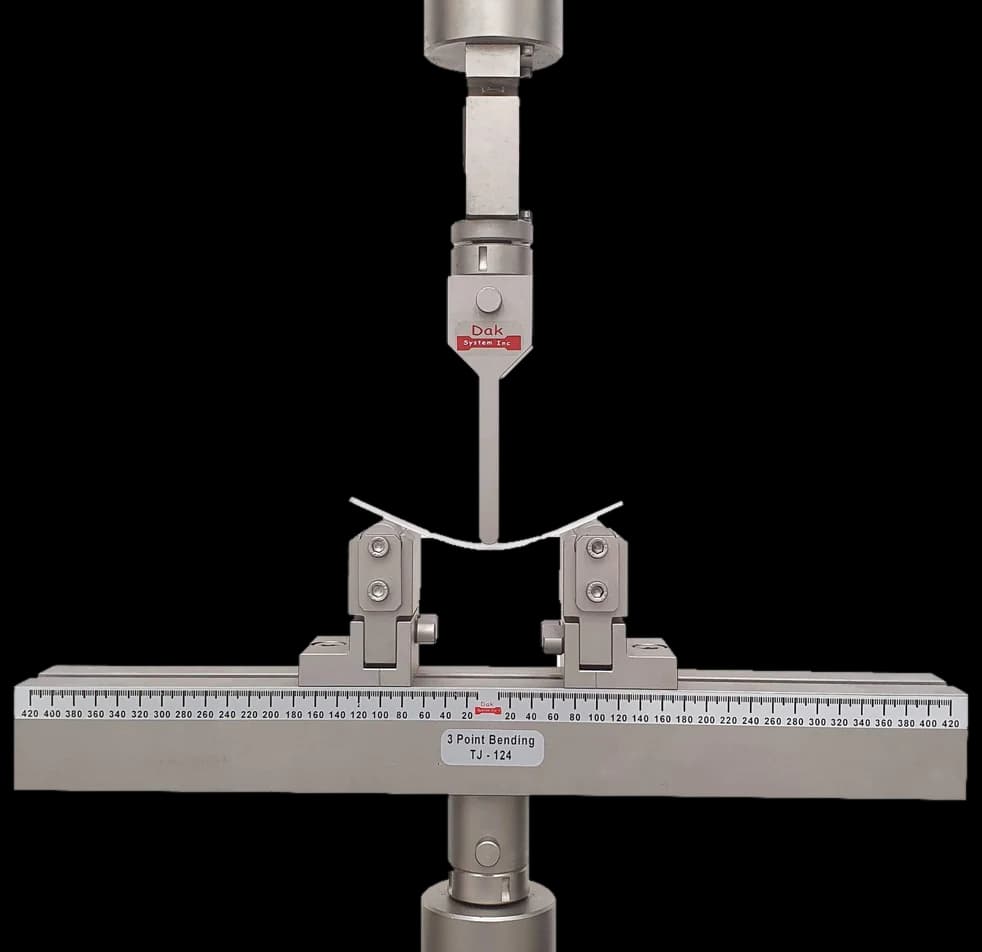
Three point bending fixture with an adjustable span and a graduated beam
Adjustable spanTJ-124

Three Point Bend Fixture

The short-span configuration for core shear. Noses have to be wide enough not to indent the facesheet into a soft core — local crushing at the load point is a common invalid failure and is cured by wider noses or pads, not by ignoring it.

Specifications
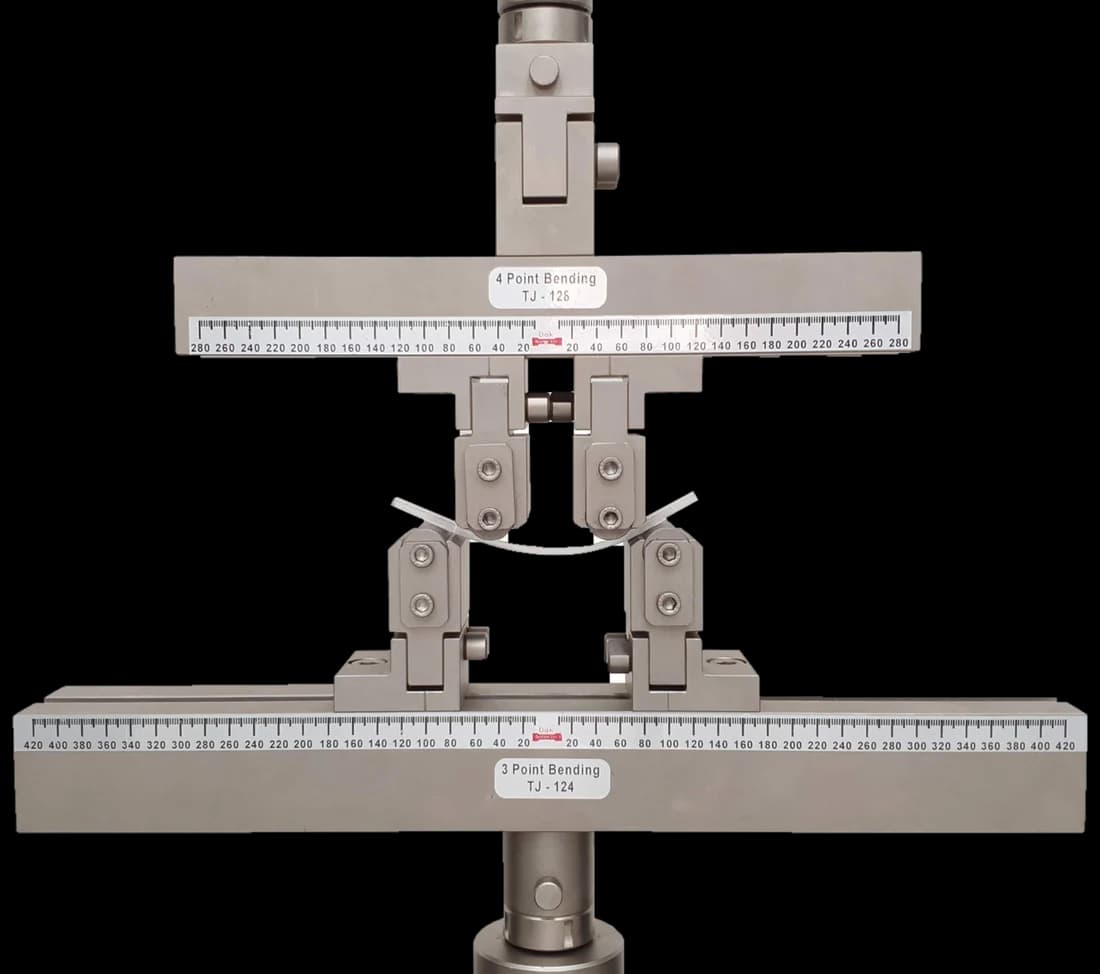
Four point bending fixture with two inner and two outer supports
Uniform momentTJ-165

Four Point Bend Fixture

The long-span configuration for facesheet properties, spreading the load over two noses on each side so the moment is constant between the inner ones. Span accuracy matters because span enters every calculation directly.

Specifications
Self-identifying

Load Cells

A laboratory-size sandwich beam fails in the hundreds of newtons to low kilonewtons. A cell sized for the specimen resolves both the failure load and the early slope the stiffness calculation needs.

Specifications

What the report has to contain

  • Reference to ASTM C393/C393M or D7249/D7249M, and the edition
  • Facesheet material, lay-up and thickness
  • Core type, density and cell size where applicable
  • Adhesive and cure schedule
  • Beam length, width and total thickness
  • Span, and three- or four-point configuration
  • Loading and support nose radii
  • Loading rate
  • Failure load and failure mode for every specimen
  • Core shear strength and modulus, or facesheet strength, as applicable
  • How deflection was measured

What the machine must be capable of

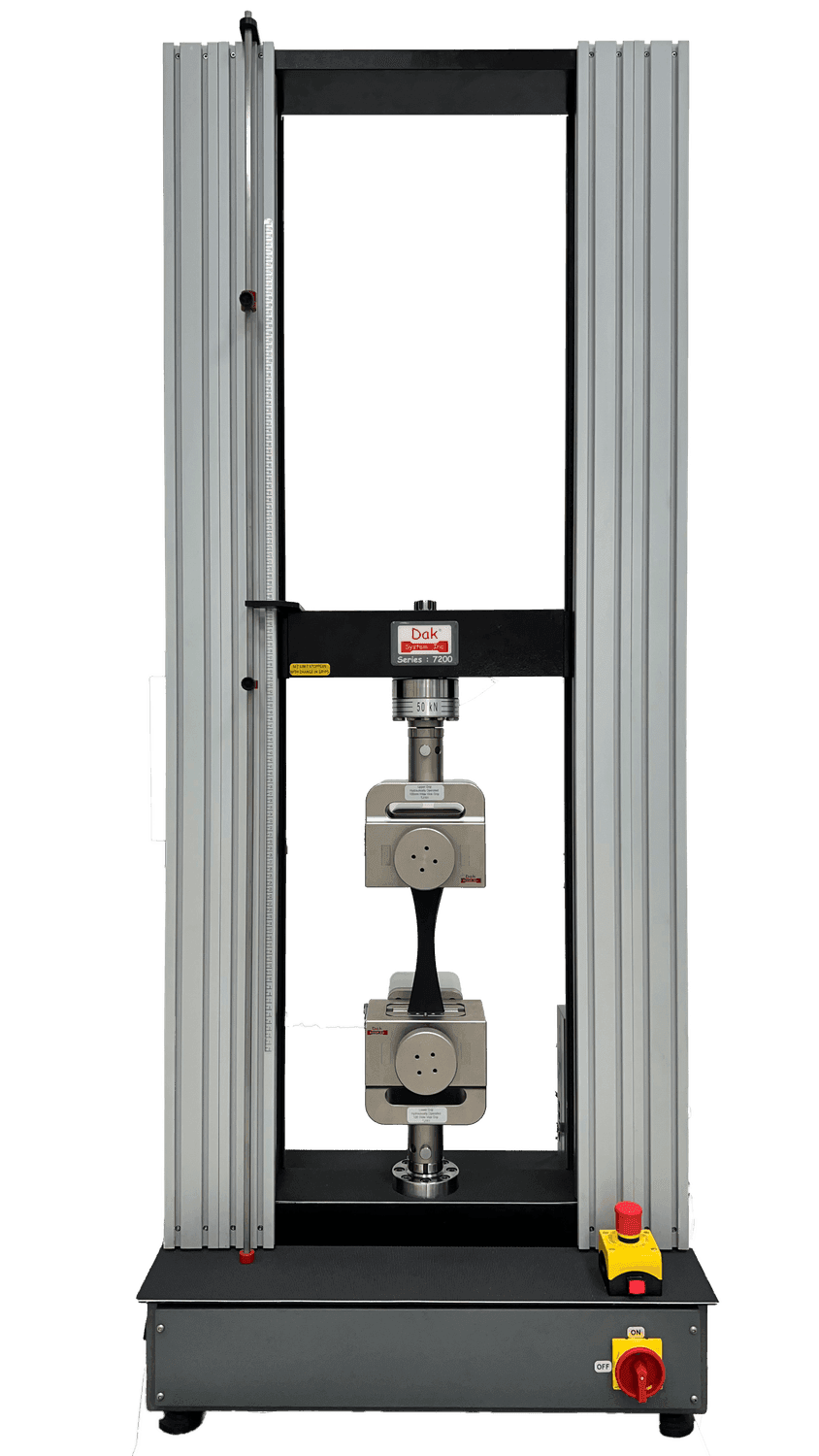
Forces are moderate, typically in the hundreds of newtons to low kilonewtons for a laboratory-size beam, so a 5 to 50 kN frame with a load cell chosen for the specimen and force accuracy to ASTM E4 is appropriate.

The fixture matters more than the frame. Loading and support noses of the specified radius are needed, wide enough not to crush the facesheet locally — indentation into a soft core at the load point is a common invalid failure. Spans must be set accurately, because span enters every calculation directly.

Deflection is measured for stiffness and core shear modulus, and for those it should come from a deflectometer at mid-span rather than from crosshead travel, which includes fixture and machine compliance.

What goes wrong in practice

Failure in the wrong mode is the characteristic problem and it is a specimen-design fault rather than a testing fault. Local crushing under the loading noses is the second, and it is cured by wider noses or by pads rather than by ignoring it. Edge-damaged core from a poor cut reads as a weak core. And taking deflection from the crosshead gives a flexural stiffness and a core shear modulus that are both low.

The sandwich construction test set

Five methods between them cover a sandwich panel. Each loads a different part of the structure.

Core shear (C393)Facesheet (D7249)Edgewise compression (C364)Flatwise compression (C365)Flatwise tension (C297)
LoadsThe core in shearThe facesheets in bendingThe panel on its edgeThe core through the thicknessThe bond through the thickness
SpecimenA short beamA long beamA short panelA block of sandwichA bonded block
FailureCore shearFacesheet compression or tensionFacesheet buckling or crushingCore crushingBond or core tension
AnswersWill the core holdHow strong is the skin in situWill the panel buckleWill the core crushIs the bond sound

A sandwich panel has at least five ways to fail and no single test covers more than one of them. A specification quoting only core shear has not qualified the panel.

Questions we are asked about this test

What are ASTM C393 and ASTM D7249?

They are companion methods that bend a flat sandwich beam. ASTM C393/C393M determines core shear properties of sandwich constructions by beam flexure; ASTM D7249/D7249M determines facesheet properties by long beam flexure. The physical arrangement is the same and the span is what differs. Current editions are C393/C393M-20 and D7249/D7249M-20, the latter retitled from Facing Properties to Facesheet Properties at that revision.

Why does the span decide which property is measured?

Because span controls the ratio of bending moment to shear force in the beam. A short span produces high shear and modest moment, so the core shears first. A long span produces a high moment and low shear, so the facesheets reach their compressive or tensile limit first. The standards are explicit that facing strength is best determined by D7249/D7249M, which is the long-beam document.

What happens if the specimen fails in the wrong mode?

The test is invalid and the span needs changing. A facesheet test that shears the core has produced a real number about the core, not about the skin, and recording it against a facesheet requirement is a reporting error. In practice a first specimen is often run to find out which way a given sandwich goes, and the span is then adjusted before the batch.

Why is facesheet strength in a sandwich different from facesheet strength on its own?

Because the core supports it. A thin skin tested alone in compression buckles at a load well below its material strength; bonded to a core it cannot buckle in the same way, so it develops much more of that strength. D7249 measures what the facesheet actually achieves in the structure, which is the number a designer needs, rather than the property of the sheet material in isolation.

What core types are covered?

Both continuous and discontinuous bonding surfaces. Balsa and foam cores present a continuous surface to the adhesive; honeycomb presents a discontinuous one, bonding only along the cell walls. Both are permissible, and the distinction matters mostly in specimen preparation, because honeycomb is easy to damage at a cut edge in a way that foam is not.

What is the commonest handling error?

Edge damage from cutting. A saw that tears honeycomb cell walls or crushes foam along the cut leaves a strip of degraded core down each side of the beam, and on a narrow specimen that strip is a meaningful share of the shear area. The result reads as a weak core. Cutting with the right blade and speed for the core, and inspecting the edges before testing, is the whole of the fix.

Why should deflection not be taken from crosshead travel?

Because a sandwich beam is compliant and the fixture is not rigid, so a large part of the crosshead movement is fixture bedding and machine compliance rather than specimen deflection. Core shear modulus and flexural stiffness both come from the load-deflection slope, so both come out low if the deflection includes the machine. A deflectometer at mid-span measures the beam, and ASTM D7250/D7250M is the practice for turning that data into stiffness values.

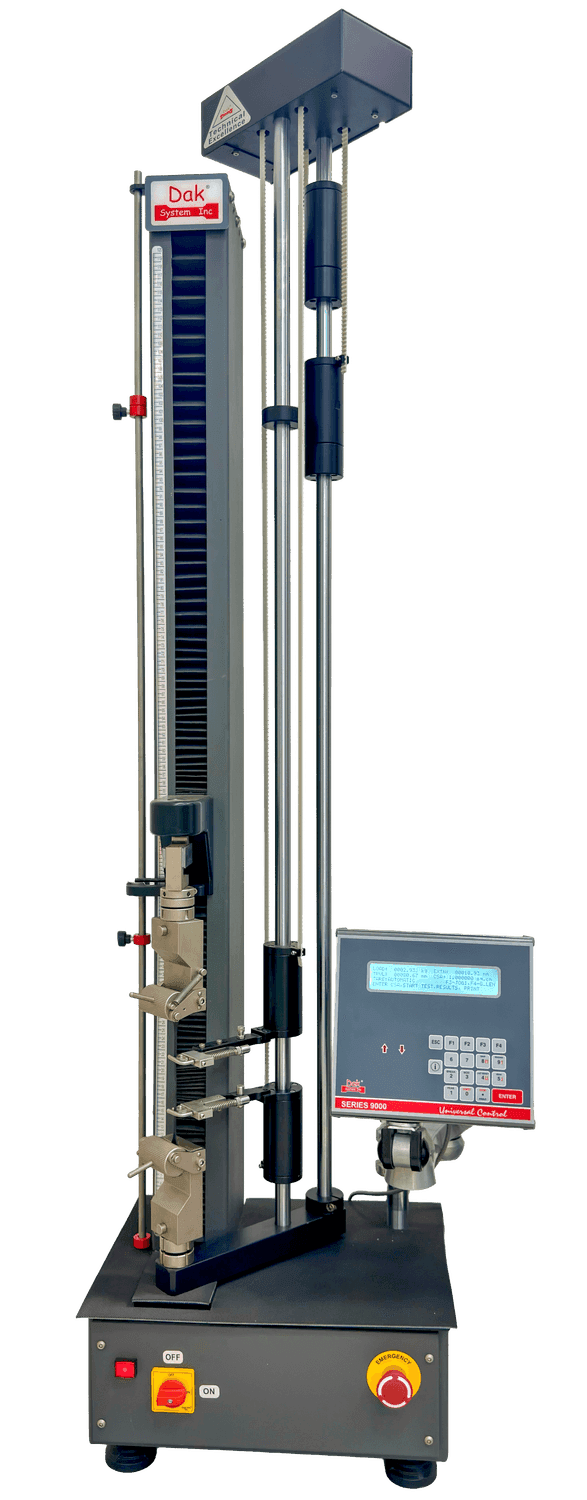
Running ASTM C393/D7249 on the Series 7200 and Series 9000

Dak verifies against whichever standard the method names, and where a class applies our frames sit a class tighter than it asks.

The method asks forDak supplies
CapacityModerate — hundreds of newtons to low kN for a laboratory-size beamLoad cells from 1 kg to 60 ton on the Series 7200, and 0.5 to 100 kN on the Series 9000
Force accuracyASTM E4Verified to ASTM E4, and to ISO 7500-1 Class 0.5
Strain measurementAn extensometer of the class the method specifiesCertified to ISO 9513 Class 1 and ASTM E83 non-contact video, clip-on and high-elongation
GrippingThree- or four-point bend fixture with loading and support noses of the specified radius, wide enough not to indent the facesheetOur bend fixtures, built to the specimen
EnvironmentStandard laboratory atmosphere, with moisture conditioning where the test plan requires it3009 series chambers, −150 °C to +400 °C — temperature only

This page describes the method as practised. The governing text is the current edition from the issuing body. Tell us what you are testing and we will answer with the machine, the fixture and a quotation.

Materials tested to it

The test it standardises

Other standards explained