

Adhesion and Peel Testing Machines for Tapes, Laminates and Bonded Products
Understand how a bonded product responds when its layers or joint are pulled apart. DAK universal testing machines support peel, adhesion and shear testing, with specimen holding, loading geometry and measurement selected around the product and the result you need.
Start with the bonded product
Pressure-sensitive tapes and labels
Peel testing measures the force required to separate a tape from a specified surface. The backing, substrate and peel angle shape the measurement. Record how the specimen was applied and conditioned so comparisons relate to a defined test arrangement.
Flexible laminates and bonded layers
The flexibility of each layer helps determine the peel arrangement. Two flexible adherends can be assessed using T-peel, while a flexible layer bonded to a rigid substrate calls for a different setup. Identify both layers before choosing the method.
Bonded joints and assembled products
Overlapping joints can be assessed in lap-shear; other bonded arrangements use tensile loading. Joint geometry, bonded area and loading direction determine what the result describes. Select the test to answer the product question, rather than using one generic bond-strength number.
Choose the peel geometry before choosing the fixture
Peel angle and specimen support define the test arrangement. These three common geometries answer related questions, but their results should be identified by the method and setup used.
90-degree peel
A flexible layer is drawn away approximately perpendicular to the bonded surface. The support arrangement maintains the intended angle as separation progresses. This brings the specimen support and its movement into the fixture-selection discussion.
180-degree peel
The flexible layer is folded back and drawn away along the bonded surface. Its ability to bend, the available peel length and secure gripping of the free end are important parts of the setup.
T-peel
Two flexible adherends form opposing arms and are pulled apart as the bond separates. Both arms must be held securely, with sufficient space and travel for the required peel length.
Specify the setup and the information behind the result
Gripping and specimen alignment
Hold flexible ends securely while protecting the part of the specimen being assessed. Bonded-joint tests require an arrangement suited to the joint geometry and loading direction. DAK's range includes vice and pneumatic grips, variable-angle peel grips and shear fixtures.
Working force and test travel
Consider the expected peel or joint force, not just the maximum capacity of the frame. Match the load cell to the working range and allow travel for the specimen, grip arrangement and required separation length.
Specimen preparation and test conditions
Record the substrates, adhesive, specimen dimensions, bond preparation and conditioning. Define the test rate and geometry with the required method. These details make a comparison between batches or bonding processes more useful than an isolated force reading.
Results and failure observations
Report the force or strength measure specified by the method, with the evaluation region and specimen dimensions where required. Record whether separation occurs at an interface, within the adhesive or in a substrate. A peak force, an averaged peel result and an apparent lap-shear strength describe different aspects of the test.
Select the DAK UTM for your testing programme
Bring the specimen, test geometry and reporting requirement into the machine selection. Both UTM series provide routes into DAK's published peel and adhesion capabilities; the choice is shaped by your laboratory's wider testing programme.
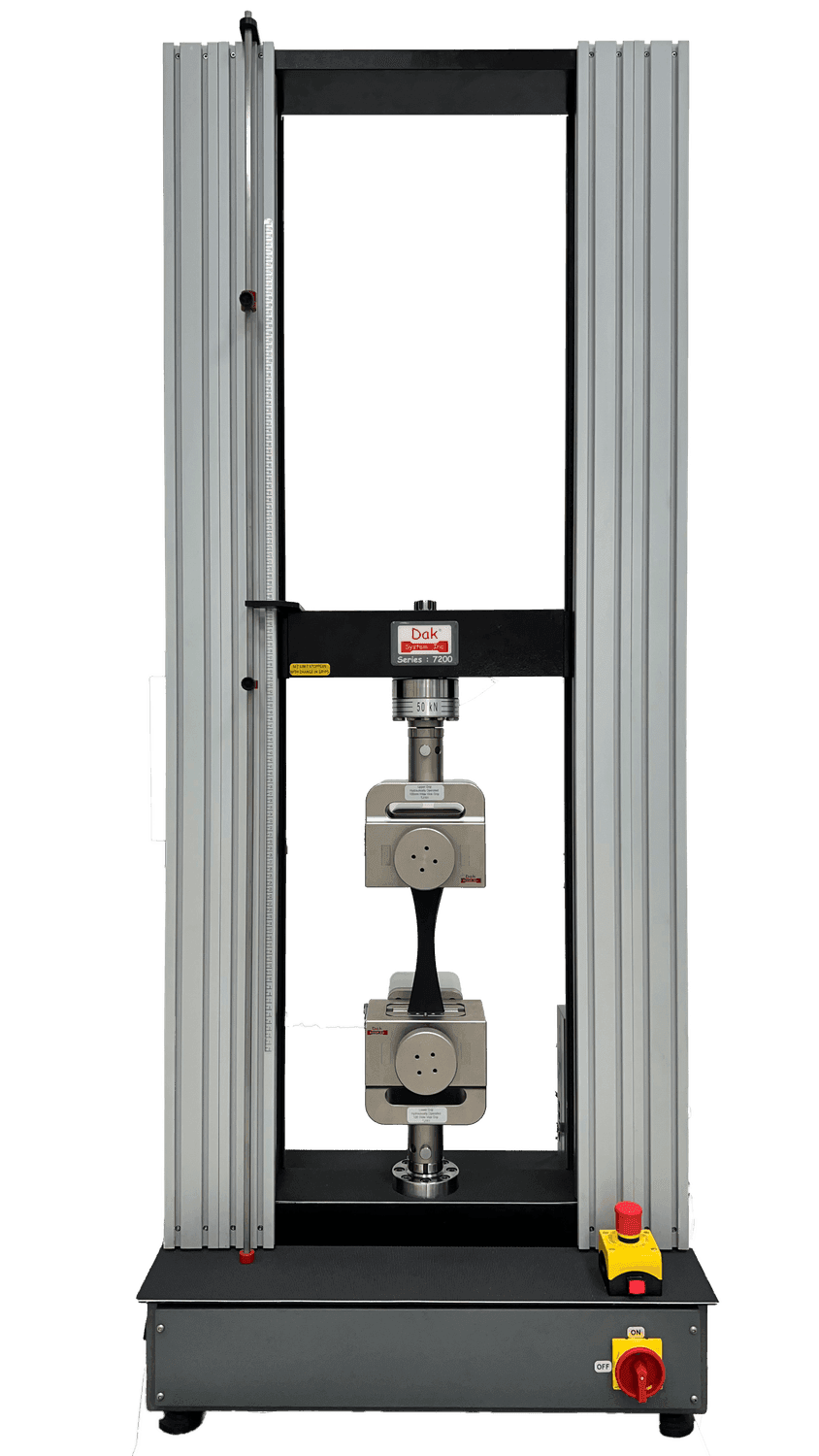
Series 7200 - DAK's flagship UTM
DAK's flagship UTM combines flexible test programming with analysis that includes peel and tear for adhesion. Follow Me mode, Safe Jog and sample protection support setup; live displays and synchronised video help connect the observed specimen behaviour with the test record.
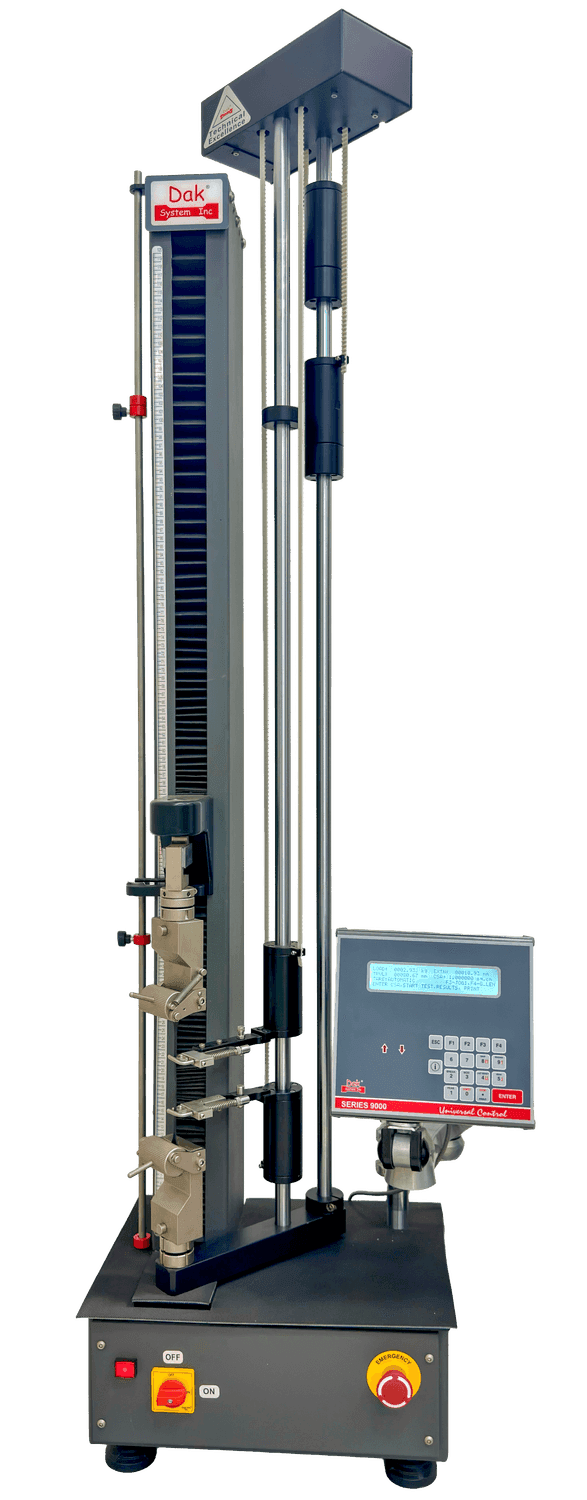
Series 9000 - Routine quality control
Use standalone console operation or PC-based testing, analysis and reporting for routine mechanical testing. The published Series 9000 range includes peel and adhesion applications, with gripping and measurement choices selected around the specimen and method.
Find the method that matches your bond
Use these guides as routes into the existing library. Choose the method around the materials and specimen arrangement; these are selected entry points, not a list of every bond test.
Pressure-sensitive tape
ASTM D3330 covers peel adhesion measurements for pressure-sensitive tape.
Peeling a flexible bonded layer
ASTM D903 and ISO 8510-2 provide peel-test routes for appropriate bonded specimens. Each retains its own specimen and test requirements.
Bonded lap joints
ASTM D1002 addresses apparent shear strength of metal-to-metal single-lap joints. ISO 4587 provides a tensile lap-shear route for rigid-to-rigid bonded assemblies.
Working with packaging laminates or seals?
For tile adhesives, building sealants, mortars and grouts, explore DAK construction-chemical testing systems and their fixture options.
Discuss your adhesion and bond testing requirements
Tell DAK Engineering what is bonded to what, how the product is expected to separate, and which result your laboratory needs. A specimen sketch or dimensions helps communicate the joint, flexible layers and available gripping length.
Include the specified method or peel angle, anticipated force and travel where known, preparation or conditioning requirements and reporting needs. Add your laboratory location and workload to help define the complete system quotation.