Tile adhesives
Compare tensile and shear adhesion across the required conditioning groups, then assess transverse deformation where your product specification calls for it.

One DAK universal testing machine for bond, tensile, shear, peel, flexural, deformation and compression testing.
Bring formulation development and production quality control onto one testing platform. Configure a DAK UTM for tile adhesives, sealants, repair mortars, grouts and coatings, with interchangeable fixtures and measurement selected around the results your laboratory needs.
Tile adhesives · Sealants · Cement mortars · Grouts · Bonding systems · Coatings
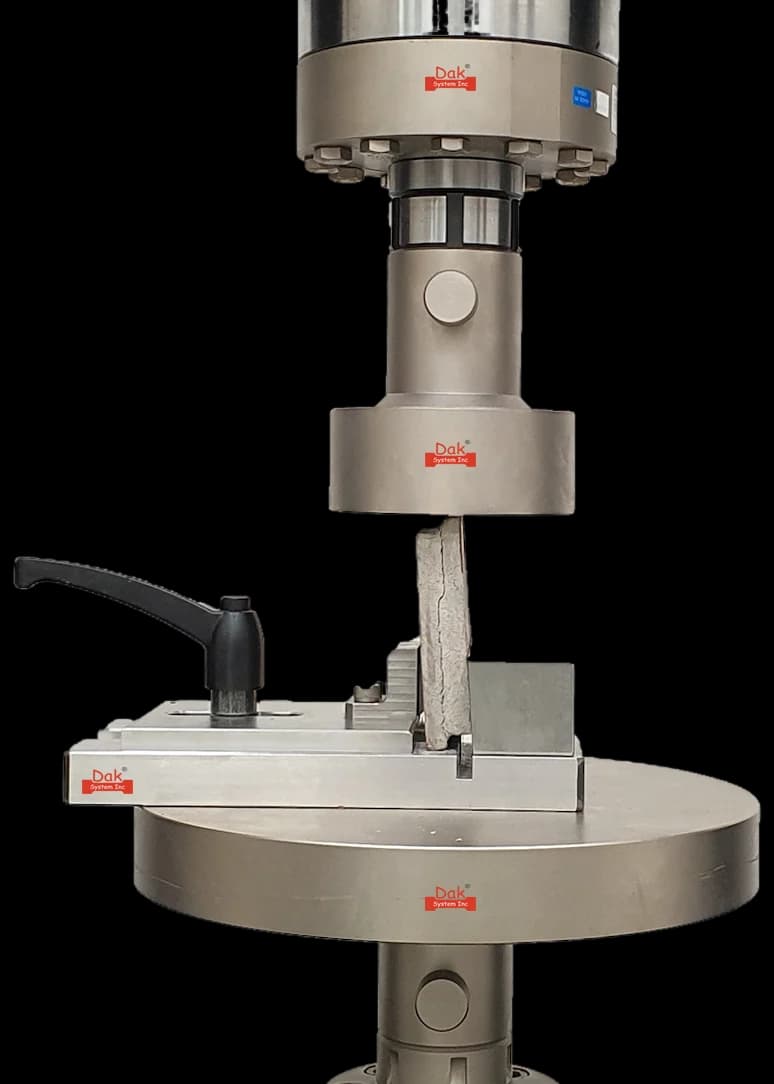
Compare tensile and shear adhesion across the required conditioning groups, then assess transverse deformation where your product specification calls for it.
Measure strength development in cured specimens and the performance of bonded assemblies. Match the method to cementitious or resin-based materials.
Study how a sealant stretches, holds to its substrate and accommodates joint movement. Tensile, peel and movement tests answer different performance questions.
Investigate the tensile behaviour of suitable cured films and how a coating responds when its substrate opens across a crack.
A multi-test programme needs more than a maximum-load figure. Plan the lowest forces you need to measure, the highest test load, specimen clearance, control mode and fixture changes together.
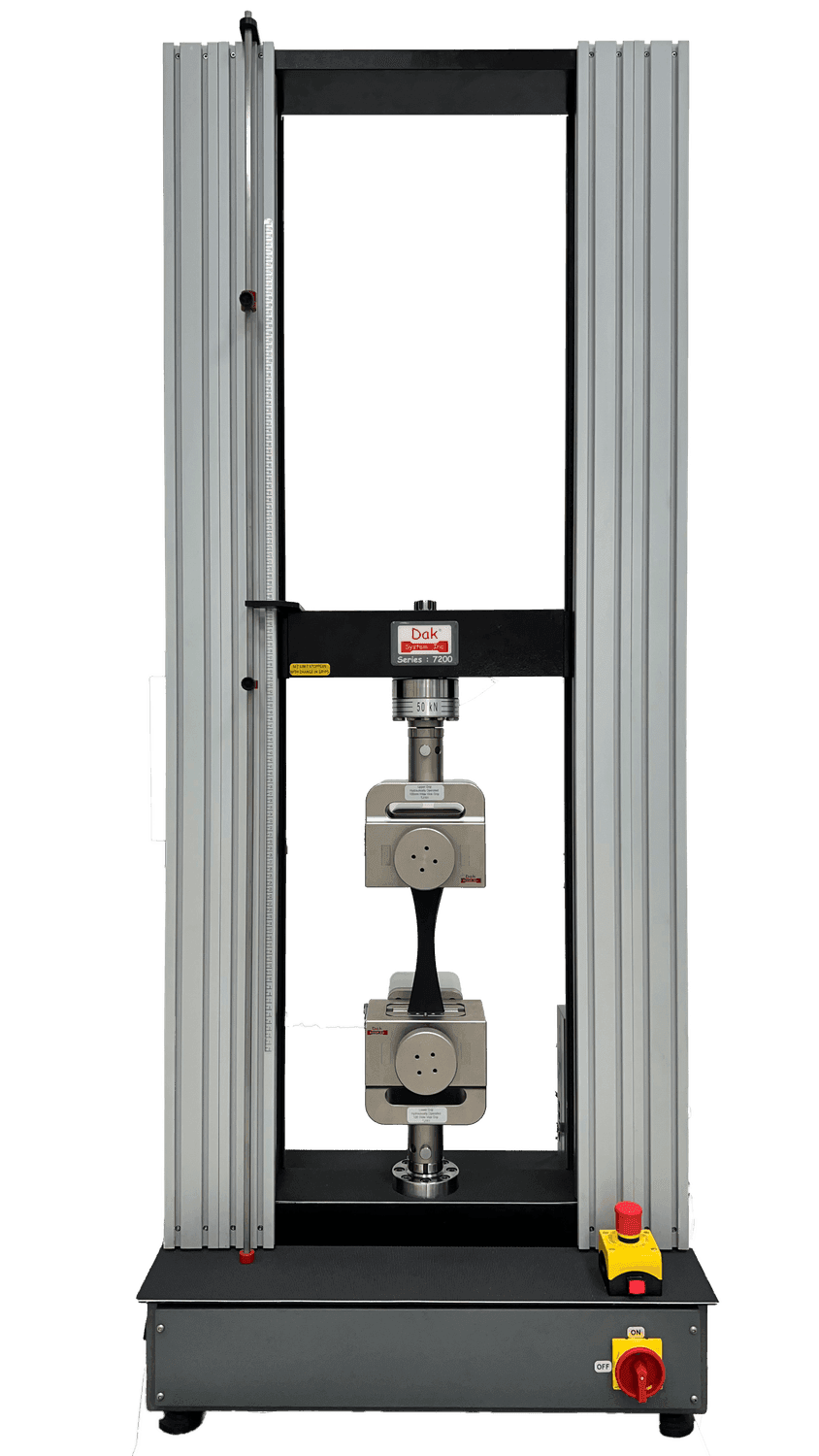
For laboratories combining several materials and methods, start with Series 7200. Position, load, stress and strain control support varied test programmes, while Follow Me, Safe Jog and sample protection support specimen setup. Select the load cells, working space and fixtures around the complete programme.
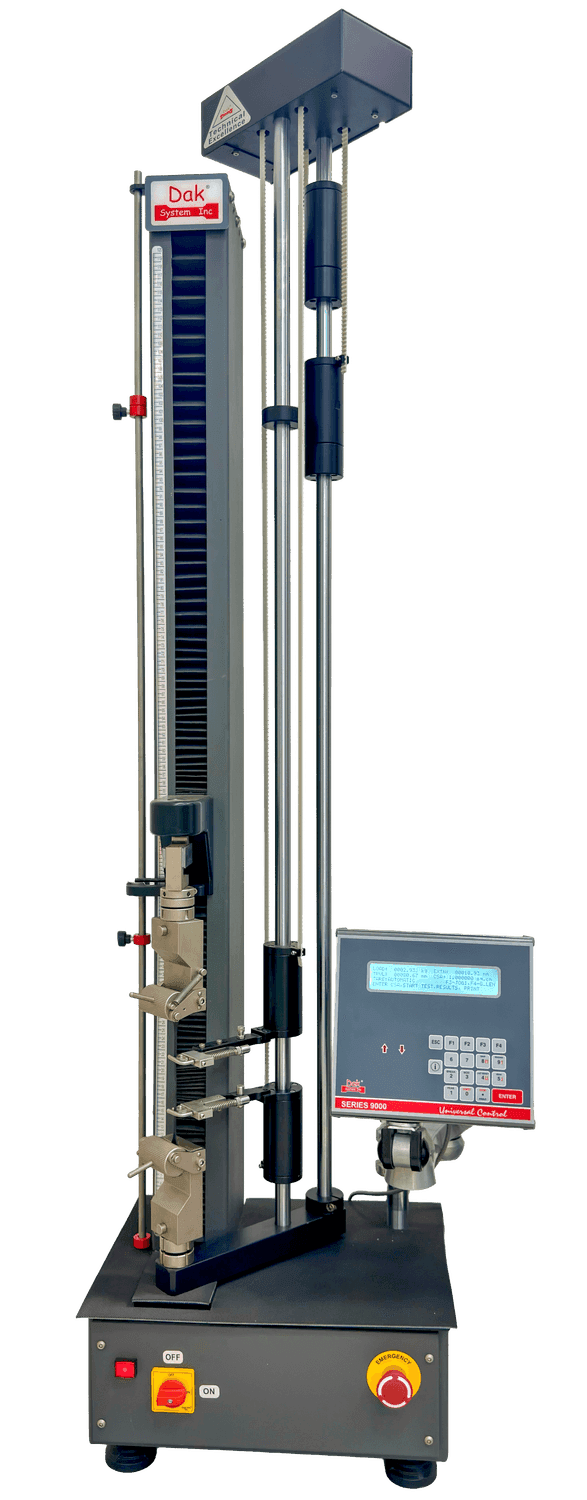
For established travel-controlled methods, Series 9000 combines standalone Console operation with a PC-connected testing and reporting workflow. Match the required control mode, working force range and specimen arrangement to the methods you need to run.
Start with the material and the way it is loaded. A bond pulled apart, a sealant peeled from a surface and a mortar beam bent to failure answer different questions, even when they are tested on the same UTM.
How strongly does the adhesive hold the tile to its substrate?
Load the bonded tile perpendicular to the substrate through a pull-head. Measure the resistance to separation and record where the assembly fails. Compare results for the relevant conditioning regimes, rather than treating a dry test as the whole performance picture.
On the UTMPull-head, substrate support and alignment or positioning arrangement.
ISO 13007-2 · EN 12004-2 · IS 15477
How does the bonded assembly resist sliding loads?
The fixture transfers load across the bond in the direction required by the selected method. A compression-loaded tile arrangement and a tensile-loaded bonded joint use different holding geometries; choosing the correct load path keeps the result relevant to the application.
On the UTMTile shear or tensile-shear fixture selected for the bonded assembly.
ISO 13007-2 · EN 12004-2 · IS 15477, where applicable to the adhesive and test
How does an inclined bond carry compression and shear together?
Load an assembly containing an inclined bonded interface to assess its resistance under combined loading. The specimen geometry defines the method, so a tile slant-shear arrangement and a concrete bonding-system specimen are selected separately.
On the UTMSlant-shear arrangement or compression tooling matched to the specimen.
ASTM C882/C882M for bonding systems used with concrete
How much tensile stress can the cured material withstand?
A moulded briquette is held by its shaped ends and pulled along its axis. The test measures the material itself, rather than adhesion to a separate substrate, helping laboratories compare cured formulations and strength development.
On the UTMProfiled briquette grips and an appropriate force-measurement range.
ASTM C307 for chemical-resistant mortar, grout and monolithic surfacing materials
How does a moulded beam or prism resist bending?
Support the specimen over a defined span and apply a bending load. Flexural strength helps compare resistance to bending failure; methods that also determine modulus require the corresponding deflection measurement. Choose the method around the binder and material, not just the shape of the mould.
On the UTMBending fixture with the required supports, loading nose and measurement.
ASTM C348 · ASTM C580 · ISO 13007-4, according to material
How far can a tile-adhesive specimen bend under the prescribed test?
Measure the deformation of a prepared adhesive specimen using the relevant bending arrangement. This is a different result from flexural strength: the laboratory is assessing deformation behaviour, not simply the highest breaking load.
On the UTMDeformation fixture and displacement measurement suited to the method.
ISO 13007-2 · EN 12004-2 · IS 15477
Does the sealant hold to its substrate and accommodate movement?
Peel testing examines the bond between a cured sealant and its substrate. Joint-movement testing examines adhesion and cohesion as the joint opens and closes. Keep these as distinct test programmes, with the conditioning and movement sequence belonging to the selected method.
On the UTMPeel or joint-movement holding arrangement; conditioning equipment as required.
ASTM C794 for peel · ASTM C719 for cyclic joint movement
How does the cured material respond to compressive loading?
Load the specimen between the specified bearing surfaces. Cement mortar, chemical-resistant grout and a rigid resin system can require different methods, specimen preparation and measurement. Select capacity from the expected force and specimen area, together with the complete tooling arrangement.
On the UTMCompression tooling with bearing surfaces and alignment suited to the method.
ASTM C109/C109M · ASTM C579 · ASTM D695, according to material
How does the joint respond as the sealant stretches?
Pull a cured sealant joint between its bonded substrates and examine the force and extension response. This helps compare how formulations accommodate movement and where the joint fails. Keep this result separate from adhesion-in-peel and cyclic movement performance.
On the UTMSubstrate holders aligned with the loading axis, with the required force and extension measurement.
ISO 8339 for building-sealant tensile properties; ASTM C1135 for structural-sealant tensile adhesion.
Can the coating deform with its supporting surface?
A tensile test examines a suitable cured film as it stretches. A crack-bridging test examines a coating on a prepared substrate as a gap opens beneath it. These are different specimen arrangements and different results. DAK testing systems support coating deformation and crack-bridging applications through tooling and measurement selected for the test.
On the UTMFilm grips or a substrate-opening fixture, with the required displacement measurement and test environment.
Select the method around the coating, substrate and loading programme; do not substitute film elongation for crack-bridging performance.
DAK’s fixture range brings different specimen geometries and loading arrangements to the same testing platform. Explore the actual products below, then discuss the complete set for your laboratory.
TJ-521
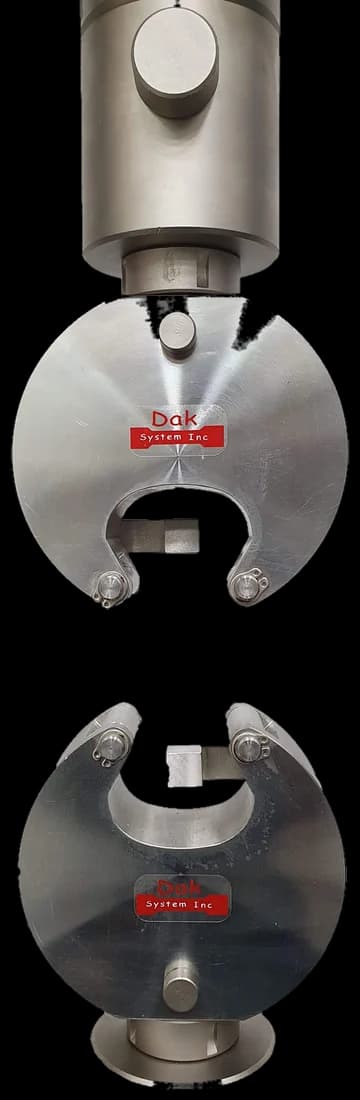
Profiled seats hold the shaped ends of a moulded briquette for axial tensile loading.
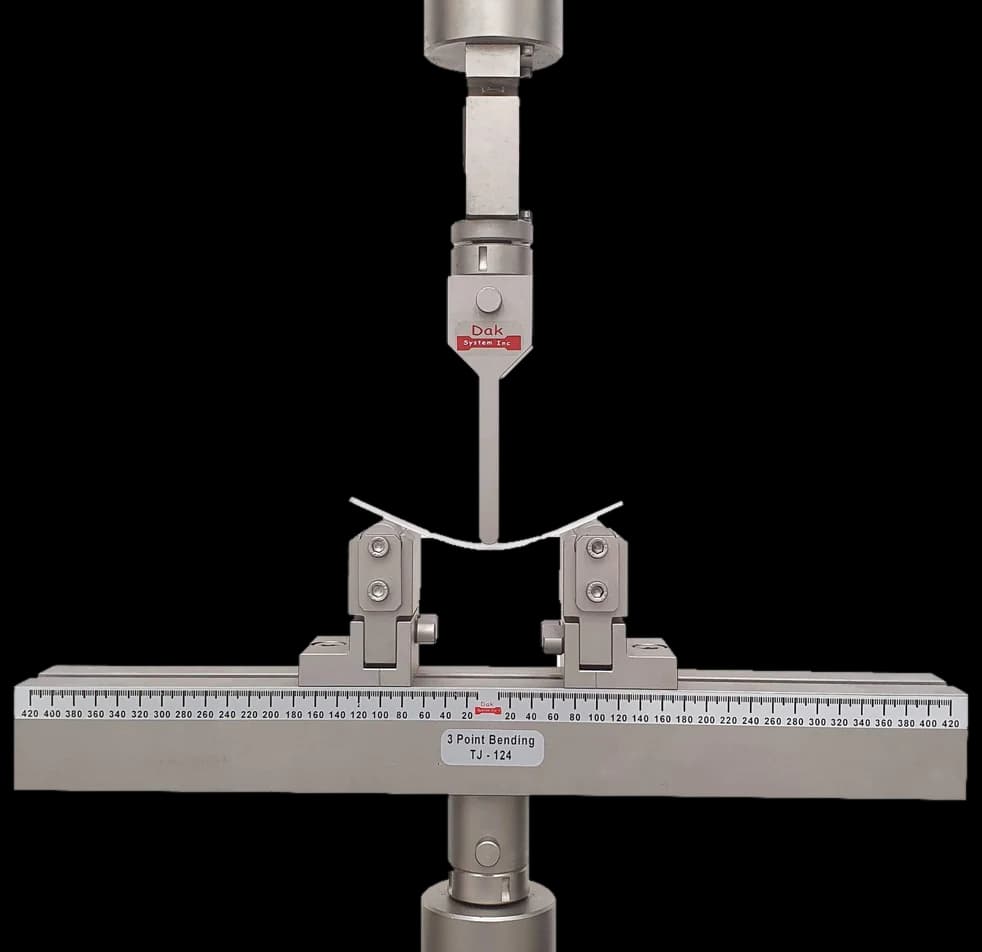
TJ-124
An adjustable support arrangement for bending specimens, configured to the required span and contact geometry.
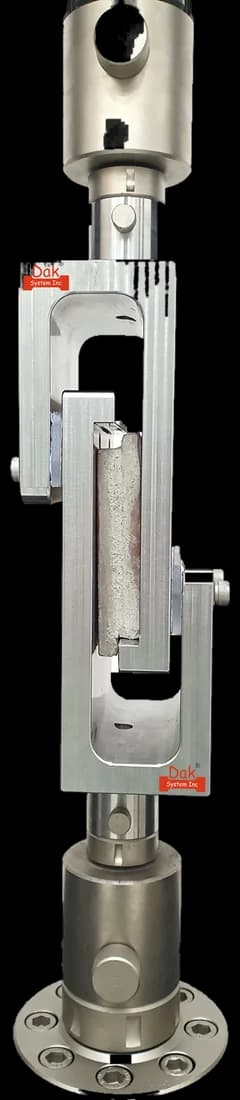
TJ-311
A tension-loaded arrangement for transferring force across a bonded interface.
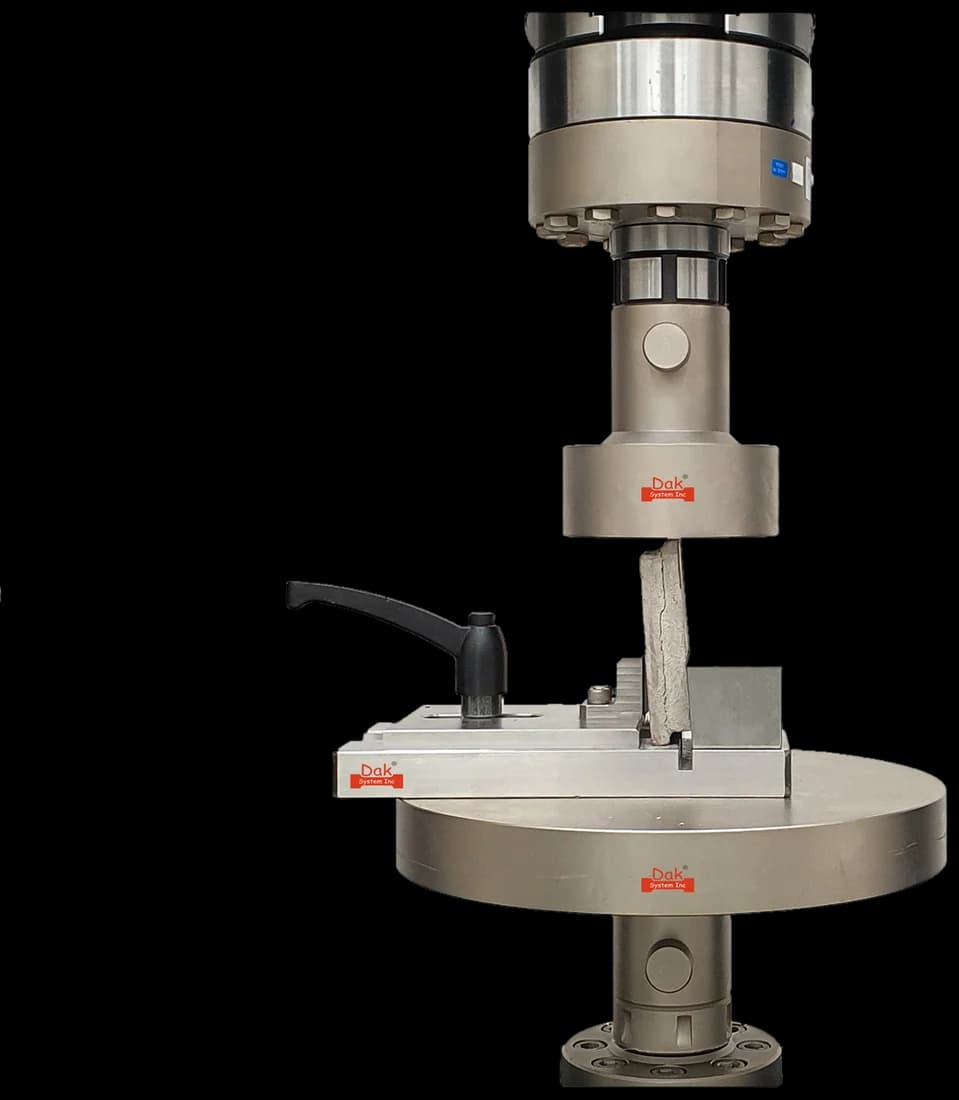
An inclined seating arrangement for testing a bonded joint under combined compression and shear.
TJ-532
A compression-loaded fixture for a tile-bond assembly, selected around the required specimen geometry.
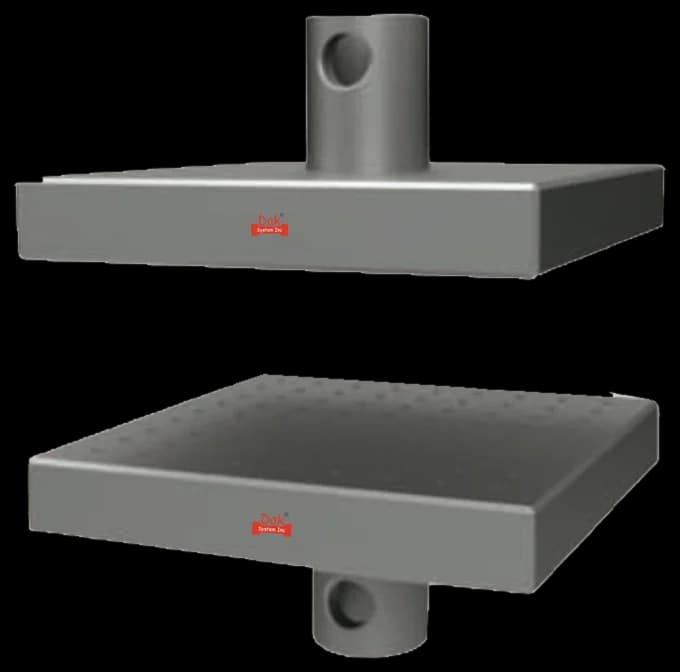
TJ-125
Compression tooling selected around the specimen, bearing arrangement and required test capacity.
Complete the programme with the pull-head and substrate arrangement for tensile adhesion, the holding geometry for sealant peel, and the fixture and measurement for deformation testing. Include specimen drawings or photographs when discussing the setup with DAK.
The same UTM follows a different setup for each material question. Build the programme around the required method, then keep the specimen, fixture and reporting connected.
Identify the formulation, substrate, curing age and conditioning group. Prepare the moulded specimen or bonded assembly for the selected method.
Install the tensile, shear, bending, peel or compression arrangement. Set the specimen square to the intended load path and choose the working measurement range.
Apply the required force or displacement programme. Capture the force response and the deformation or other measurements needed for the result.
Combine the calculated result with specimen identity, conditioning and failure observations. Compare equivalent groups to support formulation and quality decisions.
A tile releasing at the interface, a sealant tearing within its body and a substrate breaking are different outcomes. Record the failure location alongside the measured strength to understand what limited the assembly.
Curing age, temperature, water exposure and other required conditioning affect how results are interpreted. Compare like-for-like specimens and retain the identity of each conditioning group.
Strength, deflection and modulus do not mean the same thing. Select the required force and displacement measurement, and use specimen-level measurement where the method calls for it rather than treating crosshead travel as a universal substitute.
Look at repeat results and their spread, together with the force curve and failure observations. A single peak value cannot explain batch consistency or isolate specimen-preparation effects.
Use this map to connect a test requirement to the relevant material and setup. The standard families below serve different purposes: some define product requirements, while others specify test methods.
| Standard | Material | What the test addresses |
|---|---|---|
| ASTM C348 | Hydraulic-cement mortar | Flexural strengthBending of mortar prisms; not a tensile adhesion method. |
| ASTM C580 | Chemical-resistant mortars, grouts, surfacings and polymer concrete | Flexural strength and modulusA bending method for the chemical-resistant materials within its scope. |
| ASTM C307 | Chemical-resistant mortar, grout and monolithic surfacing materials | Briquette tensile strengthMeasures a moulded material specimen rather than a bonded tile assembly. |
| ISO 13007 | Tile adhesives and grouts | Adhesive and grout requirements and testingPart 1: adhesive requirements. Part 2: adhesive test methods. Part 3: grout requirements. Part 4: grout test methods, including flexural and compressive strength. |
| EN 12004 | Ceramic tile adhesives | Adhesive requirements and test methodsPart 1 covers requirements and classification; Part 2 contains test methods, including tensile adhesion, shear adhesion and transverse deformation. |
| IS 15477 | Adhesives for ceramic, mosaic and stone tiles | Tile-adhesive performanceRelevant testing includes tensile adhesion, shear adhesion and deformability, according to the product and applicable requirements. |
| ASTM C719 | Elastomeric building-joint sealants | Adhesion and cohesion under cyclic movementJoint movement combined with water and temperature conditioning; distinct from a single pull-to-failure test. |
| BS 4254 · Legacy reference | Two-part polysulphide-based sealants | Historical product specificationA withdrawn specification that may still appear in older laboratory requirements. Its replacement is BS EN ISO 11600; retain the specified edition when identifying a legacy programme. |
| ASTM C794 | Elastomeric joint sealants | Adhesion-in-peelAssesses the cured sealant’s bond to a substrate under peel loading. |
| ASTM D695 | Rigid plastics and suitable rigid resin systems | Compressive propertiesRelevant to applicable polymer materials, not a general cement-mortar compression method. |
| ASTM C109/C109M | Hydraulic-cement mortar | Compressive strengthUses mortar cube specimens; separate from flexural strength and bond testing. |
| ASTM C579 | Chemical-resistant mortars, grouts, surfacings and polymer concrete | Compressive strengthAn additional relevant method for chemical-resistant construction materials. |
| ASTM C882/C882M | Bonding systems used with concrete | Bond strength by slant shearAn additional relevant method with a specific concrete-bond specimen; not interchangeable with every tile shear arrangement. |
| ISO 8339 | Building-joint sealants | Tensile properties to breakA tensile route for the cured joint, distinct from peel and cyclic movement. |
| ASTM C1135 | Structural sealants | Tensile adhesion propertiesSelected around the structural-sealant specimen and substrate arrangement. |
This guide connects applications to testing equipment. Use the specified edition of the applicable standard for specimen preparation, conditioning, test settings and reporting requirements.
Yes. DAK UTMs can serve a multi-test laboratory by changing the grips, fixtures, load cell and test programme to suit the specimen. Plan the complete range at the outset, including working space and control modes. Preparation and conditioning equipment remain part of the laboratory setup, rather than functions automatically supplied by the UTM.
Tensile adhesion pulls a bonded assembly apart to examine the bond and the materials around it. Briquette tensile testing pulls a shaped specimen of the cured material itself. The first asks how an assembly holds together; the second measures the material’s tensile strength.
No. Peel progressively separates a flexible bonded element, shear loads along a bonded interface, and pull-off loads away from the substrate. The direction of loading, specimen and calculation differ, so select the test that matches the product requirement.
They both involve separation away from a substrate, but they are not the same test. Tile-adhesive methods define tile assemblies and conditioning; coating methods define their own specimens and apparatus. For a coating test, include the exact method and whether you need a laboratory UTM arrangement or a portable pull-off instrument.
Both matter when one machine serves several methods. The largest compression test determines the upper load requirement, while lower-force adhesion, peel or deformation work determines the measurement range needed at the other end. Choose the frame and load-cell configuration around the whole test programme.
Yes. The specimen dimensions, support span and loading geometry determine the flexural arrangement. Include the mould or specimen drawing and the method when discussing the fixture. A square cross-section does not by itself define the test; a cube-compression test is a separate loading arrangement.
Keep each group identifiable and compare results under the same preparation and conditioning. Record the strength or deformation alongside failure observations. This helps distinguish an adhesive-interface issue from failure within the material or substrate.
Start with the materials, test methods and specimen dimensions, then add expected forces, required results and daily workload where known. For bonded assemblies, describe the substrates and bond geometry. Include your installation country and any accessories you already use. Drawings or photographs are helpful when available, but you can begin without them.
Share the products you make and the tests you need to run. If the load range or fixture is not yet defined, start with the specimen dimensions, test method and required result. We can then discuss the UTM, measurement and accessories as one coordinated system.