Load Cells
A tuft comes out of a backing at a low load. The cell has to be chosen for the tuft rather than for the frame — a capacity picked to suit the machine throws away the resolution the whole measurement rests on.
SpecificationsTesting standard
Standard Test Method for Tuft Bind of Pile Yarn Floor Coverings
Written and technically reviewed by Dak System Inc. engineeringLast reviewed
ASTM D1335 measures the force required to pull or break a single tuft from a pile yarn floor covering. The carpet is held on a cylindrical specimen holder with a cut-away section so the backing behind the tuft is unsupported, and one tuft leg or one loop is drawn out. The current edition is ASTM D1335-21(2026), active on the ASTM catalogue and written in SI units.
One tuft is pulled out. The floor covering is mounted on a cylindrical specimen holder that has a section of its wall cut away, and the sample is tensioned evenly across the clamp width so that it presents an undistorted cylindrical surface over that cut-away. A single tuft leg, or a single uncut loop, is then engaged and drawn away from the backing while the frame records the force. Because the backing immediately behind the tuft is unsupported over the cut-away, the tuft comes out of the backing rather than the machine simply loading the carpet as a sheet. The result is the force required to pull or break that tuft.
How well the backing system holds the pile, which is the property that decides whether a carpet keeps looking like the one that was specified. The standard puts the reasoning plainly: satisfactory performance depends to a considerable extent on maintaining the original appearance, and inadequate tuft bind shows up in two different ways depending on construction. In a cut pile covering it can mean complete loss of pile in areas of severe wear. In a looped pile covering the loops are pulled out to form long, unsightly loops that may themselves be a hazard. The method is used for acceptance testing of commercial shipments, so the figure is often contractual rather than merely descriptive.
What comes out of the backing is one tuft, and where on the sample it is taken from is governed rather than left to the operator.
Mounting is the whole test. If the surface over the cut-away is not cylindrical and evenly tensioned, the tuft leaves the backing at the wrong angle and the force is not the tuft bind.
The force required to pull or break the tuft from the sample
A force, not a stress. There is no area in it and nothing is normalised by pile weight or gauge.
The arithmetic mean of the specimens tested from the sample
Reported with the number of specimens, so a reader can see how thin the mean is.
The backing behind the tuft is unsupported
Without it the frame would load the covering as a sheet and the tuft would never come out of the backing. The holder geometry is what makes the measured force a property of the anchorage.
A tuft comes out of a backing at a low load. The cell has to be chosen for the tuft rather than for the frame — a capacity picked to suit the machine throws away the resolution the whole measurement rests on.
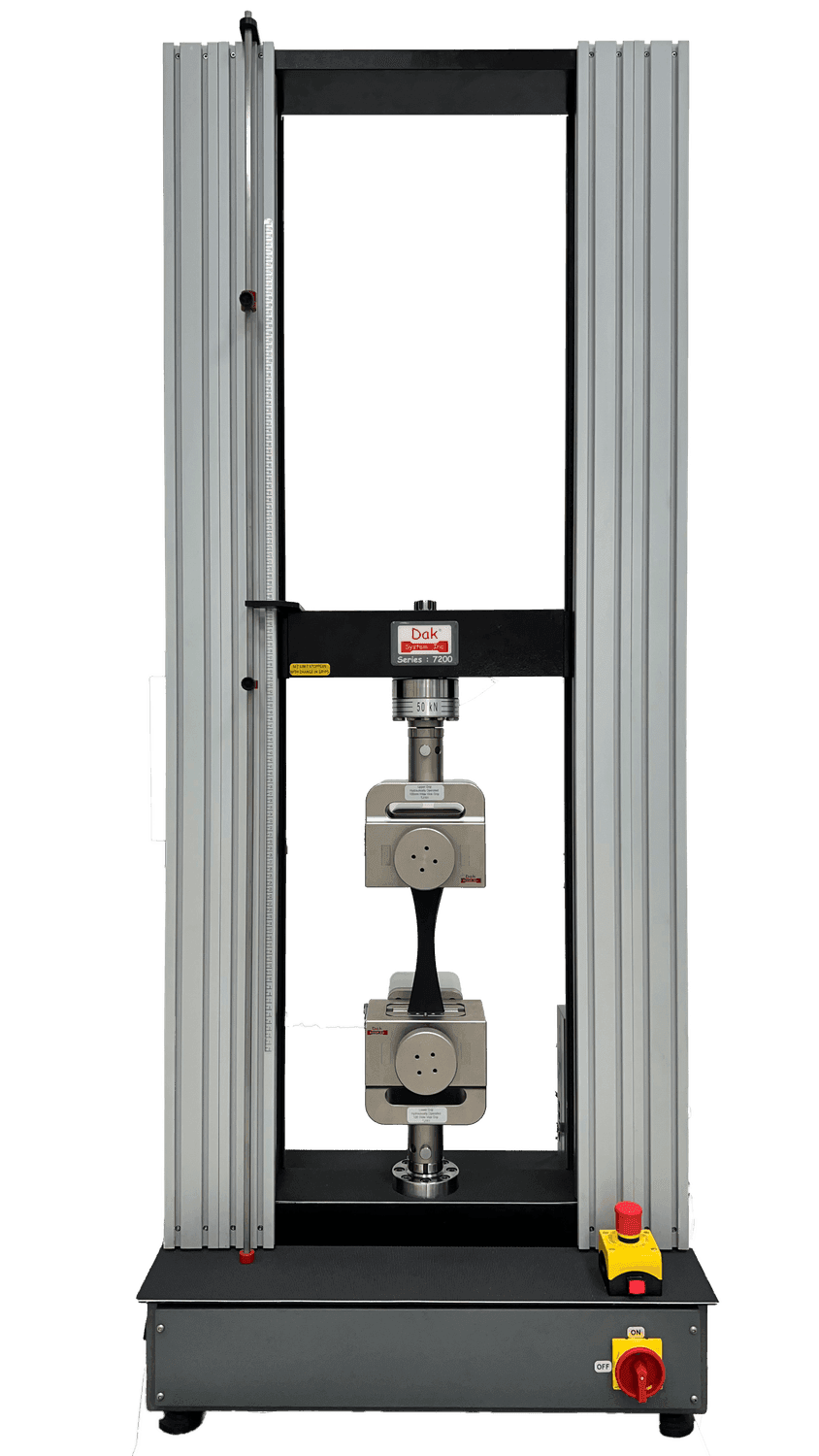
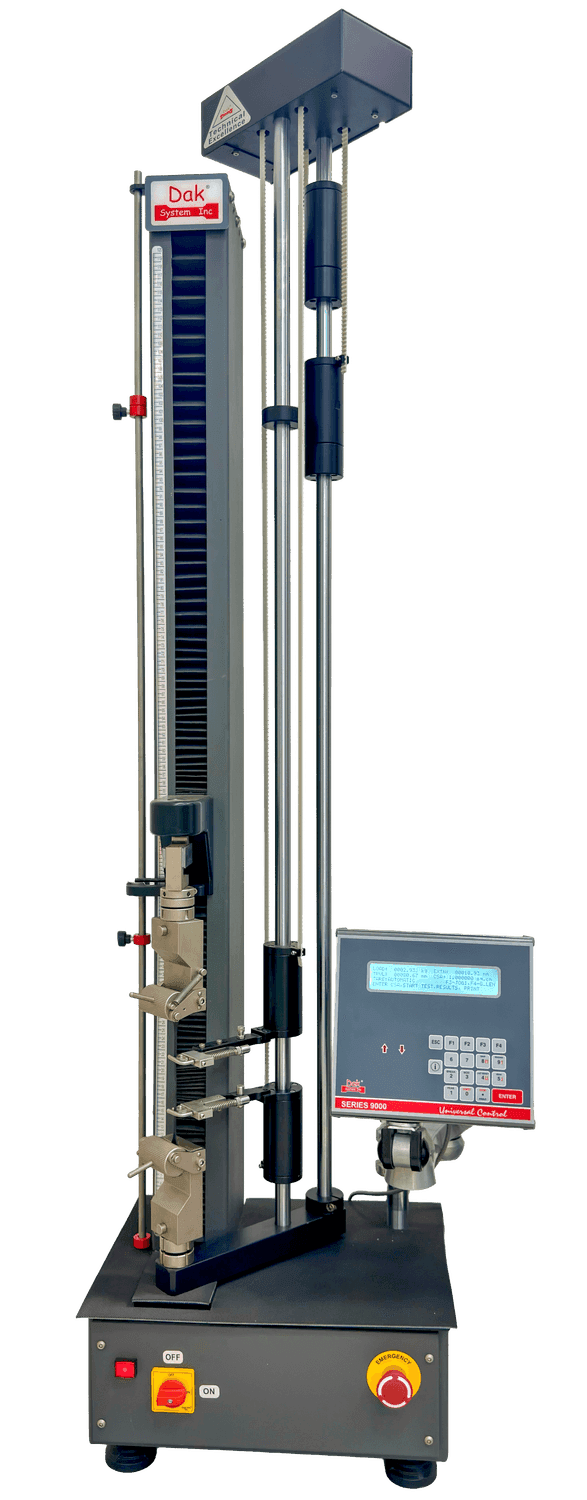
SpecificationsSmall forces, resolved well, at a constant rate. A tuft leaves a backing at a low load, so the load cell has to be chosen for the tuft and not for the frame, and its capacity chosen so the recorded force falls well inside the useful part of the range. The frame has to meet the ASTM specification for tensile testing machines for textiles, and the method does not tie the test to one machine principle — a constant-rate-of-traverse machine built to that specification and run at the same speed is permitted alongside the constant-rate-of-extension type. The type of machine used is a reporting item for that reason: results from different machine principles are not always at the same level. The upper attachment has to grip a single tuft or hook a single loop without cutting it, which in practice means a small clamp or hook carried on the load train rather than a standard jaw.
Mounting the sample slack or unevenly, so the surface over the cut-away is not cylindrical and the tuft is pulled at an angle. Taking more than one tuft from a single row, or taking one within 25 mm of the edge, where the backing has already been disturbed — both of which the method rules out. Comparing a loop result with a cut-pile result, or with a result from another construction entirely, as though tuft bind were a single scale. Confusing tuft bind with the tensile strength of the backing fabric, which is a different measurement made on a different specimen. And mixing units: the method has a long inch-pound history and the current edition is written in SI alone, so a figure carried across from an older report without its units is worse than no figure.
| ASTM D1335 | ISO 4919 | Backing tensile methods | |
|---|---|---|---|
| Measures | Force to pull or break one tuft | Tuft withdrawal force | Strength of the backing fabric |
| Specimen | A single tuft leg or loop | A single tuft or loop | A piece of fabric |
| Tells you about | The anchorage of the pile | The anchorage of the pile | The substrate, not the pile |
| Interchangeable | No | No | Different property entirely |
ASTM D1335 and ISO 4919 measure the same idea and are still not substitutes on a specification. Neither has anything to say about the tensile strength of the backing, which is measured on a fabric specimen by a different method.
ASTM D1335 is the Standard Test Method for Tuft Bind of Pile Yarn Floor Coverings. It covers the measurement of the force required to pull or break a tuft from a pile floor covering sample, and applies to both cut and loop pile constructions. The current edition is ASTM D1335-21(2026), approved in 2021 and reapproved in 2026, under Subcommittee D13.21 on Pile Floor Coverings.
So the backing immediately behind the tuft under test is unsupported. The carpet is wrapped round a cylindrical holder and tensioned evenly, and the tuft being pulled sits over the cut-away. Without that opening the frame would simply load the covering as a sheet and the tuft would not come out of the backing, so the force recorded would describe the carpet rather than the anchorage.
More than one, and never two from the same row. The method takes several individual tufts from each sample, selects only one from any one row, and keeps every tuft at least 25 mm from the edge of the sample, where the backing has already been disturbed by the cut. The quoted figure is an average of those individual pulls, and the number tested is a required reporting item — an average of an unstated number of tufts cannot be judged by whoever relies on it.
It depends on the construction, and the standard sets both cases out. In a cut pile covering, inadequate tuft bind can mean complete loss of pile in areas exposed to severe wear. In a looped pile covering, the loops can be pulled out to form long, unsightly loops that may themselves be hazardous. Either way the covering stops looking like the one that was specified, which is what the property is there to protect.
No, and conflating the two is a frequent error. Tuft bind is the anchorage of an individual tuft in the backing system — the adhesive, the coating and the mechanical lock together. The tensile strength of the backing fabric is a property of a sheet of material and is measured on a fabric specimen by an entirely different method. A carpet can have a strong backing and poor tuft bind.
Not as an equivalence. ISO 4919, Carpets — Determination of tuft withdrawal force, works on the same principle of removing a single tuft or loop and recording the maximum force, and the current edition is ISO 4919:2012 with a revision at draft stage. The methods differ in their detail and a specification names one of them. Where a customer asks for both, both are run.
Because the mounting sets the angle at which the tuft leaves the backing, and that angle is the measurement. The requirement is that tension is uniform across the clamp width so the sample presents an undistorted cylindrical surface over the cut-away section. A slack or unevenly tensioned sample bulges or flattens there, the tuft is drawn out obliquely, and the result drifts in a way that looks like product variation.
It is used as one. ASTM states that Test Method D1335 is being used for acceptance testing of commercial shipments, which is why the reporting detail matters more than it might on a purely comparative method: the number is often contractual, and a report that omits the units, the number of specimens or which pile type was tested cannot be checked by the party relying on it.
Dak verifies against whichever standard the method names, and where a class applies our frames sit a class tighter than it asks.
| The method asks for | Dak supplies | |
|---|---|---|
| Capacity | Low — one tuft leaves the backing at a small force, so the cell is chosen for the tuft rather than for the frame and the reading should fall well inside the useful part of the range | Load cells from 1 kg to 60 ton on the Series 7200, and 0.5 to 100 kN on the Series 9000 |
| Force accuracy | ASTM D76 requirements for textile testing machines | ISO 7500-1 Class 0.5, verified to ASTM E4, DIN 51221 and BS 1610 |
| Gripping | A cut-away cylindrical specimen holder, with a small clamp for a cut-pile tuft or a hook for a loop | Our a fixture built for this method, built to the specimen |
| Environment | The ASTM standard atmosphere for testing textiles | 3009 series chambers, −150 °C to +400 °C — temperature only |
This page describes the method as practised. The governing text is the current edition from the issuing body. Tell us what you are testing and we will answer with the machine, the fixture and a quotation.