
ANSI/BIFMA X5.1 — read the full explanation
Load–deflection & proof loadOffice chairs — static load, proof and durability tests on seat, back and arms (force-application frames).

Turn material choices into measurable performance. DAK testing systems help laboratories evaluate the foams, fabrics, panels, bonds and components used in furniture and interiors, with the machine, fixtures and measurement selected around the specimen and the result you need.
A soft foam specimen, an upholstery seam and a rigid panel place different demands on the test setup. Select the working force range, test space, loading arrangement and measurement together.
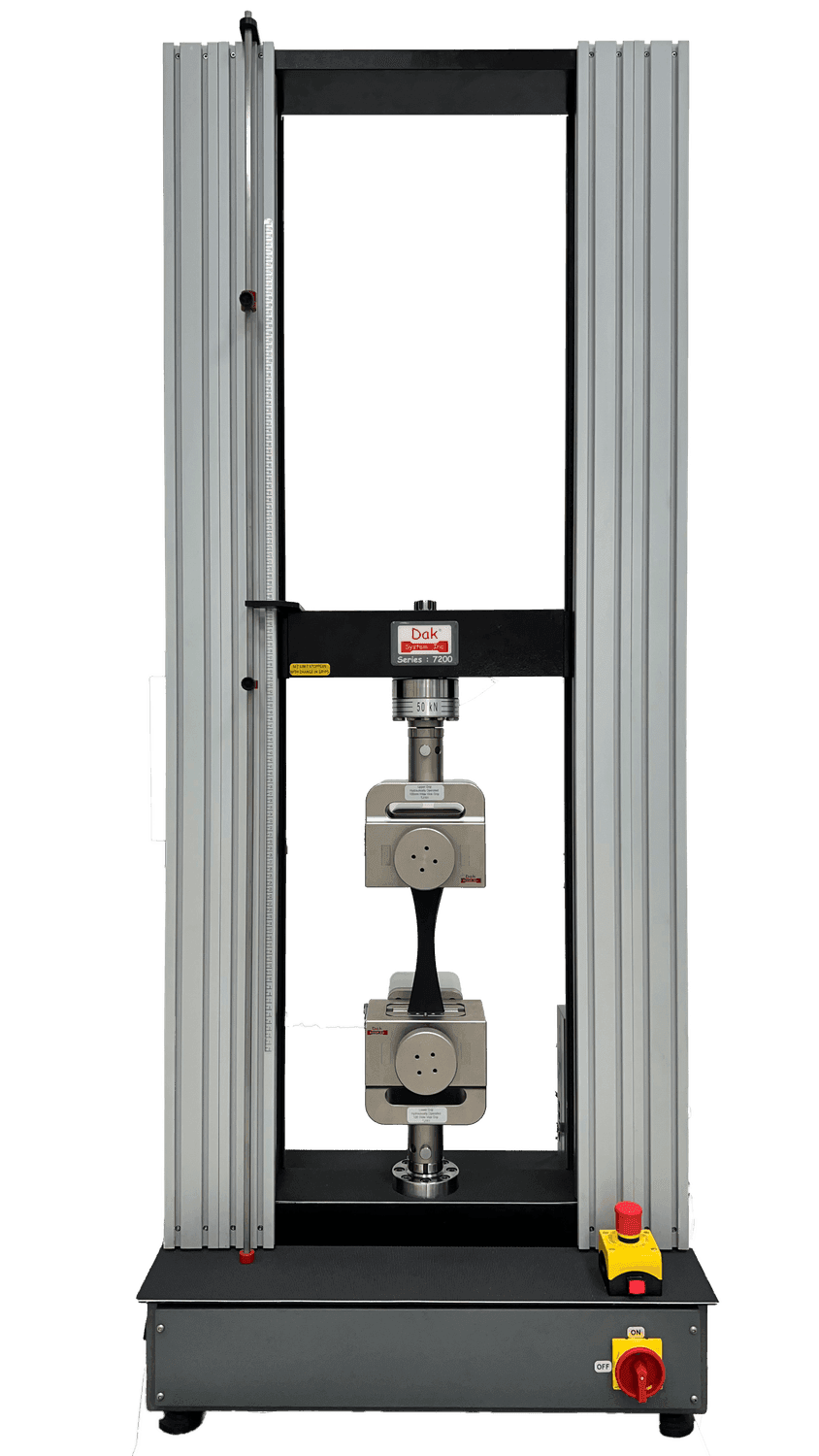
Flagship platform
DAK’s flagship platform brings together flexible test programming, precise specimen setup, measurement and analysis. Explore Series 7200 for material development, demanding quality control and laboratories working across different specimen types and loading sequences.
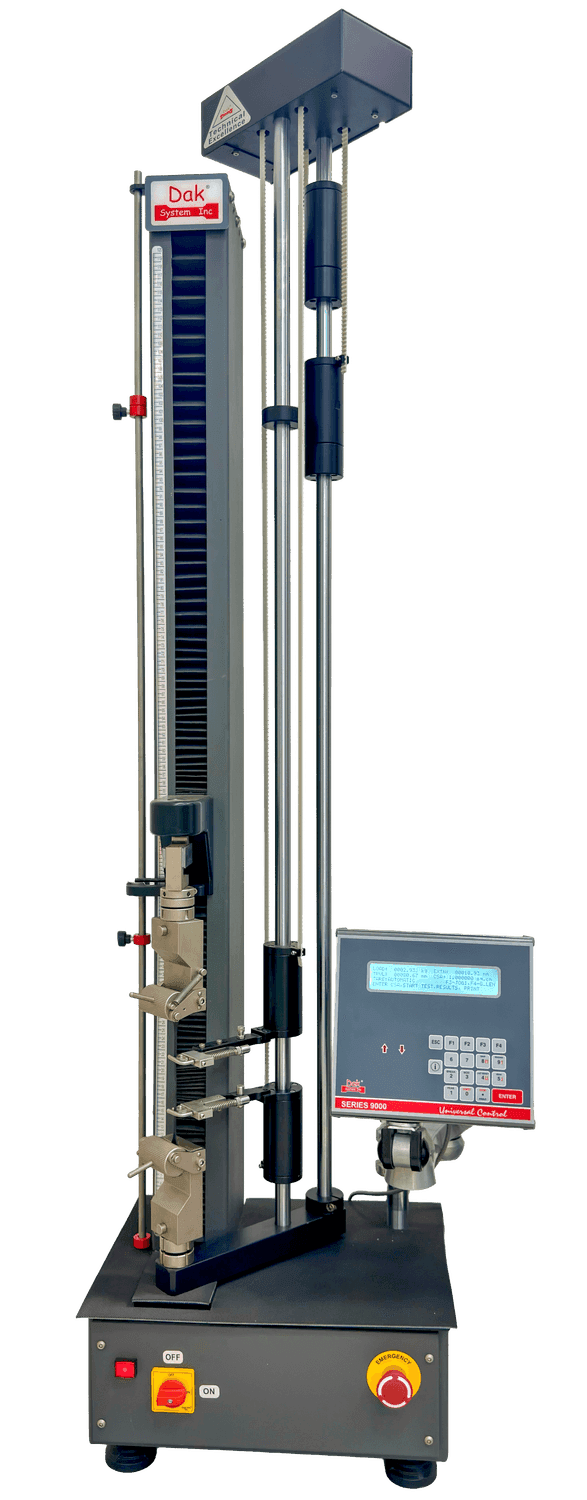
Established laboratory methods
Travel-controlled testing with standalone Console operation or a PC-connected workflow. Explore Series 9000 for established tensile, compression, flexural and adhesion methods, configured around the required specimen, working range and measurement.
Evaluate indentation firmness, compression response, tensile strength and tear resistance as distinct properties. Include foam type, specimen thickness and conditioning when comparing formulations, incoming batches or prepared cushion samples.
Assess the fabric and the sewn construction separately. Tensile, tear and seam tests help identify whether the material, stitching or assembled seam governs the result; include the fabric direction and seam preparation.
Connect bending strength and stiffness to the panel’s load-bearing role, then assess internal bond where the panel construction requires it. Include board type, thickness, direction and conditioning in the test specification.
Define which bond you want to assess and how it is loaded. A wood-block shear test and a peel test on a flexible covering load the joint differently; specimen preparation and the observed failure location belong with the result.
Distinguish the force needed to pull a tuft from its backing from the force needed to separate bonded backing layers. Identify the yarn, backing structure and interface before choosing the specimen-holding arrangement.
For spring-supported seating and bedding, define the required load–deflection response and component geometry. Follow metal frame and fastening materials into their dedicated testing guides rather than treating every component as the same specimen.
| Your question | What the measurement tells you | Explore |
|---|---|---|
| How firm is this foam? | Density describes mass per unit volume; it does not by itself specify firmness. Indentation testing measures the force response at defined indentation conditions. Keep the method, thickness, loading history and dwell consistent when comparing samples. | |
| How does the foam respond to compression? | Compression stress–strain testing characterises the material under the specified platen loading. It is different from an indentation result, and a compression-set measurement asks another question: how much deformation remains after a defined treatment and recovery. | |
| Is the panel stiff, or strongly bonded internally? | Bending evaluates the panel across a support span. Internal-bond testing applies tension perpendicular to its faces. These results describe different properties and use different specimen preparation and fixtures. | |
| Does the cover material or its seam govern failure? | A fabric test loads the material; a seam test loads a prepared sewn joint. Record the method, loading direction, stitch construction and failure mode so the result can guide a material or manufacturing decision. |
Density describes mass per unit volume; it does not by itself specify firmness. Indentation testing measures the force response at defined indentation conditions. Keep the method, thickness, loading history and dwell consistent when comparing samples.
Compression stress–strain testing characterises the material under the specified platen loading. It is different from an indentation result, and a compression-set measurement asks another question: how much deformation remains after a defined treatment and recovery.
Bending evaluates the panel across a support span. Internal-bond testing applies tension perpendicular to its faces. These results describe different properties and use different specimen preparation and fixtures.
A fabric test loads the material; a seam test loads a prepared sewn joint. Record the method, loading direction, stitch construction and failure mode so the result can guide a material or manufacturing decision.
The loading arrangement is part of the test. Choose jaw faces for flexible fabrics, support geometry for panels and the specified indenter or platen arrangement for foam.
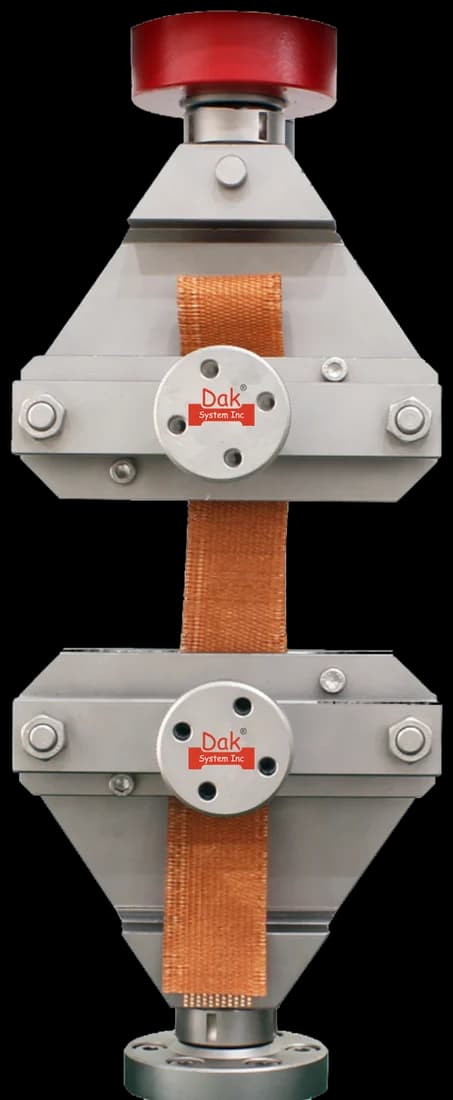
DAK’s 100mm Wide Vice Action Grips have jaw faces 100 mm wide and 50 mm long, with interchangeable flat and corrugated forms. Select the contact surface around the fabric and prepared specimen.
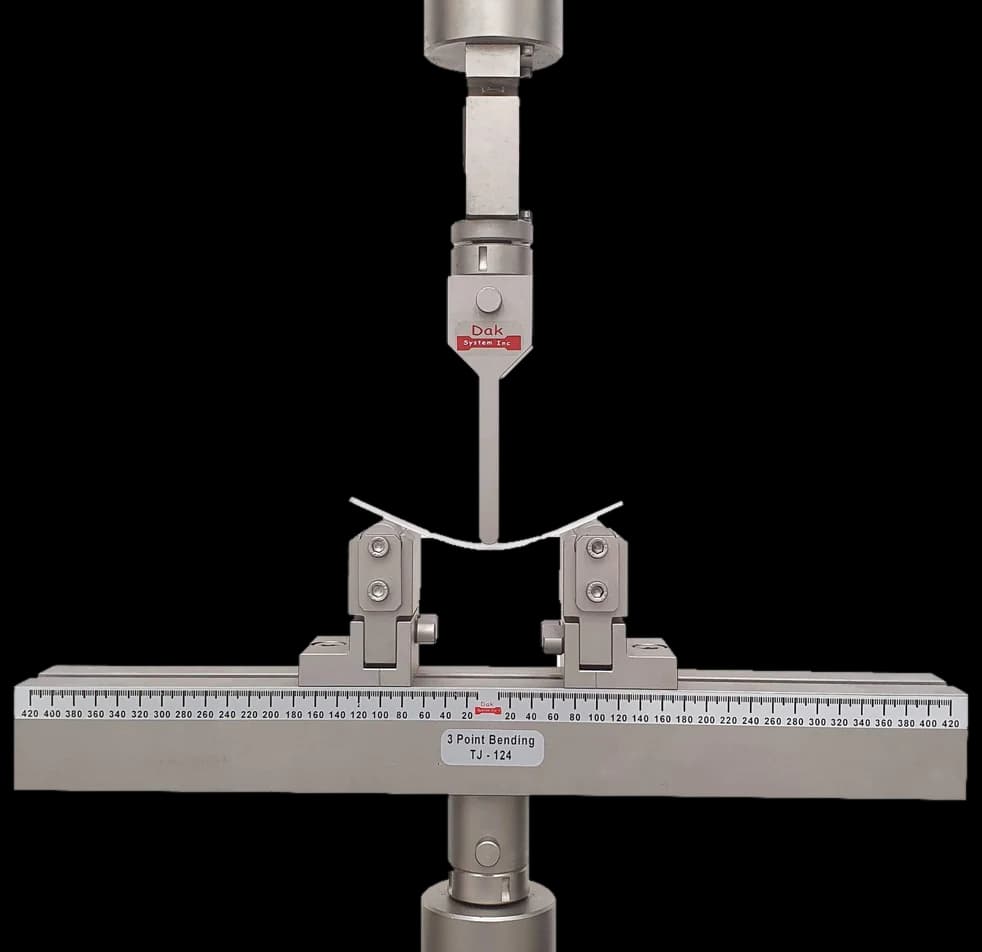
DAK’s Three Point Bend Fixture provides an adjustable span from 25 to 300 mm for samples up to 150 mm wide. Light- and heavy-duty versions allow the fixture range to be selected around the test load.
For foam indentation, specify the indenter, support surface, specimen dimensions and loading sequence together. Include the required force resolution and how deformation is measured; for tensile specimens, choose an extension measurement suited to their softness, gauge length and expected elongation.
Record material grade, supplier or batch, specimen orientation and preparation. Include foam recovery history, fabric direction, panel conditioning and adhesive cure conditions where they affect the selected test.
Plan the reported forces, deformation, strength or bond results before selecting the setup. Dyna Desk – Test Bench supports saved methods, graphing and reports with spreadsheet, PDF and CSV exports.
Material specimens, joints and complete furniture assemblies require different support and loading arrangements. Share whether the programme concerns a cut specimen, a component or a complete article, together with the required static or repeated-loading sequence.
Use these starting points, then search the complete furniture, bedding and interiors library by designation, material or test type. Define the specimen or assembly and the particular test within your programme.
Office chairs — static load, proof and durability tests on seat, back and arms (force-application frames).
Textile floor coverings — bond strength determination (delamination of backing).
Tuft bind of pile yarn floor coverings (force to pull a tuft from carpet backing).
Small clear specimens of timber — static bending, compression parallel/perpendicular, shear, tension.
Static tests of lumber in structural sizes.
Strength tests for zippers — crosswise strength, slider lock holding, pull-off of puller.
Flexible cellular materials — slab, bonded and molded urethane foams (IFD, CFD, tensile, tear, compression set).
Strength of adhesive bonds in shear by compression loading (wood block shear).
Domestic seating and storage furniture — static load requirements.
Domestic seating and storage furniture — static load requirements.
Domestic and non-domestic seating — strength and durability static load tests.
Domestic and non-domestic seating — strength and durability static load tests.
Beds and mattresses — durability rig companion; firmness characterization via ISO 2439-type indentation on UTM.
Wood-based panels — modulus of elasticity in bending and bending strength.
Particleboards and fibreboards — internal bond (tensile strength perpendicular to plane).
Bunk beds and high beds — static strength of frame, guard rails and ladder.
Leather — adhesion of surface finish coating.
Sewn seam strength and maximum force to seam rupture of woven fabrics.
Tear properties of fabrics — trouser, wing and tongue-shaped specimens.
Tensile strength and elongation at break of flexible cellular polymers.
Leather — stitch tear resistance (upholstery and footwear seam design).
Indentation hardness (IFD/ILD) of flexible cellular materials — seating and mattress foams.
Seating and mattress foam — IFD/ILD hardness, CFD and compression set.
Stress-strain characteristics in compression of flexible cellular polymers (low- and high-density).
Tear strength of flexible cellular polymeric materials.
Showing 1–8 of 25 standards
Share your testing requirements with DAK so the quotation can cover the machine, specimen holding, measurement and reporting as one setup.