Testing standard

ASTM D5169/D5170

Standard Test Method for Shear Strength (Dynamic Method) of Hook and Loop Touch Fasteners; and Standard Test Method for Peel Strength ("T" Method) of Hook and Loop Touch Fasteners

Written and technically reviewed by Dak System Inc. engineeringLast reviewed

ASTM D5169 measures the shear strength of a hook and loop touch fastener, pulling the engaged closure with the force parallel to the plane of the fastener on a recording constant-rate-of-extension machine. ASTM D5170 measures peel strength by the "T" method, leading the two tails away from each other so the closure opens from one end. Both are 1998 texts reapproved in 2021 and both are active.

At a glance

Test type
Peel & adhesiona bonded joint is pulled apart
Published by
ASTM
Edition
D5169-98(2021)

What the test does

A hook tape and a loop tape are engaged and then pulled apart on a recording constant-rate-of-extension tensile testing machine. The two methods differ in the direction of the pull. D5169 applies the force parallel to the plane of the closure, so the faces slide against each other and the hooks load along their length: the shear case. D5170 leads the two free tails away from each other in a T, so the closure opens from one end and the hooks release a row at a time: the peel case. Both depend on the closure being made up to a repeatable degree of engagement first, which the methods prescribe rather than leave to the operator — a fastener pressed together by hand answers differently every time.

What it measures, and why it matters

Shear is the load a closure carries in service. A strap, a cuff or a cargo restraint is loaded along its length, and the shear figure says whether it will hold. Peel is how a closure is opened, and also how it fails: a corner lifts, and once lifted the rest runs on at a fraction of the shear load. The two numbers differ widely for the same fastener and neither substitutes for the other.

Peel force is inherently irregular, because the hooks release in bursts, and D5170 is unusually candid about the consequence. Two calculation options are offered — the integrator average and the average of the five highest peaks — and the standard states plainly that they are not equivalent, the integrator average generally being lower. It also says what each is for: the five-peak figure better reflects performance, while the integrator result characterises a closure and suits quality control. A peel value quoted without naming its calculation is comparable with nothing.

The closure, and how it is made up

The specimen is a made-up closure rather than a piece of material, and how it was engaged is part of the result.

Specimen
A hook tape and a loop tape, engaged
Engagement
Made up to a repeatable degree, as the method prescribesThe methods prescribe how the closure is engaged rather than leaving it to the operator, and a dedicated roller arrangement is used to do it. A fastener pressed together by hand answers differently every time.
Free tails
Long enough to reach the grips
Conditioning
The textile standard atmospherePracticeOrdinary practice for an ASTM D13 textile method. The conditioning clause of these two methods was not confirmed on a publisher-side page, so it is shown as practice rather than as a requirement.
Tape width and engaged length
Scale the result directlyPracticeBoth a shear and a peel figure are properties of a closure of a stated size. A value from one width cannot be read across to another.
Cycle history
State itDakHook and loop is a wearing closure and strength falls with each open-and-close cycle. A result from virgin material describes the product on the day it was made, not after a season of use.

The values stated in inch-pound units are the standard in both methods; the SI values given in parentheses are conversions provided for information only.

How each method pulls

D5169 — direction
Force applied parallel to the plane of the fastenerThe faces slide against each other and the hooks load along their length. This is the service case for a strap, a cuff or a cargo restraint.
D5170 — direction
The two tails led away from each other in a TThe closure opens from one end and the hooks release a row at a time.
Machine
A recording constant-rate-of-extension (CRE) tensile testing machineNamed in the scope of both methods.
Rate
As specified in the methodNo crosshead speed is quoted here: no publisher-side figure was corroborated twice. Read it from the edition in force.
Interlaboratory disputes
Resolved by comparative testingD5169 sets out a protocol where acceptance results on a commercial shipment conflict: test comparatively, and analyse statistically to find and correct the bias.

Calculating a peel result — the part that is easy to get wrong

Shear gives a single force. Peel does not, and D5170 is unusually candid about the consequence.

Shear strength

The force to separate the closure, loaded parallel to its plane

A single figure, reported for a closure of the stated engaged area.

Peel — integrator average

The average force over the trace, by integration

D5170 states this generally runs lower than the five-peak figure. It characterises a closure and is relatively easy to calculate, which suits quality control.

Peel — average of the five highest peaks

The mean of the five largest peaks in the trace

D5170 states this better reflects performance.

The two are not equivalent

Integrator average ≠ average of five highest peaks

The method says so in terms. A peel value quoted without naming its calculation is comparable with nothing — a supplier's five-peak average meeting a purchaser's integrator average produces a gap that gets investigated as a defect and is not one.

How the test runs

  1. 01Condition the tapes in the textile standard atmosphere.
  2. 02Cut hook and loop tapes to the specified width and length.
  3. 03Engage them over the defined length, using the prescribed roller arrangement rather than hand pressure.
  4. 04Mount the free tails in the grips — in line for D5169, led away from each other for D5170.
  5. 05Check that the grip faces hold the full tape width along a straight line.
  6. 06Run the machine at the specified constant rate of extension.
  7. 07For D5169, record the force to separate the closure.
  8. 08For D5170, record the whole trace, and calculate either the integrator average or the average of the five highest peaks.
  9. 09State which peel calculation was used.
  10. 10Repeat over the specified number of specimens and report the mean.

Any cycling done before the test — engaging and disengaging the closure to simulate use — belongs in the report. It changes the result and leaves no other evidence.

Grips and fixtures for this method

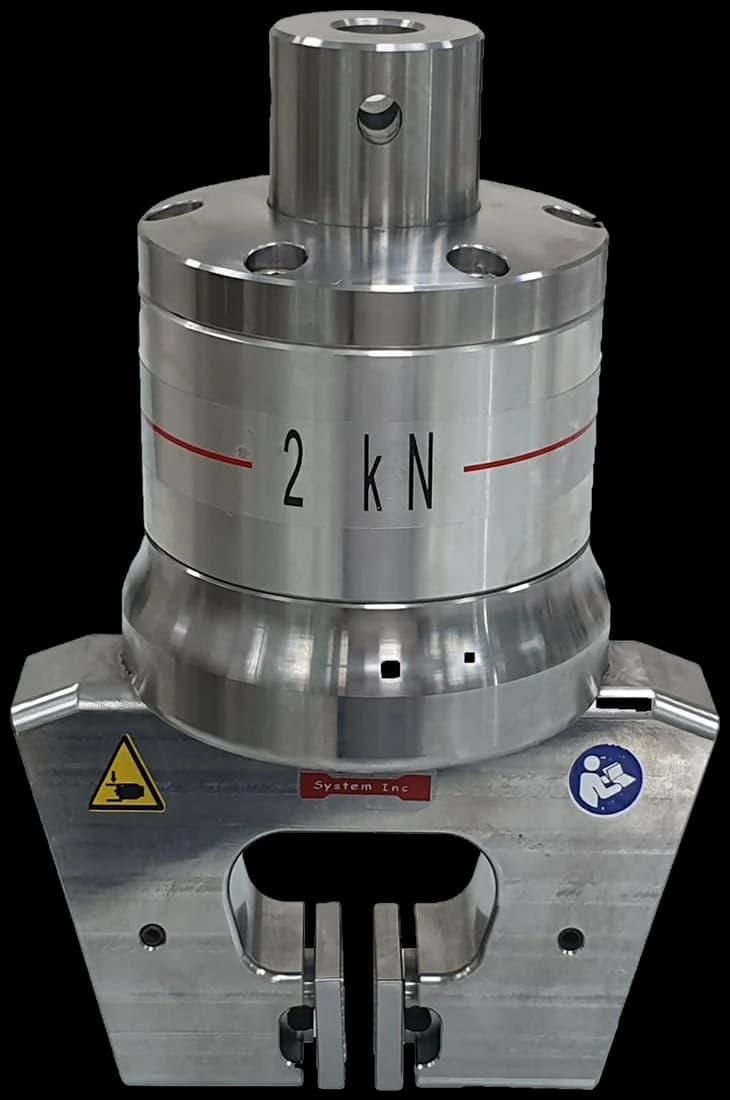
2 kN pneumatic vice action grip with its capacity engraved on the body

2 kN Pneumatic Grip

Air-driven vice action for textiles and tape, closing at identical pressure on every specimen. Faces need to hold the full tape width along a straight line without cutting the webbing, so they are specified to the tape rather than taken as standard.

Specifications
Self-identifying

Load Cells

A low-range cell chosen for the tape rather than for the frame. Touch-fastener forces are small, and a peel result read from an irregular trace needs resolution to be worth integrating at all.

Specifications

What the report has to contain

  • Reference to ASTM D5169 or ASTM D5170 and the edition
  • Identification of the hook and the loop tape
  • Tape width and engaged length
  • How the closure was made up
  • Conditioning atmosphere
  • Rate of extension
  • For D5169, the shear force to separate
  • For D5170, the peel result and which calculation produced it — integrator average or average of five highest peaks
  • Any open-and-close cycling carried out before the test
  • Number of specimens, and the mean
  • Units, noting that inch-pound values are the standard

What the machine must be capable of

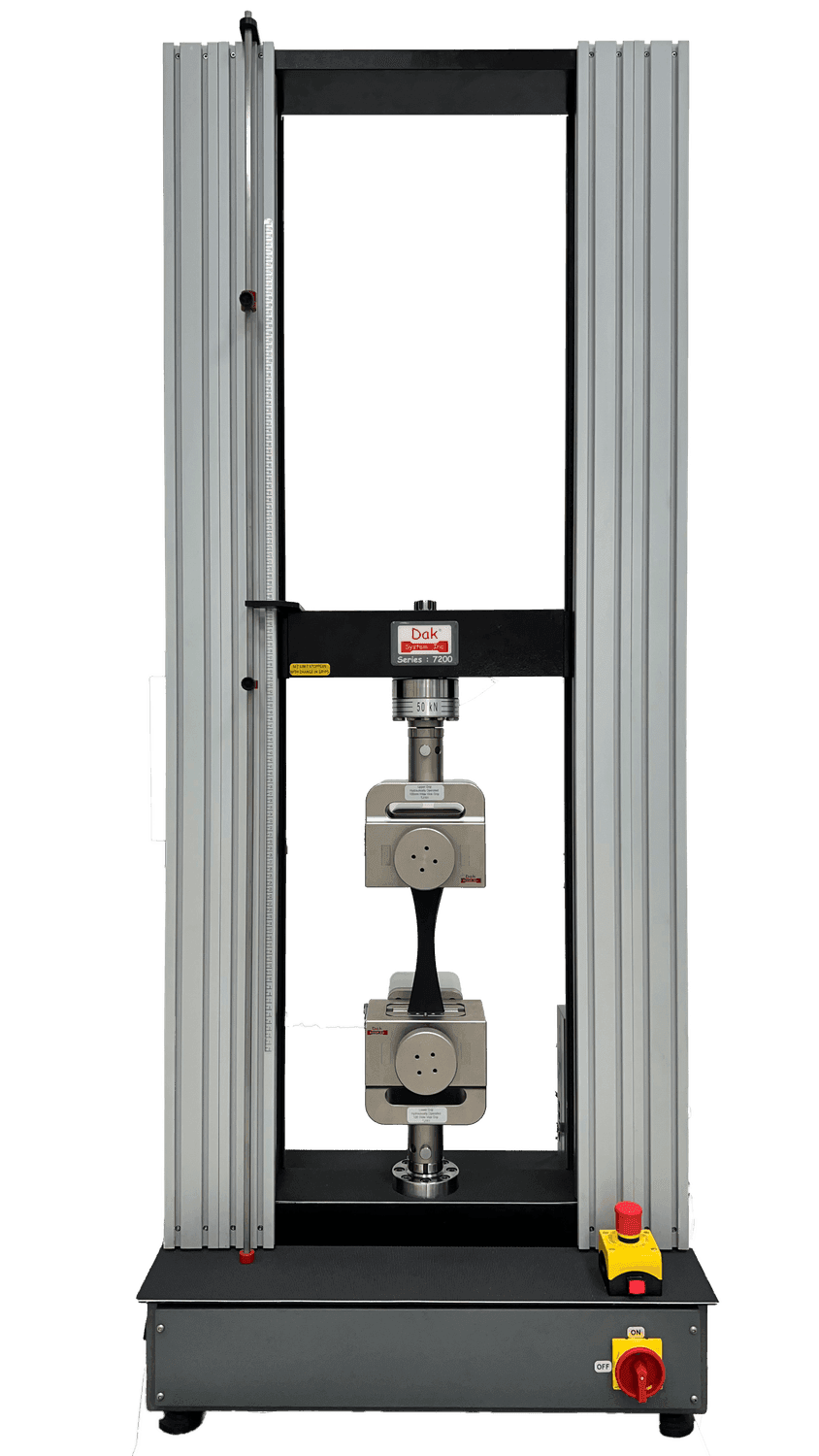
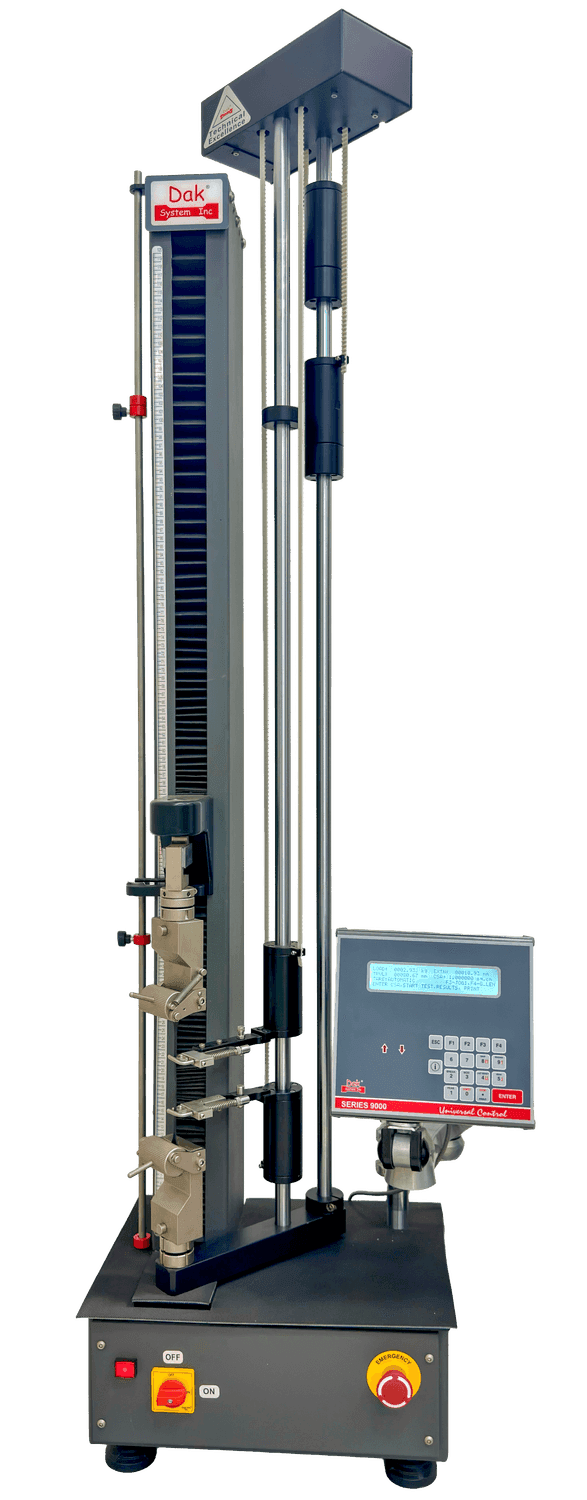
Small forces, cleanly resolved, on a frame that holds woven tape without damaging it. A load cell chosen for the tape rather than for the frame comes first; then grip faces wide enough to hold the full tape width along a straight line, which means pneumatic or vice-action grips with flat or lightly serrated faces rather than sharp wedges that cut webbing. For peel, the tails must be led away symmetrically so the separation line stays square to the pull.

The other requirement is a data-acquisition one. The machine must integrate the area under an irregular trace for the integrator average, and identify the five highest peaks in it, because D5170 defines its result in those terms and neither number can be read off a dial.

What goes wrong in practice

Inconsistent engagement, which moves every result and leaves no evidence. Reporting a peel figure without naming the calculation, so a supplier's five-peak average meets a purchaser's integrator average and the gap is investigated as a defect. Grip slippage on slick tape backings, which flattens the trace. Testing a used closure against a specification written for a new one. And treating the parenthetical SI values as the requirement, when the inch-pound figures are the standard and the conversions are informative only.

Shear and peel on the same closure

ASTM D5169ASTM D5170
LoadingParallel to the plane of the fastenerTails led apart in a T
How the hooks failAlong their length, togetherA row at a time, from one end
What it representsThe load a closure carries in serviceHow a closure is opened, and how it unzips once a corner lifts
TraceA single force to separateIrregular, because the hooks release in bursts
CalculationOne figureTwo options, explicitly not equivalent
Relative magnitudeThe higher of the twoA fraction of the shear value

The two numbers differ widely for the same fastener and neither substitutes for the other. A closure specified only on shear can still peel open at a lifted corner, which is how most of them actually fail.

Questions we are asked about this test

What is ASTM D5169?

It is the ASTM test method for the shear strength of hook and loop touch fasteners, measured on a recording constant-rate-of-extension tensile testing machine. An engaged closure is pulled with the force applied parallel to the plane of the fastener, so the faces slide against each other and the hooks load along their length. The current edition is D5169-98(2021) — the 1998 text reapproved in 2021 — and it is active.

What is ASTM D5170?

It is the companion method for peel strength by the "T" method, currently D5170-98(2021) and also active. The two free tails are led away from each other in a T so the closure opens from one end and the hooks release a row at a time. Both methods sit with subcommittee D13.54 in Book of Standards volume 07.02.

Why are there two ways of calculating a peel result?

Because the force in a peel test is irregular. D5170 says so directly, and notes that empirical methods had to be developed to get usable values out of it. Two options are given: the integrator average and the average of the five highest peaks. The standard states that they are not equivalent, that the integrator average will generally be lower, that the five-peak figure better reflects performance, and that the integrator result characterises a closure and is relatively easy to calculate, which suits quality control.

Which peel calculation should I report?

Whichever the specification names — and if it names none, that is the thing to settle before testing rather than after. The two are not interchangeable and the gap between them is systematic, not scatter. A peel value quoted without naming its calculation cannot be compared with anything, and the commonest way this surfaces is a supplier reporting five-peak averages against a purchaser checking integrator averages.

Why do shear and peel give such different numbers?

Because of how the hooks are loaded. In shear the whole engaged area resists at once and every hook carries part of the load. In peel the separation runs along a line and only the hooks at that line are engaged at any moment, so the force is a fraction of the shear value. This is also why a closure fails in service the way it does: a corner lifts, and once lifted the rest runs on at peel forces rather than shear ones.

Does the degree of engagement matter?

Enormously, which is why both methods prescribe how the closure is made up rather than leaving it to the operator, using a roller arrangement instead of hand pressure. Inconsistent engagement moves every result and leaves no evidence in the data that it happened — the trace looks normal, the number is simply wrong.

Do these results apply to a used fastener?

Not directly. Hook and loop is a wearing closure and its strength falls with each open-and-close cycle, so a result from virgin material describes the product on the day it was made. Where a specification is about performance after use, the cycling has to be done deliberately before the test and recorded in the report.

Which units are standard in these methods?

Inch-pound. Both D5169 and D5170 state that the values in inch-pound units are to be regarded as standard, with the SI values in parentheses given as conversions for information only. This is worth checking against neighbouring closure standards rather than assuming — ASTM D2061, the zipper method under the same subcommittee, takes SI as standard instead.

Running ASTM D5169/D5170 on the Series 7200 and Series 9000

Dak verifies against whichever standard the method names, and where a class applies our frames sit a class tighter than it asks.

The method asks forDak supplies
CapacityLow. Touch-fastener forces are small and a load cell sized for the frame will not resolve them. No range is quoted, no publisher-side figure having been corroborated twice.Load cells from 1 kg to 60 ton on the Series 7200, and 0.5 to 100 kN on the Series 9000
Force accuracyunknown — no accuracy class was confirmed on the publisher recordsISO 7500-1 Class 0.5, verified to ASTM E4, DIN 51221 and BS 1610
GrippingOpposing tensile grips on a recording constant-rate-of-extension machine, in line for D5169 and with the tails led apart for D5170; a roller arrangement engages the closure before the pullOur vice-action grips, built to the specimen
EnvironmentThe textile standard atmosphere. The conditioning clause was not confirmed on a publisher-side page, so it is carried as practice rather than as a requirement.3009 series chambers, −150 °C to +400 °C — temperature only

This page describes the method as practised. The governing text is the current edition from the issuing body. Tell us what you are testing and we will answer with the machine, the fixture and a quotation.