Standard 25 mm
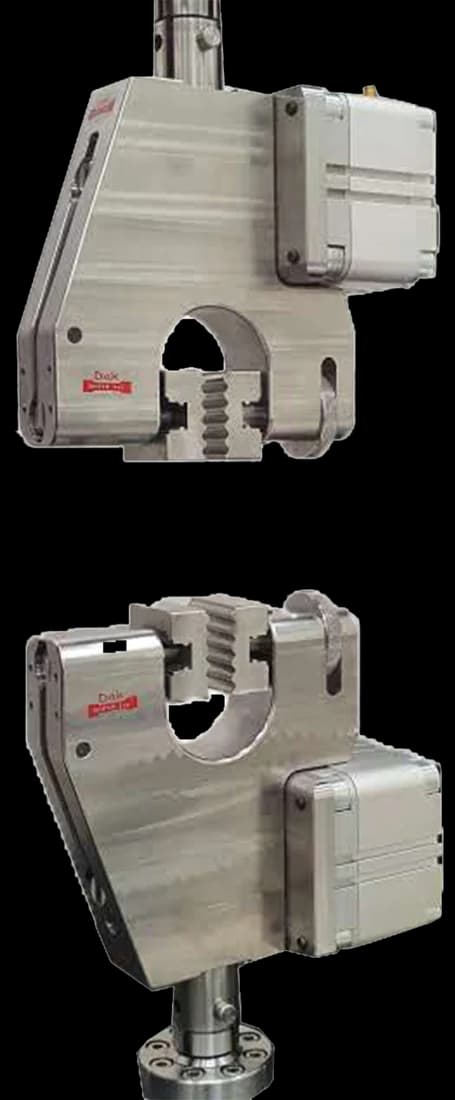
Pneumatic Vice Action Grip
Pneumatic vice action grips clamp the full specimen width at a constant, even pressure — which is what stops one side slipping or tearing before the other.
Specifications
Testing standard
Standard Test Method for Tearing Strength of Fabrics by the Tongue (Single Rip) Procedure (Constant-Rate-of-Extension Tensile Testing Machine)
Written and technically reviewed by Dak System Inc. engineeringLast reviewed
ASTM D2261 measures tearing strength by the tongue, or single rip, procedure. A slit is cut to make two legs, the legs are clamped in opposing grips, and the tear is propagated along the fabric. The reported figure comes from the peaks of a jagged trace, because a tear advances yarn by yarn rather than smoothly.
From the test method to your testing system
Explore the DAK machines already listed for ASTM D2261, then review the grips, measurement and setup requirements below.
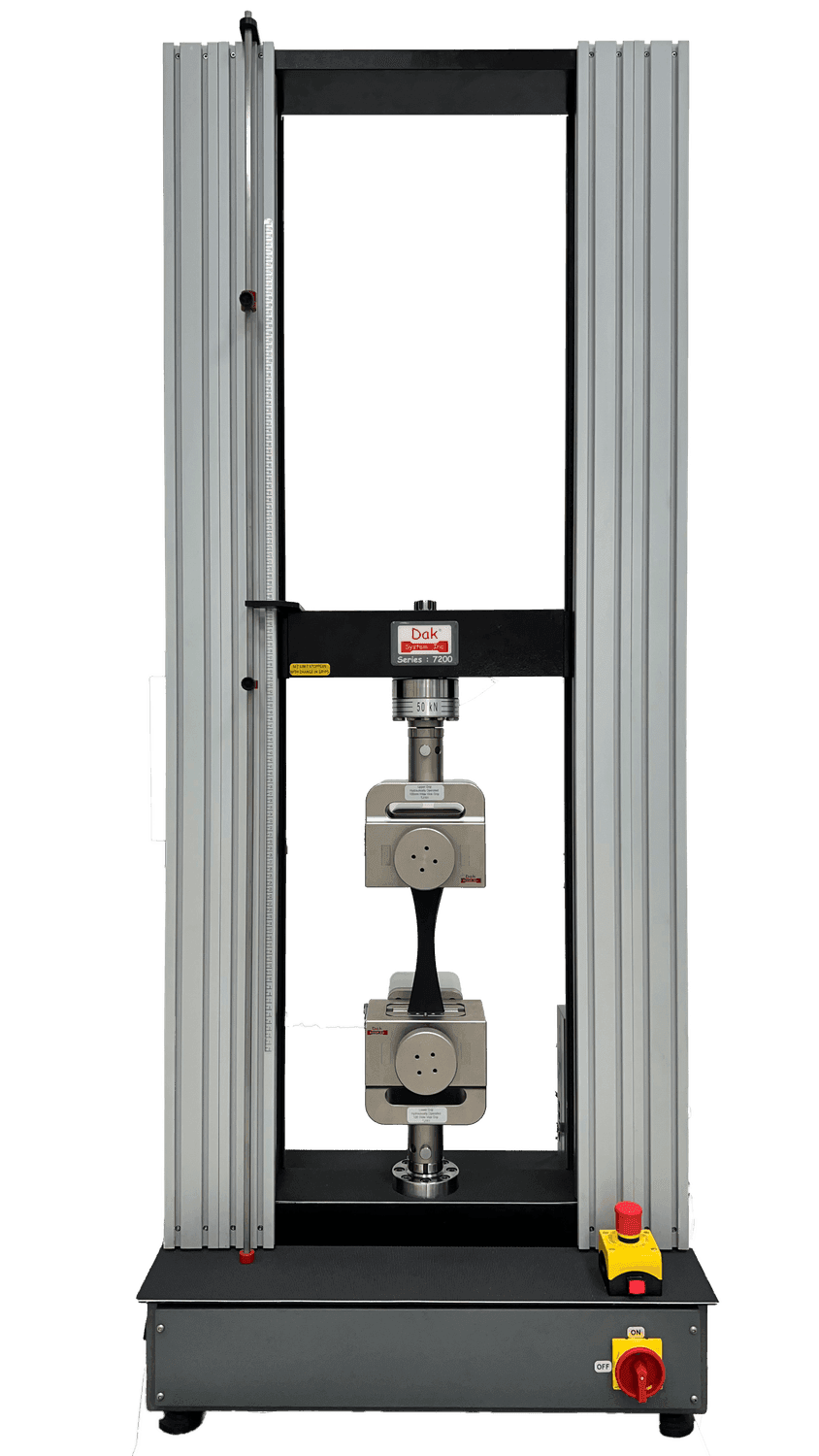 Universal Testing MachineSeries 7200Explore the machine →
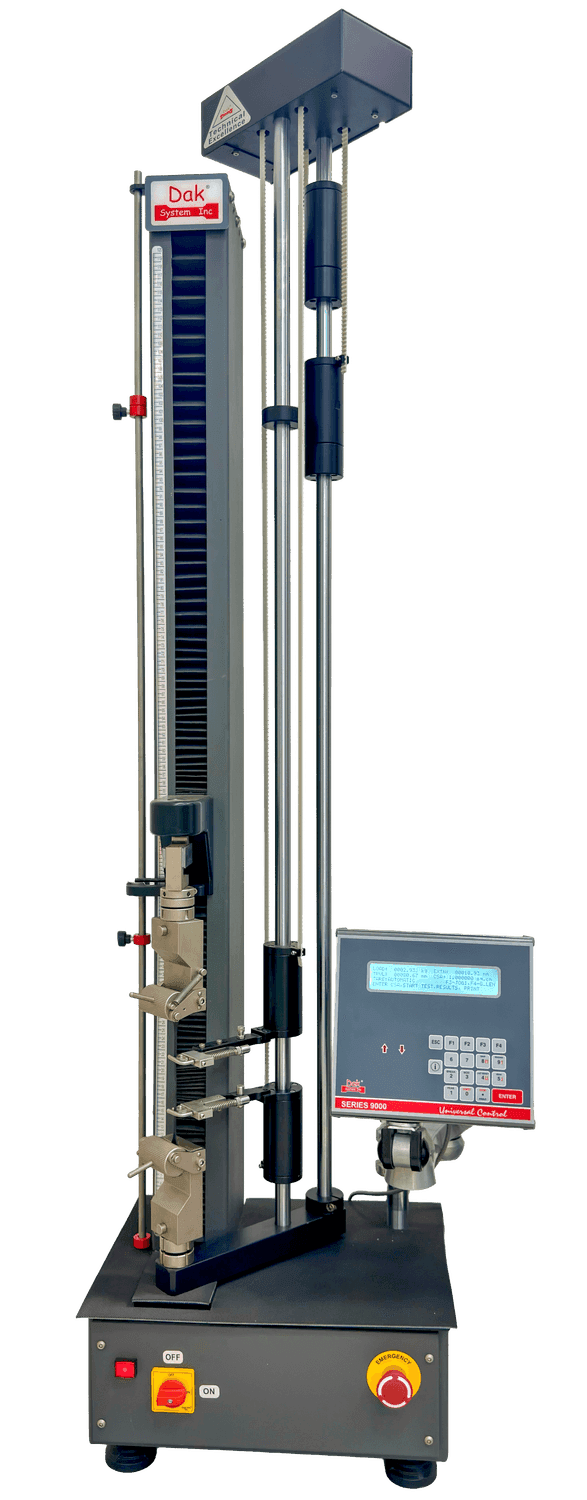 Universal Testing MachineSeries 9000Explore the machine →
01Understand the method
A rectangular fabric specimen is cut with a slit down its centre, dividing one end into two legs. Each leg is clamped in an opposing grip, and the crosshead separates them so that the tear at the head of the slit is forced to travel along the fabric. Force is recorded against travel throughout. Because the tear advances by breaking yarns one after another rather than smoothly, the resulting trace is a saw-tooth, and the reported tearing strength is derived from its peaks rather than from an average across the whole record. Warp and weft specimens are cut and reported separately.
The result is the force needed to keep a tear moving through the fabric. That is a different and often more useful question than tensile strength, because fabrics in service very rarely fail by being pulled evenly across their width. They get snagged on a fixing, cut by a sharp edge, or punctured — and what decides whether the article survives is whether that small damage spreads. A tarpaulin, a tent, an airbag, a lifting sling cover or a protective garment can have ample breaking strength and still be useless if a two-centimetre cut runs across it under load.
02Prepare the specimen and test settings
A tear test is a controlled crack. The slit is the starting crack, and how cleanly it is cut decides where the tear goes.
The result is read from the peaks, not the average. A tear advances by breaking yarns one after another, so the trace is a saw-tooth — averaging it reports mostly the troughs, where nothing was breaking.
03Build the test setup on a DAK machine
Low forces measured well — commonly between a few newtons and a few hundred — so resolution at the bottom of the load cell's range matters more than capacity. The crosshead must hold the specified rate, and the data acquisition rate matters more here than in most tensile work: the peaks that constitute the result are brief, each being a single yarn letting go, and a sampling rate too low will skim over them and report a fabric weaker than it is. The retrievable ASTM record for D2261 names no accuracy class and no machine specification, so none is quoted here. Grips need wide flat faces and an even clamp across each leg, because a leg held unevenly twists as it is pulled and the tear wanders out of line.
Pneumatic vice action grips clamp the full specimen width at a constant, even pressure — which is what stops one side slipping or tearing before the other.
Specifications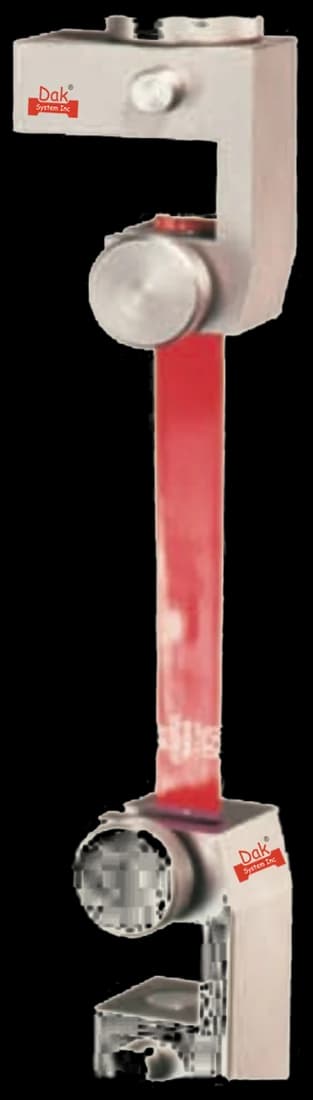
A 25 mm square vice grip suits the narrower specimen widths where a wide jaw is unnecessary.
SpecificationsDak verifies against whichever standard the method names, and where a class applies our frames sit a class tighter than it asks.
| The method asks for | Dak supplies | |
|---|---|---|
| Capacity | Low — commonly 5 N to 300 N, and the peak is what is reported rather than the mean | Load cells from 1 kg to 60 ton on the Series 7200, and 0.5 to 100 kN on the Series 9000 |
| Force accuracy | unknown — the retrievable ASTM record for D2261 names no accuracy class and no machine specification | ISO 7500-1 Class 0.5 — the method sets no class of its own |
| Gripping | Flat-faced grips holding the two legs of a slit specimen, pulled apart to propagate a tear | Wedge, vice-action, pneumatic and hydraulic grips, built to the specimen |
04Run the test
05Calculate, report and interpret
The average of the highest peaks over the tear length, in N
Which peaks and how many is set by the method. A mean of the whole trace understates the fabric substantially.
Averaging the whole trace rather than reading its peaks is the most consequential analytical error, and it understates the fabric by a wide margin because most of the record is the trough between yarn breaks. Off-line tears are the commonest cause of a rejected specimen, and they almost always trace back to the slit rather than the machine. A data rate too low to catch brief peaks produces a quiet, consistent underestimate that looks like a material property. And testing in the general laboratory atmosphere rather than the textile one biases every result on any fabric containing natural or regenerated fibre.
06Compare methods and find answers
| ASTM D2261 tongue | ASTM D4533 trapezoid | |
|---|---|---|
| Tear path | Along the specimen, yarn by yarn | Across a marked trapezoid |
| Best suited to | Woven apparel and technical fabrics | Geotextiles and nonwovens |
| Trace | Saw-toothed, read from peaks | Usually a single peak |
| Typical failure | Tear wanders off-line | Grips slip on a stiff fabric |
Different geometries suiting different materials, and not convertible. A specification naming one is not satisfied by the other.
It is the ASTM tongue, or single rip, tear test for fabrics. A slit is cut to form two legs, the legs are clamped in opposing grips, and the tear is propagated along the fabric while force is recorded. The reported tearing strength comes from the peaks in that trace.
Because a tear does not advance smoothly. It breaks one yarn, the force drops, load builds again against the next, and it breaks — so the trace is a saw-tooth. The peaks are the yarns actually resisting; the troughs are the moments between. Averaging the whole trace reports mostly troughs and understates the fabric substantially.
Because fabrics in service rarely fail by being pulled evenly. They get snagged, cut or punctured, and what decides the outcome is whether that small damage spreads. A tarpaulin, an airbag, a tent or a protective garment can have ample tensile strength and still be useless if a small cut runs.
Reject the specimen and re-run. Once the tear leaves the intended path it has stopped measuring the fabric and is describing the specimen geometry instead. Off-line tears usually trace back to a slit that was ragged or off-centre, so the fix is at the cutting stage rather than the machine.
Because they are different failures. A tear travelling in one direction has to break the yarns running across it, so a warp-direction tear breaks weft yarns and vice versa. Resistance depends on which set is being broken and how tightly they are held, and the two figures commonly differ substantially.
The public ASTM record for D2261 carries the Scope and the Significance and Use only. It prints no atmosphere and names no conditioning practice, so no figure is published here. The requirement itself still matters: natural and regenerated fibres change strength appreciably with moisture regain, so an unconditioned or wrongly conditioned sample carries a consistent bias. Take the atmosphere from the purchased text and record it alongside the result.
More than in most tensile work. The peaks that constitute the result are brief — each is one yarn letting go — so a sampling rate too low will skim over them and report a fabric weaker than it is. It produces a quiet, consistent underestimate with nothing in the trace to reveal it.
Discuss your specimen, test requirements and reporting needs with DAK engineering.
This page describes the method as practised. The governing text is the current edition from the issuing body. Tell us what you are testing and we will answer with the machine, the fixture and a quotation.