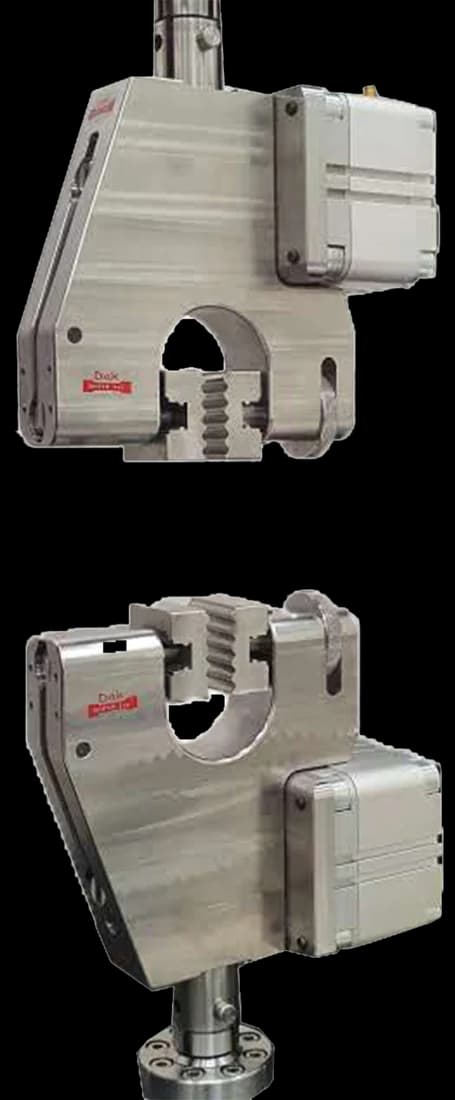
Standard 25 mm
Pneumatic Vice Action Grip
Pneumatic vice action grips clamp the full specimen width at a constant, even pressure — which is what stops one side slipping or tearing before the other.
Specifications
Testing standard
Textiles — Tear properties of fabrics — Part 2: Determination of tear force of trouser-shaped test specimens (Single tear method)
Written and technically reviewed by Dak System Inc. engineeringLast reviewed
ISO 13937-2 measures tear force using a trouser-shaped specimen: a slit cut up the middle leaves two legs which are pulled in opposite directions, tearing the fabric along the slit. It is the single tear method, and the reported force comes from peaks in a saw-toothed trace rather than from an average.
From the test method to your testing system
Explore the DAK machines already listed for ISO 13937-2, then review the grips, measurement and setup requirements below.
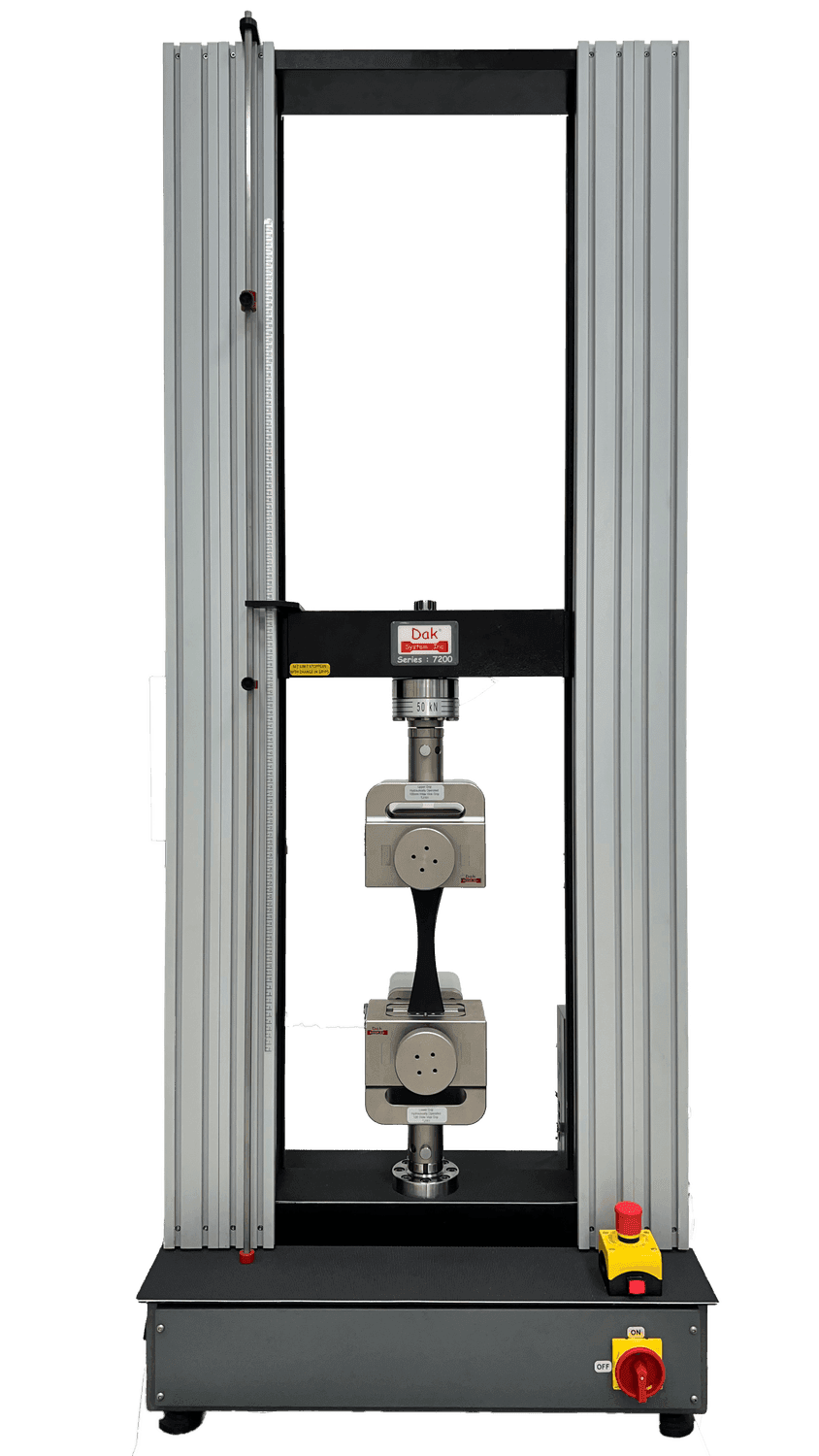 Universal Testing MachineSeries 7200Explore the machine →
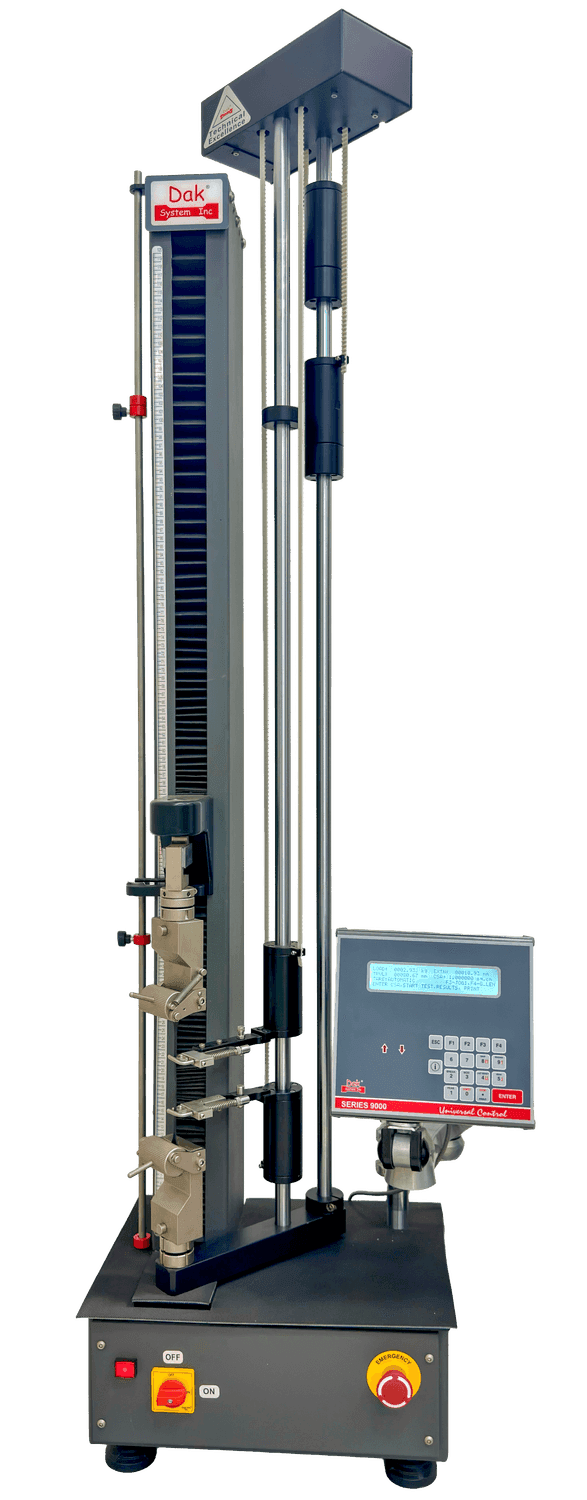 Universal Testing MachineSeries 9000Explore the machine →
01Understand the method
A rectangular fabric specimen is cut with a slit up its centre, dividing one end into two legs — the shape that gives the method its name. Each leg is clamped in an opposing grip and the crosshead separates them at 100 mm/min, so the fabric tears along the line of the slit. Force is recorded against travel throughout. Because the tear advances by breaking yarns one at a time, the trace is a saw-tooth, and the reported tear force is derived from its peaks over the tear length rather than from an average of the whole record. Warp and weft specimens are cut and reported separately.
The result is the force required to keep a tear running through the fabric once it has started. That is the property that decides whether damage stays local or spreads, and it is a different question from breaking strength entirely. Almost nothing in service fails by being pulled evenly across its width: a tarpaulin catches on a hook, a workwear garment snags on a bracket, a technical textile is nicked during installation. Whether the article survives depends on whether that small cut propagates under load, and that is what this test measures.
02Prepare the specimen and test settings
The trouser shape is the whole method. Two legs pulled apart force the tear along a defined line, and everything else exists to keep it there.
A specimen whose tear deviates from the slit line is void. It has stopped measuring the fabric and started measuring the specimen's geometry.
03Build the test setup on a DAK machine
Low forces measured accurately — commonly between a few newtons and a couple of hundred — so resolution at the low end of the load cell matters more than capacity, and accuracy to ISO 7500-1 Class 1 is needed over the range actually used. The crosshead must hold 100 mm/min. As with all tear testing, the data acquisition rate is more critical than in ordinary tensile work: each peak is a single yarn letting go, and a sampling rate too low skims over them and reports a fabric weaker than it is. Grips need wide flat faces and an even clamp across each leg.
Pneumatic vice action grips clamp the full specimen width at a constant, even pressure — which is what stops one side slipping or tearing before the other.
Specifications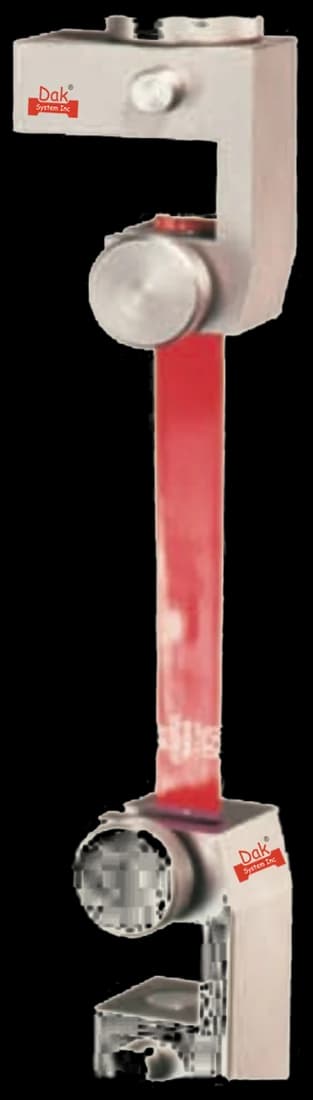
A 25 mm square vice grip suits the narrower specimen widths where a wide jaw is unnecessary.
SpecificationsDak verifies against whichever standard the method names, and where a class applies our frames sit a class tighter than it asks.
| The method asks for | Dak supplies | |
|---|---|---|
| Capacity | Low — commonly 5 N to 200 N, reported from the peaks of a jagged trace | Load cells from 1 kg to 60 ton on the Series 7200, and 0.5 to 100 kN on the Series 9000 |
| Force accuracy | ISO 7500-1 Class 1 over the working range | ISO 7500-1 Class 0.5 — a class tighter than the method asks |
| Gripping | Flat-faced grips holding the two legs of a trouser-shaped specimen | Wedge, vice-action, pneumatic and hydraulic grips, built to the specimen |
| Environment | conditioning not verified from a publisher source; ISO textile methods normally condition to ISO 139 | 3009 series chambers, −150 °C to +400 °C — temperature only |
04Run the test
05Calculate, report and interpret
Computed from the peak forces recorded over the tear length, in N
Which peaks are used and how they are combined is set by the standard. Reporting a mean of the whole record understates the fabric.
Tears deviating from the slit line are the commonest cause of a voided specimen, and they usually originate in the cutting rather than the machine. Reading an average from the trace instead of its peaks understates the fabric by a wide margin, because most of the record is the trough between yarn breaks. A sampling rate too low to catch brief peaks does the same thing more quietly, with nothing in the data to reveal it. And treating a Part 1 pendulum figure as comparable with a Part 2 force is a category error — one is an energy, the other a force.
06Compare methods and find answers
| Part 1 | Part 2 | Part 3 | Part 4 | |
|---|---|---|---|---|
| Method | Ballistic pendulum (Elmendorf) | Trouser, single tear | Wing-shaped | Tongue-shaped, double tear |
| Apparatus | Pendulum tester | Tensile machine | Tensile machine | Tensile machine |
| Reads | Energy absorbed | Force peaks | Force peaks | Force peaks |
Part 1 uses a pendulum and measures energy; the other three use a tensile machine and measure force. A pendulum result and a tensile-machine result are not comparable, and a specification naming a part means that part.
It is Part 2 of the ISO fabric tear family: the single tear method using a trouser-shaped specimen. A slit up the middle of a rectangular specimen leaves two legs, which are clamped in opposing grips and pulled apart at 100 mm/min so the fabric tears along the slit.
Because the slit divides one end of the specimen into two legs, and the specimen mounted in the machine looks like a pair of trousers with a leg in each grip. It is a description of the geometry rather than of anything about the fabric.
Part 1 is the ballistic pendulum, or Elmendorf, method — a swinging pendulum tears the fabric and the energy absorbed is read from the swing. It needs a dedicated instrument and reports energy. Parts 2, 3 and 4 all use an ordinary tensile machine and report force. A pendulum result and a tensile-machine result are not comparable.
Because once the tear leaves the slit line it is no longer travelling through the fabric in the way the method intends — it is following whatever weakness or geometry drew it aside. The number that results describes that path rather than the material. Marking the expected line before testing makes the deviation obvious as it happens.
It is the rate the standard sets, and rate matters because most fabrics are at least somewhat rate-sensitive: tear faster and the recorded force generally rises. Fixing it at 100 mm/min is what allows two laboratories to compare results at all, which is why it is not a parameter to adjust for convenience.
Whichever your customer's specification names — that is the only answer that matters commercially. If you are choosing freely, Part 2 is the most widely used of the tensile-machine methods and needs no special apparatus, which makes it the practical default.
They are close in principle: both propagate a tear along a slit using a tensile machine and both read the result from force peaks. The specimen geometry and the rate differ, so the figures should not be pooled, and a certificate should name the method actually run rather than describing the family.
Discuss your specimen, test requirements and reporting needs with DAK engineering.
This page describes the method as practised. The governing text is the current edition from the issuing body. Tell us what you are testing and we will answer with the machine, the fixture and a quotation.