Rigidly fixedTJ-146
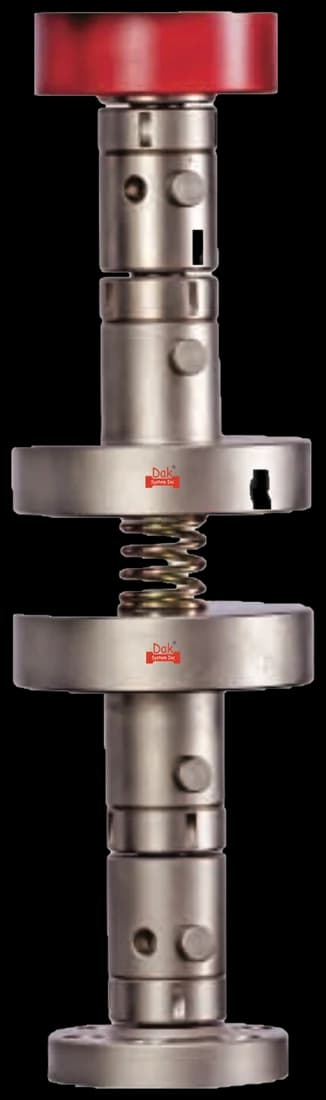
Compression Anvils
Flat parallel platens for the compression force deflection and compression set procedures, with enough travel to compress a block through most of its thickness.
Specifications
Testing standard
Standard Test Methods for Flexible Cellular Materials—Slab, Bonded, and Molded Polyurethane Foams
Written and technically reviewed by Dak System Inc. engineeringLast reviewed
ASTM D3574 is a family of tests for flexible cellular materials — slab, bonded and moulded urethane foams. Several run on a universal frame: indentation force deflection, compression force deflection, tension and tear, and constant-deflection compression set. Indentation force deflection is the figure a foam is bought and sold on.
From the test method to your testing system
Explore the DAK machines already listed for ASTM D3574, then review the grips, measurement and setup requirements below.
 Universal Testing MachineSeries 7200Explore the machine →
 Universal Testing MachineSeries 9000Explore the machine →
01Understand the method
D3574 is a family of tests on flexible foam rather than one method, and several run on a universal frame. Indentation force deflection presses a circular indentor into a foam block to stated percentages of its thickness and records the force at each. Compression force deflection compresses the whole specimen between platens. Tensile and tear tests pull cut specimens to rupture, and constant-deflection compression set measures the thickness a foam fails to recover after being held compressed.
Indentation force deflection is the number a foam is bought and sold on: it describes how a seat cushion feels and how it supports a load. The ratio between the 65 % and 25 % values is the support factor, which distinguishes a foam that bottoms out from one that carries increasing load as it compresses. Tensile strength, elongation and tear resistance describe whether the foam will survive fabrication and use, and compression set predicts whether a cushion will still be the right height after a year.
The family is designed to be read together rather than cherry-picked. Indentation force deflection describes firmness, the support factor describes how that firmness changes as the foam is compressed, density describes the material rather than the feel, and compression set describes whether any of it survives. A cushion specified on IFD alone can be the right firmness on delivery, bottom out under a heavier user, and lose height within a year — three failures that three different figures in this document would have predicted.
02Prepare the specimen and test settings
03Build the test setup on a DAK machine
Long travel at low force is the characteristic requirement: a foam block compresses through most of its thickness at forces of tens or hundreds of newtons, so a low-capacity load cell with clean resolution and a frame with generous travel is what the family needs. Platens and indentors of specified geometry are part of the method rather than accessories, and the indentation procedures require a defined preload and dwell at each deflection step.
None of it is left to the operator's judgement, and the rates are explicit. The indentation and compression tests all run at 50 ± 5 mm/min with a 60 ± 3 s dwell at each deflection step, after a preflex twice to 75 to 80 % of thickness at 250 ± 25 mm/min and a 6 ± 1 min rest: Test B1 sets its datum thickness at a 4,5 N contact force under the 200 mm indentor foot and then reads at 25 % and 65 %, while Test C compresses to 50 %. The tensile and tear tests, E and F, both run at 500 ± 50 mm/min. The apparatus clause requires a frame able to deflect the specimen anywhere between 50 and 250 mm/min.
The characteristic requirement is generous travel at low force, which is the opposite balance from most mechanical testing and often the reason a general-purpose frame is unsuitable. A block 100 mm thick compressed to 65 per cent needs 65 mm of controlled travel while measuring tens of newtons accurately. The indentor and platens are specified geometry rather than accessories, and the preload and dwell schedule has to be executed by the machine rather than by an operator watching a clock.
Flat parallel platens for the compression force deflection and compression set procedures, with enough travel to compress a block through most of its thickness.
Specifications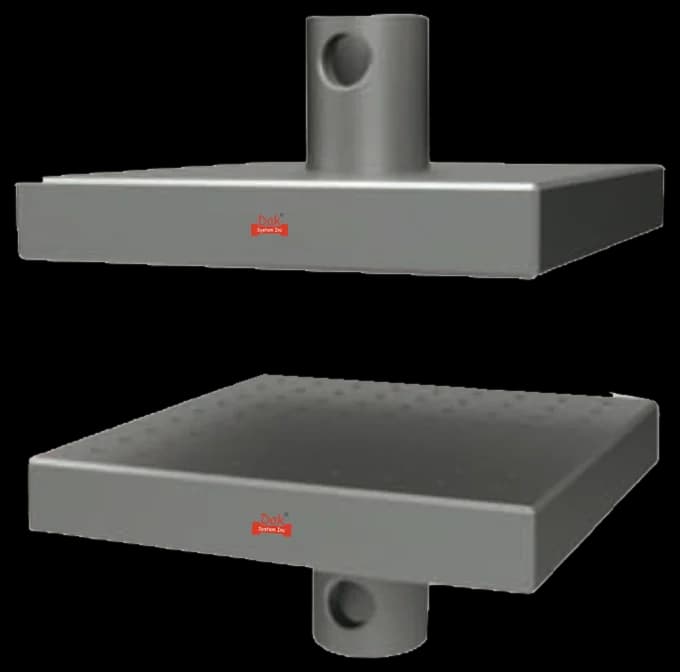
Direct compression platens sized for a full foam block, where the bearing face has to cover the whole specimen rather than indent it.
SpecificationsDak verifies against whichever standard the method names, and where a class applies our frames sit a class tighter than it asks.
| The method asks for | Dak supplies | |
|---|---|---|
| Capacity | Low force over long travel — a foam block compresses through most of its thickness at tens or hundreds of newtons. | Load cells from 1 kg to 60 ton on the Series 7200, and 0.5 to 100 kN on the Series 9000 |
| Force accuracy | unknown — ASTM E4 is not among this method's referenced documents, which name no force-verification standard and no accuracy class | ISO 7500-1 Class 0.5 — the method sets no class of its own |
| Gripping | A circular indentor of specified diameter for IFD, and flat platens for compression force deflection and compression set. | Our compression anvils, built to the specimen |
| Environment | Ambient: standard laboratory atmosphere, after a stated recovery period following cutting. | 3009 series chambers, −150 °C to +400 °C — temperature only |
04Run the test
05Calculate, report and interpret
IFD = force at a stated percentage deflection, N
Quoted at the deflection it was taken at — IFD 25 % and IFD 65 % are different numbers for the same foam.
SF = IFD at 65 % / IFD at 25 %
THE useful ratio. A high support factor means the foam carries increasing load as it compresses; a low one means it bottoms out. Two foams with the same 25 % figure can feel entirely different in a seat because of this.
Cs = ((t₀ − t_f) / t₀) × 100
How much height a cushion will permanently lose. It predicts whether a seat will still be the right height in a year.
Crushed cut edges are the commonest specimen fault and they soften the start of the curve. Skipping the dwell at each deflection step reports higher forces, because foam relaxes measurably within seconds. Testing before the material has recovered from cutting or from compression during shipping does the same. And using crosshead travel as deflection without accounting for the platen closing on the specimen shifts the whole curve.
Foam that has been stored compressed — in a roll or under other stock — has not recovered even when it looks flat, and it reads soft. Specimens cut from near a moulded skin behave differently from those cut from the core. And running the deflection steps continuously rather than pausing at each converts the test into a single sweep, which reports higher forces throughout because the foam is never allowed to relax.
06Compare methods and find answers
| ASTM D3574 | ISO 2439 | ISO 3386 | |
|---|---|---|---|
| Scope | A family — indentation, compression, tension, tear, set | Indentation hardness | Compression stress-strain |
| Indentor | Circular, specified | Circular, specified | Full-area platen |
| Comparable figures | — | Close but not identical | Different quantity |
As with most cellular-material work the method has to be named with the figure, because specimen sizes, indentor geometry and dwell schedules all differ. An IFD and an ISO 2439 hardness are close relatives and not the same number.
It is the ASTM family of test methods for flexible cellular materials — slab, bonded and moulded urethane foams. It covers indentation force deflection, compression force deflection, tensile and tear properties, and constant-deflection compression set, several of which run on a universal testing frame.
Indentation force deflection is the force needed to indent a foam block to a stated percentage of its thickness with a circular indentor. It describes how a cushion feels and how it supports a load, which is why foam is bought and sold on it. It is always quoted with the deflection it was measured at.
The ratio of the 65 % IFD to the 25 % IFD. It says whether the foam carries increasing load as it compresses or bottoms out. Two foams with identical 25 % figures can feel completely different in a seat because one keeps supporting and the other collapses — and the support factor is what distinguishes them.
Because cutting deforms it, and so does compression during shipping and storage. Testing before the cells have recovered gives a softer result that belongs to the handling rather than the material. The stated recovery period is what removes that history.
Because foam relaxes measurably within seconds of being compressed. The dwell is 60 ± 3 s after reaching each deflection, with the indentor arriving at 50 ± 5 mm/min. Reading force immediately after reaching a deflection records a higher value than the specification intends, and skipping the dwell across a run makes results systematically high — consistently enough to look like a genuinely firmer foam.
They answer different questions. IFD says what the foam feels like now; compression set says whether it will still feel like that in a year. A cushion that starts at the right firmness and loses height permanently has failed its user even though it passed on IFD, which is why both appear in furniture and automotive specifications.
They are independent, and confusing them is the commonest error in foam specification. Density describes how much material is in a given volume and governs durability and cost; indentation force deflection describes how firm the foam feels. A low-density foam can be made firm and a high-density one soft, so a cushion specified on firmness alone can be perfectly comfortable and wear out quickly.
Most often because it has not recovered. Foam shipped in a roll or stored under other stock stays compressed at the cell level for far longer than it looks compressed, and it reads soft until it has fully recovered. Cutting also deforms the specimen. The stated recovery periods after cutting and after unpacking exist precisely to remove that history.
Discuss your specimen, test requirements and reporting needs with DAK engineering.
This page describes the method as practised. The governing text is the current edition from the issuing body. Tell us what you are testing and we will answer with the machine, the fixture and a quotation.