ISO 527-4 — read the full explanation
TensileTensile test conditions for isotropic and orthotropic fibre-reinforced plastic composites.

Bring material and component performance into focus. DAK testing systems support mechanical testing across vehicle materials, joints and assemblies, with the loading arrangement, measurement and analysis selected around the result your laboratory needs.
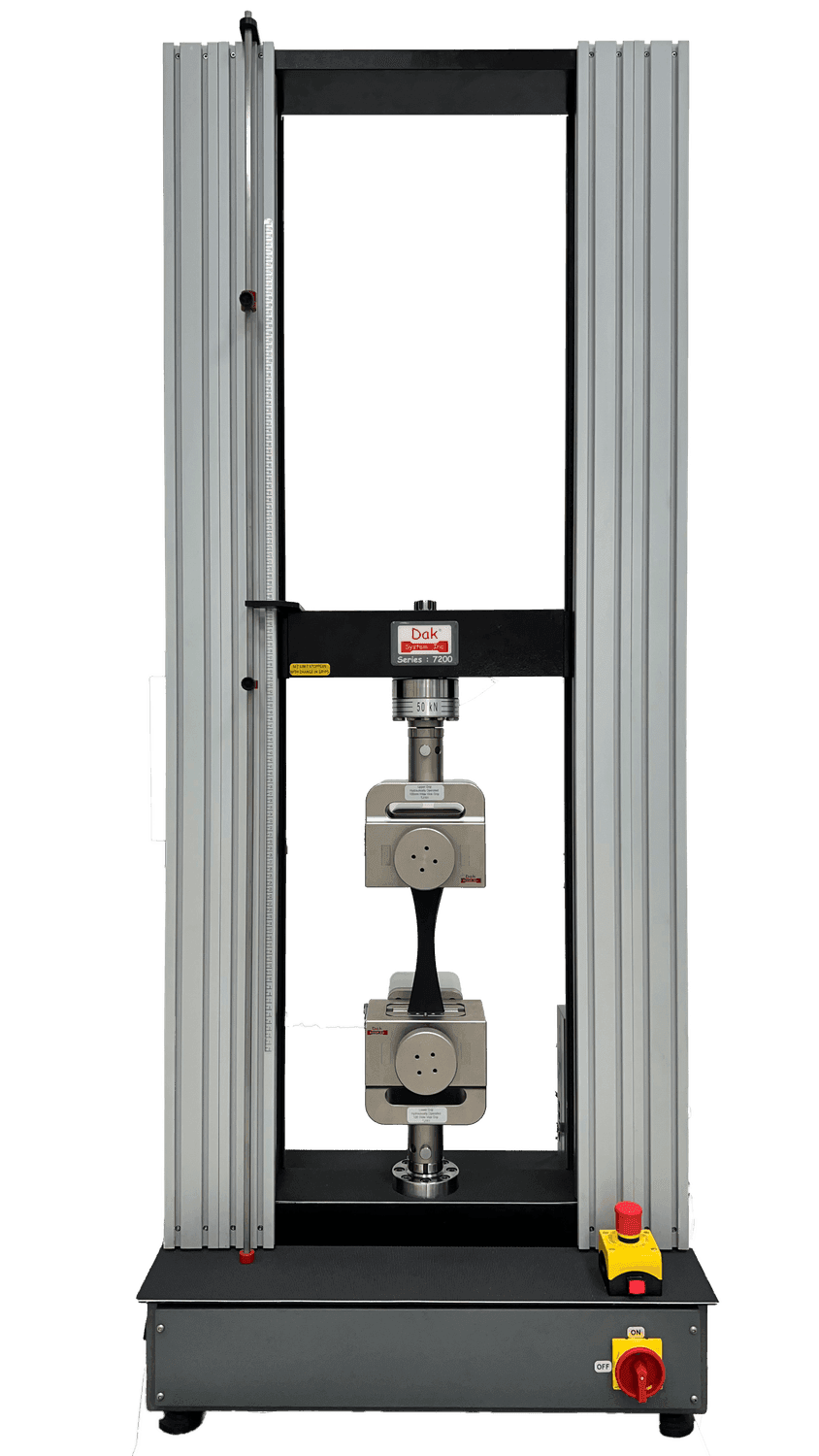
Flagship platform
Our flagship universal testing platform brings together specimen handling, force and strain measurement, flexible test programming and analysis. Configure the frame and accessories around the materials, components and test methods in your laboratory.
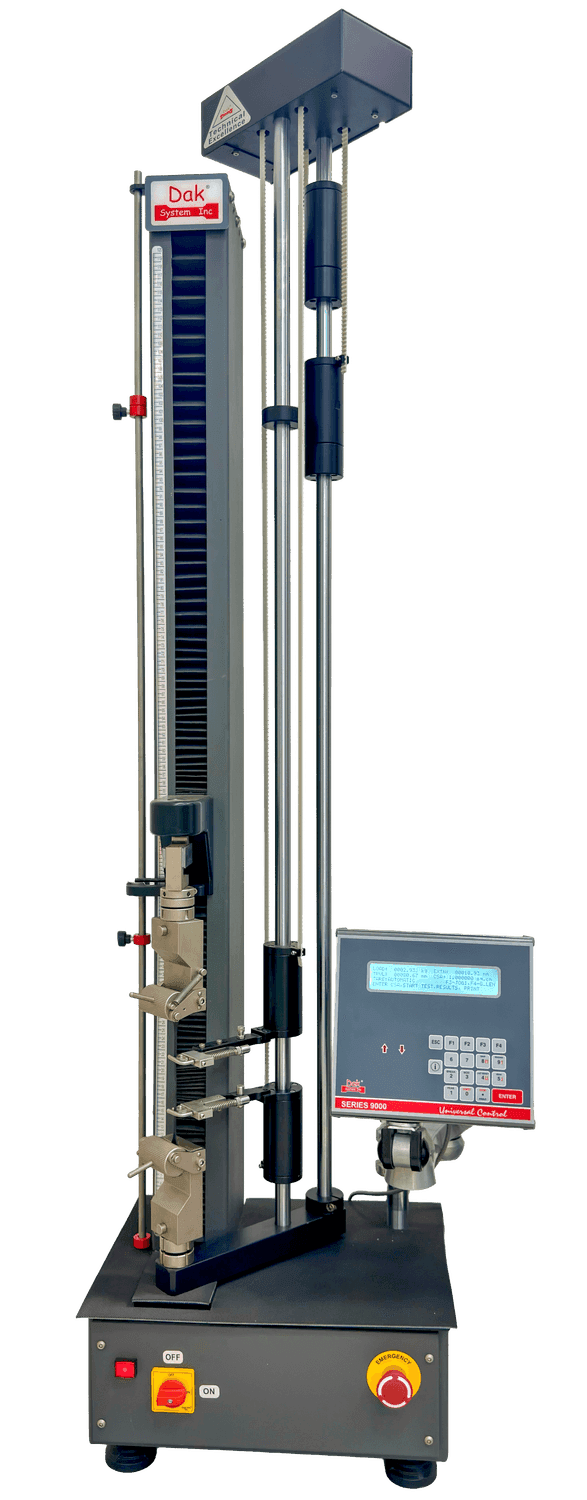
A universal testing platform for routine laboratory and production checks, with standalone Console or PC operation. Select the frame, grips and measurement arrangement for your defined test workflow.
For repeated-load programmes, explore DAK fatigue systems for coupons and components. Define the loading direction, waveform, frequency, force range and required number of cycles as part of the test specification.
For shafts, fasteners, springs and other rotational components, specify torque, angular movement and the holding arrangement. DAK torsion systems provide a dedicated route for these measurements.
Tensile and bend tests characterise material used in body, chassis and component production. Identify the alloy, thickness, specimen direction and required results, including strength, elongation or formability measurements.
Spot-welded coupons, adhesive joints and bonded layers require different loading geometries. The joint design and force direction guide specimen holding, whether the test is tensile-shear, cross-tension or peel.
Tensile, tear, compression and adhesion measurements answer different questions about elastomer performance. Gaskets and sealing components can also require load-retention or recovery measurements within a defined test programme.
Trim polymers, upholstery, foams and layered interior materials bring together strength, extension, compression and bond performance. Identify whether the specimen is a material sample, seam, bonded layer or finished part.
Metallic foils, separator films and pouch materials need a setup suited to thin specimens and their expected forces. Define the material layer and required tensile, peel or compression measurement before selecting the configuration.
Load-deflection, proof loading, torque and pull-off measurements relate to different component functions. Include the component geometry and load path when defining a spring, threaded connection or crimp test.
A metallic current-collector foil, a polymer separator and a cell assembly present different test tasks. Define the specimen and required mechanical result so the load cell, holding surfaces, travel and measurement are selected together.
Record the material, thickness, strip width, test direction and expected force. Grip faces and clamping conditions should suit the specimen, while the extension-measurement approach follows the method and the result being reported.
State which interface is being separated and the required loading geometry. Peel angle, support of the flexible layer and the area or width used to report the result define the test arrangement.
For assembly compression enquiries, include the specimen construction, dimensions, loading faces and required force-displacement result. The complete application specification defines the machine, tooling and laboratory integration.
| Test question | Define in the requirement | Explore the method |
|---|---|---|
| Tensile-shear of a spot weld | Overlapping sheet geometry, weld position and the tensile-shear loading arrangement. | |
| Cross-tension of a spot weld | The cross-tension specimen and fixture, rather than treating it as a simple lap-shear test. | |
| Peel of a welded specimen | The welded assembly, peel arrangement and force result required by the test method. | |
| Adhesively bonded joint | Adherend materials, bond geometry, conditioning and the required shear or peel result. |
Overlapping sheet geometry, weld position and the tensile-shear loading arrangement.
The cross-tension specimen and fixture, rather than treating it as a simple lap-shear test.
The welded assembly, peel arrangement and force result required by the test method.
Adherend materials, bond geometry, conditioning and the required shear or peel result.
Include the lowest force of interest as well as the maximum expected load. Allow for the specimen, grips, fixtures and movement within the available testing space.
Thin foil, a rigid coupon and a formed component transfer load differently. Select contact surfaces, jaw geometry or locating features around the specimen and its intended loading direction.
Define whether the report needs force, displacement, specimen strain or a calculated property. Include temperature, conditioning, control requirements and report format in the application specification.
Use the complete automotive standards explorer below to connect a designation with its testing context. For a customer-specific method, include the relevant drawing and test requirement with your enquiry.
Tensile test conditions for isotropic and orthotropic fibre-reinforced plastic composites.
Creep relaxation of a gasket material — the sealing load retained over time.
Compressibility and recovery of gasket materials under a specified compressive load.
Torsion testing of wire — twists to fracture, counting turns, for ductility and surface soundness. Equivalent to: ISO 7800
Heat-treated helical steel springs — load and permanent-set requirements.
Adhesion or cohesion strength of thermal spray coatings (tension pull-off).
Apparent shear strength of single-lap-joint adhesively bonded metal specimens.
T-peel resistance of adhesives (flexible-to-flexible adherends).
Durability of adhesive lap-shear joints under sustained static load.
Lap-shear strength of adhesively bonded plastic and FRP joints.
Floating roller peel resistance of adhesives (metal-to-metal bonds).
Compressive properties of composites by shear loading (IITRI fixture).
In-plane shear response by tensile test of a ±45° laminate.
Flexible cellular materials — slab, bonded and molded urethane foams (IFD, CFD, tensile, tear, compression set).
Engine mounts, bushings, seals and weatherstrips — tensile, tear and compression of elastomers.
Shear properties by V-notched beam (Iosipescu) method.
Rubber properties in compression (deflection at load / load at deflection).
Interior and exterior plastic trims, bumpers — tensile and flexural properties.
Compressive properties of polymer matrix composites — Combined Loading Compression (CLC) fixture.
90° peel resistance of adhesives.
Flexural properties of composites — 3-point and 4-point bending.
Tensile (butt-joint) strength of adhesive bonds — bar and rod specimens.
Bearing strength of plastics (pin bearing, tension or compression loading).
Bend testing of materials for ductility (guided, semi-guided and free bend).
Tension testing of metallic foil.
Force-controlled constant-amplitude axial fatigue tests of metallic materials (servo-hydraulic UTM).
Plastic strain ratio (r-value) of sheet metal (deep-drawing quality).
Tensile strain-hardening exponent (n-value) of metallic sheet materials (formability).
Sheet metal formability — n-value and r-value for stamping and deep drawing.
Body, chassis and powertrain steel and aluminium tensile verification.
Compression testing of metallic materials at room temperature.
Mechanical properties of externally and internally threaded fasteners, washers and rivets (wedge tensile, proof load, axial tension).
Evaluation of the resistance spot welding behaviour of automotive sheet steel — shear tension and cross tension testing of welded coupons.
Cylindrical helical compression springs of round wire — quality specifications (supersedes DIN 2095). Equivalent to: IS 7906 / 7907
Wiring harness insulation tensile and crimp pull-off testing (EV high-voltage harnesses).
Leaf spring load-rate and deflection testing. Equivalent to: —
Indian Standard for mechanical properties of threaded steel fasteners.
Helical compression springs — design, testing and quality requirements including load at specified length and spring rate verification.
Leaf springs for automotive suspension — load rate, deflection and permanent-set testing. Equivalent to: —
r-value and n-value determination for sheet and strip (formability parameters).
180 degree peel test for a flexible adherend bonded to a rigid one.
BIS tensile stress-strain method for vulcanized rubber, aligned with ISO 37.
Trapezoid tearing strength of textile fabrics.
Calibration and verification of a testing machine's force-measuring system.
Force calibration and verification of testing machines.
Calibration and classification of extensometer systems for uniaxial testing.
Verification of testing frame and specimen alignment by measured bending.
Plane-strain fracture toughness and strain energy release rate of plastics.
Tensile creep behaviour of plastics under constant load.
Flexural creep of plastics by three-point loading, under constant load.
T-peel test for flexible-to-flexible bonded assemblies.
Leather — adhesion of surface finish coating.
Tear properties of fabrics — trouser, wing and tongue-shaped specimens.
Flexural properties of fibre-reinforced plastic composites.
In-plane compressive properties of fibre-reinforced plastic composites.
Mechanized peel testing of resistance spot, seam and embossed projection welds.
Cross-tension testing of resistance spot and embossed projection welds.
Tensile-shear testing of resistance spot and embossed projection welds.
Tensile strength and elongation at break of flexible cellular polymers.
Leather — stitch tear resistance (upholstery and footwear seam design).
Indentation hardness (IFD/ILD) of flexible cellular materials — seating and mattress foams.
Stress-strain characteristics in compression of flexible cellular polymers (low- and high-density).
Seat-belt webbing breaking strength and elongation (tested as narrow fabric tensile).
Tensile lap-shear strength of rigid-to-rigid bonded assemblies.
Interior and exterior plastic trims, bumpers — tensile and flexural properties.
Tensile testing of metallic materials at ambient temperature (Methods A and B strain-rate control). Equivalent to: IS 1608-1
Bend test of metallic materials. Equivalent to: IS 1599
Determination of compression stress-strain properties of rubber.
Tear strength of flexible cellular polymeric materials.
Adhesion of rubber to rigid substrate — 90° peel and tension methods.
Threaded fastener proof-load and wedge-tensile verification. Equivalent to: IS 1367-3
Hose tube/cover tensile, elongation and layer adhesion.
Showing 1–8 of 72 standards
Tell us what you are testing and what the result needs to show. Our team can build the machine and accessory discussion around your actual laboratory requirement.
For laboratories in India or overseas, include the installation location and your training, calibration and support requirements.