Medical gloves for single use — Part 2: Requirements and testing for physical properties
Written and technically reviewed by Dak System Inc. engineering·Last reviewed
EN 455-2 is the European standard setting the physical property requirements for single-use medical gloves, and it contains its own tensile method rather than calling one up. A dumb-bell is cut from each of thirteen gloves in a lot and pulled to break at 500 mm/min, and the median force at break must reach 9.0 N for surgical gloves, 6.0 N for elastomer examination gloves and 3.6 N for thermoplastic ones. The same thresholds apply after seven days of accelerated ageing at 70 °C.
EN 455-2 is a requirements standard that carries its own test method rather than pointing at one, which surprises people who expect a tensile procedure to be delegated. There is no reference to ISO 37, ASTM D412 or any other tensile standard in it. Its complete normative reference list is EN 455-4, EN 1041, EN ISO 15223-1, ISO 188 and ISO 23529, and the last two are called up only for the ageing oven and for thickness measurement.
The test is simple. A dumb-bell is cut from the glove, pulled to destruction, and the force at break recorded. Thirteen gloves are taken per lot, one dumb-bell from each, and the acceptance figure is the median of the thirteen — not the mean, and not the lowest.
What it measures, and why it matters
Force at break is the property, and the standard names three categories rather than two. Surgical gloves must reach at least 9.0 N. Examination and procedure gloves in elastomer — latex, nitrile and the rest — must reach 6.0 N. Those made from thermoplastic materials, polyvinyl chloride and polyethylene, the gloves usually sold as vinyl, must reach 3.6 N.
The point most often got wrong is ageing. A single row of the requirement table covers both conditions: the same thresholds apply throughout shelf life on unaged gloves and, within twelve months of manufacture, after the ageing challenge. There is no relaxed post-ageing figure. A vinyl glove below 3.6 N after seven days in the oven has failed, not merely degraded.
The standard is also candid about what its own number means. Different glove materials need different force at break requirements, it says, and absolute force at break values do not directly correlate with in-use performance. Choosing a material for an application is part of risk management, not something the 9.0 N figure settles.
Specimen, sampling and ageing
Thirteen gloves, one dumb-bell each, and a median. The statistic is as much a part of the requirement as the force is.
Specimens per lot
13For force at break, one dumb-bell from each glove, from seven pairs of gloves where applicable. Also 13 for the dimensional checks.
Acceptance statistic
The median of the 13Not the mean, and not a minimum-of-all. A single low result does not fail the lot, and equally cannot be removed from it.
Dumb-bell
Cut with the cutter the standard dimensions in its own figureNo external specimen standard is referenced.
Thickness measurement
Method A of ISO 23529The only borrowed preparation step.
Conditioning
At least 16 hours before test
Accelerated ageing
7 days at 70 ± 2 °CIn an oven as specified in ISO 188, on gloves in unit packages or taken from bulk. Ageing and shelf life themselves are described in EN 455-4.
Recommended maximum lot size
500 000The lot size itself is not specified.
Acceptable quality level
None stated in Part 2The words do not appear in the standard. The AQL of 1.5 commonly quoted for medical gloves belongs to EN 455-1, on freedom from holes.
Test rate and instrument
The standard sets the speed itself. It is fast for a specimen that breaks at a few newtons, which shifts the difficulty from the frame to the electronics.
Crosshead speed
500 mm/min
Load cell
Appropriate for the strength of the sample under testNo capacity and no accuracy class is given. With thresholds of 3.6 to 9.0 N, tens of newtons is the sensible range.
Jaws
Firmly grip but do not damage the test specimenNo grip type is named — not pneumatic, not roller, not line contact. The choice is left to the laboratory.
Sampling rate
Fast enough not to miss the peakDakAt 500 mm/min a thin glove specimen breaks quickly. A slow acquisition rate under-reads the maximum force, and the standard sets no requirement that would catch it.
How the test runs
01Take 13 gloves from the lot, from seven pairs where that applies.
02Condition them for at least 16 hours.
03For the aged condition, place gloves in unit packages or taken from bulk into an ISO 188 oven for seven days at 70 ± 2 °C.
04Measure thickness by method A of ISO 23529.
05Cut one dumb-bell from each glove with the cutter the standard dimensions.
06Set the crosshead speed to 500 mm/min.
07Grip each specimen firmly without damaging it and pull to break.
08Record the force at break for each of the 13 specimens, including any that broke at the shoulder.
09Take the median of the 13 and compare it with the requirement for the glove category.
A test piece that breaks at the shoulder does not need to be repeated — the standard says so explicitly, which is the opposite of most tensile methods. That result stays in the set of thirteen. Discarding low shoulder-break values raises the median and can turn a failing lot into a passing one.
Grips and fixtures for this method
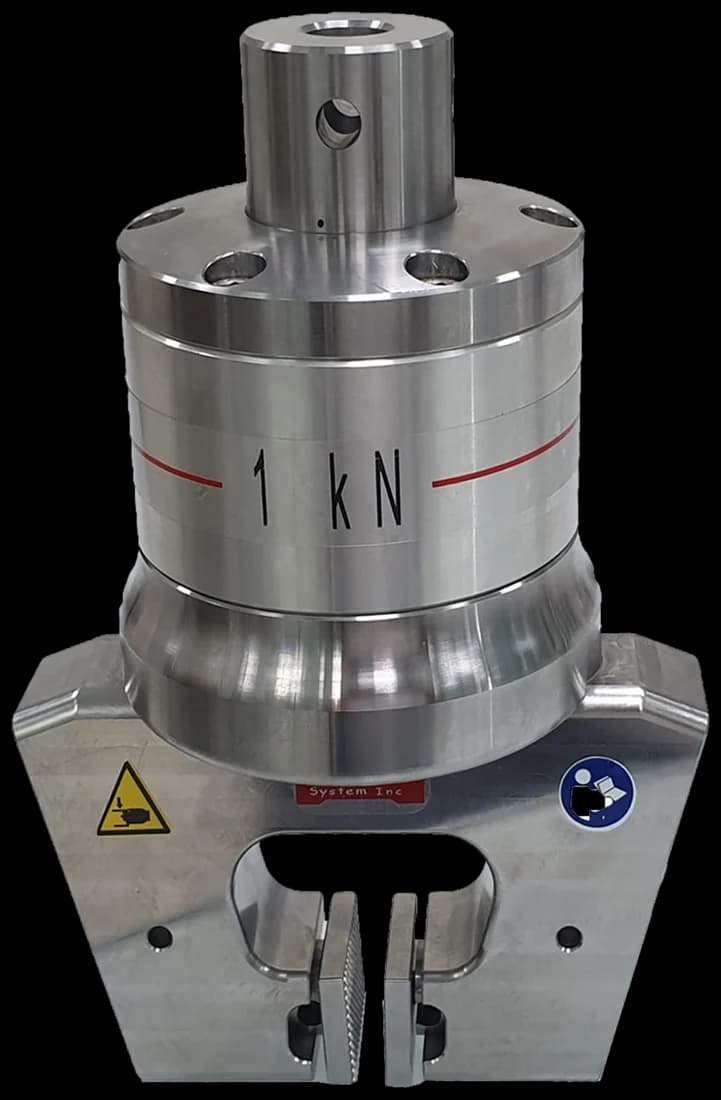
HJ-42
Light Duty Pneumatic Grip
Thin elastomer film is the awkward case the standard leaves to judgement. Pneumatic closure applies an even, repeatable clamping pressure across the tab, which is what keeps a glove dumb-bell from either slipping or tearing along the jaw line.
Force here is measured in single newtons, so the frame is chosen for its load cell rather than its capacity. Pneumatic grips remove the operator variability that hand-tightened jaws introduce on a specimen this delicate.
Glove category — surgical, elastomer examination, or thermoplastic examination
Material
Lot identification and lot size
Condition tested: unaged, or aged seven days at 70 °C
Thickness, by method A of ISO 23529
Conditioning time before test
Crosshead speed used
Force at break for each of the 13 specimens, shoulder breaks included
The median of the 13, against the requirement
Any specimen that broke at the shoulder, identified as such
What the machine must be capable of
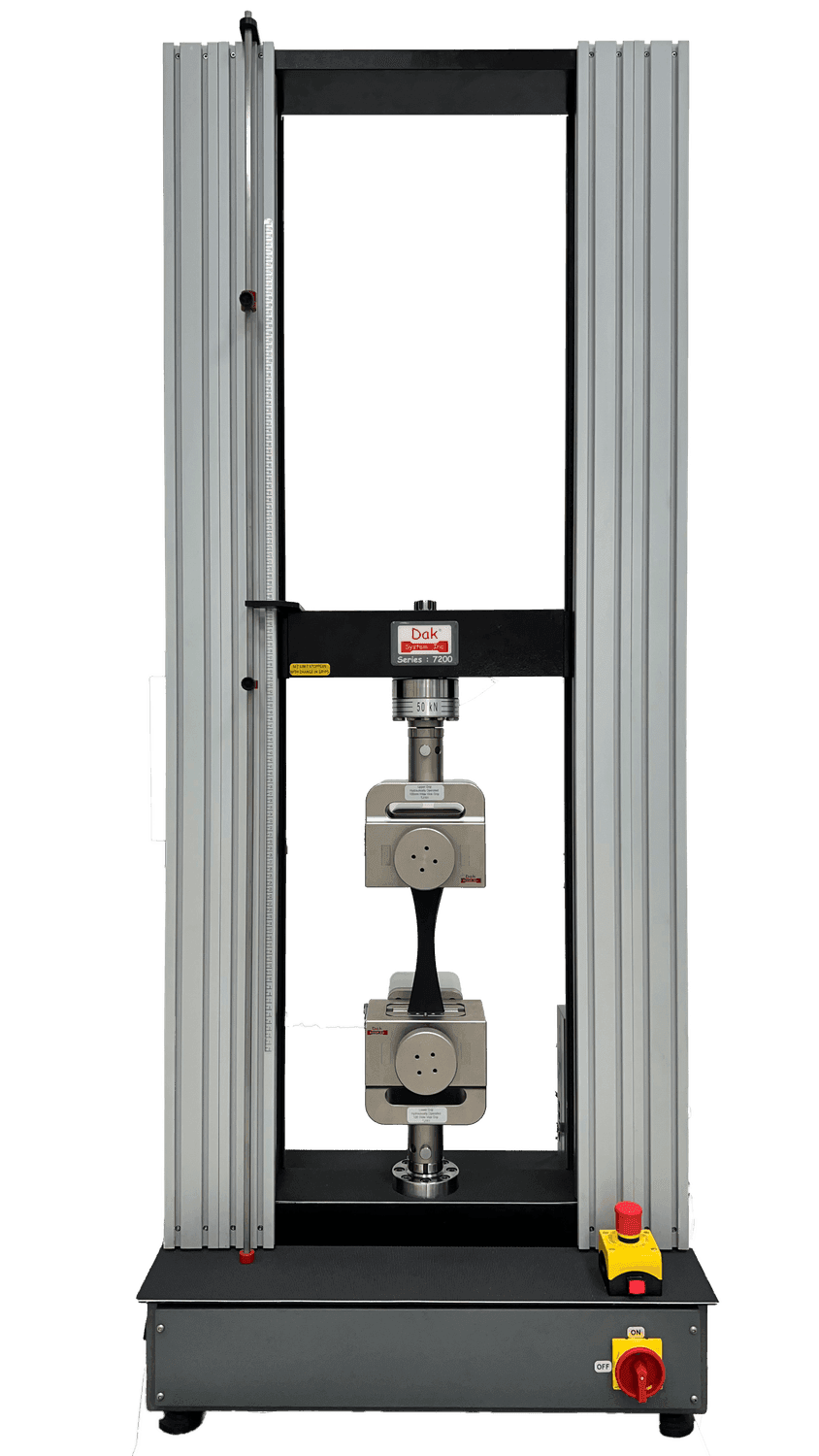
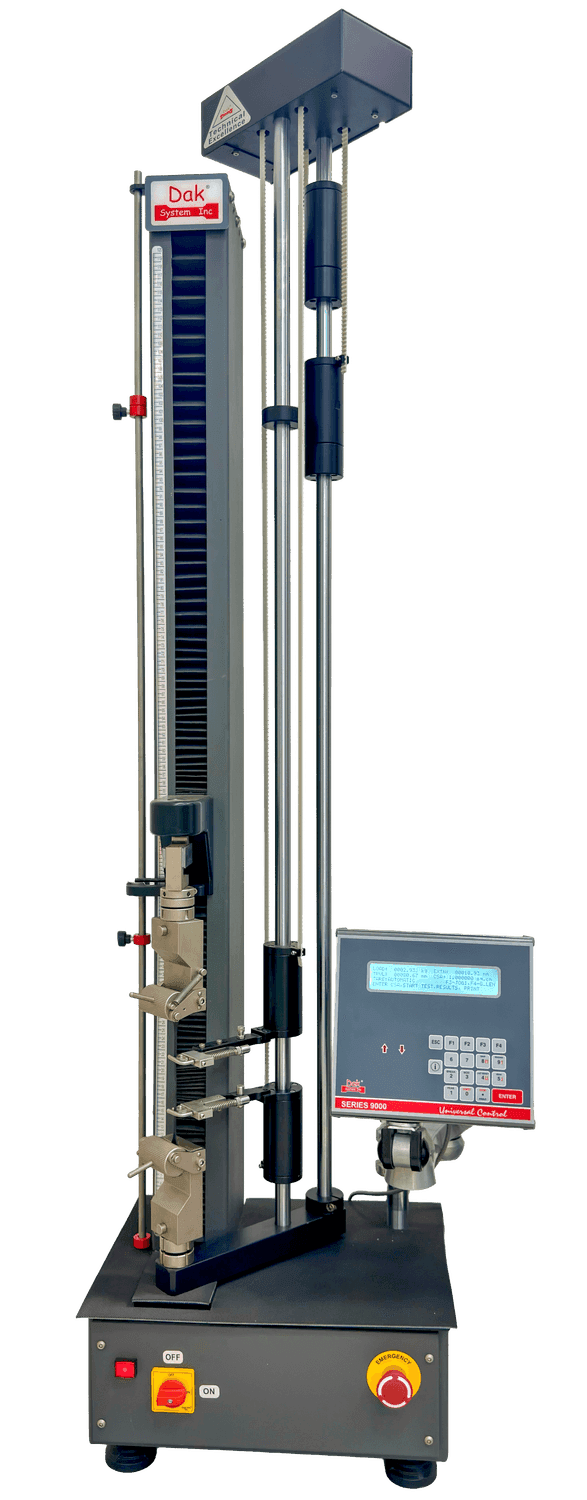
Capacity is almost irrelevant and resolution is everything. The thresholds run from 3.6 to 9.0 N, so a load cell measured in tens of newtons is the right instrument, not a large frame working at the bottom of its range. The standard asks only for a load cell appropriate for the strength of the sample under test, and gives no accuracy class or capacity.
The crosshead speed is 500 mm/min, which is fast. On a specimen breaking at a few newtons the data acquisition rate and the dynamic response of the load cell matter far more than the frame does, and a slow sampling rate will miss the peak.
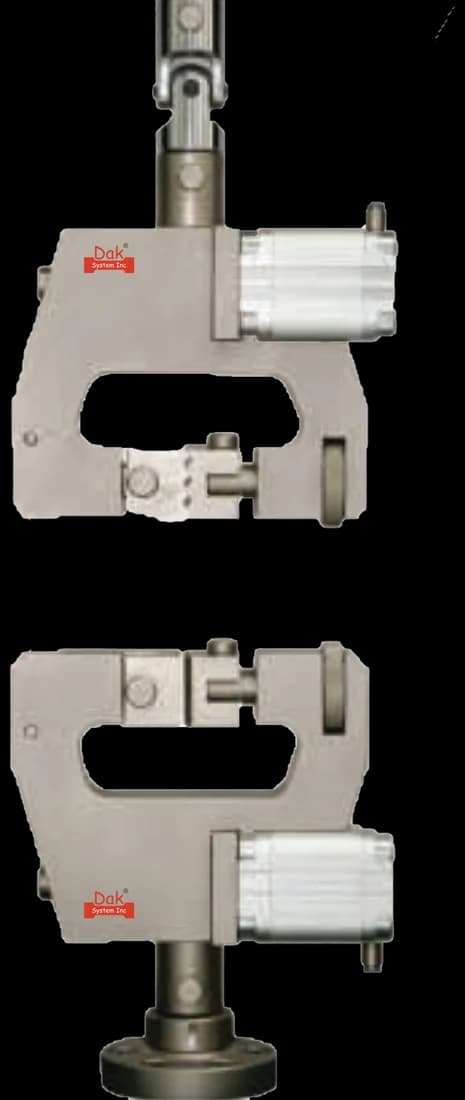
Grips are specified by what they must achieve rather than by type: jaws that firmly grip but do not damage the test specimen, with no grip design named at all. That is a genuine gap a laboratory closes with judgement, because thin elastomer film slips in flat jaws and tears at the jaw line when over-clamped.
What goes wrong in practice
EN 455-2 handles the jaw-break problem in a way that is the opposite of most tensile standards, and this is the single most useful sentence in its test clause: if a test piece breaks at the shoulder, it is not necessary to repeat the test on another test piece.
That has a consequence people miss. Because the acceptance figure is the median of thirteen, and because a shoulder break is a valid result, a low shoulder-break value cannot be quietly discarded. Doing so shifts the median upward and turns a failing lot into a passing one. The standard has decided that a glove that breaks at the shoulder is a glove that broke.
The second recurring error is expecting a lower requirement for aged gloves. There is not one.
The third is quoting an AQL for Part 2. Part 2 contains none.
Force at break requirements
Table 3 of EN 455-2:2015, reproduced in full. Note that it is a single row: one set of thresholds serves both the unaged and the aged condition.
Condition
Surgical gloves
Examination or procedure, elastomer
Examination or procedure, thermoplastic
Throughout shelf life, unaged; AND within 12 months of manufacture after the ageing challenge
≥ 9.0 N
≥ 6.0 N
≥ 3.6 N
There is no relaxed post-ageing figure — this is the most misreported thing about EN 455-2. The elastomer column covers all examination gloves EXCEPT those made from thermoplastic materials; the thermoplastic column covers polyvinyl chloride and polyethylene, the gloves usually sold as vinyl. The standard also warns in clause 5.1 that absolute force at break values do not directly correlate with in-use performance, and that selecting an appropriate material is part of risk management.
The four parts of EN 455
Part
Covers
Part 1
Requirements and testing for freedom from holes — this is where the AQL lives
Part 2
Requirements and testing for physical properties — dimensions and force at break
Part 3
Requirements and testing for biological evaluation
Part 4
Requirements and testing for shelf life determination
Part 2 references Part 4 rather than duplicating it: ageing and shelf life requirements are described in EN 455-4, while Part 2 only carries the seven-day oven challenge used to demonstrate force at break. An AQL quoted against Part 2 is a Part 1 figure that has drifted.
Questions we are asked about this test
What is EN 455-2?+
It is Part 2 of the European standard for single-use medical gloves, covering requirements and testing for physical properties — chiefly dimensions and force at break. The current edition is EN 455-2:2024, harmonised under the European medical devices regulation. Unusually for a requirements standard, it contains its own tensile test method rather than calling one up.
Does EN 455-2 use ISO 37 for the tensile test?+
No. There is no reference to ISO 37, to ASTM D412 or to any other tensile method anywhere in it. Clause 5.2 defines the test itself, including a dimensioned dumb-bell cutter, the crosshead speed and the sampling. Its complete normative reference list is EN 455-4, EN 1041, EN ISO 15223-1, ISO 188 and ISO 23529, and the last two are used only for the ageing oven and for thickness measurement.
What force must a medical glove reach?+
It depends on the category, and there are three rather than two. Surgical gloves must reach at least 9.0 N. Examination and procedure gloves made from elastomer — latex, nitrile and the like — must reach at least 6.0 N. Examination and procedure gloves made from thermoplastic materials such as polyvinyl chloride and polyethylene, usually sold as vinyl, must reach at least 3.6 N. The figure is the median of thirteen specimens.
Is the requirement lower for aged gloves?+
No, and this is the point most often got wrong. Table 3 is a single row that covers both conditions: the same 9.0, 6.0 and 3.6 N thresholds apply throughout shelf life on unaged gloves and, within twelve months of manufacture, after the ageing challenge of seven days at 70 °C. A glove that falls below its threshold after ageing has failed.
Why is the result a median rather than an average?+
Because the standard says so: the force at break is recorded for each of the thirteen specimens and the median of those results must comply with Table 3. A median is insensitive to one extreme value in either direction, which suits a test where a shoulder break is an accepted outcome rather than a reason to retest. It also means the acceptance decision cannot be rescued by one unusually strong specimen.
My specimen broke at the shoulder. Do I test another?+
No. EN 455-2 states plainly that if a test piece breaks at the shoulder it is not necessary to repeat the test on another test piece. That is the opposite of most tensile standards and it has a consequence worth being careful about: because acceptance is the median of thirteen, a low shoulder-break value must stay in the set. Discarding it shifts the median upward and can turn a failing lot into a passing one.
What grips should I use for glove testing?+
The standard does not say. It states the functional requirement — jaws that firmly grip but do not damage the test specimen — and names no grip type, pressure or face material. That leaves a real decision to the laboratory, because thin elastomer film slips out of flat jaws if under-clamped and tears along the jaw line if over-clamped. Pneumatic grips help by applying an even, repeatable pressure that does not vary with the operator.
What machine capacity do I need for EN 455-2?+
Very little, and that is the trap. The thresholds run from 3.6 to 9.0 N, so a load cell of a few tens of newtons is the right instrument and a large frame working at the bottom of its range is not. The standard asks only for a load cell appropriate for the strength of the sample under test and gives no capacity or accuracy class. The crosshead speed of 500 mm/min is fast for a specimen that breaks at a few newtons, so data acquisition rate and load cell dynamic response matter more than the frame.
What AQL does EN 455-2 require?+
None. The words acceptable quality level do not appear in Part 2 at all. The AQL of 1.5 that is widely quoted in connection with medical gloves belongs to EN 455-1, which covers freedom from holes and uses a watertight test. Attributing an AQL to Part 2 is a common mix-up between the parts.
Related and equivalent standards
EN 455 has four parts under one general title. Part 1 covers freedom from holes, Part 2 physical properties, Part 3 biological evaluation and Part 4 shelf life determination, and Part 4 is where ageing and shelf life requirements are actually described. ISO 188 supplies the ageing oven and ISO 23529 the thickness measurement. EN 1041 and EN ISO 15223-1 govern the information and symbols supplied with the device. ASTM D3578 for rubber examination gloves and ASTM D6319 for nitrile examination gloves are the American counterparts; those texts were not retrieved and no comparison of their figures is offered here.
Dak verifies against whichever standard the method names, and where a class applies our frames sit a class tighter than it asks.
The method asks for
Dak supplies
Capacity
Very low. The requirement is 9.0 N for surgical gloves, 6.0 N for elastomer examination gloves and 3.6 N for thermoplastic ones, so a load cell of a few tens of newtons is the right instrument rather than a large frame.
Load cells from 1 kg to 60 ton on the Series 7200, and 0.5 to 100 kN on the Series 9000
Force accuracy
none stated — the standard asks only for a load cell appropriate for the strength of the sample under test and gives no class
ISO 7500-1 Class 0.5, verified to ASTM E4, DIN 51221 and BS 1610
Gripping
Jaws that firmly grip but do not damage the test specimen. The standard names no grip type at all, which leaves the choice to the laboratory; thin elastomer film slips in flat jaws and tears at the jaw line when over-clamped.
Conditioning for at least 16 hours before test. Ageing, where it applies, is 7 days at 70 plus or minus 2 degrees Celsius in an oven specified by ISO 188.
This page describes the method as practised. The governing text is the current edition from the issuing body. Tell us what you are testing and we will answer with the machine, the fixture and a quotation.