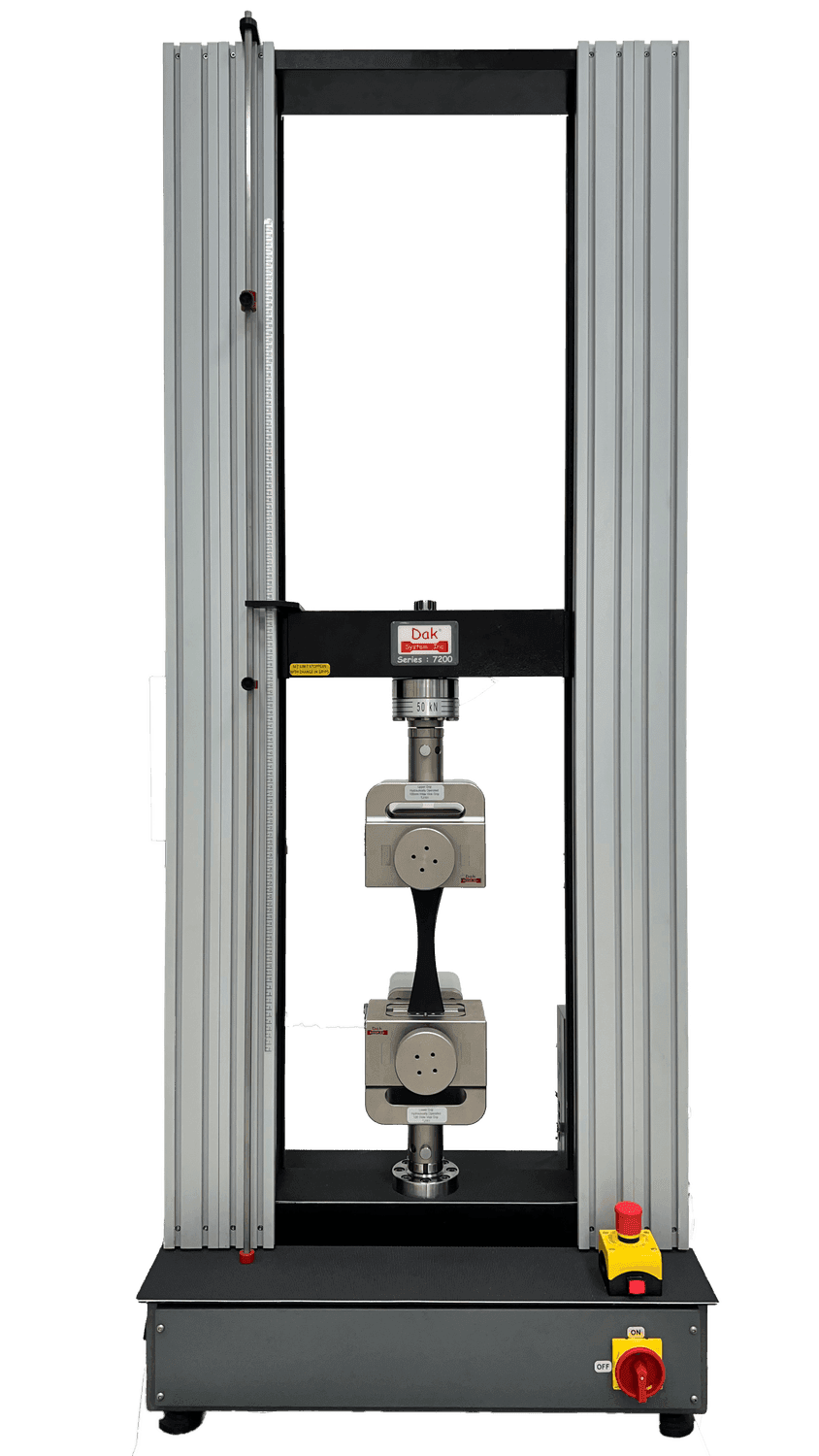
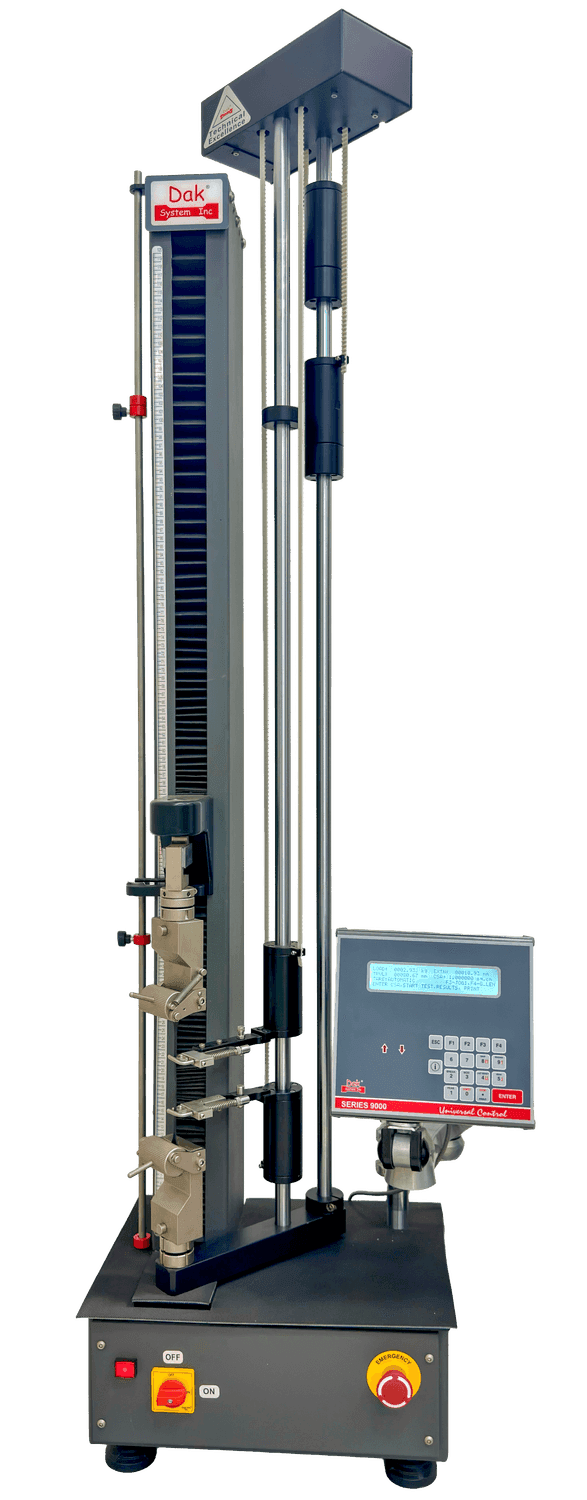
Split Capstan Grips
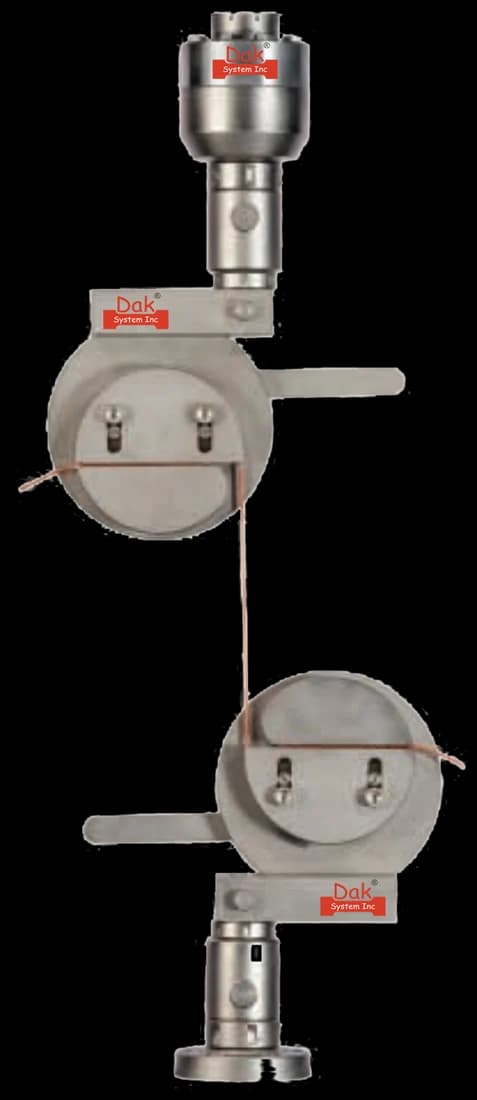
A split capstan or split-drum clamp wraps the webbing around a curved surface so the load is taken up gradually. This is the fixture the method is built around, not an alternative to a flat jaw.
SpecificationsTesting standard
Standard Test Method for Breaking Strength and Elongation of Textile Webbing, Tape and Braided Material
Written and technically reviewed by Dak System Inc. engineeringLast reviewed
ASTM D6775 determines the breaking strength of textile webbing, tape and braided material using a split-drum clamping assembly. The drum is the method: webbing is strong enough that a flat jaw would fail the specimen at the clamp long before the material reached its own limit.
A length of webbing, tape or braid is conditioned and wrapped around a split-drum clamping assembly with enough turns to prevent it slipping, then extended at a constant rate until it ruptures. The breaking strength is the maximum force recorded. Where required, elongation is also measured — not at break, but at a specified force stated with the result. The method applies to material no wider than 90 mm and no stronger than 89 000 N, and is suitable for acceptance testing of commercial shipments.
The strength of webbing as a finished product, at its full width, without normalising to anything. The drum is what makes that possible and is the defining feature of the method. Webbing is far too strong for a flat clamp: holding a strap rated in tens of kilonewtons would require a jaw pressure that crushes the yarns at the clamp line, and the specimen would break there at a fraction of its capability. A wrap takes the load up gradually through friction around a curve, so most of the tension is already carried before the webbing leaves the last turn.
The method states its own boundaries, and they are worth checking before quoting it.
Elongation here is normally quoted at a specified force, not at break. That is the number a lifting sling or a restraint is designed with, because what matters is how far it stretches under working load.
The maximum force recorded before rupture
A force for the full width of the webbing as supplied. Nothing is normalised, because webbing is a finished product rather than a material.
EASF = (ΔL / L₀) × 100 at the stated force
The force has to be stated with the value. An elongation quoted without the force it belongs to is meaningless on a material whose curve is strongly non-linear.

A split capstan or split-drum clamp wraps the webbing around a curved surface so the load is taken up gradually. This is the fixture the method is built around, not an alternative to a flat jaw.
Specifications
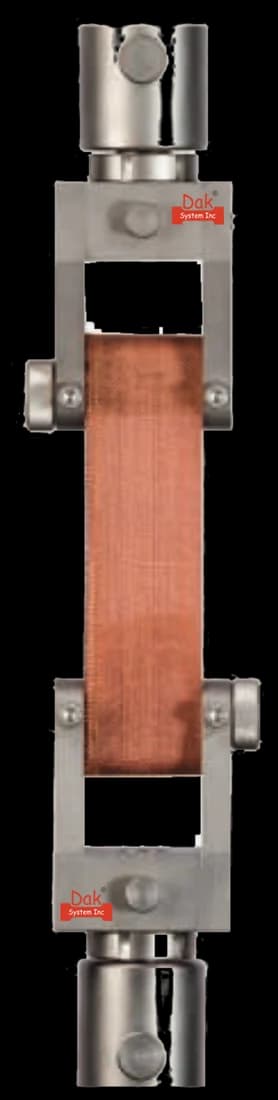
For narrower tapes and cords, where a bollard arrangement gives the same wrap without the bulk of a full drum.
SpecificationsSubstantial force by textile standards — the method reaches to 89 000 N — with a split-drum assembly sized for the width and the load, and a frame with enough travel for the wraps and the extension together. Elongation at a specified force needs the data system to capture the force and extension continuously rather than only at the peak. The load cell is chosen for the material's rating, and the frame's stiffness matters because the energy released when webbing ruptures at these loads is considerable.
Testing webbing on a flat-jaw fabric method, which fails the specimen at the clamp, reads low, and gets the material rejected for a fixture problem — a common and expensive error, because nothing about the low result announces its cause except the break position. Too few wraps, so the specimen creeps through during the test. Twisted wraps. And quoting an elongation without the force it was measured at, on a material whose curve is non-linear enough that the omission makes the figure unusable. A quieter failure is ignoring the scope limits: heavy lifting slings and cargo webbing can exceed the 89 000 N ceiling, and above it both the drum assembly and the frame are outside what the method contemplates, so the designation should not be cited for the result.
| ASTM D6775 | D5034 / D5035 | |
|---|---|---|
| Clamping | Split drum | Flat jaws |
| Material | Webbing, tape, braid | Woven and knitted fabrics |
| Strength range | Up to 89 000 N | Far lower |
| Elongation | At a specified force | At break |
Testing webbing on a fabric method is a common and expensive mistake — the specimen fails at the jaw, the result is low, and the material gets rejected for a fixture problem.
It is the ASTM test method for the breaking strength and elongation of textile webbing, tape and braided material, using a split-drum clamping assembly. It applies to material no wider than 90 mm and no stronger than 89 000 N, and is suitable for acceptance testing of commercial shipments. The current designation is D6775-13(2024).
Because webbing is far too strong for a flat clamp. To hold a strap rated in tens of kilonewtons, a jaw would have to grip hard enough to crush the yarns at the clamp line, and the specimen would break there at a fraction of its real strength. Wrapping it around a drum takes the load up gradually through friction along a curve, so by the time the webbing leaves the last wrap most of the tension is already carried and the clamping force required is modest.
Because that is the number the product is designed around. A lifting sling, a harness or a restraint is specified by how far it stretches under working load, not by how far it stretches at the instant it breaks. Webbing curves are strongly non-linear, so the elongation depends heavily on where on the curve it is read — which is why the force has to be stated with the value or it means nothing.
It usually fails at the jaw and reads low, and the material is rejected for a fixture problem rather than a material one. This is a common and expensive mistake, because the fabric methods look applicable — the material is a textile, the machine is the same — and nothing about the low result announces that the clamping was the cause. The break position is the tell.
Enough that the specimen does not slip, which depends on the webbing's surface and the load. The principle is that friction accumulates around the wrap, so each additional turn reduces the tension reaching the clamped tail substantially. Too few and the specimen creeps through, corrupting both the force and any elongation reading; the check is whether the free end moved during the test.
Because webbing fails from an edge. If the wrap is twisted or sits unevenly across the drum, one edge takes up load before the other, reaches its limit first, and the failure runs across from there at a force below the strap's real capability. Across a 90 mm width a small twist puts a meaningful path-length difference between the two edges.
Material wider than 90 mm or stronger than 89 000 N. Both limits are stated in the method, and both matter in practice — heavy lifting slings and cargo webbing can exceed the strength limit, at which point the drum assembly and the frame are outside what the method contemplates and a different arrangement, with its own justification, is needed.
Dak verifies against whichever standard the method names, and where a class applies our frames sit a class tighter than it asks.
| The method asks for | Dak supplies | |
|---|---|---|
| Capacity | High for a textile — the method covers breaking strengths up to 89 000 N | Load cells from 1 kg to 60 ton on the Series 7200, and 0.5 to 100 kN on the Series 9000 |
| Force accuracy | ASTM D76 requirements for textile testing machines | ISO 7500-1 Class 0.5, verified to ASTM E4, DIN 51221 and BS 1610 |
| Gripping | A split-drum clamping assembly, which wraps the webbing rather than pinching it | Our split capstan grips, built to the specimen |
| Environment | 23 ± 2 °C standard laboratory atmosphere | 3009 series chambers, −150 °C to +400 °C — temperature only |
This page describes the method as practised. The governing text is the current edition from the issuing body. Tell us what you are testing and we will answer with the machine, the fixture and a quotation.