Testing standard

ASTM D2061

Standard Test Methods for Strength Tests for Zippers

Written and technically reviewed by Dak System Inc. engineeringLast reviewed

ASTM D2061 is a set of ten test methods for the strength of zippers, covering the chain and elements, the stops, separable units, the slider and the slider pull. The standard states that no single test determines suitability for an end use and that the tests are inter-related, so more than one is usually needed. The current edition is D2061-07(2021), active, with SI units regarded as standard.

At a glance

Test type
Tensilethe specimen is pulled apart
Published by
ASTM
Edition
D2061-07(2021)

What the test does

Ten methods, each addressing one way a zipper can be pulled apart: strength of chains and elements, holding strength of stops, holding strengths of separable units, resistance to cushioned compression of sliders, slider deflection and recovery, resistance to twist of pull and slider, torsional resistance of slider pull for removal of components, resistance to pull-off of slider pull, resistance to angular pull-off of slider pull, and holding strength of slider lock.

Six are tension pulls on a testing frame — the chain loaded across its width, a stop or separable unit loaded until it lets go, a pull detached from its slider straight on and then at an angle, a lock loaded until it releases. One is a compression test on the slider, one measures deflection and recovery, and two are twisting tests. The scope warns that not every method suits every kind of zipper, and states the restrictions inside each method rather than centrally.

What it measures, and why it matters

Where a zipper will give up first. A zip is an assembly of dissimilar small parts and fails at whichever is weakest for the way it is used: elements stripping off the tape on a tight garment, a bottom stop pulling through on an overfilled bag, a pull snapping off a sleeve, a slider spreading under a load it was never meant to carry. The standard is explicit that no single test determines suitability for an end use and that the tests are inter-related, so more than one may be needed.

They are also stated to be satisfactory for acceptance testing of commercial shipments, which is how most of this work is commissioned: a purchaser names two or three of the ten against a limit, and a batch is released or held on those. D2061 sits within a wider family of zipper methods — D2051, D2052, D2053, D2054, D2057, D2058, D2059/D2059M, D2060, D2061 and D2062, not every number in that range — which ASTM calls a collection of proven test methods that can be used as aids in evaluating zippers without the need for a thorough knowledge of them, while noting they do not measure every relevant property.

What is tested, and which of the ten

The specimen is a finished zipper, tested as supplied. The first decision is not how to test it but which of the ten methods the specification actually calls for.

Strength of chains and elements
Sections 9–16
Holding strength of stops
Sections 17–24
Holding strengths of separable units
Sections 25–32
Resistance to cushioned compression of sliders
Sections 33–42
Slider deflection and recovery
Sections 43–51
Resistance to twist of pull and slider
Sections 52–61
Torsional resistance of slider pull
Sections 62–71For removal of components.
Resistance to pull-off of slider pull
Sections 72–81
Resistance to angular pull-off of slider pull
Sections 82–91
Holding strength of slider lock
Sections 92–100
Specimen
The finished zipper, tape attached, as suppliedSeveral methods load tape and elements together, so the tape is not trimmed away.
Applicability
Not every method suits every kind of zipperThe scope warns of this, and the restrictions are stated inside each method rather than centrally.
Units
SI values are standardInch-pound equivalents are given for information only — the reverse of the convention in the neighbouring touch-fastener methods.

Citing "ASTM D2061" without naming which of the ten methods is meant is the commonest fault on a zipper specification, and it makes the requirement untestable.

Loading, by group

The ten methods do not all load the same way, which is why one machine does not cover all of them.

Tension group
Six of the tenThe chain loaded across its width, a stop or a separable unit loaded until it lets go, a pull detached from its slider straight on and then at an angle, a lock loaded until it releases.
Compression
Resistance to cushioned compression of slidersPlatens with a compliant backing rather than a tensile pull.
Deflection and recovery
Slider deflection and recoveryDisplacement measured after unloading, not only at peak — an elastic-recovery measurement rather than a strength one.
Twist and torsion
Two methodsResistance to twist of pull and slider, and torsional resistance of slider pull. Neither is a tension test.
Rates and grip separations
As specified in each methodNo figures are quoted here: none was corroborated against two independent publisher-side sources. Read them from the edition in force.
Conditioning
The textile standard atmospherePractice

How a D2061 programme runs

  1. 01Establish which of the ten methods the specification names — this comes before anything else.
  2. 02Check the restrictions inside each of those methods against the zipper type in hand.
  3. 03Condition the zippers in the textile standard atmosphere.
  4. 04Mount the zipper as the chosen method defines, with the tape attached.
  5. 05For the tension methods, grip the tape without crushing the elements beside the jaw.
  6. 06Load at the rate the method specifies, to the defined end point.
  7. 07For cushioned compression, load the slider between platens against the specified backing.
  8. 08For deflection and recovery, record the displacement after unloading as well as at peak.
  9. 09For the twist and torsional methods, apply torque rather than a linear pull.
  10. 10Report each method separately, naming it — never as a single "D2061" figure.

The standard states that the tests are inter-related and that no single one determines suitability for an end use. Reading one result as a verdict is a misuse of the method, not a shortcut through it.

Grips and fixtures for this method

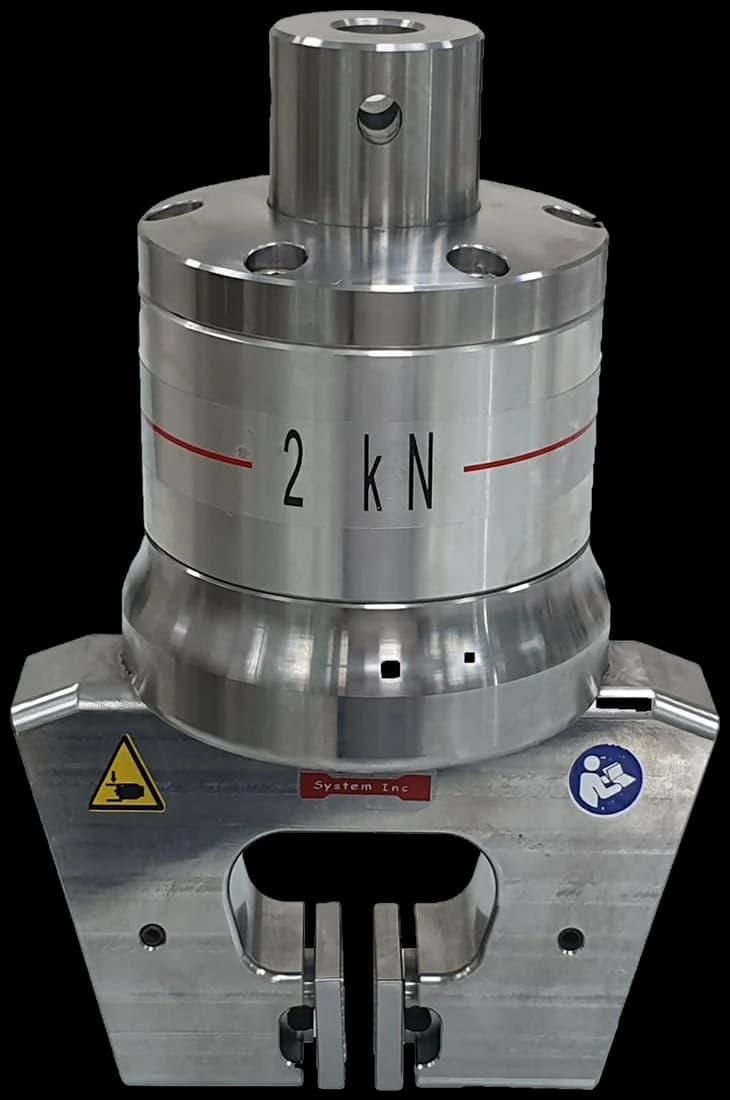
2 kN pneumatic vice action grip with its capacity engraved on the body

2 kN Pneumatic Grip

Air-driven vice action for the tension group. Identical clamping pressure on every specimen matters here because most of these methods load a small metal or moulded part through a textile tape, and operator grip force would otherwise be a variable.

Specifications
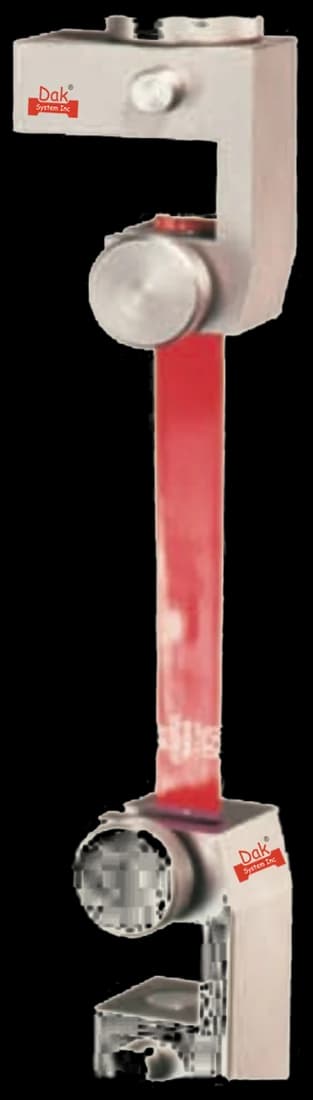
25 mm square vice action grip clamping a red film specimen
Rubber facedTJ-34

25mm Square Vice Action Grip

Rubber-coated faces hold the tape without crushing the elements beside the jaw. A zipper gripped across its elements fails at the grip line, and the result then describes the clamping rather than the zipper.

Specifications
Self-identifying

Load Cells

A low-range cell sized for the specimen. The tension methods work in a few hundred newtons at most, and a cell chosen for the frame's capacity throws away the resolution these results need.

Specifications
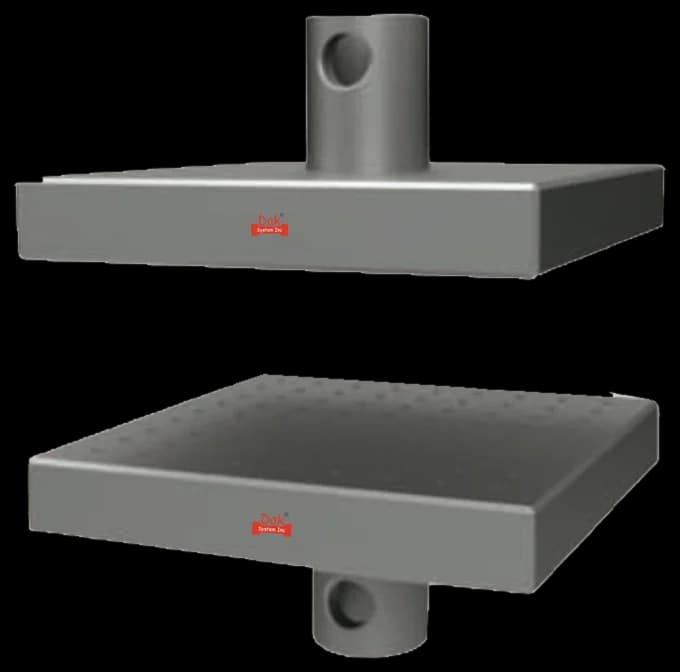
Direct compression fixture platens
5 to 400 kNTJ-125

Direct Compression Fixture

For the cushioned compression method, which loads the slider between platens rather than pulling it. Custom geometry is normal here — the backing and the platen arrangement are defined by the method, not by the frame.

Specifications

What the report has to contain

  • Reference to ASTM D2061 and the edition
  • Which of the ten methods was run, named individually
  • Zipper type, size, element material and tape
  • Conditioning atmosphere
  • The rate or loading condition used, per method
  • The result for each method, with its units — SI being standard
  • Number of specimens per method
  • Any method excluded because the zipper type falls outside its stated restrictions
  • Failure location and description
  • Any specimen that failed at the grip line, and whether it was discarded

What the machine must be capable of

One designation, more than one machine. The tension group runs on a constant-rate-of-extension frame with a load cell sized for a few hundred newtons and light pneumatic or vice-action grips; the forces are small and a cell chosen for the frame will not resolve them. Angular pull-off needs the pull held off-axis at a defined angle, a fixture requirement rather than a frame one. Cushioned compression needs platens and a soft backing. Slider deflection and recovery needs displacement measured after unloading, not only at peak. The twist and torsional methods are not tension tests and need a torque arrangement. A laboratory equipped for the tension group can run most of D2061 but not all of it, so establish which of the ten a specification calls for.

What goes wrong in practice

Citing "ASTM D2061" without naming which of the ten methods is meant — the commonest fault, and it makes the requirement untestable. Reading one result as a verdict, when the standard says the tests are inter-related and none settles fitness for an end use. Gripping across the elements so the chain fails at the jaw. Comparing a result against a European performance level set by a different document with its own methods. And reversing the unit convention out of habit: in D2061 the SI values are the standard, unlike several neighbouring closure methods.

D2061, its ASTM companions and the European route

ASTM D2061ASTM D2062EN 16732
What it coversStrength of zippers, in ten methodsOperability of zippersSlide fasteners (zips) — specification
Type of documentTest methodsTest methodA specification with its own test methods
Question answeredHow strong is each part?How well does it run?Does it meet a stated performance level?
ResultA force or torque per methodAn operability measureA performance level against each characteristic
Interchangeable?NoNo

EN 16732 sets performance levels using its own test methods, so a requirement written to it does not resolve into D2061 numbers and the two cannot be cross-read. D2061 sits within a wider ASTM family of zipper methods — D2051, D2052, D2053, D2054, D2057, D2058, D2059/D2059M, D2060 and D2062 alongside it — which ASTM describes as a collection of proven test methods usable as aids in evaluating zippers without the need for a thorough knowledge of them, while noting they do not measure every relevant property.

Questions we are asked about this test

What is ASTM D2061?

It is the ASTM standard test methods — plural — for strength tests for zippers, currently D2061-07(2021), active, maintained by subcommittee D13.54 in Book of Standards volume 07.01. It contains ten separate methods, each addressing one way a zipper can be pulled apart, from the strength of the chain and elements through the holding strength of the stops to the resistance of the slider pull to angular pull-off.

Which of the ten methods do I need?

Whichever the specification names — and that is the point most zipper requirements fall down on. Citing "ASTM D2061" alone does not identify a test, because the designation covers ten of them loading different parts in different directions. The standard itself warns that not every method suits every kind of zipper, and states the restrictions inside each method rather than in one central list, so the zipper type has to be checked against the method as well.

Can one test tell me whether a zipper is fit for its use?

No, and the standard says so: no single test determines suitability for an end use, and the tests are inter-related, so more than one may be needed. A zip is an assembly of dissimilar small parts and fails at whichever is weakest for the way it is used — elements stripping off the tape on a tight garment, a bottom stop pulling through on an overfilled bag, a pull snapping off a sleeve, a slider spreading under a load it was never meant to carry.

Is D2061 suitable for acceptance testing?

Yes — the methods are stated to be satisfactory for acceptance testing of commercial shipments, and that is how most of this work is commissioned. A purchaser names two or three of the ten against a limit, and a batch is released or held on those results.

Which units are standard in D2061?

SI. The standard states that the values in SI units are to be regarded as standard, with inch-pound equivalents provided for information only. This is worth checking rather than assuming, because it is the reverse of the convention in ASTM D5169 and D5170 — the hook and loop touch fastener methods under the same subcommittee — where the inch-pound values are standard and the SI figures are the conversions.

Can one testing machine run all ten methods?

Not usually. Six of the ten are tension pulls that run on a constant-rate-of-extension frame with a low-range load cell and light grips. But angular pull-off needs the pull held off-axis at a defined angle, cushioned compression needs platens and a soft backing, slider deflection and recovery needs displacement measured after unloading rather than only at peak, and the twist and torsional methods need a torque arrangement rather than a linear pull. A laboratory equipped for the tension group can run most of D2061 but not all of it, so it is worth establishing which methods a specification calls for before committing to equipment.

Why do zippers fail at the grip in testing?

Because the tape is gripped across the elements. Most of the ten methods load a small metal or moulded component through a textile tape, and a jaw that closes over the chain crushes or distorts the elements next to it. Failure then moves to the grip line and the result describes the clamping rather than the zipper. Faces that hold the tape firmly without bearing on the elements are the fix, and a specimen that failed at the jaw should be discarded rather than reported.

How does EN 16732 relate to D2061?

It is the European route to the same commercial question, and it does not translate. EN 16732, Slide fasteners (zips) — Specification, sets performance levels using its own test methods, covering the strengths of puller attachment, the closed-end bottom stop and top stop, the open-end box, the reciprocating mechanism, the fastener extended laterally, the slider locking device, and single stringer slider retention and slider resistance to torque. A requirement written to EN 16732 does not resolve into D2061 numbers, so comparing a result against a European performance level set by a different document is a mistake rather than a conversion.

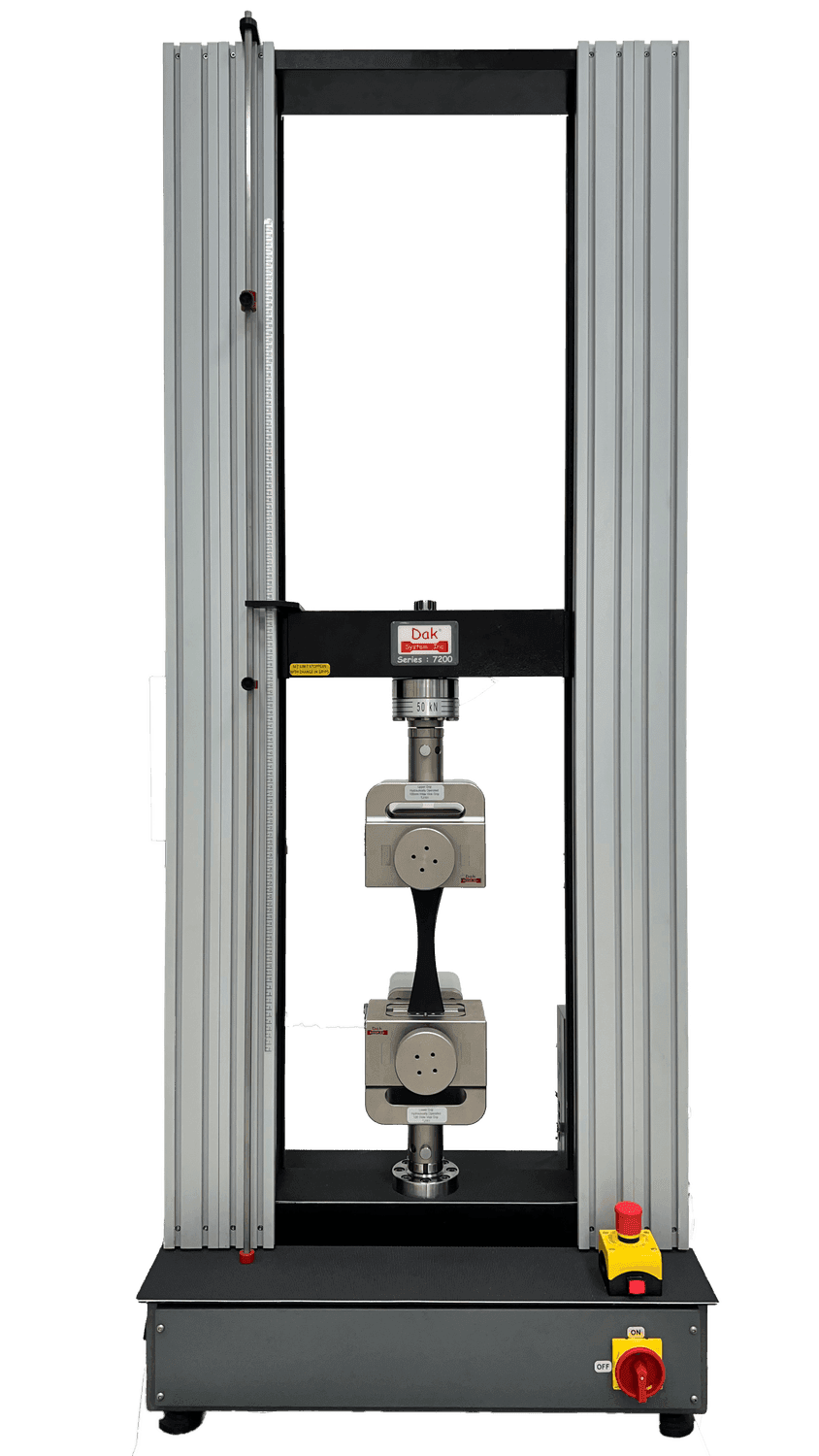
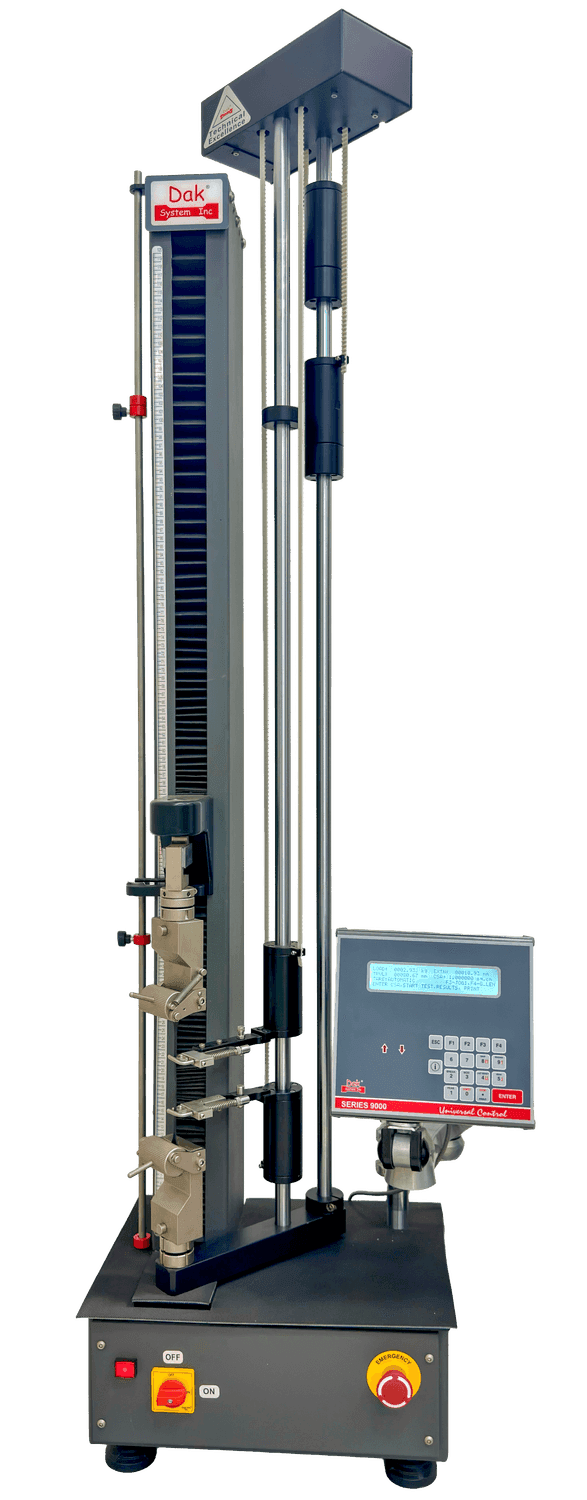
Running ASTM D2061 on the Series 7200 and Series 9000

Dak verifies against whichever standard the method names, and where a class applies our frames sit a class tighter than it asks.

The method asks forDak supplies
CapacityThe tension methods work in a few hundred newtons at most, so a low-range cell chosen for the specimen rather than the frame is the constraint. Per-method limits were not corroborated twice and are not quoted.Load cells from 1 kg to 60 ton on the Series 7200, and 0.5 to 100 kN on the Series 9000
Force accuracyunknown — no accuracy class was confirmed on the publisher recordISO 7500-1 Class 0.5, verified to ASTM E4, DIN 51221 and BS 1610
GrippingGrips holding the tape without bearing on the elements for the tension group; an off-axis holder for angular pull-off; platens with a compliant backing for cushioned compression; a torque arrangement for the twist and torsional methodsOur vice-action grips, built to the specimen
EnvironmentThe textile standard atmosphere. The conditioning clause was not confirmed on a publisher-side page, so it is carried as practice rather than as a requirement.3009 series chambers, −150 °C to +400 °C — temperature only

This page describes the method as practised. The governing text is the current edition from the issuing body. Tell us what you are testing and we will answer with the machine, the fixture and a quotation.