Testing standard

EN 1348

Adhesives for tiles — Determination of tensile adhesion strength for cementitious adhesives

Written and technically reviewed by Dak System Inc. engineeringLast reviewed

EN 1348 is the tile adhesive pull-off test: ceramic tiles are bedded in cementitious adhesive on a standard concrete slab, conditioned under one of four regimes, and then pulled perpendicular to the slab at a constant rate of force until the bond fails. The result is a tensile adhesion strength in newtons per square millimetre, and the set of four regimes is what supports the C1 and C2 classification. EN 1348:2007 was withdrawn in February 2017 and superseded by EN 12004-2:2017, which carries the method; a specification naming EN 1348 today should name EN 12004-2 instead.

At a glance

Test type
Peel & adhesiona bonded joint is pulled apart
Published by
EN
Edition
EN 1348:2007

What the test does

Ceramic tiles are bedded into cementitious adhesive spread on a standard concrete slab, under a defined load. The assembly is cured, then conditioned by one of several regimes. A steel pull-head is bonded square to each tile face with an adhesive stronger than the mortar, and the tile is pulled perpendicular to the slab until the bond fails. The force rises at a constant 250 newtons per second, plus or minus 50, and the failure force divided by the bonded area is the tensile adhesion strength.

What it measures, and why it matters

Adhesion in the direction that actually pulls a tile off a wall, in newtons per square millimetre. One figure is only part of the answer, because the method is run after four histories: 28 days in standard conditions; water immersion; heat ageing at 70 °C for 14 days; and 25 freeze–thaw cycles. An adhesive strong dry and weak after immersion is the wrong adhesive for a shower whatever its dry figure says, and one that survives water but not freeze–thaw is wrong for an external terrace. The set of four is the result. Those figures underpin the classification everyone specifies by: an adhesive is C1 or C2 because named values from these named regimes cleared the limits in the requirements standard, EN 12004-1 since 2017. Reporting the standard-conditions figure alone and letting it stand for the rest is the commonest way a product is compliant on paper and not on site.

The assembly, and why building it is the method

There is no specimen to machine. There is an assembly to make, and almost every source of scatter in the result is introduced while making it.

Substrate
Standard concrete slabs of specified porosity and surface textureSpecified by EN 1323 while EN 1348 stood; EN 12004-2 absorbed that standard alongside this method in 2017.
Adhesive
Mixed exactly to the manufacturer's instructionsWater ratio and maturing time are as much a part of the product as the powder, and changing either changes what is being tested.
Tiles
Small square ceramic tiles of the size the method fixesNo dimension is quoted here. The figure in circulation traces to one lineage of secondary summaries rather than to two independent sources.
Bedding
Set into a combed bed under a defined loadThe load is what makes bed thickness and contact area repeatable from tile to tile and laboratory to laboratory.
Pull-heads
Bonded square to the tile face with an adhesive stronger than the mortarIf the head releases first the test has measured the bonding adhesive and nothing else.
Conditioning
Four regimes, each giving its own resultStandard conditions to 28 days; water immersion; heat ageing at 70 °C for 14 days; and 25 freeze-thaw cycles.
Cut one slab, and let the head cure fully before pulling
DakBoth shortcuts show up as adhesive variability that is not in the adhesive, and neither leaves a mark on the trace to say what happened.

A result without its conditioning regime attached is unusable, however carefully it was measured. An adhesive strong dry and weak after immersion is the wrong adhesive for a shower whatever its dry figure says.

Loading and conditions

Loading
Force increasing at a constant 250 N/s plus or minus 50Rate of force, not rate of displacement. A frame run in displacement control produces a different loading history on every specimen as the bond stiffness varies.
Direction
Perpendicular to the plane of the slab
Laboratory atmosphere
Nominally 23 °C and 50 % relative humidity
Heat ageing
70 °C for 14 days
Freeze-thaw
25 alternating cycles
Water immersion
Immersed for the period the method setsNo day count is given here: published requirements tables disagree, one stating 14 days immersed and another 7 days in standard conditions followed by 21 days wet.
Choose the load cell for the tile, not for the frame
DakThe failure force is a few kilonewtons at most. A cell sized for the machine reads it at the bottom of its range, where its accuracy class no longer applies.

Calculations

Tensile adhesion strength

Failure force divided by the bonded area

failure force
the force at which the bond gave way, N
bonded area
the area of the tile face carrying the bond, mm²

Reported in newtons per square millimetre, which is numerically the same as megapascals.

Why there are four results and not one

One strength per conditioning regime

The regimes are the point of the method. Reporting the standard-conditions figure and letting it stand for the rest is the commonest way a product is compliant on paper and not on site.

Failure mode

Where the assembly came apart

Adhesive failure at the slab, at the tile, cohesive failure in the mortar, or failure of the pull-head bond. The last of those is not a result at all.

How the test runs

  1. 01Condition the standard concrete slabs in the laboratory atmosphere.
  2. 02Mix the adhesive strictly to the manufacturer's instructions and allow the stated maturing time.
  3. 03Comb the adhesive onto the slab and bed the tiles into it under the defined load.
  4. 04Cure the assembly, then put each slab through its conditioning regime.
  5. 05Return the assembly to the laboratory atmosphere where the regime requires it.
  6. 06Bond a pull-head square to each tile face with an adhesive stronger than the mortar.
  7. 07Let the bonding adhesive cure fully before loading anything.
  8. 08Align the pull so it is genuinely perpendicular to the slab, with no side load on the head.
  9. 09Increase the force at a constant 250 N/s until the bond fails.
  10. 10Divide the failure force by the bonded area to get the tensile adhesion strength.
  11. 11Record the failure mode for every tile, and discard any that released at the pull-head.
  12. 12Report each regime separately, never as a single averaged figure.

A pull-head bonded out of square peels one edge first. It gives a low result and a failure surface that looks like poor adhesion, and nothing in the force trace distinguishes it from a genuinely weak bond.

The fixture this method needs

Self-identifying

Load Cells

A cell sized for the bond rather than the frame. A tile of this size fails in single-digit kilonewtons, and an accuracy class applies only above a stated fraction of capacity — so a machine's largest cell is very likely outside the range its own certificate covers at this load.

Specifications

What the report has to contain

  • Reference to the method, and a note that EN 12004-2 is now the current document
  • Full identification of the adhesive, its batch and its mixing instructions
  • Water ratio and maturing time used
  • Substrate description and its conformity to the standard slab specification
  • Tile type and the bonded area used in the calculation
  • Bedding load and open time before the tiles were placed
  • The conditioning regime, in full, for every set of results
  • Bonding adhesive used for the pull-heads and its cure time
  • Rate of loading
  • Failure force and tensile adhesion strength for each tile
  • Failure mode for each tile, and any discarded for pull-head release
  • Number of tiles, the mean and the scatter, reported per regime

What the machine must be capable of

A truly perpendicular pull at a controlled force rate, and very little else. Capacity is not the constraint: a small tile at a few newtons per square millimetre fails in single-digit kilonewtons, so a modest frame is ample and a load cell chosen for that range resolves far better than one sized for the machine. What the work demands is squareness and repeatability across many tiles on one slab, which is why a positioning arrangement reaching each tile in turn beats moving a heavy slab under a fixed head. Loading is rate-controlled in force, not displacement, so the frame has to hold 250 newtons per second steadily to failure. Conditioning is as much part of the method as the frame: immersion, heat ageing at 70 °C and freeze–thaw cycling all have to run to schedule.

What goes wrong in practice

A pull-head bonded out of square, peeling one edge first and giving a low result with a misleading failure surface. Bonding adhesive not fully cured, so the head releases before the mortar. Slabs drifting from the standard specification, or varying in porosity between batches, which reads as adhesive variability. Loading by displacement rate rather than force rate. And reporting a result without naming its conditioning regime, which makes the number unusable however carefully it was measured.

EN 1348 and the standards that replaced and surround it

EN 1348:2007EN 12004-2:2017EN 12004-1:2017
StatusWithdrawn, February 2017CurrentCurrent
CarriesThe tensile adhesion method aloneThe test methods, this one among themThe requirements, classes and marking
AnswersHow strong is the bond, after which history?How is each characteristic measured?Is the adhesive a C1 or a C2?
Cite it today?No — it names a withdrawn documentYes, for the methodYes, for the class

The method did not disappear when EN 1348 was withdrawn; it was carried across into EN 12004-2 with EN 1308, EN 1323, EN 1324, EN 1346, EN 12002 and EN 12003. A specification that still names EN 1348 is asking for work that can be done — under the reference that now holds it.

Perpendicular pull-off on two different systems

EN 1348ASTM D4541
SystemCementitious adhesive under a ceramic tileProtective coating on a substrate
LoadingForce-controlled pull normal to the surfacePull normal to the surface with a portable tester
ReportsTensile adhesion strength with a failure modePull-off strength with a failure mode
ConditioningFour defined regimes are part of the methodAs the specification requires

The arrangement is nearly the same and the numbers are not transferable. The bonded area, the substrate, the loading rate and the conditioning all differ, and D4541 was written around portable adhesion testers rather than a laboratory frame.

Questions we are asked about this test

Is EN 1348 still current?

No. EN 1348:2007 was withdrawn in February 2017 and superseded by EN 12004-2:2017, Adhesives for ceramic tiles — Test methods, which absorbed it along with EN 1308, EN 1323, EN 1324, EN 1346, EN 12002 and EN 12003. The method itself was carried across rather than dropped, so the work is unchanged; only the reference has moved. A drawing or tender still citing EN 1348 should be read as calling for the tensile adhesion method now published in EN 12004-2.

What does EN 1348 measure?

The tensile adhesion strength of a cementitious tile adhesive — the force needed to pull a tile perpendicularly off a standard concrete slab, divided by the bonded area, reported in newtons per square millimetre. That is adhesion in the direction that actually pulls a tile off a wall, which is why it is the figure the classification system is built on.

Why are there four results rather than one?

Because the method is run after four different histories: standard conditions to 28 days, water immersion, heat ageing at 70 °C for 14 days, and 25 freeze-thaw cycles. An adhesive that is strong dry and weak after immersion is the wrong adhesive for a shower whatever its dry figure says, and one that survives water but not freeze-thaw is wrong for an external terrace. The set of four is the result; any one of them alone is a fragment.

How do C1 and C2 relate to this test?

They are classes in the requirements standard, EN 12004-1:2017, and an adhesive earns one by clearing the stated limits in each of the named conditioning regimes. The strength figures come from this method, so the class is a summary of a set of EN 1348 results rather than a separate property. Reporting one regime and letting it stand for the class is how a product ends up compliant on paper and not on site.

Why is the load applied at a rate of force rather than displacement?

Because the method specifies it: the force increases at a constant 250 N/s, plus or minus 50, until the bond fails. Running the frame in displacement control instead makes the loading history depend on how stiff each assembly happens to be, so nominally identical specimens see different rates and the scatter grows for a reason that has nothing to do with the adhesive.

What machine does the test need?

A modest one. Capacity is not the constraint — a tile of this size at a few newtons per square millimetre fails in single-digit kilonewtons — so what matters is a truly perpendicular pull, steady force-rate control to failure, and a load cell chosen for that range rather than for the frame. Conditioning capability is as much part of the requirement as the frame, since immersion, heat ageing and freeze-thaw cycling all have to run to schedule.

What is the commonest way this test goes wrong?

A pull-head bonded out of square, which peels one edge first and gives a low result with a misleading failure surface. After that: bonding adhesive that has not fully cured, so the head releases before the mortar and the test has measured nothing; slabs drifting from the standard specification or varying in porosity between batches, which reads as adhesive variability; and reporting a figure without naming the conditioning regime it came from.

Why does the concrete slab have to be a standard one?

Because porosity and surface texture govern how much water the substrate draws out of the adhesive while it sets, and that in turn governs the bond. Leaving the slab to whatever the laboratory had makes results incomparable between laboratories and between batches. The slab specification travelled with the method: it was EN 1323 while EN 1348 stood, and EN 12004-2 absorbed both in 2017.

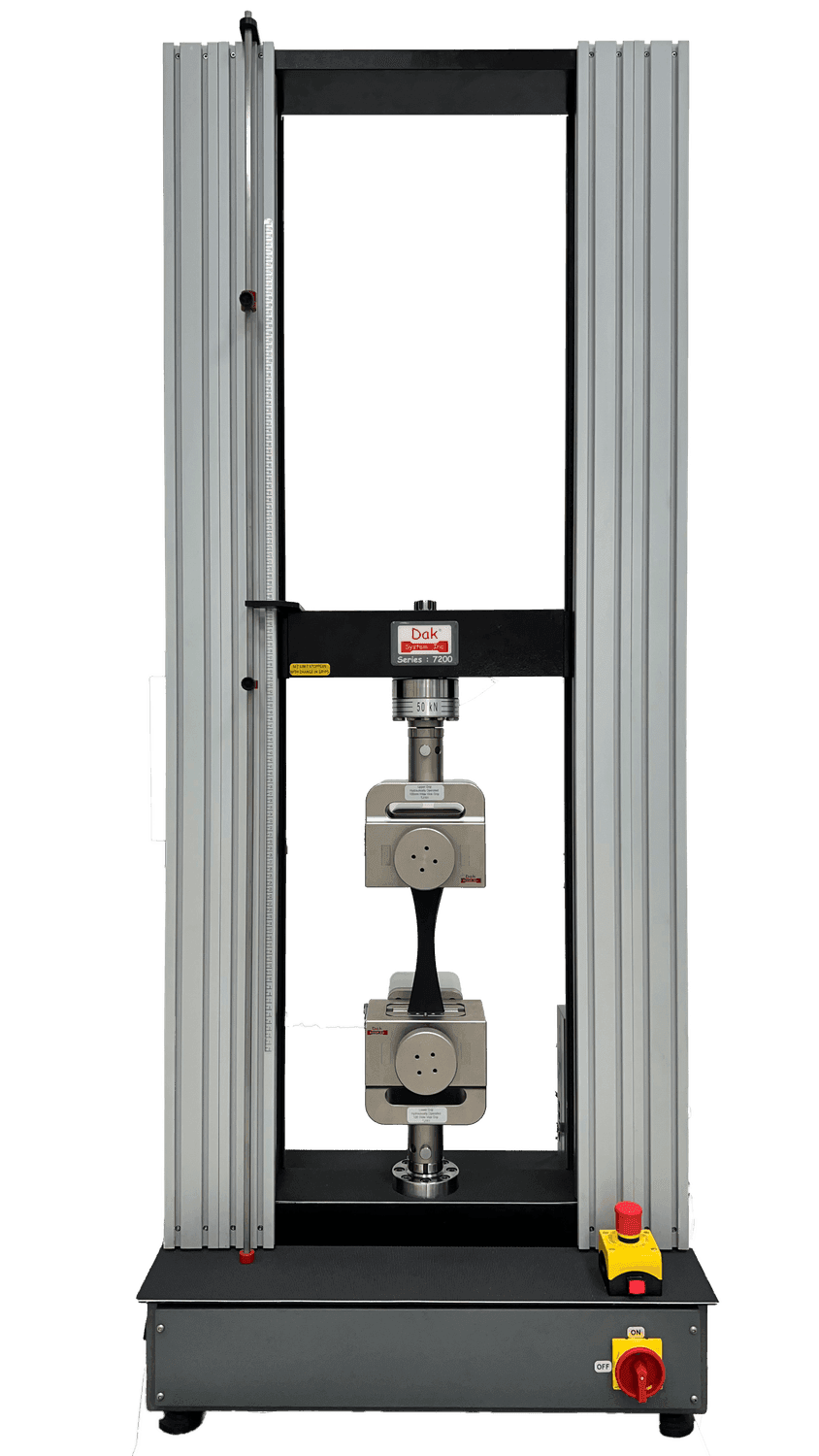
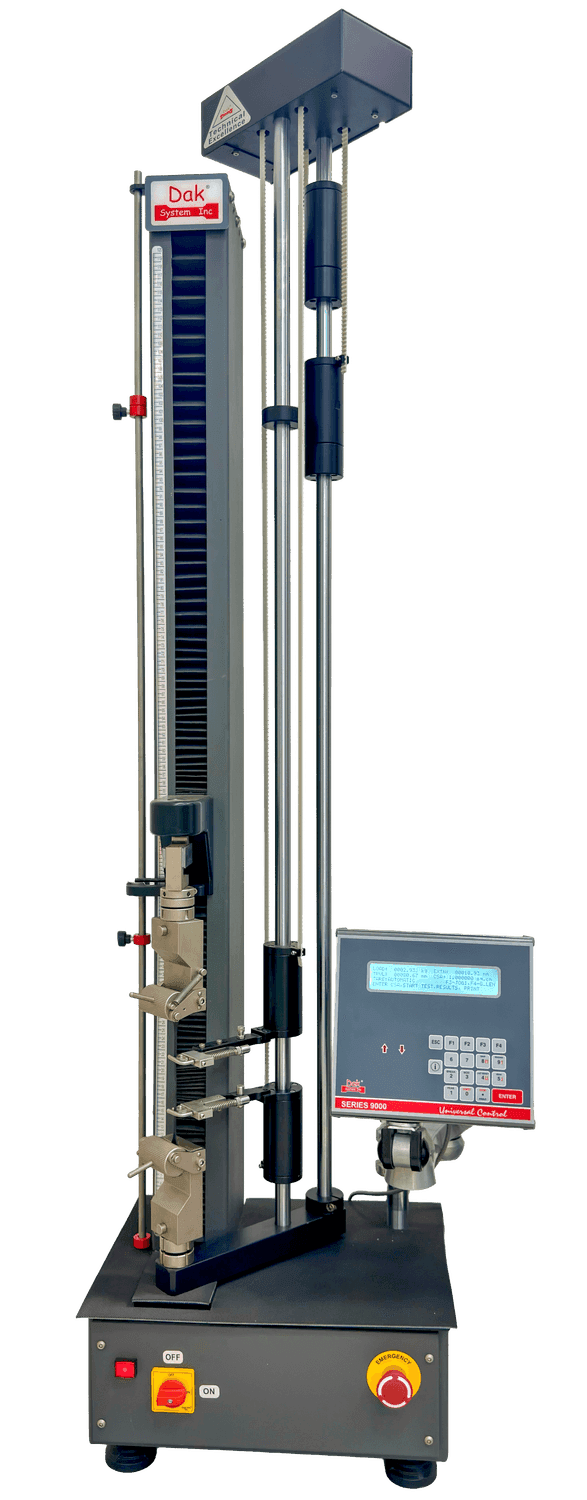
Running EN 1348 on the Series 7200 and Series 9000

Dak verifies against whichever standard the method names, and where a class applies our frames sit a class tighter than it asks.

The method asks forDak supplies
CapacityLow. A small tile at a few newtons per square millimetre fails in single-digit kilonewtons, so capacity is not the constraint and a cell chosen for that range resolves far better than one sized for the machine.Load cells from 1 kg to 60 ton on the Series 7200, and 0.5 to 100 kN on the Series 9000
Force accuracyunknown — no accuracy class could be confirmed for this methodISO 7500-1 Class 0.5, verified to ASTM E4, DIN 51221 and BS 1610
GrippingPull-heads bonded square to the tile faces, with a positioning arrangement reaching each tile in turn on a fixed slabOur a fixture built for this method, built to the specimen
EnvironmentNominally 23 °C and 50 % relative humidity, plus four conditioning regimes: standard conditions to 28 days, water immersion, heat ageing at 70 °C for 14 days, and 25 freeze-thaw cycles3009 series chambers, −150 °C to +400 °C — temperature only

This page describes the method as practised. The governing text is the current edition from the issuing body. Tell us what you are testing and we will answer with the machine, the fixture and a quotation.

Materials tested to it

The test it standardises

Other standards explained