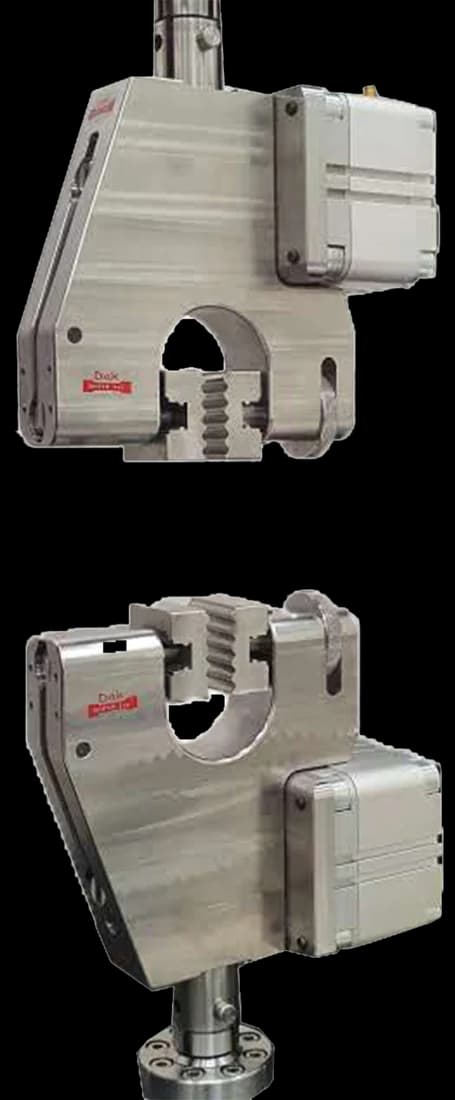
Standard 25 mm
Pneumatic Vice Action Grip
Pneumatic vice action grips clamp the full specimen width at a constant, even pressure — which is what stops one side slipping or tearing before the other.
Specifications
Testing standard
Intravascular catheters — Sterile and single-use catheters — Part 1: General requirements
Written and technically reviewed by Dak System Inc. engineeringLast reviewed
ISO 10555-1 is the general requirements standard for sterile single-use intravascular catheters. Among its requirements is a tensile test: the catheter and each of its junctions must withstand a specified force without separating. The forces are small, which makes the choice of load cell the dominant accuracy question.
From the test method to your testing system
Explore the DAK machines already listed for ISO 10555-1, then review the grips, measurement and setup requirements below.
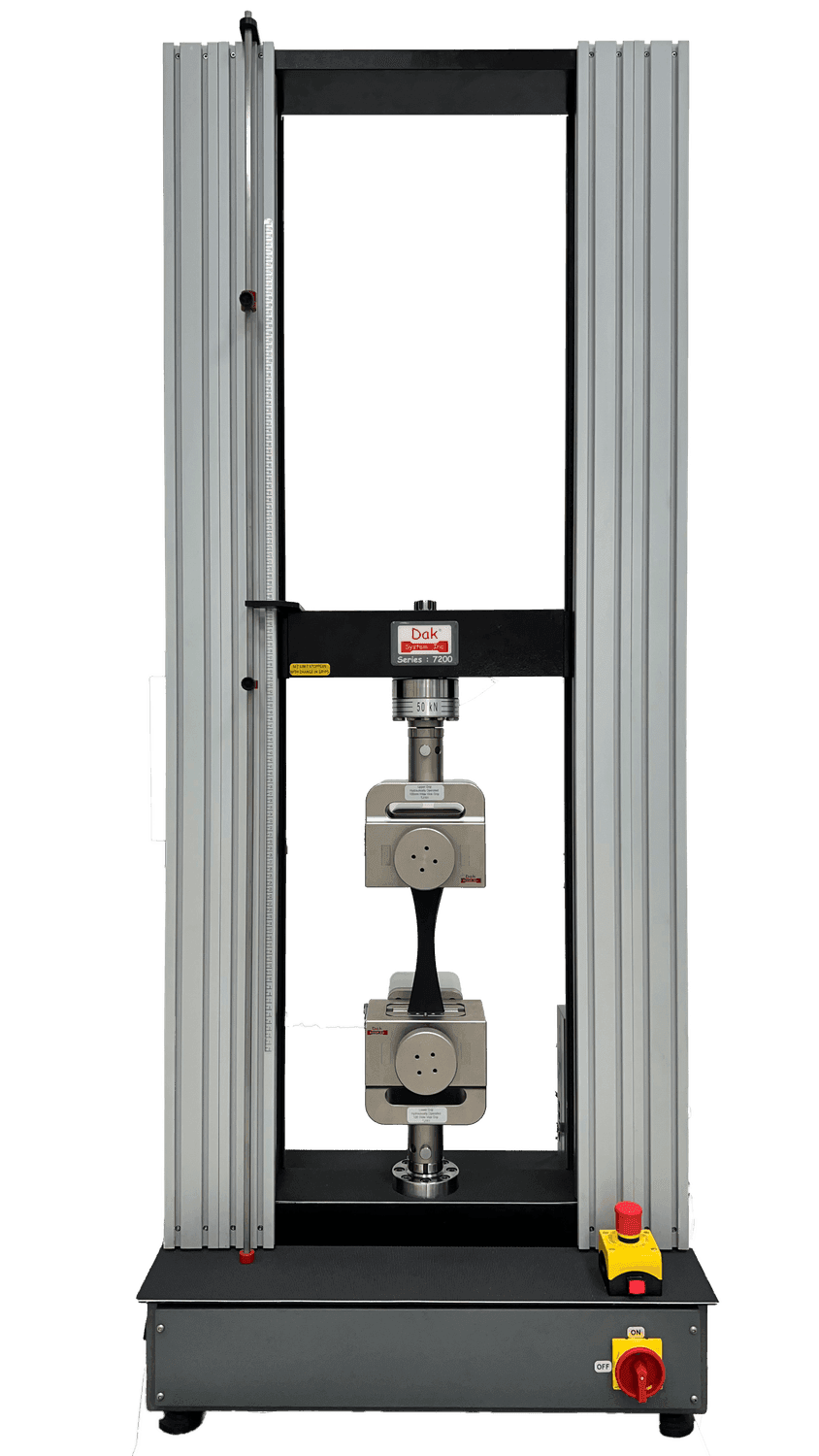 Universal Testing MachineSeries 7200Explore the machine →
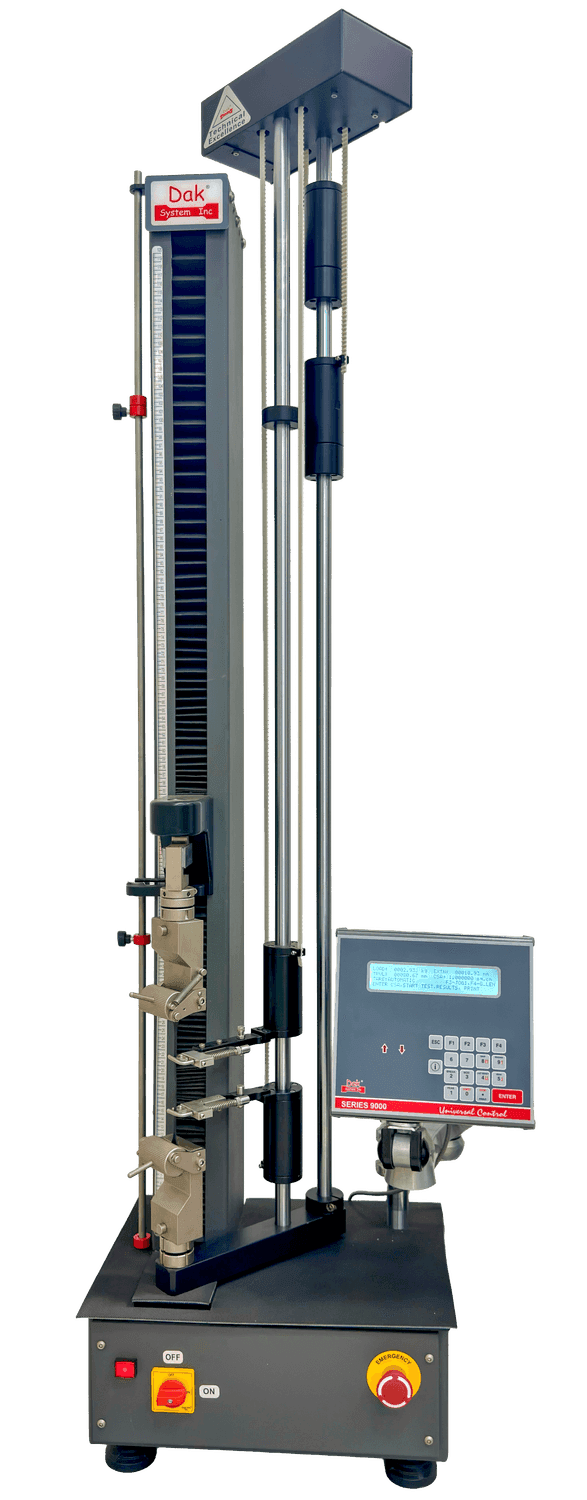 Universal Testing MachineSeries 9000Explore the machine →
01Understand the method
The catheter is clamped so that the junction under test lies between the grips and pulled at 100 mm/min to a force specified in the standard for that size and construction, then held for the specified time. If it does not separate, it passes. The requirement applies to the catheter as a whole and to each junction within it — hub to tube, tube to tip, and any bonded or moulded joint along the length — so an assembly generates several specimens rather than one. Nothing is calculated from the curve; the recorded outcome is whether it held, and if not, where it came apart.
Whether a catheter and its joints will survive the forces of insertion, manipulation and withdrawal without coming apart inside a patient. That is the entire rationale, and it explains why the criterion is a required force rather than a measured strength: the design question is not how strong the assembly is, but whether it clears a threshold that reflects clinical handling. A shaft that holds while the hub separates is the failure mode the requirement exists to prevent, which is why every junction is tested rather than only the tube.
02Prepare the specimen and test settings
The test is applied to the whole assembly and to each junction in it. A catheter that separates at the hub in use is the failure this exists to prevent.
This is a pass or fail against a required force, not a strength measurement. The result is that the assembly held, or that it did not and where.
03Build the test setup on a DAK machine
Very little force, and that is exactly the difficulty. The requirements sit between a few newtons and a few tens of newtons, so the load cell must be chosen for the force rather than for the frame. Accuracy classes are specified as a percentage of reading down to a stated fraction of capacity, and below that fraction the class simply does not apply — a cell rated for kilonewtons asked to resolve fifteen newtons is working far outside the range its calibration certificate speaks to. Soft-faced or profiled pneumatic grips, at a clamping pressure just sufficient to hold, complete the requirement.
Pneumatic vice action grips clamp the full specimen width at a constant, even pressure — which is what stops one side slipping or tearing before the other.
SpecificationsDak verifies against whichever standard the method names, and where a class applies our frames sit a class tighter than it asks.
| The method asks for | Dak supplies | |
|---|---|---|
| Capacity | Very low — tensile requirements are in the range of a few newtons to tens of newtons | Load cells from 1 kg to 60 ton on the Series 7200, and 0.5 to 100 kN on the Series 9000 |
| Force accuracy | ISO 7500-1 Class 1 — but verify the class at the actual working load, not at frame capacity | ISO 7500-1 Class 0.5 — a class tighter than the method asks |
| Gripping | Low-capacity load cell with soft-faced or pneumatic grips that will not cut a polymer tube | Our pneumatic grips, built to the specimen |
| Environment | 23 ± 2 °C standard laboratory atmosphere | 3009 series chambers, −150 °C to +400 °C — temperature only |
04Run the test
05Calculate, report and interpret
From the table for the catheter's size and type
A requirement to be met, not a quantity computed from the test.
Working load should sit in the upper part of the cell's range
Accuracy classes are specified as a percentage of reading down to a stated fraction of capacity. Below that fraction the class no longer applies.
Oversized load cells, which produce numbers that look precise and are not traceable at the working load. Serrated steel jaws, which nick the tube wall and cause the catheter to tear from the notch well below its real capability, so the test reports the fixture. Testing only the shaft and never the hub junction. And reporting a pass without naming the load cell capacity and its verified class at the actual force, which leaves a reviewer unable to judge whether the measurement was capable of the claim.
06Compare methods and find answers
| ISO 10555-1 | Parts 3 to 7 | |
|---|---|---|
| Scope | General requirements for all intravascular catheters | Central venous, balloon, and other specific types |
| Tensile requirement | The general force requirement | May add or modify it |
| Use | Always applies | Applied with Part 1, never instead of it |
| Read | First | Second, for the type in hand |
Part 1 is not optional when a part standard applies — the two are read together, and the specific part can tighten a requirement but does not replace the general one.
It is the general requirements standard for sterile, single-use intravascular catheters, covering the catheter as a whole and every junction in it. Among its requirements is a tensile test in which the assembly must withstand a specified force without separating. Parts 3 to 7 of the series add requirements for particular catheter types and are read together with it.
Because the forces are very small — a few newtons to tens of newtons — while the frames available in a laboratory are often sized for materials testing. An accuracy class is specified as a percentage of reading down to a stated fraction of capacity, and below that fraction it no longer applies. A cell rated for five kilonewtons asked to resolve fifteen newtons is working at well under one per cent of range, where its stated class means very little in practice.
Because a serrated jaw cuts into a thin polymer wall and creates a notch. The catheter then tears from that notch at a force well below what it could actually withstand, so the test reports the gripping arrangement rather than the product. Soft-faced or profiled jaws, at a clamping pressure just high enough to hold, spread the clamping load and leave the wall intact.
No. It is a pass-or-fail check against a required force taken from the standard for that catheter's size and construction. Nothing is calculated from the curve. The useful output beyond pass or fail is where a failed specimen separated, because a hub separation and a tip separation point at different steps in manufacture.
Yes. The requirement applies to the catheter and to each junction in it — hub to tube, tube to tip, and any bonded or moulded joint along the length. A catheter that holds along its shaft but separates at the hub under load is precisely the failure the requirement exists to prevent, and testing only the shaft would miss it entirely.
Because these are polymers being tested at low loads, and polymer strength and stiffness move appreciably with temperature and moisture content. A sample tested straight off a cold shelf and one tested after conditioning can give meaningfully different results at these force levels, which is why the conditioning is specified rather than left to the laboratory.
No, they are applied with it. Part 1 carries the general requirements for every intravascular catheter; parts 3 to 7 add or tighten requirements for central venous catheters, balloon catheters and other specific types. A test report should name both the part standard and Part 1, along with the edition of each.
Discuss your specimen, test requirements and reporting needs with DAK engineering.
This page describes the method as practised. The governing text is the current edition from the issuing body. Tell us what you are testing and we will answer with the machine, the fixture and a quotation.