ISO 7864 — read the full explanation
TensileRequirements and test methods for sterile single-use hypodermic needles, including cannula-to-hub bond strength.

From the force needed to move a syringe plunger to the strength of a material or assembled joint, mechanical testing connects a design question to a measurable result. DAK testing systems bring force, movement and specimen-specific tooling together for medical-device development, quality control and biomedical research.
Distinguish the initial force that starts plunger movement from the force needed to keep it moving. Plunger pull-out is a separate loading arrangement. Define the syringe geometry, travel and result so the fixture holds the barrel and loads the plunger as intended.
Needle penetration measures resistance as a needle enters a material or closure. Needle pull-out examines the strength of an assembled connection. These are different test questions, requiring different holding and loading arrangements.
Examine the tensile behaviour of a shaft, tube or joined section. Identify where the component is held and which connection is being assessed, so the gripping arrangement loads the intended region.
Soft specimens bring different handling, extension and environmental needs from rigid components. Describe the material, loading direction and whether testing takes place in air or a liquid medium when planning a research configuration.
Separate a single-load measurement from a repeated-loading or torque requirement. Component geometry, support points and loading direction determine the fixture; the test programme determines whether to explore a UTM, fatigue system or torsion system.
Measure the mechanical behaviour of a film, nonwoven, glove material or package seal. Seal peel, puncture and material tensile tests answer different questions, so identify the specimen and the property to be reported.
Include the lowest force of interest as well as the expected peak. Describe whether the result is an initial peak, a force over a travel interval, a maximum load or a force–movement curve.
The fixture must support the specimen without making the holding arrangement the subject of the test. Share the contact points, loading axis and access needed for mounting or fluid collection.
State the required stroke, loading speed, conditioning and measurement points. For strain measurements, identify the region of the specimen being measured. Include any liquid-medium or temperature requirement in the configuration brief.
Start with the specimen and required measurements, then select the frame, force sensor and tooling as one testing system.
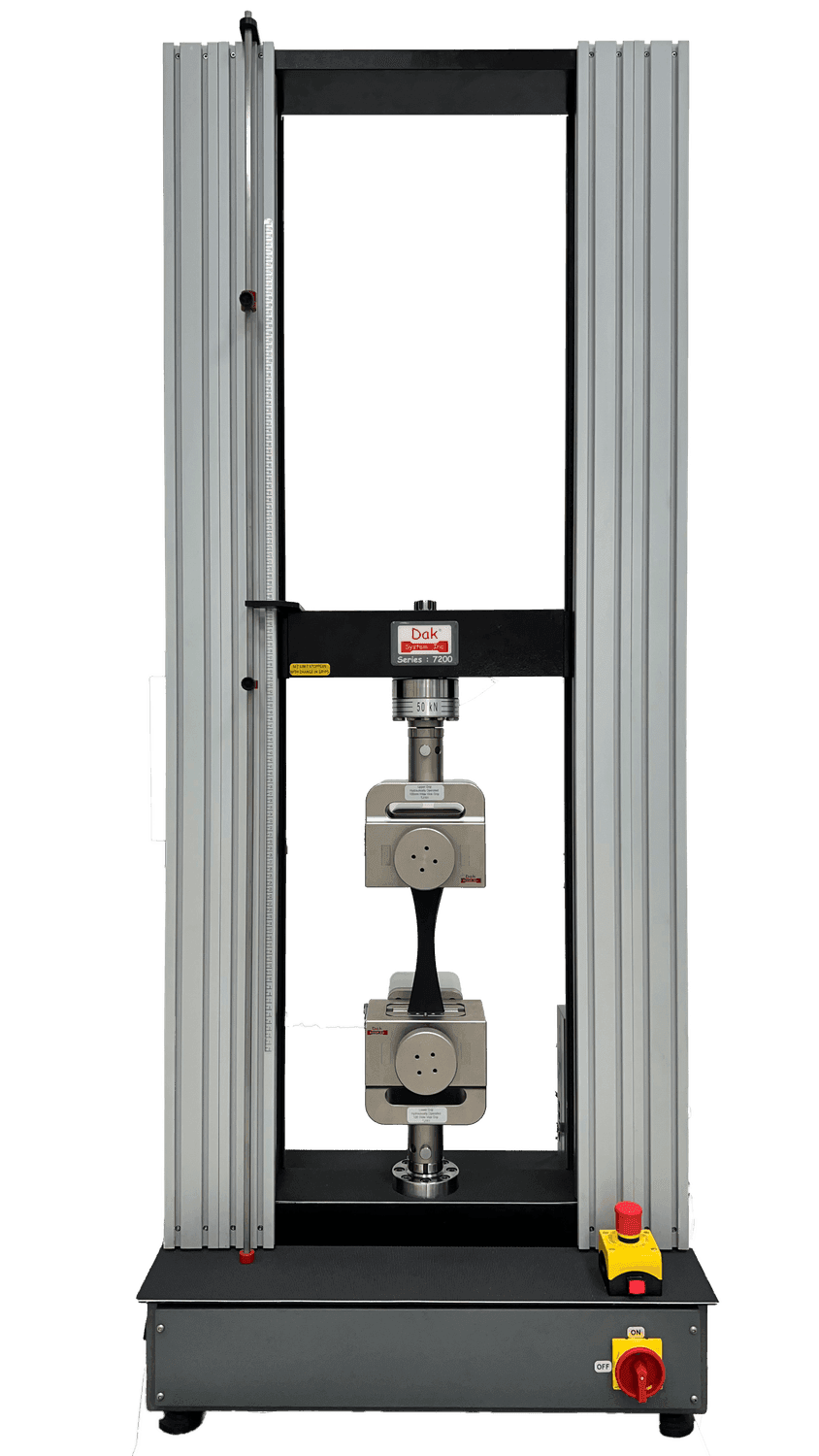
DAK’s flagship UTM
DAK’s flagship platform for laboratories combining routine measurements with research and development. Bring the specimen, fixture, force measurement and test programme together around your application.
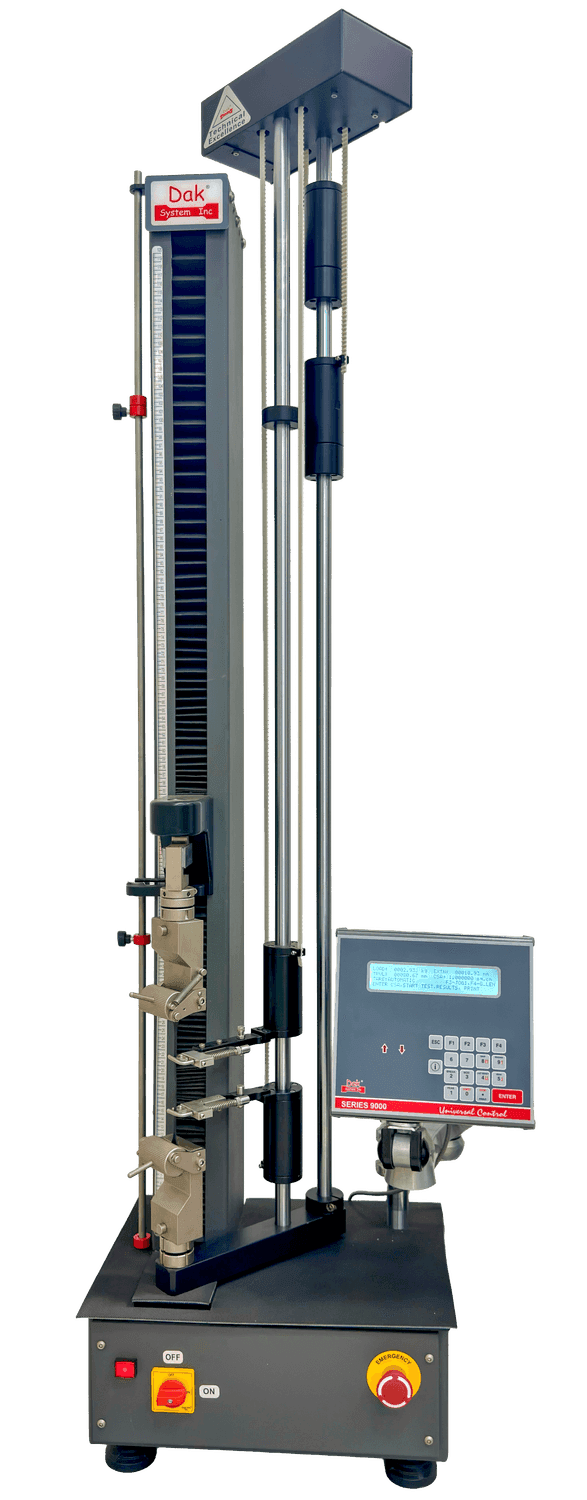
Explore the Series 9000 alongside the flagship platform when defining your laboratory’s tensile, compression and flexural testing requirements. Compare the current machine specifications, controls and accessories against the tests you need.
For programmes centred on cyclic loading or torque, explore DAK’s dedicated fatigue and torsion systems. Describe the loading mode, range and fixture requirements as part of the enquiry.
NIPER uses DAK universal testing equipment for medical and biomedical investigations, including syringe plunger forces, needle pull-out and penetration testing. Explore the application story and DAK’s demonstration of the different test arrangements.
One IIT research application combines tensile loading and twisting of animal tissue in a bio-bath on a UTM. The work investigates injury mechanisms and the development of protective equipment, illustrating how the test configuration follows the research question.
Search the existing library by designation, material or test type. Use the method and required result to plan the relevant mechanical test within your wider device-evaluation programme.
Requirements and test methods for sterile single-use hypodermic needles, including cannula-to-hub bond strength.
Flexural strength of advanced ceramics at ambient temperature.
Monotonic compressive strength of advanced ceramics.
Equibiaxial flexural strength of advanced ceramics (ring-on-ring) — also applied to glass discs.
Microtensile properties of plastics using miniature specimens (limited material availability).
Examination and surgical gloves — force at break.
Internal pressurization failure resistance of unrestrained packages (companion to F88).
Intramedullary fixation devices — static bending, torsion and fatigue.
Slow-rate penetration resistance of flexible barrier films and laminates.
Spinal implant constructs — static and fatigue testing in a vertebrectomy model.
Static and fatigue characterization of spinal interconnection mechanisms.
Intervertebral body fusion devices — static and dynamic axial compression, shear.
Characterization of biomaterial polymer hydrogels.
Strength of tissue adhesives in T-peel by tension loading (medical).
Static and dynamic characterization of spinal artificial discs.
Wound closure strength of tissue adhesives and sealants.
Bioabsorbable plates and screws — static bending and torsion characterization.
Tension testing of Nickel-Titanium (Nitinol) superelastic materials (upper/lower plateau strength).
Three-point bending of balloon-expandable vascular stents and stent systems.
Flexural fatigue and static bending of metallic bone plates.
Metallic angled orthopaedic fracture fixation devices.
Metallic medical bone screws — axial pull-out, torsion and driving torque.
Sterile barrier packaging — seal peel strength validation.
Medical gloves — force at break requirements (single-use gloves).
Intravascular catheters — peak tensile force of catheter shaft and joints.
Strip tensile strength and elongation at break of nonwovens.
Plane-strain fracture toughness and strain energy release rate of plastics.
Endurance properties and performance of stemmed femoral hip components.
Packaging for terminally sterilized medical devices — seal strength verification (references F88-type peel).
Natural rubber latex condoms — tensile properties of test pieces.
Cardiovascular implants — tubular vascular grafts (longitudinal tensile, suture retention, burst).
Sterile hypodermic syringes — piston operating force and liquid leakage.
Small-bore (Luer) connectors — separation force, unscrewing torque and stress cracking.
Nonwovens — breaking strength and elongation by grab method.
Sutures — tensile strength and needle attachment force.
Showing 1–8 of 35 standards
Share the device or material, a specimen drawing or photograph, and the test or standard you are working to. Include the following details where available so our engineers can discuss the machine and tooling together.