
Testing standard
ISO 4344 Lift Wire Rope Breaking Force Testing
Steel wire ropes for lifts — Minimum requirements
Written and technically reviewed by Dak System Inc. engineeringLast reviewed
ISO 4344 is the specification for steel wire ropes used in lifts, from 6 mm to 38 mm diameter. It publishes minimum breaking forces by size, grade, class and construction, and covers suspension, compensation and governor duties. The breaking force itself is measured to ISO 3108, which this standard invokes rather than restates.
At a glance
- Test type
- Load–deflection & proof load
- Published by
- ISO
- Edition
- ISO 4344:2022
- Material
- Wire, cable & electrical
- Runs on
- Series 7200 and Series 9000
From the test method to your testing system
Explore DAK equipment for ISO 4344, then review the specimen and setup requirements below.
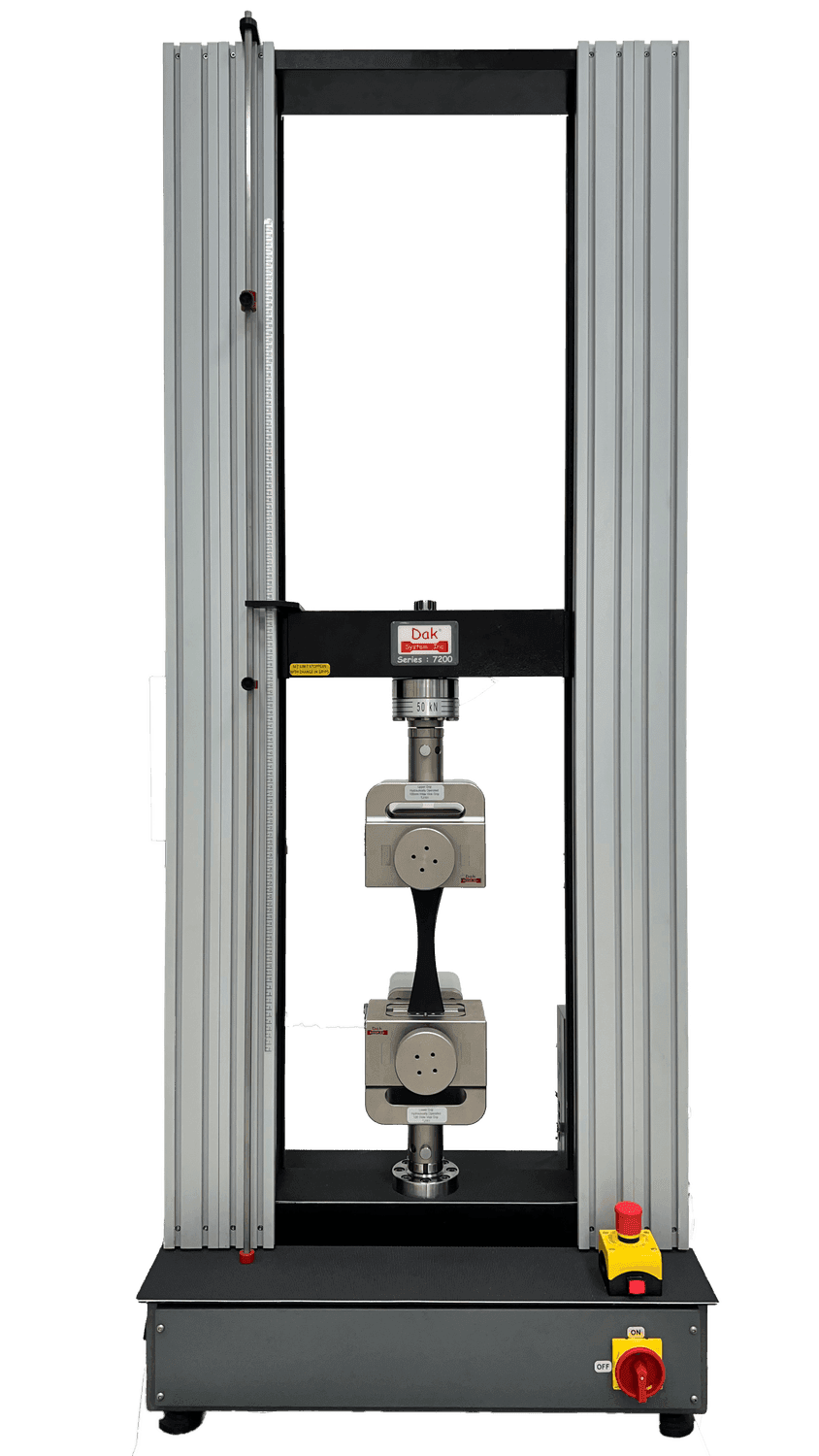 Universal Testing MachineSeries 7200Explore the machine →
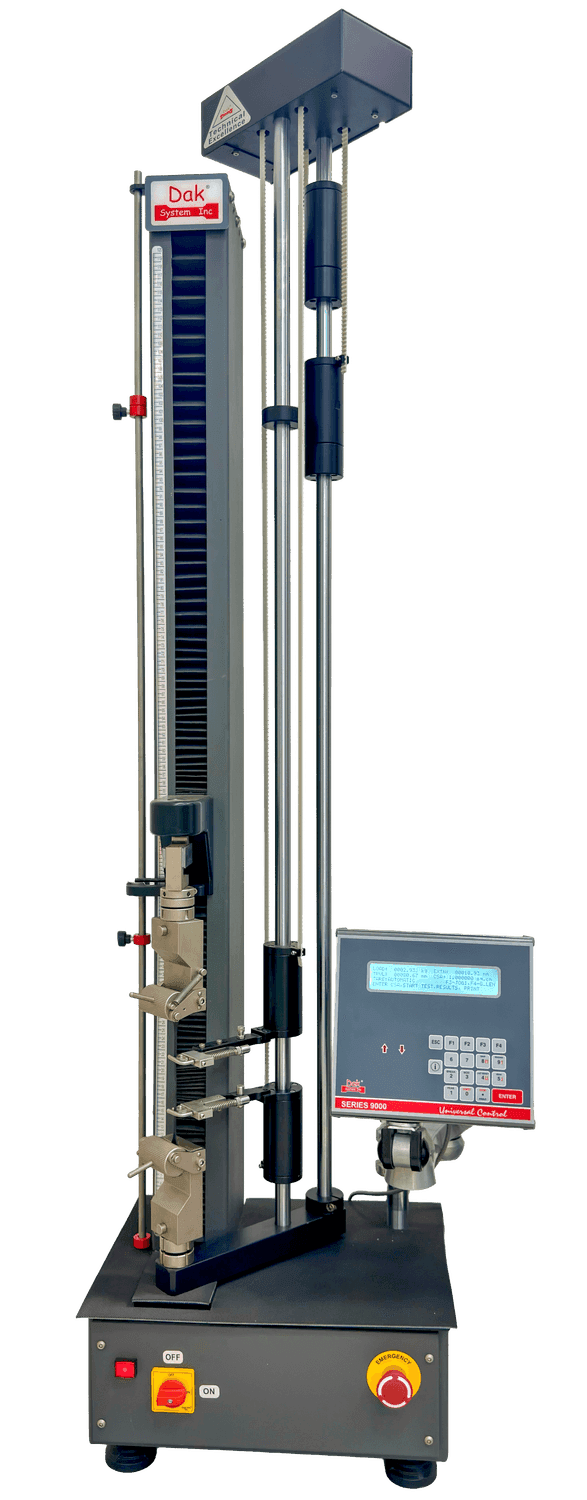 Universal Testing MachineSeries 9000Explore the machine →
Jump to a specific section
01Understand the method
What the test does
ISO 4344 is a specification rather than a test method, and knowing that changes how it is used. It sets minimum requirements for the manufacture and testing of stranded carbon steel wire ropes for lifts, and publishes tables of minimum breaking forces by size, rope grade, class and construction.
The rope is verified against those tables. Breaking force is determined by ISO 3108, which the specification invokes rather than restates: force applied quickly to 80 % of the minimum breaking force, then at not more than 0,5 % of it per second — 1 kN/s on a 200 kN rope, 2,5 kN/s at 500 kN — at 10 °C to 35 °C.
Scope is specific about duty. It covers ropes for suspension duty on traction drive and roped hydraulic lifts, and for compensation and governor duties on passenger and freight lifts, dumbwaiters, personnel hoists and man lifts moving between guides. Diameters run from 6 mm to 38 mm, in bright or galvanized wire finish, supplied as bulk manufacture.
What it measures, and why it matters
A lift rope is a life-safety component, and the specification exists because the consequence of getting it wrong is not a warranty claim. The minimum breaking force tables are the floor beneath every lift installation using that rope, and the number a manufacturer quotes has to be demonstrated rather than calculated.
The distinction between duties matters more than it first appears. A suspension rope carries car and counterweight over the traction sheave thousands of times a day, so it is fatigued as much as loaded. A governor rope does almost nothing until the day it trips the safety gear. A compensation rope hangs beneath the car balancing the changing weight above. Three service lives, one standard.
Construction sets a rope's character. Strand count, wires per strand and lay decide the balance between breaking force, flexibility and fatigue resistance over a sheave. Fewer, thicker wires give strength for diameter and less tolerance of bending; many fine wires bend happily and wear faster. The tables cover the common constructions because those trade-offs are settled for lift duty.
Diameter verification sits alongside breaking force for a practical reason: a rope worn or stretched below nominal no longer sits correctly in the sheave groove, and traction depends on that fit.
02Prepare the specimen and test settings
Specimen
A length of rope tested whole. The breaking force of a rope is not the sum of its wires.
- Form
- A length of rope from bulk manufactureThe helix means no wire is loaded exactly along the rope axis, and load sharing between strands is imperfect — which is why individual wire tests do not add up to a rope figure.
- Diameter range
- 6 mm to 38 mmBright or galvanized wire finish, in the constructions the tables cover.
- Terminations
- Resin or metal socketsDakThe rope must fail in the free length. A rope that fails at or inside the termination has measured the termination, and it always reads low.
- Free length
- Long enough for the helix to behave normallyDakToo short and the strands cannot settle into normal load sharing; the result is neither the rope's nor repeatable.
Test speed
ISO 4344 does not set a rate of its own — it invokes ISO 3108 for the breaking-force determination, and these are that method's figures.
- Approach
- Quickly to 80 % of the minimum breaking forceThe first four fifths can be covered fast, because nothing being measured happens there.
- Controlled rate
- Not more than 0,5 % of the minimum breaking force per second1 kN/s on a rope of 200 kN minimum breaking force; 2,5 kN/s at 500 kN. The machine has to change from the fast approach to this without overshooting.
- Temperature
- 10 °C to 35 °COr 23 °C ± 5 °C where a strictly controlled test is required.
03Build the test setup on a DAK machine
What the machine must be capable of
Force well beyond the minimum breaking force of the largest rope in scope — a 38 mm lift rope runs to hundreds of kilonewtons — and daylight enough for a free length in which the helix behaves normally.
Rate control matters in the second half: ISO 3108 permits rapid loading to 80 % then requires a controlled rate to failure, so the machine must change from fast approach to slow regulated climb without overshooting.
Socketing equipment is as much a part of the capability as the frame. A rope test that fails at the socket has measured the socket.
Running ISO 4344 on the Series 7200 and Series 9000
Dak verifies against whichever standard the method names, and where a class applies our frames sit a class tighter than it asks.
| The method asks for | Dak supplies | |
|---|---|---|
| Capacity | High: a 38 mm lift rope runs to hundreds of kilonewtons at its minimum breaking force | Load cells from 1 kg to 60 ton on the Series 7200, and 0.5 to 100 kN on the Series 9000 |
| Force accuracy | Set by ISO 3108, the test method this specification invokes for measured breaking force | ISO 7500-1 Class 0.5, verified to ASTM E4, DIN 51221 and BS 1610 |
| Gripping | Resin or metal sockets, so the rope fails in the free length and not at the termination | Our a fixture built for this method, built to the specimen |
| Environment | 10 °C to 35 °C per ISO 3108, or 23 °C ± 5 °C for a strictly controlled test | 3009 series chambers, −150 °C to +400 °C — temperature only |
04Run the test
How the test runs
- Take a length from bulk manufacture, long enough for a proper free length.
- Socket both ends so failure will occur clear of the terminations.
- Identify the size, grade, class and construction, and read the minimum breaking force from the tables.
- Load quickly to 80 % of that minimum.
- Continue at not more than 0,5 % of it per second to failure.
- Confirm the rope broke in the free length before accepting the result.
- Verify diameter alongside breaking force.
05Report and interpret
What travels with an ISO 4344 result
The tables are indexed by four things at once, so a force figure alone cannot be checked against anything.
- Size, rope grade, rope class and construction — all four.
- The measured breaking force against the tabulated minimum.
- Where the rope broke, and confirmation it was in the free length.
- Measured diameter against nominal.
- The duty the rope is intended for: suspension, compensation or governor.
What goes wrong in practice
Failure at or inside the termination is the classic invalid result, and it always reads low.
Loading the whole way at the fast approach rate is the second, and it reads high.
Testing a free length too short for the rope diameter is the third — the strands cannot settle into normal load sharing and the result is neither the rope's nor repeatable.
Finally, quoting a breaking force without the construction and grade beside it. The tables are indexed by size, grade, class and construction together, and a force figure without them cannot be checked against anything.
06Compare methods and find answers
Three duties, one standard
The same specification covers ropes whose service lives have almost nothing in common.
| Suspension | Compensation | Governor | |
|---|---|---|---|
| What it does | Carries car and counterweight | Hangs below the car, balancing the suspension ropes | Idle until it trips the safety gear |
| Dominant demand | Bending fatigue over the traction sheave | Weight and hang, little bending | Availability after long inactivity |
| Cycles per day | Thousands | Thousands, gently | Effectively none |
| What ends its life | Fatigue and wear at the sheave | Corrosion and wear | Corrosion, and disuse |
A rope selected on breaking force alone ignores the duty. Suspension ropes are consumed by bending, not by load.
Related and equivalent standards
ISO 3108 is the test method this specification invokes for measured breaking force. EN 12385-5 is the European specification for stranded ropes for lifts and covers similar ground. For the lift installation itself rather than the rope, the EN 81 series sets the safety requirements that make these minimum forces mandatory.
Questions we are asked about this test
What is ISO 4344?
It is the ISO specification for steel wire ropes used in lifts, current as ISO 4344:2022. It sets minimum requirements for manufacture and testing and publishes tables of minimum breaking forces for the common sizes, rope grades, classes and constructions, from 6 mm to 38 mm diameter.
Is ISO 4344 a test method?
No, and this is the thing most often misread about it. It is a specification. The breaking force is measured to ISO 3108, which ISO 4344 invokes rather than restating — so a laboratory quoting ISO 4344 compliance is running the ISO 3108 test against the ISO 4344 tables.
What loading rate applies?
The rate is ISO 3108's: force applied quickly to 80 % of the minimum breaking force, then at not more than 0,5 % of that force per second. On a rope of 200 kN minimum breaking force that is 1 kN/s; at 500 kN it is 2,5 kN/s. Test between 10 °C and 35 °C.
Which duties does it cover?
Suspension duty on traction drive and roped hydraulic lifts, and compensation and governor duties on passenger and freight lifts, dumbwaiters, personnel hoists and man lifts moving between guides.
Why does construction matter as much as diameter?
Because it sets the balance between breaking force, flexibility and fatigue resistance over a sheave. Fewer, thicker wires give more strength for a given diameter and less tolerance of bending; many fine wires bend happily and wear faster. The tables are indexed by construction for exactly that reason.
Why is diameter verified as well as breaking force?
Because a rope worn or stretched below its nominal diameter no longer sits correctly in the sheave groove, and traction depends on that fit. A rope can retain adequate strength and still be unfit for service.
What makes a rope test invalid?
Failure at or inside the termination, which measures the socket rather than the rope and always reads low. Loading the whole way at the fast approach rate, which reads high. And a free length too short for the strands to settle into normal load sharing.
Can Dak supply a rope testing machine?
Yes. Tell us the largest rope diameter and its minimum breaking force, and whether you need socketing equipment, and we will answer with the frame, the daylight, the rate control and a quotation.
Related
Materials tested to it
The test it standardises
Industries that test to it
Other standards explained
Planning ISO 4344 testing?
Discuss your specimen, test requirements and reporting needs with DAK engineering.
This page describes the method as practised. The governing text is the current edition from the issuing body. Tell us what you are testing and we will answer with the machine, the fixture and a quotation.