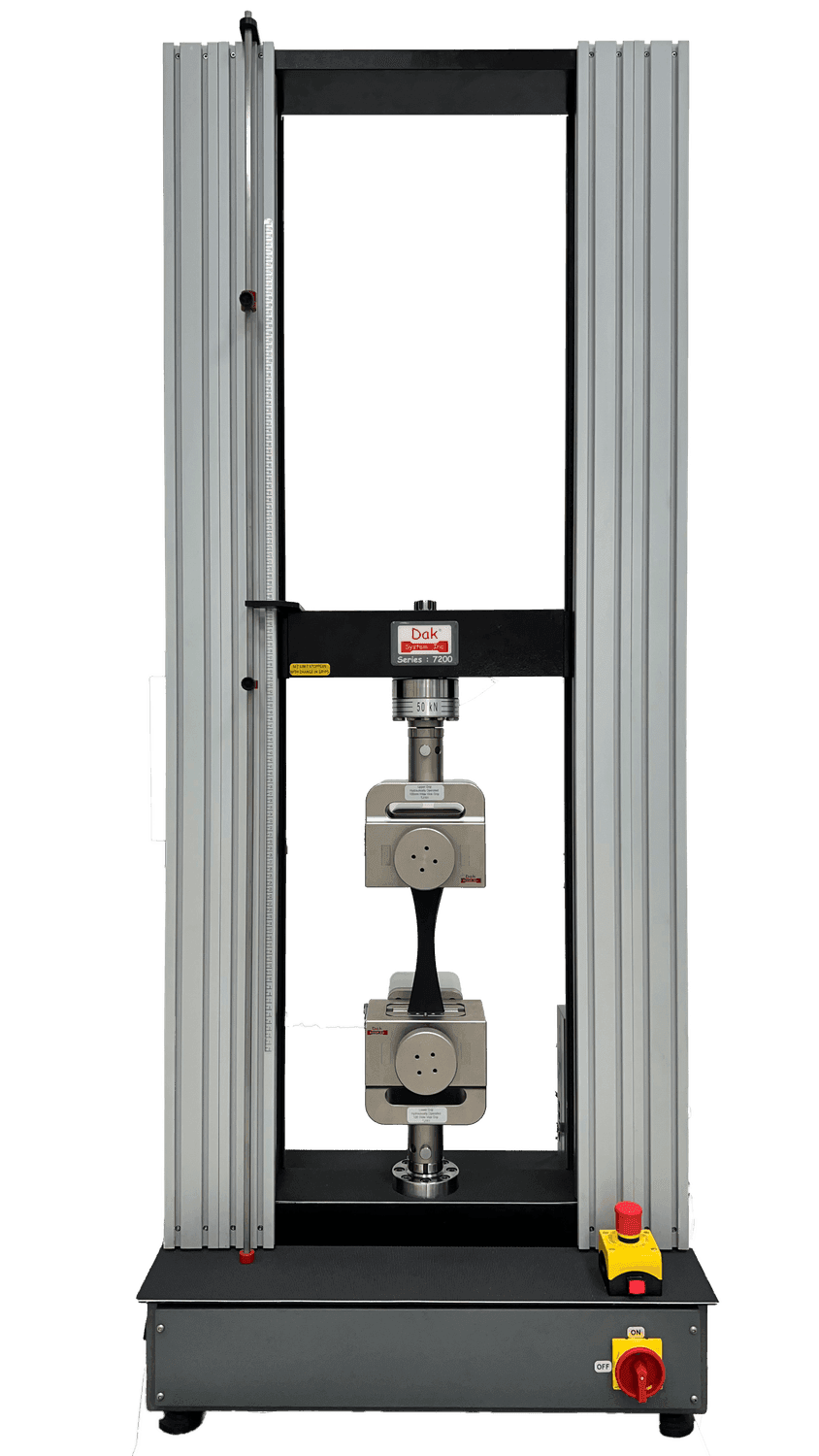
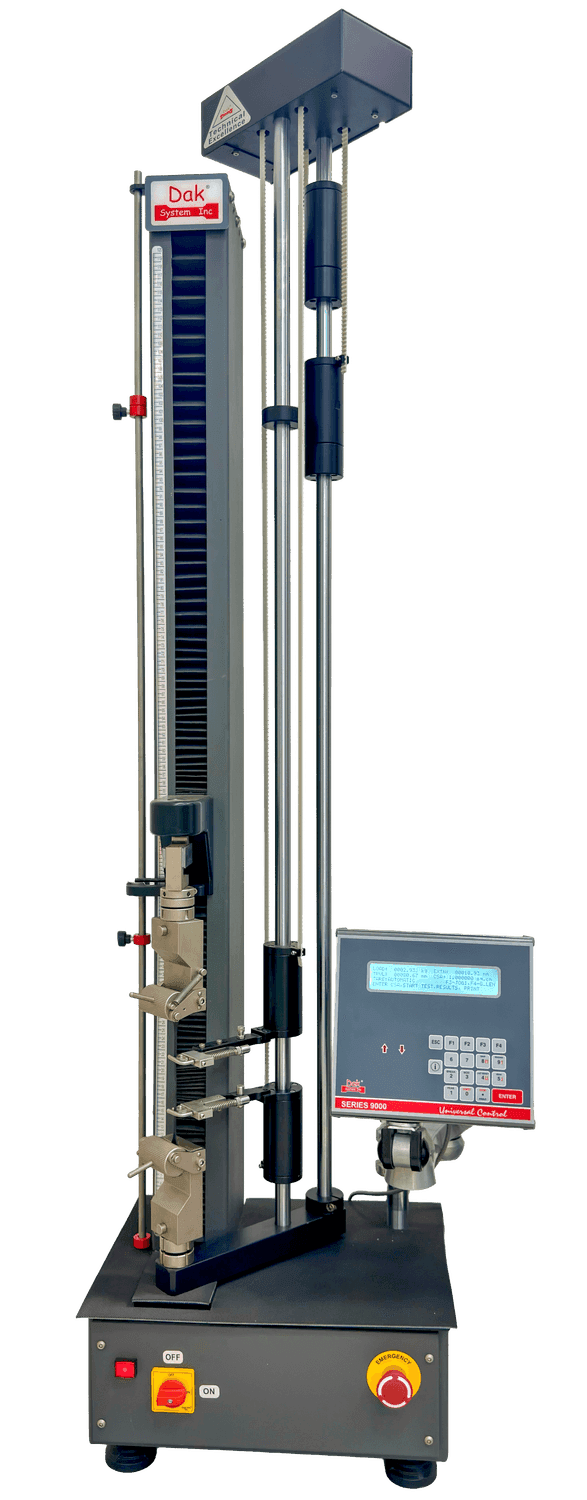
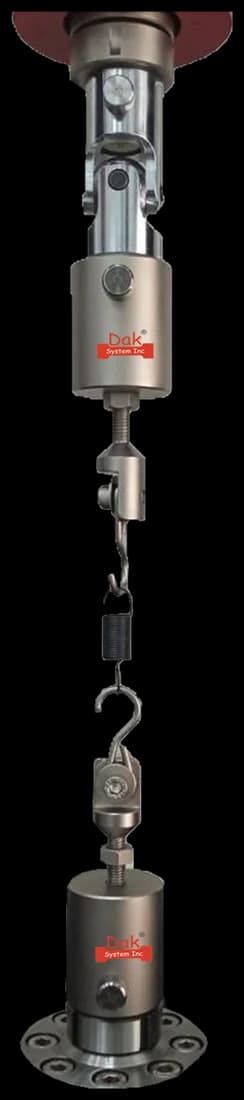
Load Cells
Suture retention on a vascular graft is measured in a few newtons. A cell sized in newtons rather than kilonewtons is what makes the result meaningful, and the same applies to the ring and strip tensile work.
SpecificationsTesting standard
Cardiovascular implants and extracorporeal systems — Vascular prostheses — Tubular vascular grafts and vascular patches
Written and technically reviewed by Dak System Inc. engineeringLast reviewed
ISO 7198 is the product standard for tubular vascular grafts and vascular patches used in open surgical implantation. Several of its evaluations run on a testing machine, the most important being suture retention strength: a suture is placed 2 mm from the end of the stretched prosthesis and pulled at 50 to 200 mm/min until it tears out. The current edition is ISO 7198:2016.
ISO 7198 is a product standard rather than a single test method. It sets requirements for the evaluation of vascular prostheses together with requirements for nomenclature, design attributes and the information the manufacturer supplies, based on current medical knowledge. It covers sterile tubular vascular grafts and vascular patches used in open surgical implantation, in synthetic and non-viable biological materials, including compound, coated, composite and externally reinforced prostheses. Guidance for developing in vitro test methods is given in an informative annex.
Several of the mechanical evaluations it calls for run on a universal testing machine: longitudinal tensile strength of the graft wall, circumferential tensile strength, and suture retention strength. Compliance and burst strength are also covered and normally use pressurised rigs rather than a tensile frame.
A vascular graft is a tube sewn into an artery and left there. Three things can go wrong mechanically and each has a test.
The graft can fail along its length or around its circumference, which the tensile tests address. It can dilate or fail to match the compliance of the host vessel, which drives long-term patency. And — the failure mode that kills people quickly — the suture can pull through the graft wall at the anastomosis.
**Suture retention strength** is therefore the number surgeons care about most. In the method a suture is inserted 2 mm from the end of the stretched prosthesis, through one wall, to form a half loop, and it is pulled at a rate between 50 mm/min and 200 mm/min. The force at which it tears out is the retention strength.
That 2 mm bite is the point of the test. A surgeon sewing an anastomosis takes a bite of a few millimetres, and the question is whether the graft wall will hold it under arterial pressure and a beating heart. A textile graft with excellent tensile strength can still have poor suture retention if the structure unravels at a cut edge.
This is a device standard. The article that is implanted is the article that is tested, and how it is held matters as much as how it is pulled.
The force at which the suture tears through the graft wall
The failure that kills quickly. It happens at the anastomosis, under arterial pressure, in a patient who is already off bypass.
Failure force of a strip or ring, per unit dimension
Whether the tube itself can fail along its length or around its circumference. A graft can be strong here and weak in suture retention.
Diameter change per unit pressure change
A compliance mismatch with the host vessel drives long-term patency, and it is measured on a pressurised rig rather than a tensile frame.
Distance from the end is the whole test. A bite taken at 3 mm instead of 2 mm has more material behind it and gives a higher force, and nothing in the record shows which was used unless it is stated.
Suture retention on a vascular graft is measured in a few newtons. A cell sized in newtons rather than kilonewtons is what makes the result meaningful, and the same applies to the ring and strip tensile work.
Specifications
The suture half loop has to be pulled squarely away from the wall, which needs a connection that self-aligns rather than one that imposes a direction. The graft-holding half of the arrangement is made to the product; where nothing published fits, the fixture is built to the specimen and to the method.
SpecificationsForces are low — suture retention on a vascular graft is measured in a few newtons — so a small frame with a load cell sized in newtons and force accuracy to ISO 7500-1 Class 1 over the working range is what the work needs.
The specified pull rate range of 50 to 200 mm/min is easily met; what is not trivial is the fixture. The suture loop has to be pulled squarely away from the graft wall while the graft is held at its stretched length without being crushed, and both halves of that arrangement are made to the product. Where nothing published fits, the fixture is built to the specimen and to the method.
Circumferential tensile tests on rings need a pair of pins or a split mandrel arrangement rather than flat grips.
Grafts held in flat jaws are crushed and the wall structure is altered before the suture is pulled. A suture bite taken at the wrong distance from the end changes the result directly. Frayed cut edges on textile grafts understate the tensile strengths. And testing a biological prosthesis in the wrong hydration state moves everything at once.
A vascular graft can fail three ways mechanically, and passing one test says nothing about the other two.
| Suture retention | Tensile strength | Compliance | |
|---|---|---|---|
| Failure it predicts | Pull-through at the anastomosis | Rupture of the tube | Long-term loss of patency |
| When it shows | Immediately, in theatre | Under pressure | Over months and years |
| Equipment | A tensile frame and a graft fixture | A tensile frame | A pressurised rig |
| Force involved | A few newtons | Low | Not a force result |
| Most affected by | Wall structure at a cut edge | Wall material and construction | Wall stiffness against the host vessel |
A textile graft with excellent tensile strength can still have poor suture retention, because the two depend on different things: one on the bulk structure, the other on whether that structure holds together where a needle has been through it near a cut edge.
ISO 7198 is the international standard for cardiovascular implants and extracorporeal systems — vascular prostheses — covering tubular vascular grafts and vascular patches used in open surgical implantation. It sets requirements for evaluation, nomenclature, design attributes and the information the manufacturer supplies, and it covers synthetic and non-viable biological materials including compound, coated, composite and externally reinforced prostheses. The current edition is ISO 7198:2016, confirmed in 2023.
Not in the usual sense. It is a product standard that sets requirements and describes evaluations, with guidance for developing in vitro test methods given in an informative annex. That informative status is worth knowing, because it means laboratories differ in fixture detail and a report has to describe the arrangement used rather than simply cite the clause.
The force at which a suture tears out of the graft wall. In the method a suture is inserted 2 mm from the end of the stretched prosthesis, through one wall, to form a half loop, and it is pulled at a rate between 50 mm/min and 200 mm/min. It is the mechanical property surgeons care about most, because the failure it predicts — the suture pulling through at the anastomosis under arterial pressure — happens immediately and in theatre.
Because that is roughly the bite a surgeon takes when sewing an anastomosis. The test is asking whether the graft wall will hold a realistic bite under a beating heart, and the distance from the cut end is what determines how much material is behind the needle. A bite taken at 3 mm has more material behind it and returns a higher force, so the distance is fixed by the method and stated in the report.
Yes, and textile grafts are the usual case. Longitudinal and circumferential tensile strength depend on the bulk structure of the tube. Suture retention depends on whether that structure holds together where a needle has passed through it a couple of millimetres from a cut edge — and a knitted or woven fabric can unravel there while the tube itself is entirely sound. The two are measured separately for exactly this reason.
At its specified stretched length, without crushing the wall. Flat jaws closed on a thin-walled tube flatten it and change the wall structure before the suture is pulled, so the holding half of the fixture is made to the product — a mandrel, a split clamp or a purpose-made arrangement. Circumferential tensile tests on rings similarly need a pair of pins or a split mandrel rather than flat grips.
A small frame with a load cell sized in newtons and force accuracy to ISO 7500-1 Class 1 over that range, since suture retention on a vascular graft is a few newtons. The 50 to 200 mm/min rate range is easily met by any modern frame. The demanding part is the fixture: the suture loop must be pulled squarely away from the wall while the graft is held stretched and uncrushed, and both halves of that are product-specific.
Dak verifies against whichever standard the method names, and where a class applies our frames sit a class tighter than it asks.
| The method asks for | Dak supplies | |
|---|---|---|
| Capacity | Very low — suture retention on a vascular graft is measured in a few newtons | Load cells from 1 kg to 60 ton on the Series 7200, and 0.5 to 100 kN on the Series 9000 |
| Force accuracy | ISO 7500-1 Class 1 over the working range | ISO 7500-1 Class 0.5 — a class tighter than the method asks |
| Gripping | A product-specific arrangement holding the graft at its stretched length without crushing it, with a self-aligning connection to the suture loop | Our a fixture built for this method, built to the specimen |
| Environment | Hydration state controlled and reported, particularly for biological and coated prostheses | 3009 series chambers, −150 °C to +400 °C — temperature only |
This page describes the method as practised. The governing text is the current edition from the issuing body. Tell us what you are testing and we will answer with the machine, the fixture and a quotation.