5 to 400 kNTJ-125
Direct Compression Fixture
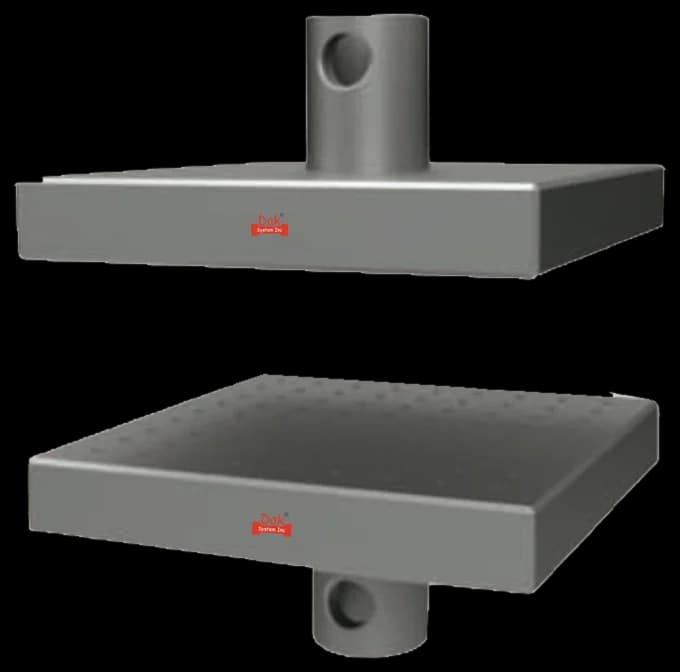
Flat, parallel platens. On a sandwich coupon the platens must stay parallel as load rises, or one facing takes the load before the other.
Specifications
Testing standard
Standard Test Method for Edgewise Compressive Strength of Sandwich Constructions
Written and technically reviewed by Dak System Inc. engineeringLast reviewed
ASTM C364 measures the compressive properties of structural sandwich construction loaded in the plane of the facings. Cores with continuous bonding surfaces such as balsa and foam are covered, as are discontinuous ones such as honeycomb.
From the test method to your testing system
Explore the DAK machines already listed for ASTM C364/C364M, then review the grips, measurement and setup requirements below.
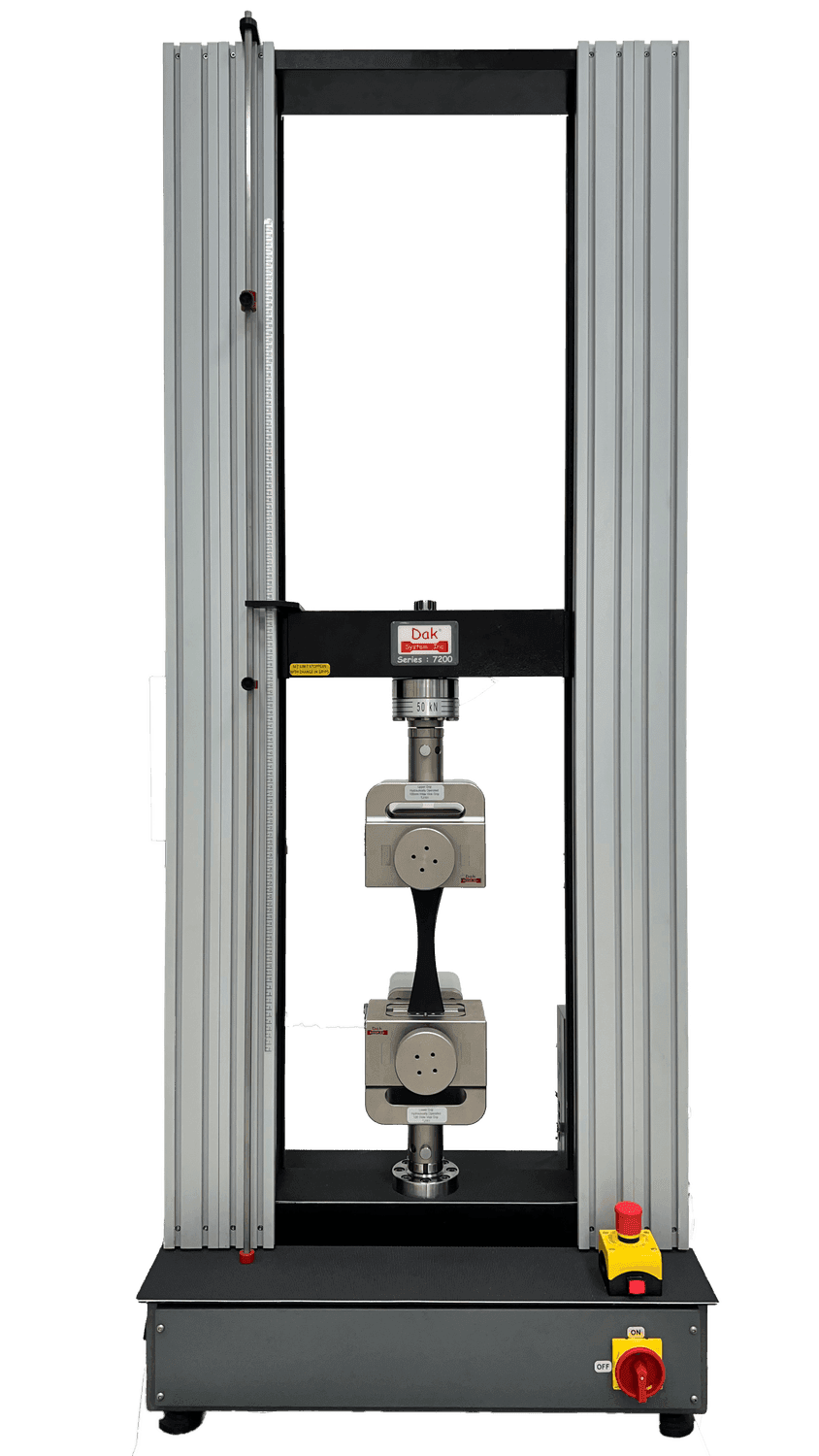 Universal Testing MachineSeries 7200Explore the machine →
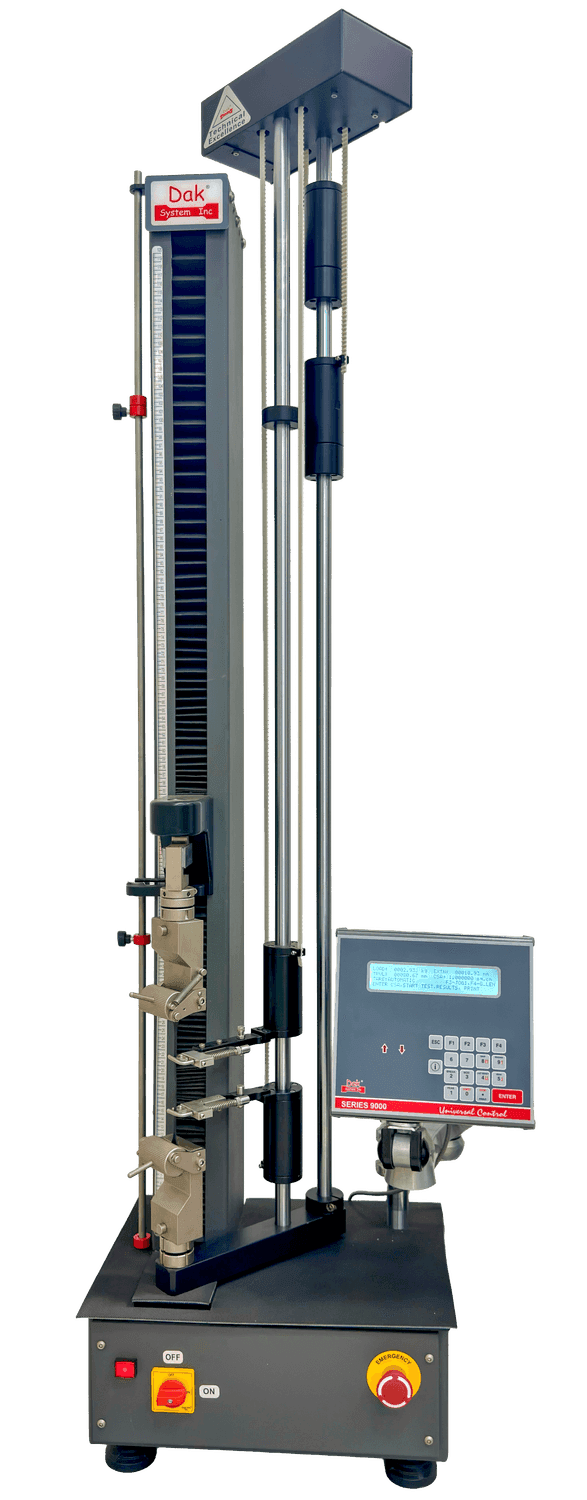 Universal Testing MachineSeries 9000Explore the machine →
01Understand the method
A sandwich coupon is cut to size, its loaded ends prepared flat, parallel and square to the facings, and its facing thickness and width measured. It is stood centrally between flat parallel platens and compressed at a constant rate in the plane of its facings until it fails. The maximum force is recorded and divided by the cross-sectional area of the facings, and the way the coupon gave way is classified as facing compression, facing wrinkling, core shear or end crushing.
The speed matters enough that the method requires it as a reported item, because edgewise strength moves with it, and it is set from the coupon rather than lifted from a single printed figure. Working it back is straightforward. A 100 mm coupon with carbon-epoxy facings fails near 1.2 % compressive strain, so the facings shorten about 1.2 mm; at 0.5 mm/min that is a little over two minutes of loading before the load train's own compliance is added, which is the right order for a test of this kind. Published applications guidance for the method puts the usable band at 0.05 to 0.51 mm/min (0.002 to 0.020 in./min) — 0.51 mm/min being 0.020 in./min exactly — with the slow end belonging to thick panels on soft cores, where more of the movement is the core bedding down and less of it is the facings straining. Set the speed from your own coupon length and expected failure strain, check it against the edition in force, and report the value used.
How much in-plane compression a sandwich panel carries before it fails — the load case of a panel acting as a column, a bulkhead or the compression face of a beam. The distinction from flatwise compression is not a detail: ASTM C365 crushes the panel through its thickness and measures the core, whereas this loads along the facings and is dominated by them. Which of the four failure modes occurred decides what the number means, and only facing compression and facing wrinkling describe the panel's edgewise capacity at all.
02Prepare the specimen and test settings
Load runs along the facings rather than through the thickness. That is a different test from crushing the core, and a different failure.
A sandwich panel has several ways to fail edgewise and they are not interchangeable. Facing wrinkling is a stability event governed by the core's support; facing compression is a strength event. Reporting a load without the mode leaves the reader unable to tell which.
03Build the test setup on a DAK machine
Moderate compressive force, commonly a few kilonewtons to tens of kilonewtons, through flat platens that stay parallel as load rises. Parallelism is the requirement that repays checking before a series: a platen a fraction of a degree out loads one facing before the other, and a sandwich panel is unforgiving about that. Where a modulus is reported an extensometer is needed, because machine compliance and bedding-in at the ends are a large share of crosshead travel on a short compression coupon.
Flat, parallel platens. On a sandwich coupon the platens must stay parallel as load rises, or one facing takes the load before the other.
SpecificationsDak verifies against whichever standard the method names, and where a class applies our frames sit a class tighter than it asks.
| The method asks for | Dak supplies | |
|---|---|---|
| Capacity | Moderate — a sandwich coupon commonly fails between a few kilonewtons and tens of kilonewtons | Load cells from 1 kg to 60 ton on the Series 7200, and 0.5 to 100 kN on the Series 9000 |
| Force accuracy | ASTM E4 over the working range | Verified to ASTM E4, and to ISO 7500-1 Class 0.5 |
| Gripping | Flat parallel compression platens, with the loaded ends of the coupon prepared square | Our compression anvils, built to the specimen |
| Environment | 23 ± 2 °C standard laboratory atmosphere | 3009 series chambers, −150 °C to +400 °C — temperature only |
04Run the test
05Calculate, report and interpret
Maximum force divided by the cross-sectional area of the facings
The core carries very little in-plane load. Dividing by the full panel section understates the facing stress badly, and which basis was used has to be stated.
A local buckling of a facing on its elastic foundation, the core
It depends on core stiffness as much as on facing strength, which is why the same facings on a softer core fail lower.
Reporting a load without the failure mode, which hides whether the panel failed by facing strength, by wrinkling — a stability event that depends on core stiffness as much as on the facings — or by something that is not an edgewise property at all. Calculating the strength on the whole panel section rather than the facing area, which understates the facing stress badly on a thick, light core. Poorly squared ends. And mixing SI and inch-pound values, which the dual designation exists to warn against. Taking a modulus from crosshead travel belongs on the list too: on a coupon this short, machine compliance and the coupon bedding down onto the platens are a large fraction of the movement, so the figure describes the load train as much as the panel.
06Compare methods and find answers
| C364 — edgewise | C365 — flatwise | |
|---|---|---|
| Load direction | In the plane of the facings | Through the thickness |
| Measures | Facing-dominated capacity | Core compressive strength |
| Governs | In-plane buckling and crushing of a panel | Local crushing under a fitting or a foot |
| Substitutable | No | No |
Two orthogonal properties of the same panel, and a design usually needs both — one describes what happens when the panel is loaded as a column, the other what happens when something presses on its face.
It is the ASTM test for the edgewise compressive strength of structural sandwich construction — compression in the plane of the facings rather than through the thickness. It covers cores with continuous bonding surfaces such as balsa and foam, and discontinuous ones such as honeycomb. The current designation is ASTM C364/C364M-16(2024).
They load the panel along different axes and measure different things. Edgewise runs the load along the facings, so the answer is dominated by the facings and by how well the core stabilises them. Flatwise, which is ASTM C365, crushes the panel through its thickness and measures the core. A design usually needs both, and neither substitutes for the other.
Because a sandwich panel has several ways to fail edgewise and only some of them describe its capacity. Facing compression is a strength event. Facing wrinkling is a stability event — a local buckle of the facing on the elastic foundation of the core — so the same facings on a softer core fail at a lower load. Core shear and end crushing are neither. A load reported without the mode leaves the reader unable to tell which was measured.
On the facing area, because the core carries very little in-plane load. Dividing the failure force by the full panel section spreads it over material that was not resisting it and understates the facing stress badly. Whichever basis is used has to be stated, since the two differ by a large factor on a thick, light core.
Because an out-of-square end crushes locally before the panel reaches its real capacity, and the recorded number then describes the end preparation rather than the sandwich. The loaded ends have to be flat, parallel and square to the facings — on a panel with stiff facings and a soft core, a small error concentrates the whole load into one corner of one facing.
Where strain is measured, yes, but it needs an extensometer rather than crosshead travel. Machine compliance and any bedding-in at the loaded ends are a large share of the movement on a short compression coupon, so a modulus from the crosshead reports the load train as much as the panel.
That the standard is written in both SI and inch-pound units, and the two are to be regarded separately and used independently rather than converted. The values in each system are not exact equivalents, so a report should state which was used and must not mix them.
Discuss your specimen, test requirements and reporting needs with DAK engineering.
This page describes the method as practised. The governing text is the current edition from the issuing body. Tell us what you are testing and we will answer with the machine, the fixture and a quotation.