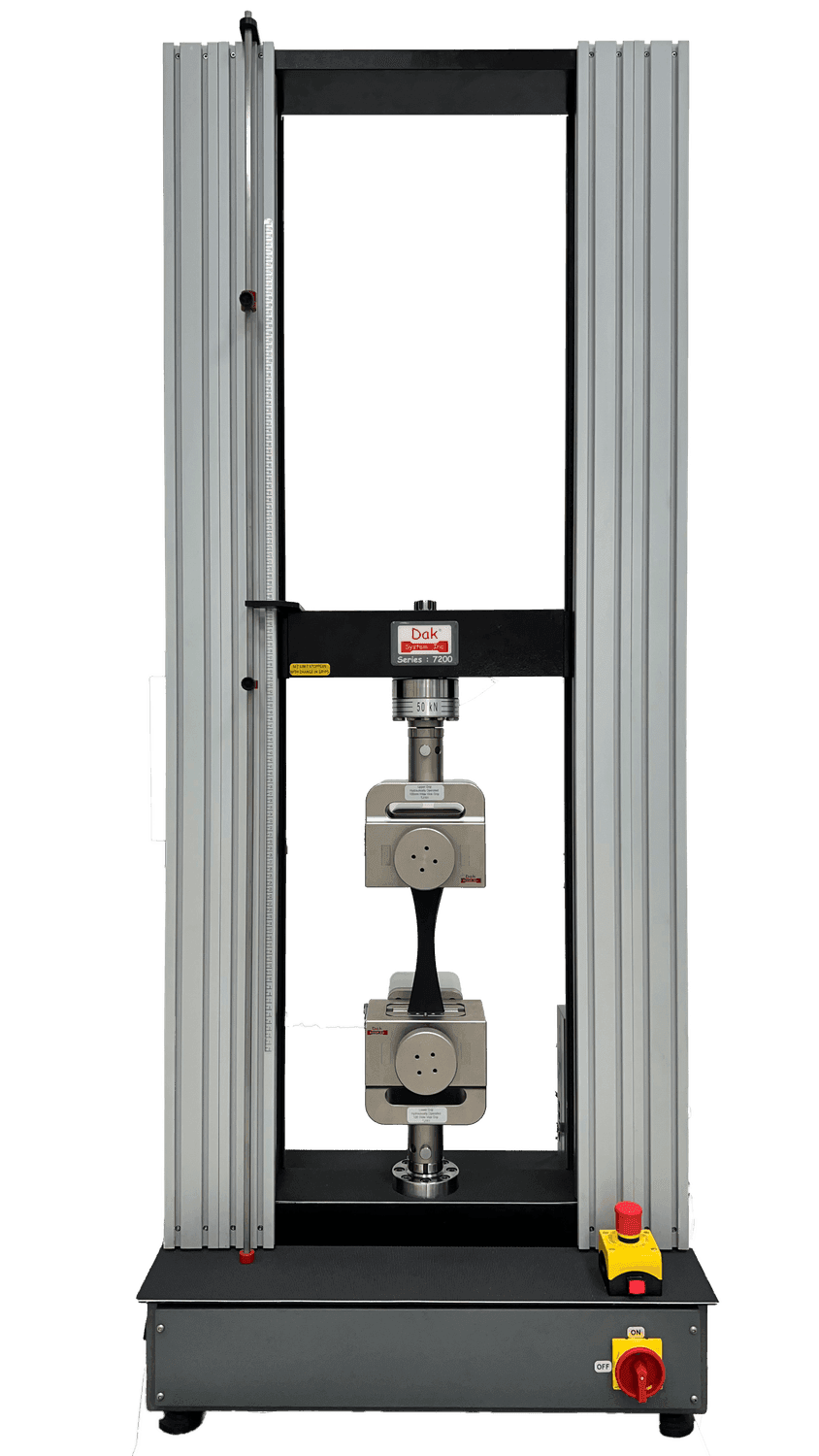
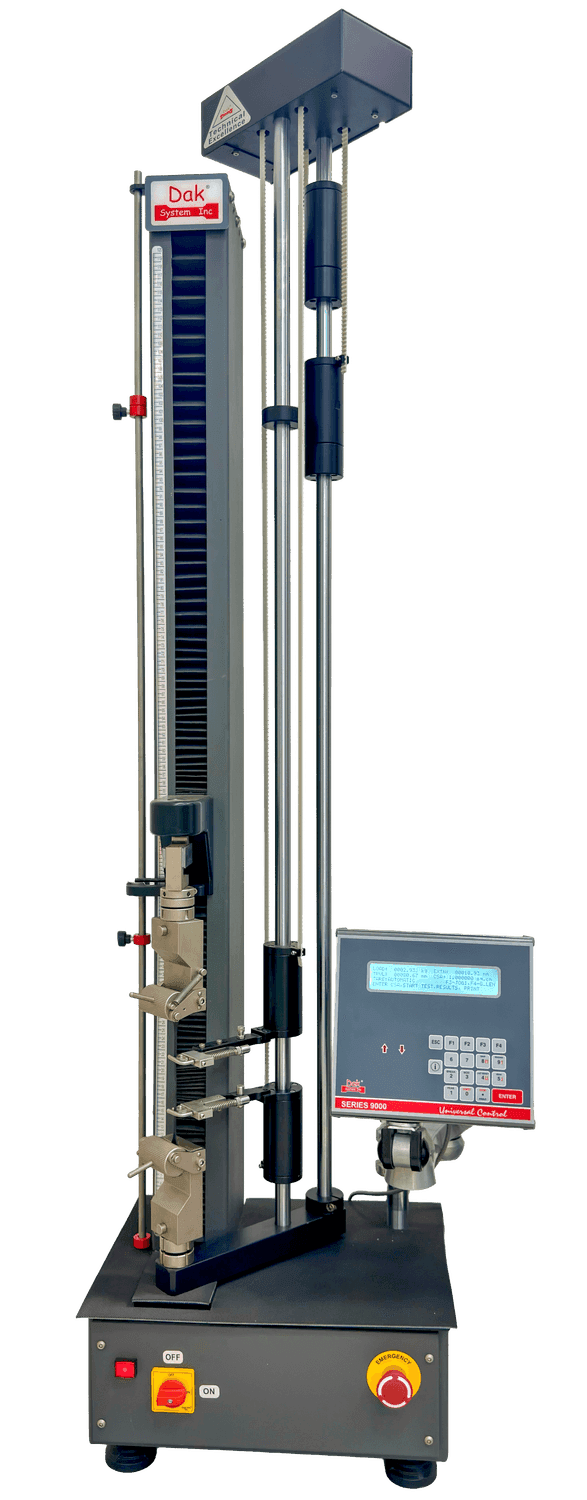
Testing standard

ASTM C496

Standard Test Method for Splitting Tensile Strength of Cylindrical Concrete Specimens

Written and technically reviewed by Dak System Inc. engineeringLast reviewed

ASTM C496 loads a concrete cylinder across its diameter until it splits, giving an indirect measure of tensile strength. Note its status before citing it: C496/C496M-17 was WITHDRAWN in 2026 and the ASTM catalogue names no replacement. IS 5816 and EN 12390-6 cover the same test and remain current.

At a glance

Test type
Tensilethe specimen is pulled apart
Published by
ASTM
Edition
C496/C496M-17

What the test does

A concrete cylinder — a moulded specimen or a drilled core — is laid on its side between the platens of a compression machine and loaded along a diametral line down its length. Narrow bearing strips run along the top and bottom contact lines so the load is distributed rather than concentrated on a knife edge.

Compressing a cylinder across its diameter puts the material in the middle of the cylinder into tension at right angles to the load. The specimen splits down that diametral plane, and the load at which it does gives the splitting tensile strength.

The load is applied continuously and without shock at a constant rate within the range 100 to 200 psi/min, which is 0.7 to 1.4 MPa/min of splitting tensile stress, until the specimen fails.

What it measures, and why it matters

Concrete is roughly ten times stronger in compression than in tension, and its tensile strength is difficult to measure directly because gripping a concrete specimen to pull it apart is impractical. The splitting test is the standard indirect route: it produces a tensile failure using a compression machine.

The result is used in the design of structural lightweight concrete members to evaluate the shear resistance provided by the concrete and to determine the development length of reinforcement. It is also used to compare mixes, to assess aggregate quality and to check curing.

Splitting tensile strength is not direct tensile strength and is not modulus of rupture. All three describe the tensile behaviour of concrete and all three give different numbers; a design that names one is not satisfied by another.

Specimen and bearing strips

The bearing strips are as much a part of the specimen as the concrete is. They are what turns a line contact into a distributed load.

Status
Withdrawn 2026 — no replacement named by ASTMThe ASTM catalogue status line reads Standard Withdrawn, No replacement, last updated 3 July 2026.
Specimen
A cylindrical concrete specimen — a moulded cylinder or a drilled core
Orientation
Laid on its side, loaded along a diametral line down its length
Bearing strips
Along the top and bottom contact lines, of the specified material and sizeConsumables. A reused, indented strip no longer distributes the load and the crack starts where it is thinnest.
Straightness
Sides parallel along the lengthPracticeA tapered or bowed cylinder bears unevenly, and the crack starts where the bearing is heaviest rather than where the analysis assumes.
Mark the intended diametral plane on both ends
DakIt lets the specimen be aligned with the platen centreline and lets the actual fracture plane be checked against the intended one afterwards.

Loading rate

Rate
100 to 200 psi/min, equivalently 0.7 to 1.4 MPa/min of splitting tensile stress
Manner
Continuously and without shock, until the specimen fails
Reported
Splitting tensile strength
Check the frame can hold a slow steady ramp
DakThat stress rate is a slow force ramp on a 300 kN frame. A machine that can only be driven quickly at the bottom of its range cannot meet the method.

Why compressing a cylinder measures tension

Splitting tensile strengthT

2P / (π L D)

P
the maximum applied load, N
L
the cylinder length, mm
D
the cylinder diameter, mm

The classical Brazilian-test expression. It assumes an elastic, homogeneous cylinder loaded along a line.

Why the specimen splits

Diametral compression produces transverse tension along the loaded plane

Concrete is roughly ten times stronger in compression than in tension, so it fails in tension across the diameter long before it crushes.

Three different tensile numbers

Direct tension, splitting tension and modulus of rupture all differ

A design naming one is not satisfied by another. Modulus of rupture is the highest of the three and direct tension the lowest.

How the test runs

  1. 01Cure the cylinder or extract and prepare the core as the project requires.
  2. 02Measure length and diameter.
  3. 03Mark the intended diametral plane on both ends.
  4. 04Place a fresh bearing strip on the lower platen.
  5. 05Lay the cylinder on its side, aligned with the platen centreline.
  6. 06Place the upper bearing strip along the top contact line.
  7. 07Close the platen and check the alignment before load is applied.
  8. 08Load continuously at 0.7 to 1.4 MPa/min of splitting tensile stress.
  9. 09Record the maximum load.
  10. 10Check the fracture plane against the marked one and report the splitting tensile strength.

Grips and fixtures for this method

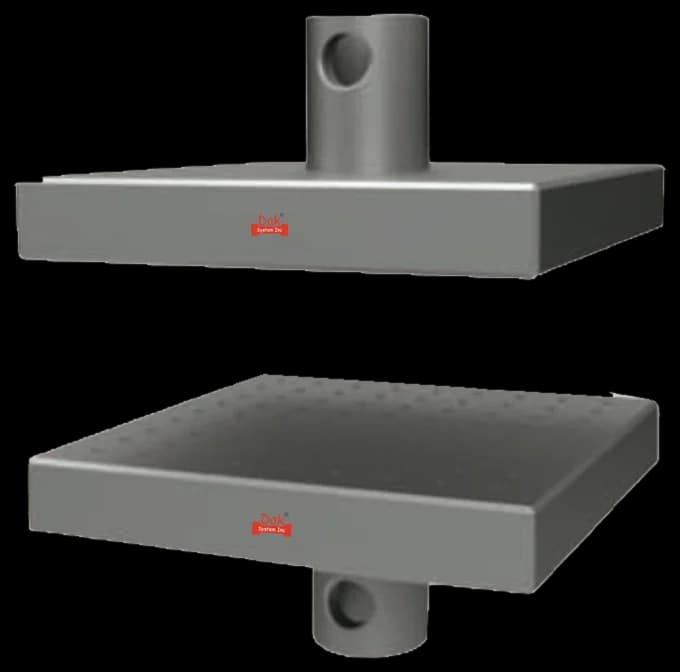
Direct compression fixture platens
5 to 400 kNTJ-125

Direct Compression Fixture

Flat, parallel platens with an alignment arrangement that holds the cylinder and both bearing strips square while the platen closes. Most of the operator variability in this test comes from alignment, and a jig removes it.

Specifications
Self-identifying

Load Cells

A 150 by 300 mm cylinder splits at around 200 kN and higher-strength mixes take more, so the frame is sized for that. What matters as much is that the machine can hold the slow, steady ramp the stress rate demands.

Specifications

What the report has to contain

  • Reference to ASTM C496/C496M, the edition, and its withdrawn status
  • Whether the specimen was a moulded cylinder or a drilled core
  • Specimen length and diameter
  • Age at test and curing history
  • Bearing strip material and dimensions
  • Loading rate
  • Maximum load for each specimen
  • Computed splitting tensile strength
  • Fracture plane, and whether it matched the marked plane
  • Mean and the number of specimens

What the machine must be capable of

A 150 mm by 300 mm cylinder splitting at typical concrete strengths demands on the order of 200 kN, and higher-strength mixes take more, so a compression frame of 300 kN upwards with force accuracy to ASTM E4 is the practical requirement.

Platen parallelism and a means of aligning the cylinder along the platen centreline matter more than headline capacity. An alignment jig that holds the cylinder and the bearing strips square while the platen closes removes most of the operator variability from this test.

Loading has to be controllable at a low, steady rate: the specified stress rate corresponds to a slow force ramp, and a machine that can only be driven quickly at the bottom of its range cannot meet it. No extensometer or strain measurement is involved; the result is a failure load.

What goes wrong in practice

Misalignment is the dominant fault and it lowers the result. Reused or wrongly sized bearing strips concentrate the load. Loading faster than the specified rate raises the apparent strength, as it does on every concrete test. And a specimen that fails on a plane other than the marked diametral one has not measured what the method defines.

Three ways to measure concrete in tension

All three are in use, all three give different numbers, and none of them is the direct tensile strength of the material.

Splitting (C496)Flexural (C78)Compressive (C39)
What is measuredIndirect tension across a diameterExtreme fibre stress in bendingCompression
SpecimenA cylinder on its sideA beamA cylinder upright
Relative magnitudeLower than modulus of ruptureThe highest of the tensile measuresAbout ten times the tensile values
Used forShear resistance, development lengthPavement designAlmost everything else
StatusWithdrawn 2026CurrentCurrent

Empirical relationships between these three exist and are mix-specific. Converting a compressive strength into an assumed splitting strength is a rough estimate, not a substitute for the test.

Questions we are asked about this test

Is ASTM C496 still current?

No. C496/C496M-17 was withdrawn in 2026 and the ASTM catalogue status line reads Standard Withdrawn, No replacement. The entry is kept here because the designation is written into a great many specifications, mix designs and quality manuals, and because the test itself remains in routine use under other documents.

What should be used instead?

The same test is covered by IS 5816 in Indian practice and by EN 12390-6 in Europe, and both remain current. Where a contract specification still names ASTM C496 the sensible course is to run the test to the withdrawn edition, state clearly in the report that the standard is withdrawn and which edition was followed, and raise the substitution with the specifier rather than making it unilaterally.

Why compress a cylinder to measure tension?

Because concrete cannot practically be gripped and pulled. Loading a cylinder across its diameter puts the material along that diametral plane into transverse tension, and since concrete is roughly ten times stronger in compression than in tension, it splits along that plane long before it crushes. It is an indirect measurement, and the strength it gives is not the direct tensile strength — but it is repeatable, it uses an ordinary compression machine, and it uses the same cylinders already being cast.

What are the bearing strips for?

To spread the load along the contact line. Without them the platen bears on the cylinder along a knife edge, the local stress is enormous and the specimen crushes at the contact instead of splitting. The strips are specified in material and dimensions and are single-use: a strip that has already been indented by one test no longer distributes evenly, and the crack starts wherever it has thinned.

How does splitting tensile strength relate to modulus of rupture?

They are different numbers for a related property, and modulus of rupture is the higher of the two. Modulus of rupture comes from beam theory applied to a flexural test and assumes concrete behaves elastically to failure, which it does not, so it overstates the true tensile strength by more than the splitting test does. A design that specifies one is not satisfied by the other, and pavement work in particular is specified on flexural strength.

What is the effect of loading too quickly?

The apparent strength goes up. This is true of every strength test on concrete and it is why the rate band is specified narrowly — 0.7 to 1.4 MPa/min of splitting tensile stress. On a large compression frame that is a slow force ramp, and a machine whose control is poor at the bottom of its range will run faster than the method allows without anyone noticing.

What machine does it need?

A compression frame of 300 kN upwards with force accuracy to ASTM E4. A 150 by 300 mm cylinder splits at roughly 200 kN at ordinary strengths and higher-strength mixes take more. Platen parallelism and a means of aligning the cylinder and its bearing strips along the platen centreline matter more than extra capacity, because misalignment is the dominant source of low results.

Running ASTM C496 on the Series 7200 and Series 9000

Dak verifies against whichever standard the method names, and where a class applies our frames sit a class tighter than it asks.

The method asks forDak supplies
CapacityHigh — around 200 kN for a 150 by 300 mm cylinder at ordinary strengths, more on high-strength mixesLoad cells from 1 kg to 60 ton on the Series 7200, and 0.5 to 100 kN on the Series 9000
Force accuracyASTM E4Verified to ASTM E4, and to ISO 7500-1 Class 0.5
GrippingFlat parallel compression platens with an alignment arrangement and single-use bearing stripsOur compression anvils, built to the specimen
EnvironmentCured as the project requires; the test itself is at ambient laboratory conditions3009 series chambers, −150 °C to +400 °C — temperature only

This page describes the method as practised. The governing text is the current edition from the issuing body. Tell us what you are testing and we will answer with the machine, the fixture and a quotation.

Materials tested to it

The test it standardises

Other standards explained