Particleboards and fibreboards — Determination of tensile strength perpendicular to the plane of the board
Written and technically reviewed by Dak System Inc. engineering·Last reviewed
EN 319 bonds a 50 mm square of particleboard or fibreboard between two metal blocks and pulls them apart, loading the board in tension at right angles to its plane. The result is the internal bond, and it is the most sensitive single indicator of whether the panel was pressed and cured properly. The edition in force is EN 319:1993.
A square specimen is cut from the panel and bonded, face and back, to a pair of steel or aluminium alloy blocks. The blocks are pulled apart in the testing machine so that the specimen is loaded in tension at right angles to the plane of the board, and a uniformly distributed tensile force is applied until rupture occurs.
The result is the tensile strength perpendicular to the plane, almost always called **internal bond**, or IB.
What it measures, and why it matters
A particleboard or fibreboard is a mat of wood particles or fibres held together by adhesive. Internal bond measures how well that adhesive is doing its job through the thickness of the board, and it is the most sensitive single indicator of whether the panel was made properly.
Resin dosage, mat moisture, press time, press temperature and degree of cure all show up here before they show up anywhere else. A board can have acceptable bending strength and poor internal bond, because bending is dominated by the dense surface layers while internal bond is governed by the weak core.
Commercially it does two things. It is the works control test that tells a press operator whether the cycle is right, and it is the property that panel product standards — the EN 312 particleboard grades, the EN 622 fibreboard grades — set requirements against for each class and thickness.
It is also the test that finds delamination-prone board. A panel that will blister in service, or that will fail at a screw held only by the core, usually fails here first.
Specimen, blocks and the adhesive between them
The bond to the steel has to be stronger than the bond inside the board. That single requirement governs almost everything about specimen preparation.
Material
Particleboards, fibreboards and cement-bonded particleboards
Specimen
50 mm by 50 mm, cut clean and square
Blocks
Steel or aluminium alloy, 50 mm square, bonded to face and back
Loading
A uniformly distributed tensile force until rupture
Adhesive
Strong enough to fail the board, without soaking into itPracticeA hot-melt applied quickly is the usual answer. An adhesive that penetrates the surface reinforces the very core being measured.
Conditioning
Conditioned before test; internal bond moves with moisture content
Take specimens across the board width
DakPress pressure and mat formation vary from edge to centre, and edge specimens alone do not describe the board.
A failure at the adhesive interface is an invalid test, not a low internal bond. Those specimens are rejected and repeated, and the report says how many — otherwise a poor gluing session reads as a poor board.
Rate and alignment
Rate
Set so that maximum load is reached within a controlled time, established for the board type
Load path
Along a common axis through the centre of the specimen
Connections
Self-aligning — a universal joint, a ball-and-socket or a pin at each endPracticeAny eccentricity peels one corner of the specimen instead of loading the whole area in uniform tension, and the result falls.
Reported
Internal bond, as a stress over the bonded area
What internal bond is diagnosing
Internal bondIB
Maximum load divided by the bonded area
maximum load
the force at rupture, N
bonded area
the nominal 50 mm by 50 mm face, mm²
Reported in N/mm². Typical values are a few tenths of a megapascal, which is why a specimen cut out of square matters — the area divided by is not the area loaded.
Why it moves before anything else does—
Resin dosage, mat moisture, press time, temperature and cure all show here first
It is governed by the weak core, where all of those variables have their largest effect.
Why bending strength can look fine while this does not—
Bending is carried by the dense surface layers
A board with an under-cured core can bend acceptably and still fail at a screw held only by that core, or blister in service.
How the test runs
01Cut 50 mm square specimens from across the width of the board.
02Check they are square, and measure the actual dimensions.
03Condition the specimens.
04Bond a 50 mm square metal block to the face and to the back.
05Let the adhesive set without letting it penetrate the board surface.
06Mount the assembly with self-aligning connections at both ends.
07Establish a rate that reaches maximum load in the controlled time.
08Pull until the specimen ruptures.
09Inspect the failure surface: reject any specimen that parted at the glue line.
10Compute internal bond and report it with the number of rejected specimens.
Grips and fixtures for this method
HJ-679
Hook Fixture
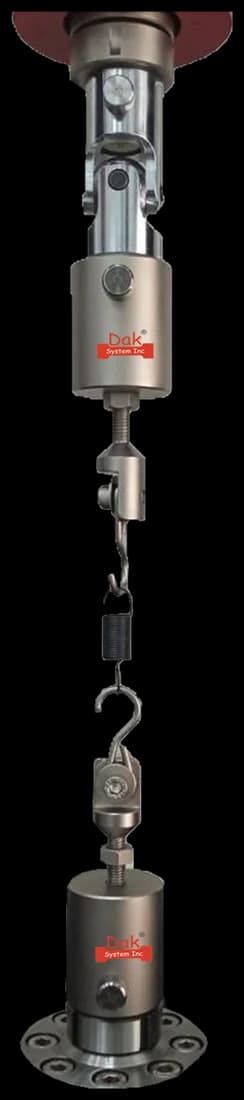
The connection between machine and specimen has to be self-aligning, so the two bonded blocks are pulled along a common axis through the centre of the specimen. Any eccentricity peels a corner instead of loading the whole 50 mm square in uniform tension.
Internal bond is typically a few tenths of a megapascal, which on a 50 mm square is a few hundred newtons to about a kilonewton. Resolution at the bottom of the range decides whether this test is usable; capacity is irrelevant.
Board type, nominal thickness and manufacturer designation
Where across the board width the specimens were taken
Measured specimen dimensions
Block material and adhesive used
Conditioning atmosphere and moisture content at test
Time to maximum load
Maximum load and internal bond for each specimen
Failure surface description for each specimen
Number of specimens rejected for adhesive failure, and why
What the machine must be capable of
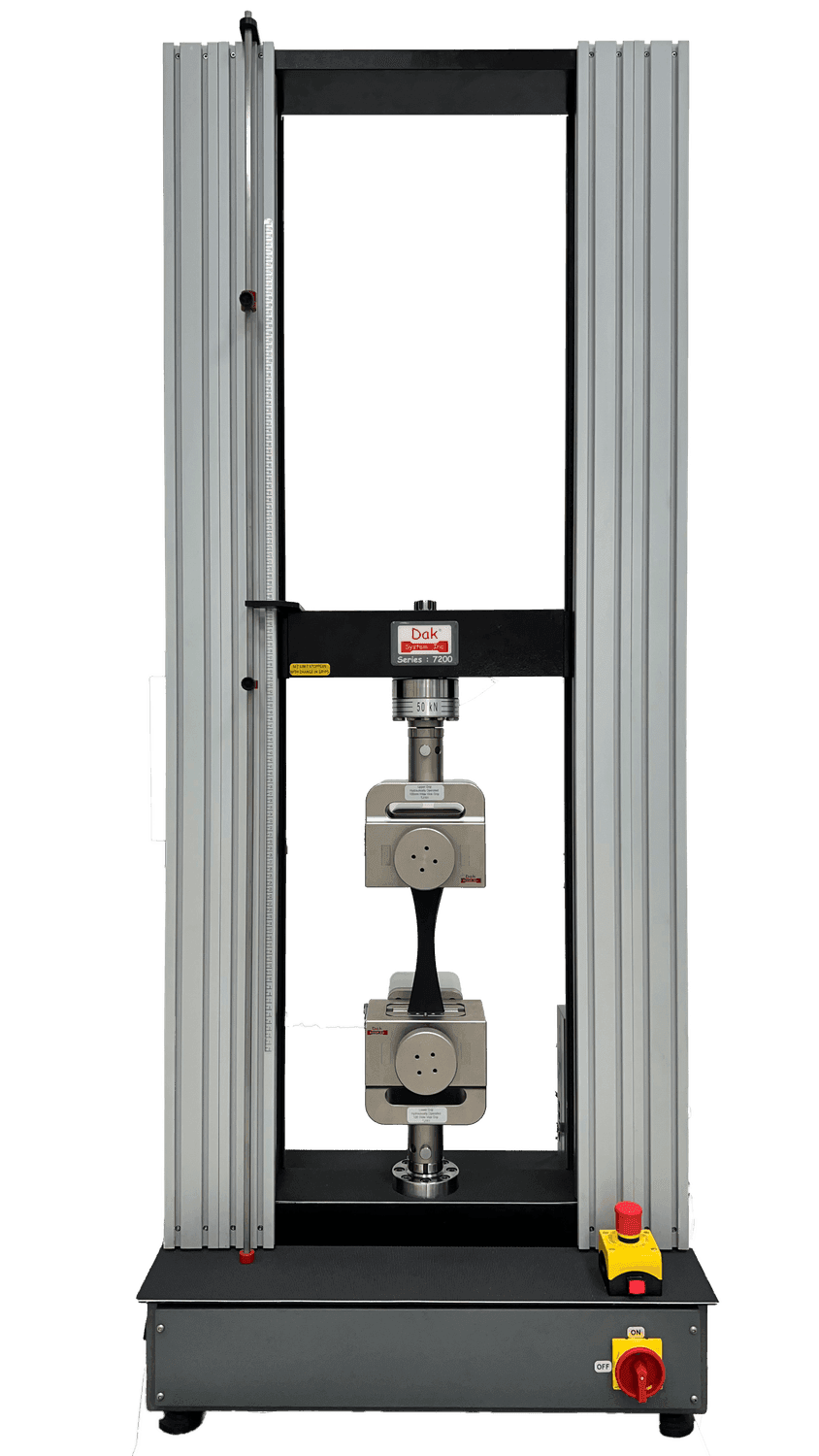
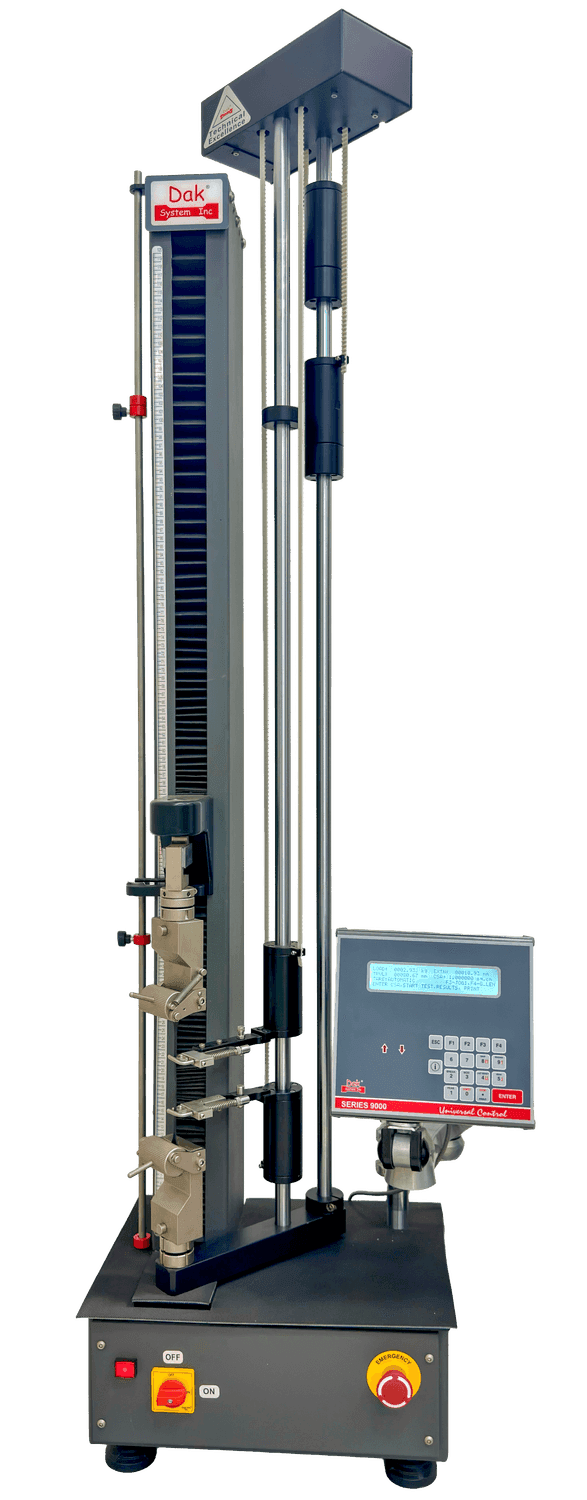
Internal bond strengths are low — typically a few tenths of a megapascal, which on a 50 mm square specimen is a few hundred newtons to about a kilonewton. A frame of 5 to 10 kN with a load cell chosen for that range and force accuracy to ISO 7500-1 Class 1 is right, and resolution at the bottom of the range matters much more than capacity.
Alignment matters more than anything else. The two blocks have to be pulled along a common axis through the centre of the specimen, so self-aligning connections — a universal joint, a ball-and-socket or a pin at each end — are used. Any eccentricity peels one corner of the specimen instead of loading the whole area in uniform tension, and the result falls.
The rate of loading is set so that maximum load is reached within a controlled time rather than by a fixed speed, and it is established for the board type being tested.
What goes wrong in practice
Adhesive failures reported as low results are the classic error and they always understate the board. Adhesive that has penetrated the surface reinforces the specimen and overstates it. Misalignment between the blocks peels rather than pulls. And a specimen cut out of square gives a bonded area that is not what the strength was divided by.
Where internal bond sits among the panel tests
Four European methods describe a wood-based panel, and each one has to be read alongside the others.
EN 319
EN 310
EN 322
EN 323
Measures
Internal bond
Bending stiffness and strength
Moisture content
Density
Governed by
The weak core
The dense faces
Conditioning and storage
The whole board
Finds
Press and resin faults
Structural adequacy
Why the others moved
Product standard
EN 312, EN 622
EN 312, EN 622
Supporting
Supporting
An internal bond figure without the moisture content and density it was measured at is difficult to argue with or against. Both move the result, and both are cheap to determine on the same board.
Questions we are asked about this test
What is EN 319?+
EN 319 is the European method for determining the tensile strength perpendicular to the plane of particleboards and fibreboards — the property universally called internal bond, or IB. A 50 mm square specimen is bonded between two metal blocks and pulled apart until it ruptures. The edition in force is EN 319:1993, which has not been revised since publication.
Why is internal bond such a useful measurement?+
Because it responds to almost everything that can go wrong in a press. Resin dosage, mat moisture, press time, press temperature and degree of cure all show up in the internal bond before they show up in any other property, because the weak core of the board is where they have their largest effect. It is the works control test that tells a press operator whether the cycle is right, and it is what product standards specify per grade and thickness.
Can a board pass EN 310 and fail EN 319?+
Routinely, and that is the reason both exist. Bending is dominated by the dense surface layers of a panel, so a board with a weak, under-cured core can produce perfectly acceptable modulus of elasticity and bending strength. The internal bond is governed by that core. Boards that will blister in service, or fail at a screw held only by the core, usually fail here first while looking sound in bending.
What if the specimen fails at the glue line?+
The test is invalid and is repeated. A failure at the adhesive interface means the bond to the block was weaker than the bond inside the board, so the board's internal bond has not been measured — only a lower limit on it. Recording those as low results understates the panel, sometimes badly, and a run with several such failures usually points at the gluing procedure rather than the board.
Why does the adhesive have to be applied quickly?+
To stop it soaking in. An adhesive that penetrates the board surface impregnates and reinforces part of the very structure being measured, so the internal bond comes out high. That is the opposite failure to a glue-line separation and it is harder to detect, because the specimen fails in the board exactly as it should. A hot-melt that sets before it can migrate is the usual answer.
Why does alignment matter so much?+
Because the method calls for a uniformly distributed tensile force, and a 50 mm square is small enough that a few millimetres of eccentricity is a large proportion of it. Off-axis loading peels one corner of the specimen progressively instead of loading the whole area at once, and the recorded strength falls. Self-aligning connections at both ends — a universal joint, a ball-and-socket or a pin — are what keep the load path through the centre.
What machine does it need?+
A small frame with excellent low-end resolution. Internal bond is typically a few tenths of a megapascal, which on a 50 mm square specimen is a few hundred newtons to about a kilonewton, so a 5 to 10 kN frame with a load cell chosen for that range and force accuracy to ISO 7500-1 Class 1 is right. Capacity is not the issue; alignment and resolution are.
This page describes the method as practised. The governing text is the current edition from the issuing body. Tell us what you are testing and we will answer with the machine, the fixture and a quotation.