Standard Test Method for Determining Durability of Adhesive Joints Stressed in Shear by Tension Loading
Written and technically reviewed by Dak System Inc. engineering·Last reviewed
ASTM D2919 determines the durability of an adhesive joint by holding a single-lap bonded specimen under a sustained tensile shear load while it sits in a chosen environment, and recording the time to failure. Stress, temperature and humidity or immersion are the three variables set deliberately, and a family of failure times across several conditions is what the method is designed to produce. The current edition is D2919-01(2023).
Single-lap adhesive joints are held under a sustained tensile shear load while exposed to a chosen environment, and the time each takes to fail is recorded. The scope covers joints stressed in contact with air, with air in equilibrium with certain solutions, with water, with aqueous solutions, or with other environments, at a range of temperatures. Three variables are set deliberately: applied stress, temperature, and the humidity or immersion condition. The result is not a force but a survival time under those three, and a family of such times across several conditions is what the method is designed to produce.
What it measures, and why it matters
The premise is stated plainly in the standard: stress and moisture together degrade most adhesive joints, and stress in the presence of water or water vapour can cause some joints to fail at a small fraction of the load needed to break the same joint dry. That is the failure mode a dry lap-shear test cannot see. Two adhesives can post identical breaking strengths on a bench and behave completely differently after a fortnight at load in humid air.
Time to failure falls as stress, temperature and relative humidity rise, which is what makes the method usable as an accelerated screening test. It is also the standard way of separating surface preparation and substrate from the adhesive itself, because those choices show up in durability long before they show up in dry strength. The method notes that assessing an adhesive properly means testing across a range of stress, humidity and temperature, while qualifying one joint for one known service condition may need only a single set.
Joint and programme design
A durability result belongs to the whole bonded system — substrate, surface preparation, adhesive and cure — not to the adhesive on its own.
Specimen
Adhesively bonded single-lap shear joints
Environments covered
Air; air in equilibrium with certain solutions; water; aqueous solutions; other environmentsAcross a range of temperatures. The scope is written broadly on purpose.
Variables set
Applied stress, temperature, and humidity or immersion
Result
Time to failure under those three conditionsNot a force. A single time with no conditions attached to it means nothing.
Reference strength
The dry breaking strength of the same jointThe sustained load is chosen against it, so a set of ordinary lap-shear specimens is broken conventionally first.
Surface preparation and substrate
Part of what is being testedThe method is applied to evaluating surface preparation. Those choices show up in durability long before they show up in dry strength.
Replication
Higher than a strength test needsPracticeTime-to-failure data scatter widely. One specimen at one condition says almost nothing.
Stress levels and exposure durations
Set per programmePracticeNo figures are quoted here: none was corroborated against two independent publisher-side sources.
Loading, and why it is not a crosshead rate
Loading
Sustained, at a chosen fraction of the dry breaking strengthThere is no rate of extension in this method. The load is applied and then held.
What is recorded
The time each joint takes to fail
Effect of stress
Time to failure generally decreases as stress rises
Effect of temperature
Time to failure generally decreases as temperature rises
Effect of humidity
Time to failure generally decreases as relative humidity risesThe three together are what make the method usable as an accelerated screening test.
Choosing the stress level
The hardest decision in the programmeDakToo high and everything fails within a day, so the ranking is dominated by short-term strength. Too low and nothing fails and the test yields nothing.
How the test runs
01Prepare and cure bonded single-lap specimens as the adhesive system requires, recording the substrate and surface preparation.
02Break a set of them conventionally in tension to establish the dry breaking strength.
03Choose the stress levels to be applied, as fractions of that strength.
04Mount the remaining joints in stressing devices and apply the sustained load.
05Place the stressed assemblies in the chosen environment — humid air, water, an aqueous solution, or outdoors — at the chosen temperature.
06Leave them under load, checking without disturbing the applied stress.
07Record the time at which each joint fails.
08Repeat across the range of stress, temperature and humidity the programme calls for.
09Report each failure time with the three conditions that produced it.
Assessing an adhesive properly means testing across a range of stress, humidity and temperature. Qualifying one joint for one known service condition may need only a single set of conditions — but the two are different exercises and should not be confused with each other.
Grips and fixtures for this method
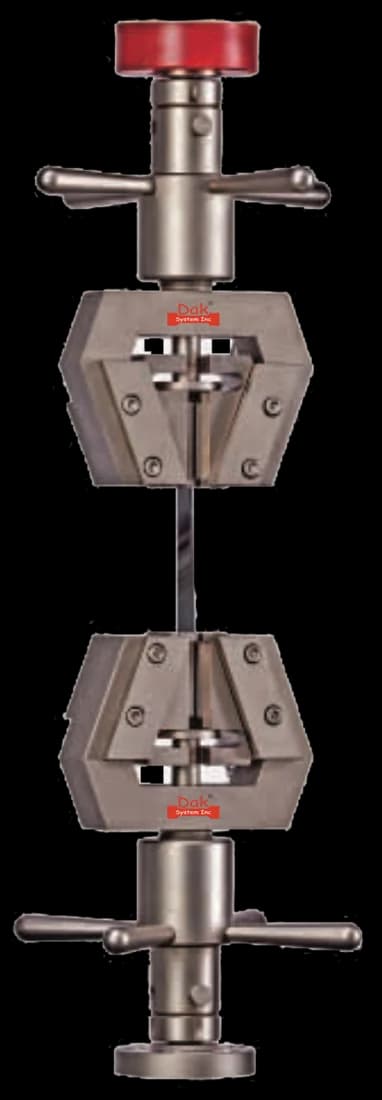
Self-tighteningTJ-15
Universal Parallel Wedge Grips
For the dry reference test that sets the stress level, not for the sustained stage. Self-tightening wedges hold a flat adherend squarely; shims or offset grips keep the load line through the bond, since the two strips lie on different planes.
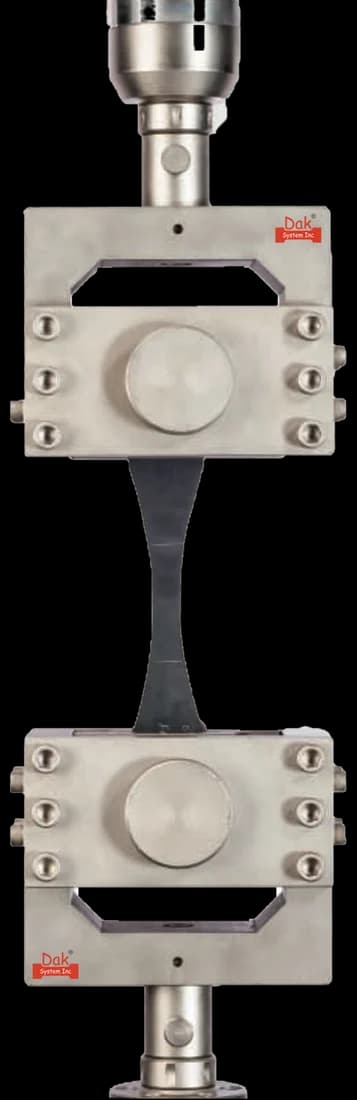
Hydraulic closure for the same reference test where the adherends are thick or the joint strong enough that a manual wedge would slip before the bond failed.
Dry breaking strength of the same joint, and how it was determined
Applied stress, absolute and as a fraction of the dry strength
Temperature
Relative humidity, or the immersion condition
Time to failure for each specimen
Number of specimens at each condition, and any still unfailed when the test was stopped
Failure mode — adhesive, cohesive, or substrate
What the machine must be capable of
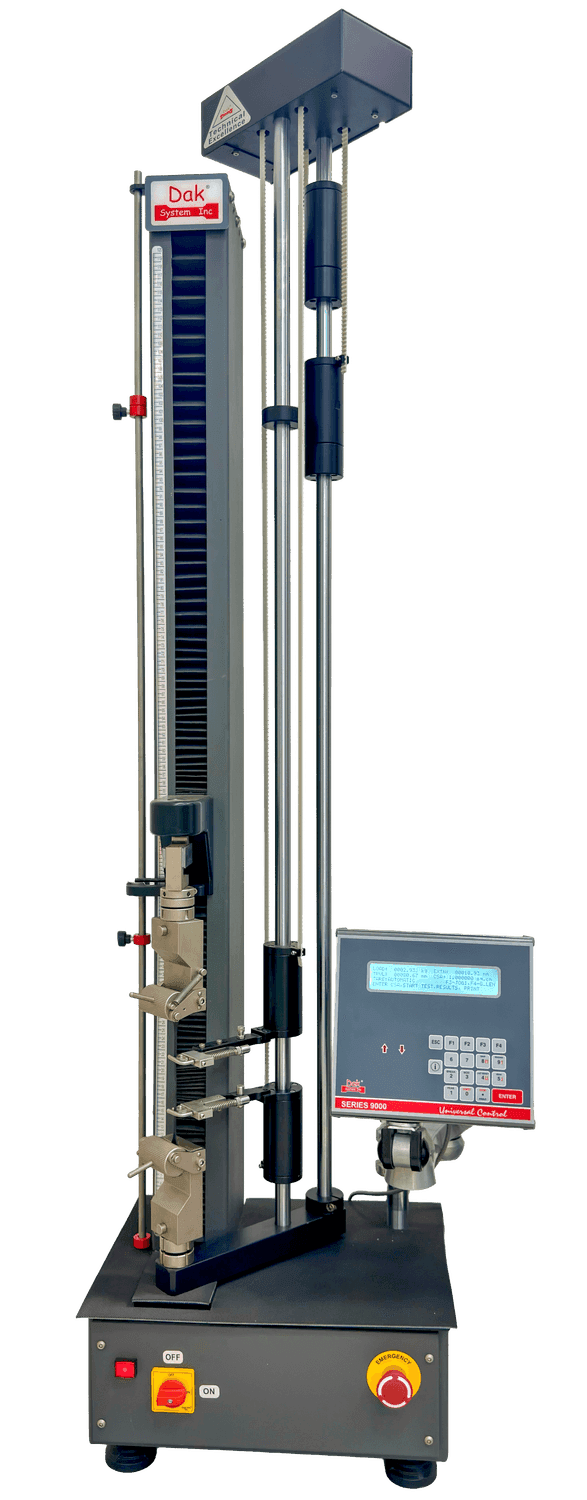
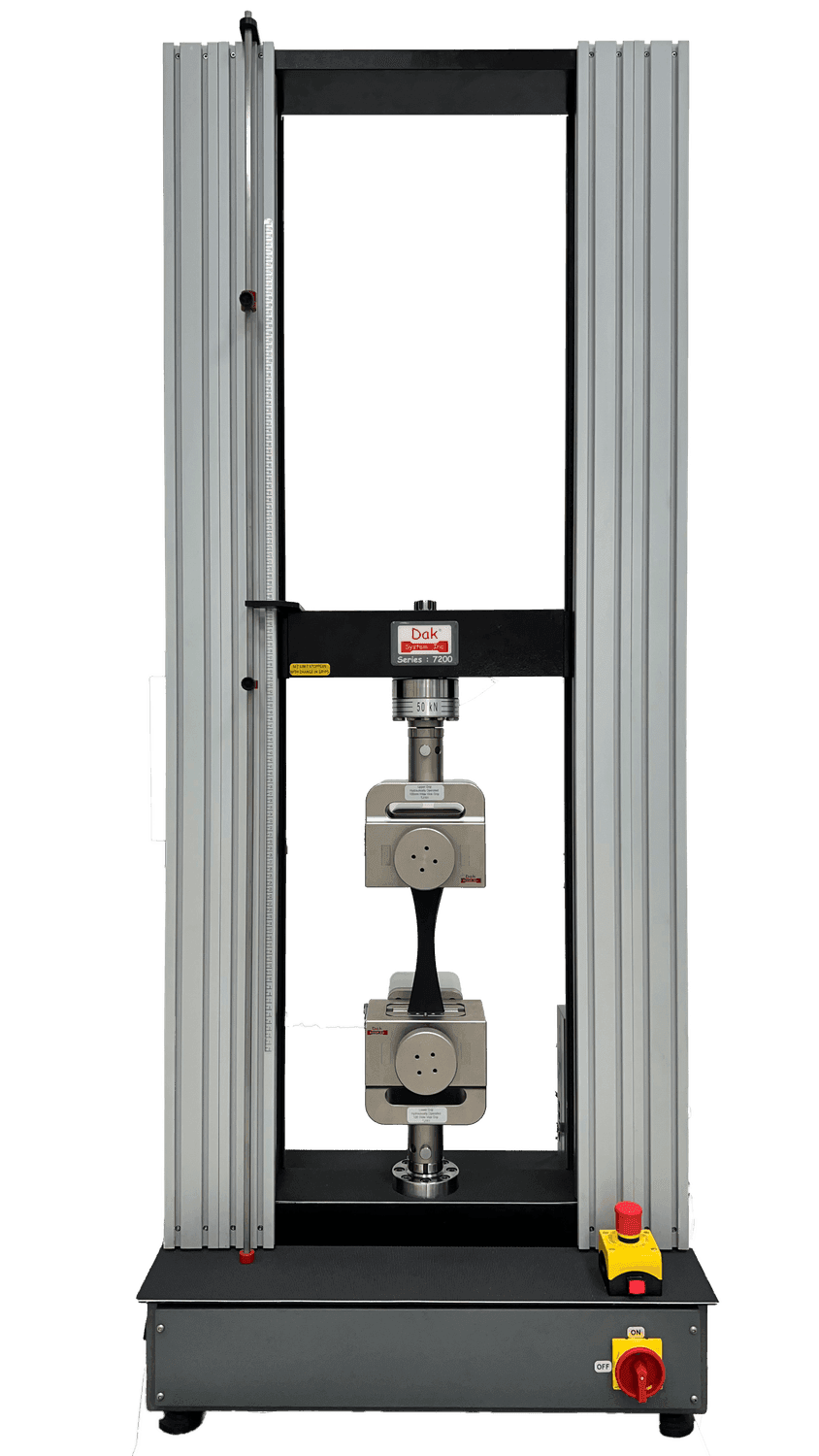
Two different things, at two different stages. Establishing the dry reference strength is a straightforward tension test: a frame with self-tightening wedge or vice-action grips holding the adherends on the load axis, with end shims so the bond line sits on the centreline, run to rupture. That is where a universal testing frame is used, and the set-up is a conventional lap-shear one.
The sustained-stress stage is different. Joints have to hold a fixed load for days or weeks while sitting in a humidity cabinet, a tank of water or an outdoor rack, so they are held in stressing devices rather than in a testing frame — a frame occupied for a month is a frame doing nothing else. What the apparatus must guarantee is that the load stays constant as the joint creeps, and that moving a stressed specimen between environments does not disturb it.
What goes wrong in practice
Choosing a stress level too high, so every joint fails within a day and the ranking is dominated by short-term strength rather than durability. Choosing one too low, so nothing fails and the test yields nothing. Reporting a time to failure without the stress, temperature and humidity that produced it, which makes the number meaningless. Comparing durability across two substrate preparations while also changing the adhesive, so neither effect can be attributed. And treating an accelerated result as a service life: the method is explicit that it screens and compares, and the relationship between an accelerated failure time and years in the field is not one this test supplies.

Durability, dry strength and creep
ASTM D2919
ASTM D1002
ASTM D2294
Loading
Sustained, in an environment
Ramped to rupture
Sustained, spring-loaded
Adherends
Written broadly
Metal to metal
Metal to metal
Result
Time to failure
Breaking strength
Creep deformation over time
Environment
Chosen deliberately, and a variable
Laboratory conditions
As specified
Question answered
How long does this joint last under load and moisture?
How strong is this joint now?
How much does this joint move under a held load?
Committee
D14.80
D14.80
D14.80
A D2919 programme almost always begins with D1002, or its international counterpart ISO 4587, because the sustained stress is set against the dry breaking strength. But dry strength does not predict durability: the method's own premise is that stress in the presence of water or water vapour can cause some joints to fail at a small fraction of the load needed to break the same joint dry.
Questions we are asked about this test
What is ASTM D2919?+
It is the ASTM test method for determining the durability of adhesive joints stressed in shear by tension loading. Single-lap bonded joints are held under a sustained tensile shear load while exposed to a chosen environment, and the time each takes to fail is recorded. The current edition is D2919-01(2023) — the 2001 text reapproved in 2023 — maintained by subcommittee D14.80, and it is active with no successor named.
Why not just do a lap-shear test?+
Because a dry lap-shear test cannot see the failure mode this method exists for. The standard states its premise plainly: the combination of stress and moisture decreases the durability of most adhesive joints, and stress in the presence of water or water vapour can cause some joints to fail at a small fraction of the load needed to break the same joint dry. Two adhesives can post identical breaking strengths on a bench and behave completely differently after a fortnight at load in humid air.
What does the result look like?+
A time, not a force — and a time that only means something alongside the three conditions that produced it: applied stress, temperature, and relative humidity or the immersion condition. A family of such times across several conditions is what the method is designed to produce. Reporting a time to failure without its conditions makes the number meaningless.
How is the stress level chosen?+
Against the dry breaking strength of the same joint, which is why a set of ordinary lap-shear specimens is broken conventionally first. Choosing the level is the hardest decision in the programme. Too high and every joint fails within a day, so the ranking is dominated by short-term strength rather than durability. Too low and nothing fails and the test yields nothing.
Can I use this to predict service life?+
No. The method is explicit that it screens and compares. Time to failure falls as stress, temperature and relative humidity rise, which is what makes it usable as an accelerated screening test — but the relationship between an accelerated failure time and years in the field is not something this test supplies. It ranks candidates and exposes weaknesses; it does not convert to a warranty period.
Why is it used to assess surface preparation?+
Because surface preparation and substrate choice show up in durability long before they show up in dry strength. A poorly prepared surface can bond well enough to pass a dry lap-shear test and then fail quickly under sustained load in humid air, since moisture attacks the interface rather than the adhesive. Separating the preparation from the adhesive is one of the method's stated applications — which also means changing both at once in the same programme leaves neither effect attributable.
Does the test need a universal testing machine?+
For part of it. Establishing the dry reference strength is a conventional lap-shear tension test: a frame with self-tightening wedge or vice-action grips holding the adherends on the load axis, with end shims so the bond line sits on the centreline, run to rupture. The sustained-stress stage is different — joints have to hold a fixed load for days or weeks in a humidity cabinet, a tank of water or an outdoor rack, so they sit in stressing devices rather than in a frame. What that apparatus must guarantee is that the load stays constant as the joint creeps, and that moving a stressed specimen between environments does not disturb it.
How does it differ from ASTM D2294?+
D2294, Creep Properties of Adhesives in Shear by Tension Loading (Metal-to-Metal), uses the same tension loading on a bonded lap joint but measures creep under a spring-loaded static load rather than time to failure in an environment. It answers how much the joint moves; D2919 answers how long it lasts. D2294 is also written for metal adherends, where the D2919 scope is broader. Both are maintained by subcommittee D14.80 and they are often run in the same programme, but they are not alternatives to one another.
Dak verifies against whichever standard the method names, and where a class applies our frames sit a class tighter than it asks.
The method asks for
Dak supplies
Capacity
The sustained load is a chosen fraction of the dry breaking strength of the same joint, so the reference lap-shear test sets the range. Stress levels are set per programme and none is quoted, no publisher-side figure having been corroborated twice.
Load cells from 1 kg to 60 ton on the Series 7200, and 0.5 to 100 kN on the Series 9000
Force accuracy
unknown for D2919 itself; the dry reference test under ASTM D1002 requires ASTM E4
Verified to ASTM E4, and to ISO 7500-1 Class 0.5
Gripping
Stressing devices that hold the joint at a constant load in the chosen environment for the sustained stage; a tension frame with self-tightening wedge or vice-action grips, and end shims, only for the dry reference strength
Chosen deliberately and varied: air, air in equilibrium with certain solutions, water, aqueous solutions, or other environments, at a range of temperatures
This page describes the method as practised. The governing text is the current edition from the issuing body. Tell us what you are testing and we will answer with the machine, the fixture and a quotation.