
Testing standard
ASTM F1140/F1140M Internal Pressurisation Testing of Unrestrained Packages
Standard Test Methods for Internal Pressurization Failure Resistance of Unrestrained Packages
Written and technically reviewed by Dak System Inc. engineeringLast reviewed
ASTM F1140/F1140M pressurises a package internally with air until it fails, with the package unrestrained. Two kinds of test are given: a burst test, which raises the pressure progressively until the package gives way, and a creep test, which holds a specified pressure for a specified time or until failure. The methods state that the result does not necessarily correlate with seal strength as measured by Test Method F88. The current edition is F1140/F1140M-13(2025).
At a glance
- Test type
- Creep & relaxation
- Published by
- ASTM
- Edition
- F1140/F1140M-13(2025)
- Material
- Paper, board & corrugated
- Runs on
- Series 7200 and Series 9000
From the test method to your testing system
Explore DAK equipment for ASTM F1140/F1140M, then review the specimen and setup requirements below.
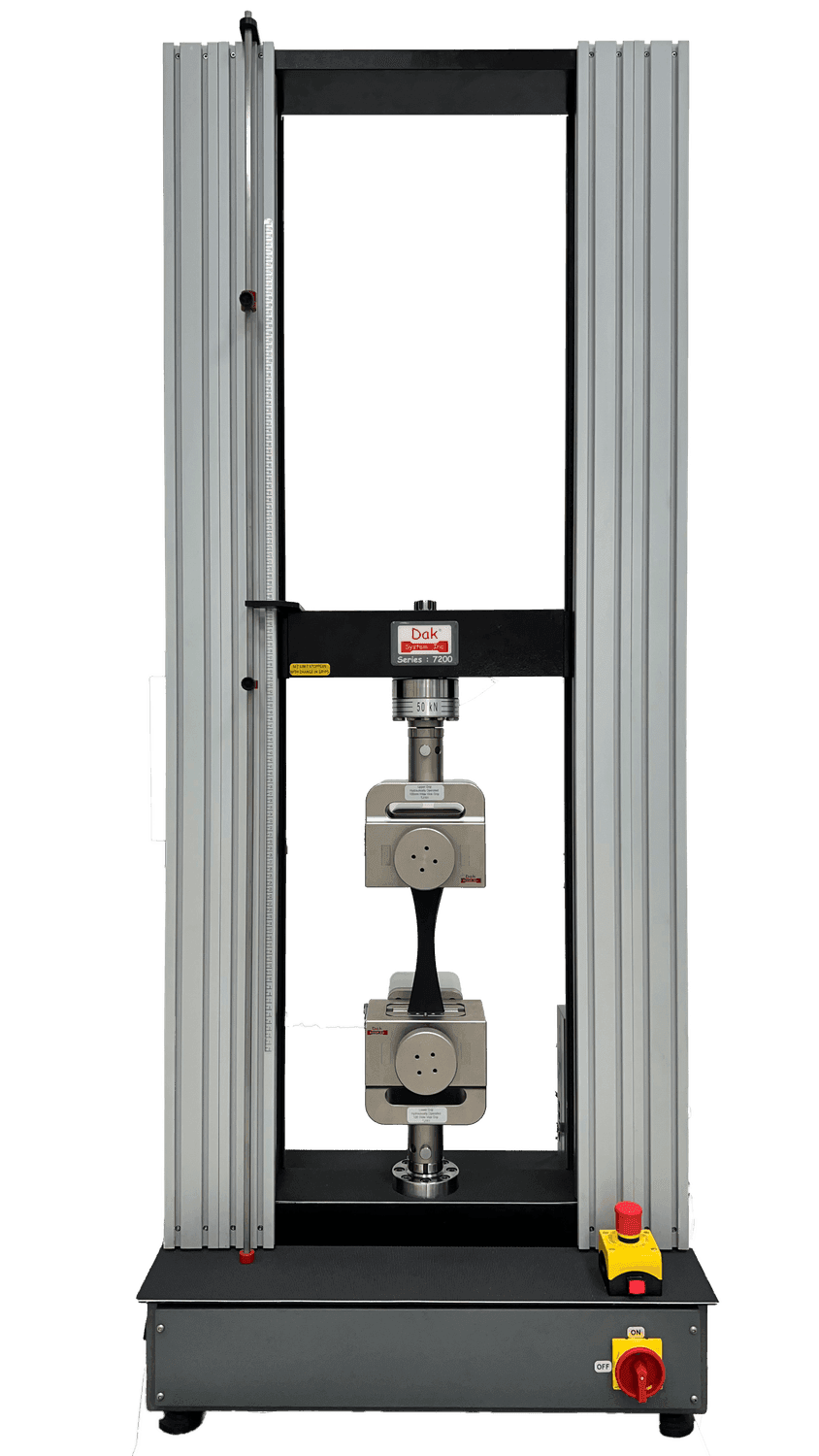 Universal Testing MachineSeries 7200Explore the machine →
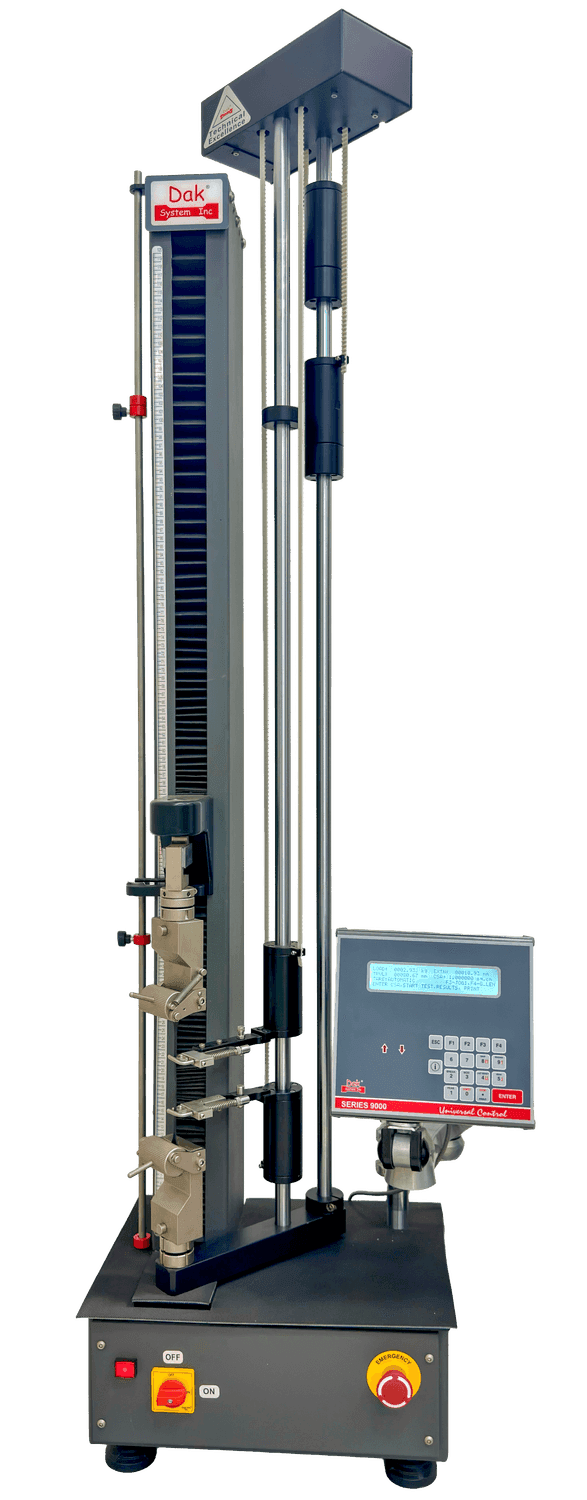 Universal Testing MachineSeries 9000Explore the machine →
Jump to a specific section
01Understand the method
What the test does
Air is fed into a package until the package gives way. Two kinds of test are defined. The burst test raises the internal pressure progressively until the package fails, and the pressure at that moment is the result. The creep test holds a stated pressure for a stated time, or until failure, and the result is whether the package survived. A pressurisation probe is either clamped into the open end of a pouch, in the open-package configuration, or introduced into an already sealed package, in the closed-package configuration. Nothing supports the package while this happens — the word "unrestrained" is the whole point of the designation, and it distinguishes these methods from burst testing carried out between restraining plates.
What it measures, and why it matters
The general ability of a package to withstand a pressure differential. Those differentials are real: a load of pouches gains altitude in an aircraft hold, a tray is drawn down and released during sterilisation, and a sealed package expands each time the surrounding pressure falls. The test is quick, needs no specimen preparation and can be run at stages along the packaging life cycle, which is why it is so often used as an in-process check and not only at design qualification.
What it does not measure is seal strength. The methods themselves say the result does not necessarily correlate with seal strength as measured by ASTM F88. The reason is geometric. With nothing restraining it, the pouch inflates into a pillow and the stress concentrates in the middle, where the package reaches its greatest diameter, rather than being spread evenly around the seal perimeter. A weak spot elsewhere in the seal can therefore survive a burst test that a stronger package would also have passed. Anyone trying to find the weakest area of a seal needs the restrained method instead.
02Prepare the specimen and test settings
The package, and what has to match before results can be compared
There is no coupon here. The specimen is the finished package, and because the result belongs to the whole package rather than to a material, the comparison rules matter more than the specimen rules.
- Specimen
- The finished packageNo cutting and no preparation, which is why the test can run at any point in manufacture.
- Open-package configuration
- A pressurisation probe clamped into the open end
- Closed-package configuration
- A probe introduced into an already sealed package
- Unrestrained
- Nothing supports the package during the testThe word is in the title and it is the whole distinction from the restrained-plate method.
- Package size
- Must match, for results to be compared
- Material and seal configuration
- Must match
- Test equipment
- Must match
- Rate of air flow into the package
- Must matchA setting, not a constant of the method — which is exactly why it has to be recorded.
- Sensitivity to a pressure drop
- Must matchThe machine's response to the drop that marks failure. Two instruments set differently give different burst pressures on identical packages.
- Position of the test article
- Must matchHow the pouch is laid out changes where it inflates and therefore where it fails.
The methods require all of these parameters to be exactly the same before a correlation between two pieces of equipment means anything. A burst pressure quoted without them is not reproducible.
The two methods
- Burst test
- Pressure increased progressively until the package failsThe result is the pressure at failure.
- Creep test
- A specified pressure held for a specified time, or until failureThe result is whether the package survived the hold.
- Rate of pressurisation
- Not fixed by the method — no rate of traverse and no numeric rise rate is specifiedWhat the methods control is pressure, not speed: burst reports the pressure at failure, creep holds a pressure the package specification names for a time it names. The one limit on how fast the pressure may be raised is instrumental — the rise must not outrun the response of the pressure indicator, or the recorded burst figure belongs to the transducer rather than to the package.
- Rate of air flow
- Set by the user and recordedThe significance clause lists it among the parameters that must be identical before results from two pieces of equipment can be correlated, which is why it is a setting rather than a specified figure.
- Drop sensitivity
- Set by the user and recordedMachine response to a pressure drop. Two instruments set differently will report different burst pressures on identical packages.
- Pick the method to the question
- DakBurst suits in-process monitoring, where a number per package is wanted. Creep suits a pass or fail against a stated differential, which is closer to what a package actually meets in a hold or an autoclave.
03Build the test setup on a DAK machine
What the machine must be capable of
This is not a tensile test and a universal testing machine cannot run it. The apparatus is a regulated compressed-air supply, a pressure transducer calibrated over the working range, a probe and clamp to seal into the package, and control logic able to detect the pressure drop that marks failure and to hold a set pressure for the creep method.
There is no rate of traverse here, and the methods fix no rate of pressurisation. What they control is pressure: burst raises it until the package fails and reports that pressure, and creep holds a stated pressure for a stated time, both set by the package specification rather than by the method. Flow rate and drop sensitivity are operator settings, recorded and matched between instruments, and the rise must not outrun the response of the pressure indicator.
A materials-testing frame is still the right machine for the rest of the programme: seal strength under ASTM F88, and the tensile and peel work behind an ISO 11607-1 validation, are frame tests with a low-range load cell and light pneumatic grips.
Running ASTM F1140/F1140M on the Series 7200 and Series 9000
Dak verifies against whichever standard the method names, and where a class applies our frames sit a class tighter than it asks.
| The method asks for | Dak supplies | |
|---|---|---|
| Capacity | n/a — the result is a pressure, not a force. The apparatus is a regulated compressed-air supply and a calibrated pressure transducer, not a load frame. | Load cells from 1 kg to 60 ton on the Series 7200, and 0.5 to 100 kN on the Series 9000 |
| Force accuracy | n/a — force accuracy classes do not apply; the pressure transducer is calibrated over the working range | ISO 7500-1 Class 0.5, verified to ASTM E4, DIN 51221 and BS 1610 |
| Gripping | A pressurisation probe clamped into the open end of the package (open-package configuration) or introduced into an already sealed package (closed-package configuration), with nothing restraining the package | Our a fixture built for this method, built to the specimen |
| Environment | Ambient laboratory conditions; no conditioning atmosphere was found on the publisher record | 3009 series chambers, −150 °C to +400 °C — temperature only |
04Run the test
How the test runs
- Decide between the open-package and the closed-package configuration.
- Record the package size, material and seal configuration.
- Fit the pressurisation probe, clamping it into the open end or introducing it into the sealed package.
- Lay the article out in the position that will be used for every replicate, and record it.
- Set the rate of air flow into the package, and record it.
- Set the instrument's sensitivity to a pressure drop, and record it.
- Leave the package unrestrained — nothing supporting or confining it.
- For the burst method, increase the pressure progressively until the package fails and record the pressure at failure.
- For the creep method, raise to the specified pressure and hold for the specified time, or until failure.
- Note where the package failed, and whether the failure was a seal or the material.
On a porous package, air escaping progressively through the breathable web is not a seal failure. The distinction has to be made deliberately, because the instrument sees a pressure it cannot hold either way.
05Report and interpret
What the report has to contain
- Reference to ASTM F1140/F1140M and the edition
- Which method was used, burst or creep
- Open-package or closed-package configuration
- Package size, material and seal configuration
- Test equipment identification
- Rate of air flow into the package
- Instrument sensitivity to a pressure drop
- Position of the test article
- Burst pressure for each package, or the held pressure and time and whether it survived
- Location and description of the failure
- Number of packages tested
What goes wrong in practice
Quoting a burst pressure as though it were a seal strength. Comparing results across two instruments running different flow rates or different drop sensitivities, which shifts the recorded pressure without anything about the package having changed. Using the unrestrained method to hunt for the weakest point in a seal, which it is not built to find. Failing to record the position of the article, so a repeat test lays the pouch differently and reads differently. And, on porous packages, mistaking a progressive leak through the breathable web for a seal failure — the pressure trace behaves differently and the distinction has to be made deliberately.
06Compare methods and find answers
Unrestrained burst, restrained burst and seal strength
| ASTM F1140/F1140M | ASTM F2054/F2054M | ASTM F88 | |
|---|---|---|---|
| What is loaded | The whole package, free to inflate | The whole package, between restraining plates | A strip cut through one seal |
| Stress distribution | Concentrated where the package reaches its greatest diameter | Spread around the seal perimeter | Across the width of the cut strip |
| Answers | Can this package hold a pressure differential? | Where is the weakest area of the seal? | How strong is this seal, in force per unit width? |
| Specimen preparation | None | None | Strip cut across the seal |
| Typical use | In-process monitoring | Finding the weakest seal region | Lot release and process validation |
F1140 states that its result does not necessarily correlate with seal strength as measured by Test Method F88. Unrestrained, the package inflates into a pillow and the stress concentrates in the middle rather than around the seal perimeter, so a weak area elsewhere in the seal can survive a burst a stronger package would also have passed. Anyone looking for the weakest area of a seal needs the restrained method.
Questions we are asked about this test
What is ASTM F1140?
It is the ASTM set of test methods for the internal pressurisation failure resistance of unrestrained packages, currently F1140/F1140M-13(2025). Air is fed into a package until it gives way. Two kinds of test are defined: a burst test that raises the pressure progressively until failure, and a creep test that holds a specified pressure for a specified time or until failure. The package is not supported or confined while this happens.
Does a burst pressure tell me the seal strength?
No, and the methods say so directly: the result does not necessarily correlate with actual package seal strength as typically measured using Test Method F88. The reason is geometric. With nothing restraining it the pouch inflates into a pillow, and the stress concentrates where the package reaches its greatest diameter rather than spreading evenly around the seal perimeter. A weak spot elsewhere in the seal can survive a burst test comfortably.
What does 'unrestrained' mean, and why is it in the title?
It means nothing supports the package during the test — no plates, no confinement. It is in the title because it is the distinction from ASTM F2054/F2054M, which runs the same burst test with the package held between restraining plates so the stress is distributed around the whole seal perimeter. The two answer different questions and a specification naming one is not satisfied by the other.
Which method should I use, burst or creep?
Burst gives a number per package and suits in-process monitoring: it needs no specimen preparation and can be run at stages along the packaging life cycle. Creep holds a stated pressure for a stated time and gives a pass or fail, which is closer to the service condition — a package meets a sustained differential in an aircraft hold or through a sterilisation cycle, not a ramp to destruction.
Why do two laboratories get different burst pressures on the same package?
Usually because the rate of air flow into the package or the instrument's sensitivity to a pressure drop is set differently. These methods fix no rate of pressurisation at all — no rate of traverse, and no numeric rise rate — so both are user settings rather than constants of the method, and both shift the recorded pressure without anything about the package having changed. The only limit the methods place on the rise is that it must not outrun the response of the pressure indicator. The methods list them, along with package size, material, seal configuration, test equipment and the position of the test article, as parameters that must all be exactly the same before results can be correlated.
Can a universal testing machine run this test?
No. The apparatus is a regulated compressed-air supply with controlled flow, a calibrated pressure transducer, a probe and clamp arrangement to seal into the package, and control logic able to detect the pressure drop that marks failure and to hold a set pressure for the creep method. A materials-testing frame is still the right machine for the rest of the same programme, though — seal strength under ASTM F88 and the tensile and peel work behind a packaging validation are all frame tests with a low-range load cell and light grips.
Why is this test used on medical device packaging?
Because packaging systems for terminally sterilised medical devices have to be validated under ISO 11607-1, and pressure differentials are a real part of what those packages meet: a load of pouches gains altitude in an aircraft hold, a tray is drawn down and released during sterilisation, and a sealed package expands whenever the surrounding pressure falls. F1140 is quick, needs no specimen preparation and can be run in-process, which is why it is so often used for monitoring and not only at design qualification. The 2000 edition, F1140-00, carried 'for Medical Applications' in the title; that qualifier has since been dropped.
What goes wrong with porous packages?
A progressive leak through the breathable web can be mistaken for a seal failure. Much sterile barrier packaging has a porous face by design, and air passing through it produces a pressure the instrument cannot hold — which looks like a failure to a system watching for a pressure drop. The trace behaves differently from a seal letting go, and the distinction has to be made deliberately rather than left to the instrument.
Related
Materials tested to it
Industries that test to it
Other standards explained
Planning ASTM F1140/F1140M testing?
Discuss your specimen, test requirements and reporting needs with DAK engineering.
This page describes the method as practised. The governing text is the current edition from the issuing body. Tell us what you are testing and we will answer with the machine, the fixture and a quotation.