Standard Test Method for Determining Compressive Resistance of Shipping Containers, Components, and Unit Loads
Written and technically reviewed by Dak System Inc. engineering·Last reviewed
ASTM D642 measures the compressive resistance of a shipping container — how much load a box, component or unit load carries before it collapses. The container is squashed between two large flat platens at 12.5 mm/min. It is the test behind stacking strength, and its answer depends as much on conditioning humidity as on the board.
A complete shipping container — assembled, closed and sealed exactly as production does it, and either empty or filled with specified contents — is stood centrally between two large flat platens. The platens close at 12.5 ± 2.5 mm/min and squash the container until it collapses. Force is recorded against platen travel, and the peak force together with the deflection at that peak are reported. Whether the upper platen is held fixed or allowed to pivot is a defined condition of the test, chosen deliberately and recorded, because it changes the answer. Both preconditioning and conditioning to a controlled atmosphere precede the test.
What it measures, and why it matters
The result is compressive resistance: the load at which the container gives way, and how far it deflected getting there. This is the number that decides how high pallets can be stacked in a warehouse, how a unit load survives being placed beneath others, and whether a board specification is adequate for a distribution chain. It is also the primary tool for packaging development — a box redesigned to save board is verified here before it ships. The deflection at peak matters alongside the force, because a stiff container that fails abruptly and a soft one that yields gradually can reach the same peak while behaving quite differently in a stack.
Specimen and platen condition
A box is not a coupon. It is a structure, and it is tested as manufactured, closed and, where the specification requires, filled.
Specimen
The complete container as it will shipClosed and sealed by the method actually used in production — tape, glue or staples all behave differently.
Contents
Empty, or with the specified filling or dunnageContents can carry a large share of the load, so an empty-box result understates a packed one, sometimes greatly.
Platen condition
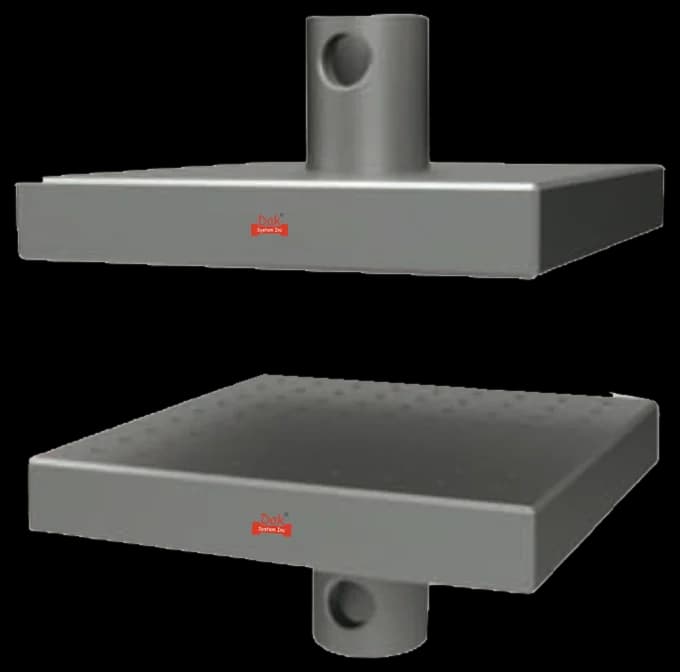
Fixed or floating, selected and recordedA floating platen pivots to follow a box that is not quite square and gives a higher result; a fixed platen does not and is more severe.
Platens
Larger than the container footprint
Preconditioning then conditioning
Both, to the specified atmospherePreconditioning to a dry state first means every specimen approaches the test humidity from the same direction — board has hysteresis.
Orientation
Recorded, and consistent
Condition for long enough
Board is slow to equilibrateDakA heavy-walled or bulk-packed carton takes far longer to reach equilibrium than the outside of the board suggests.
Compressive resistance is not stacking strength. A short-term peak load says nothing about how long the box will hold that load in a warehouse, where creep, humidity cycling and time reduce it substantially.
Test speed
Platen speed
12.5 ± 2.5 mm/min
Reported values
Peak force, and deflection at peak
Fixed or floating platen
Reported with every result
Watch how it fails
Panel, edge, corner or closureDakWhere the box gives way is what tells the designer what to change — a closure failure and a panel buckle call for entirely different fixes.
Calculations
Compressive resistance—
The maximum force the container sustains, in N
Reported directly. There is no area normalisation, because a container is a structure rather than a material specimen.
Deflection at maximum loadδ
δ = platen travel from first contact to peak force, mm
A stiff box that fails suddenly and a soft box that fails gradually can reach the same peak; the deflection distinguishes them.
How the test runs
01Assemble and close containers exactly as production does.
02Fill with the specified contents or dunnage, or leave empty as specified.
03Precondition to the specified dry atmosphere.
04Condition to the test atmosphere for the full period.
05Select and record the platen condition — fixed or floating.
06Measure the container and record its orientation.
07Centre it on the lower platen.
08Close to light contact and zero force and deflection.
09Compress at 12.5 mm/min, recording force against platen travel.
10Continue past the peak until the container has clearly collapsed.
11Record peak force and deflection at peak.
12Note where and how the container failed.
The fixture this method needs
5 to 400 kNTJ-125
Direct Compression Fixture
Direct compression platens sized to the container footprint. What the method requires is that the platens be larger than the box and that whether the upper one is fixed or free to pivot is a deliberate, recorded choice.
Container description — board grade, construction, dimensions and closure method
Contents or dunnage, or a statement that it was empty
Preconditioning and conditioning atmospheres and durations
Platen condition, fixed or floating
Orientation tested
Platen speed
Peak force and deflection at peak for each container
Failure location and mode
Number tested, mean and standard deviation
What the machine must be capable of
A frame with large platens — bigger than the container footprint — and enough daylight to take the container height, together with force measurement to ASTM E4 over a range from under a kilonewton for a light carton to tens of kilonewtons for a heavy case or unit load. The crosshead must hold 12.5 mm/min. The distinguishing requirement is platen behaviour: the apparatus must be able to provide a genuinely fixed platen or a genuinely floating one as selected, since a platen that is nominally fixed but has play in it produces results belonging to neither condition. The laboratory also needs proper humidity control, which for this test is not optional.
What goes wrong in practice
Inadequate conditioning is the single largest source of disagreement between laboratories, and it always biases the same way — a box that has taken up moisture reads weak. Omitting the preconditioning stage leaves specimens with different moisture histories that identical conditioning will not reconcile. Failing to record the platen condition makes results incomparable, because fixed and floating platens can differ substantially on an out-of-square box. Beyond the laboratory, the most consequential misuse is treating short-term compressive resistance as stacking strength; board creeps under sustained load, and real warehouse capability is a fraction of the measured peak.
ASTM D642 or ISO 12048
ASTM D642
ISO 12048
Loading
Constant platen speed to failure
Constant speed, and also a constant-load hold option
Primary output
Compressive resistance and deflection
Compression resistance, or survival of a held load
Platen condition
Fixed or floating, both defined
Defined equivalently
Typical use
Board and container development, QC
Type testing and transport qualification
ISO 12048's constant-load option answers a question D642 does not: whether the container survives a defined load held for a defined time. That is closer to warehouse reality than any short-term peak, and the two results are not interchangeable.
Questions we are asked about this test
What is ASTM D642?+
It is the ASTM method for the compressive resistance of shipping containers, components and unit loads. The container is compressed between two large flat platens at 12.5 mm/min until it collapses, and the peak force and the deflection at that peak are reported. It is the basis of stacking strength assessment for corrugated and other shipping containers.
Does a fixed or floating platen give a different answer?+
Yes, and the difference can be substantial. A floating platen pivots to follow a container that is not perfectly square, so the load spreads across all four walls and the box reads stronger. A fixed platen does not pivot, so an out-of-square box takes the load on its high corner first and fails earlier. Neither is wrong, both are defined, and the condition used must be reported — comparing across conditions is meaningless.
Why does humidity matter so much?+
Because corrugated board loses compressive strength sharply as it takes up moisture — the fibre bonds that give the board its stiffness weaken. A box tested at high humidity can carry a fraction of what the same box carries when dry. This is why the method specifies both preconditioning and conditioning, and why a laboratory that does not control humidity properly cannot produce comparable results at all.
Why precondition before conditioning?+
Because board exhibits hysteresis: its moisture content at a given humidity depends on whether it arrived there from a wetter or a drier state. Preconditioning to a dry atmosphere first means every specimen approaches the test humidity from the same direction, so they all reach the same moisture content. Without it, a box that has been in a damp warehouse and one from a dry store will not be comparable even after identical conditioning.
Is compressive resistance the same as stacking strength?+
No, and this is the most important limitation to understand. The test measures a short-term peak — how much load the box takes when squashed over a few minutes. In a warehouse the box holds a load for weeks or months, during which board creeps and humidity cycles. Real stacking capability is a fraction of the measured peak, and the safety factors applied in packaging design exist precisely to bridge that gap.
Should the box be tested empty or filled?+
Whichever the specification requires, and the report must say which. Contents frequently carry a significant share of the compressive load — tightly packed product acts as an internal column — so an empty-box result can understate a packed one substantially. Testing empty is the more severe and more repeatable condition; testing filled is more representative of what actually ships.
What does the failure location tell me?+
What to change. A panel buckling inward means the board's edgewise stiffness is the limit, so a heavier flute or a better liner helps. A closure failure means the tape or glue line is giving way before the board does, and no amount of board upgrade will help. A corner collapse often points to an out-of-square box or poor score alignment. The peak force alone identifies none of these.
This page describes the method as practised. The governing text is the current edition from the issuing body. Tell us what you are testing and we will answer with the machine, the fixture and a quotation.