Testing standard

ISO 12048

Packaging — Complete, filled transport packages — Compression and stacking tests using a compression tester

Written and technically reviewed by Dak System Inc. engineeringLast reviewed

ISO 12048 tests complete, filled transport packages in compression. It offers two methods: a constant-speed test that squashes the package to failure and reports peak force, and a constant-load test that applies a defined load and checks whether the package survives it for a defined time. The second is much closer to what a warehouse actually does.

At a glance

Test type
Compressionthe specimen is squeezed
Published by
ISO
Edition
ISO 12048:1994

What the test does

A complete transport package, filled and closed as it ships, is conditioned to a defined atmosphere and stood between two large flat platens. The standard then offers two routes. In the constant-speed method the platens close at 10 ± 3 mm/min and the package is compressed until it fails, with the peak force and the deflection at peak recorded. In the constant-load method a load calculated from the intended stack is applied and held for a defined period — hours or days — and the package is judged on whether it survives, with deflection tracked throughout. Whether the upper platen is fixed or free to pivot is selected and recorded in both cases.

What it measures, and why it matters

Between them the two methods answer two different questions: how strong the package is now, and whether it will still be standing after the storage period the supply chain imposes. The distinction matters because fibreboard creeps. A package with an ample margin on peak compression can collapse under a sustained load well below that peak, and every warehouse failure of an apparently well-qualified package traces back to this. The constant-speed method is the practical tool for development and quality control; the constant-load method is what qualifies a package against real storage, and it is the closer analogue of what actually happens to goods in a stack.

Specimen and method choice

The choice between the two methods is the most consequential decision in this standard, and it should follow the question being asked rather than laboratory convenience.

Specimen
The complete, filled transport packageFilled, closed and sealed as it ships. The contents are part of the structure.
Constant-speed method
Compress to failure, report peak forceQuick, comparative, good for development and quality control.
Constant-load method
Apply a defined load and hold itAnswers the real question — does the package survive the stack? — and takes far longer.
Platen arrangement
Fixed or pivoting, as selected
Conditioning
To the defined atmosphere before testFibreboard strength falls sharply with moisture. Tropical and cold-chain atmospheres are used where the supply chain demands.
Orientation
As shipped, and recorded
Test in the atmosphere, not just after it
Where the equipment allowsDakA conditioned package begins losing or gaining moisture the moment it leaves the cabinet, and a long constant-load test in an uncontrolled room drifts away from its conditioning.

A package that passes the constant-speed test at a comfortable margin can still fail the constant-load test, because fibreboard creeps. Peak strength and sustained-load survival are different properties and one does not imply the other.

Speed and load application

Constant-speed rate
10 ± 3 mm/min
Constant-load duration
As specified — hours to daysChosen to represent the storage period the supply chain actually imposes.
Applied load
Calculated from the stack height, mass and a safety factor
Record deflection through the hold
Not just pass or failDakA package that survives but deflects steadily throughout is close to its limit, and the deflection curve is the only warning of that.

Calculations

Compression resistance

Maximum force sustained in the constant-speed test, in N

Reported directly, with no area normalisation.

Stacking loadF

F = m × g × n × k

m
mass of one package, kg
g
9.81 m/s²
n
number of packages above the one being tested
k
safety factor covering time, humidity and handling

The safety factor is where the difference between a laboratory minute and a warehouse month is accounted for. It is not a formality.

How the test runs

  1. 01Fill, close and seal packages exactly as production does.
  2. 02Condition to the defined atmosphere for the full period.
  3. 03Choose the method — constant speed or constant load.
  4. 04Select and record the platen arrangement.
  5. 05Centre the package on the lower platen in its shipping orientation.
  6. 06Close to light contact and zero force and deflection.
  7. 07For constant speed, compress at 10 mm/min to failure and record the peak.
  8. 08For constant load, apply the calculated load and begin the hold.
  9. 09Record deflection through the hold period, not only at its end.
  10. 10At the end of the hold, inspect the package and its contents.
  11. 11Report the result with the method, atmosphere and platen arrangement.

The fixture this method needs

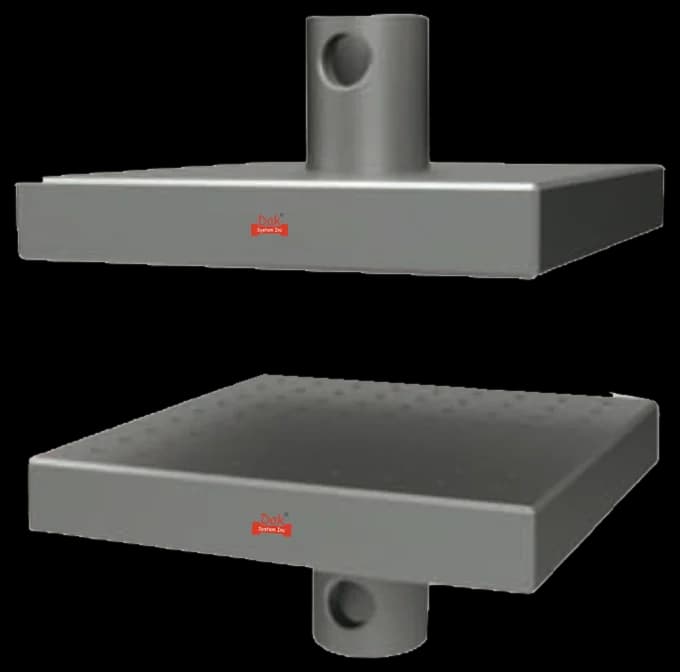
Direct compression fixture platens
5 to 400 kNTJ-125

Direct Compression Fixture

Direct compression platens sized above the package footprint. For the constant-load method the requirement is different from a normal compression test — the frame must hold a steady load for hours or days rather than ramp to a peak.

Specifications

What the report has to contain

  • Reference to ISO 12048 and the edition, and which method was used
  • Package description — material, construction, dimensions, closure
  • Contents and their mass
  • Conditioning atmosphere and duration
  • Platen arrangement, fixed or pivoting
  • Compression rate, or applied load and hold duration
  • Peak force, or whether the package survived the held load
  • Deflection at peak, or deflection through the hold
  • Failure location and mode where failure occurred
  • Condition of contents after test
  • Number tested and the result for each

What the machine must be capable of

Large platens, enough daylight for the package height, and force measurement to ISO 7500-1 Class 1 across a range from under a kilonewton to tens of kilonewtons. For the constant-speed method the crosshead must hold 10 ± 3 mm/min. The constant-load method places a quite different demand on the frame: it must hold a steady load for hours or days without drift, which is a control problem rather than a ramping one, and it occupies the machine for the whole period. The platen arrangement must be genuinely fixed or genuinely pivoting as selected, and the laboratory needs proper humidity control throughout.

What goes wrong in practice

The most consequential error is using the constant-speed result to qualify a package for storage, which ignores creep entirely and is the standard route to a stack that collapses after three weeks. Optimistic safety factors in the stacking load calculation do the same thing more subtly. In the laboratory, inadequate humidity control dominates the scatter, and long constant-load tests run in an uncontrolled room drift away from their conditioning as they go. Recording only pass or fail on a constant-load test throws away the deflection curve, which is the only evidence distinguishing a package with real margin from one that barely survived.

Constant speed or constant load

Constant speedConstant load
Question answeredHow strong is it nowWill it survive the stack
DurationMinutesHours to days
OutputPeak forcePass or fail, plus a creep curve
Accounts for creepNoYes

These are not two ways of getting the same number. Fibreboard creeps, so a package with an ample peak strength can still collapse under a sustained load well below it. Development work uses the constant-speed test; qualification for real storage should use the constant-load test.

Questions we are asked about this test

What is ISO 12048?

It is the ISO standard for compression and stacking tests on complete, filled transport packages. It offers two methods: a constant-speed compression to failure that reports peak force, and a constant-load test in which a defined load is applied and held for a defined time to see whether the package survives.

Which method should I use?

It depends on the question. For development and quality control — comparing board grades, verifying a design change, checking a production batch — the constant-speed test is quick and discriminating. For qualifying a package against real storage, the constant-load test is the right one, because it is the only one that accounts for creep. Many programmes use the first routinely and the second for type approval.

Why can a package pass one test and fail the other?

Because fibreboard creeps under sustained load. The constant-speed test squashes the package over a few minutes, during which creep has no time to act. In a warehouse the load sits there for weeks, and the board slowly deforms until the structure loses stability. A package with a comfortable margin on peak strength can still collapse under a steady load well below that peak.

How is the stacking load calculated?

From the mass of one package, the number of packages that will sit above the one at the bottom of the stack, gravity, and a safety factor. The safety factor is doing the important work: it covers the difference between a laboratory test and months of storage, humidity variation, uneven stacking and handling damage. Choosing it too optimistically is the usual reason a package that passed qualification fails in the field.

Why does the platen arrangement matter?

Because a package is rarely perfectly square. A pivoting upper platen follows the package and spreads the load across all its walls; a fixed platen does not, so a high corner takes the load first and the package fails earlier. Both arrangements are defined and both are used, but they can give substantially different results, so the arrangement is recorded and results from different arrangements are not compared.

Do I need to control humidity for this test?

Yes, and for fibreboard it is not a refinement. Compressive strength falls sharply as the board takes up moisture, so an uncontrolled laboratory produces results that vary with the weather. For long constant-load tests it is worth going further and holding the package in the conditioned atmosphere throughout the hold, since a package conditioned and then held in an ordinary room drifts away from its conditioning during the test.

Should I record anything besides pass or fail?

The deflection through the hold, always. A package that survives but deflects steadily and continuously is close to its limit and will not survive a longer storage period, a warmer warehouse or a slightly heavier stack. A package that deflects a little at first and then stops has genuine margin. Those two outcomes are both recorded as a pass, and only the deflection curve distinguishes them.

Running ISO 12048 on the Series 7200 and Series 9000

Dak verifies against whichever standard the method names, and where a class applies our frames sit a class tighter than it asks.

The method asks forDak supplies
CapacityWide — from under 1 kN for a light carton to tens of kilonewtons for a heavy filled packageLoad cells from 1 kg to 60 ton on the Series 7200, and 0.5 to 100 kN on the Series 9000
Force accuracyISO 7500-1 Class 1 over the working rangeISO 7500-1 Class 0.5 — a class tighter than the method asks
GrippingTwo large flat platens, with the upper platen fixed or free to pivot as the selected method requiresOur compression anvils, built to the specimen
EnvironmentConditioned to a defined atmosphere before test, commonly 23 °C and 50 % RH; other atmospheres are used for tropical or cold-chain qualification3009 series chambers, −150 °C to +400 °C — temperature only

This page describes the method as practised. The governing text is the current edition from the issuing body. Tell us what you are testing and we will answer with the machine, the fixture and a quotation.

Materials tested to it

The test it standardises

Other standards explained