5 to 400 kNTJ-125
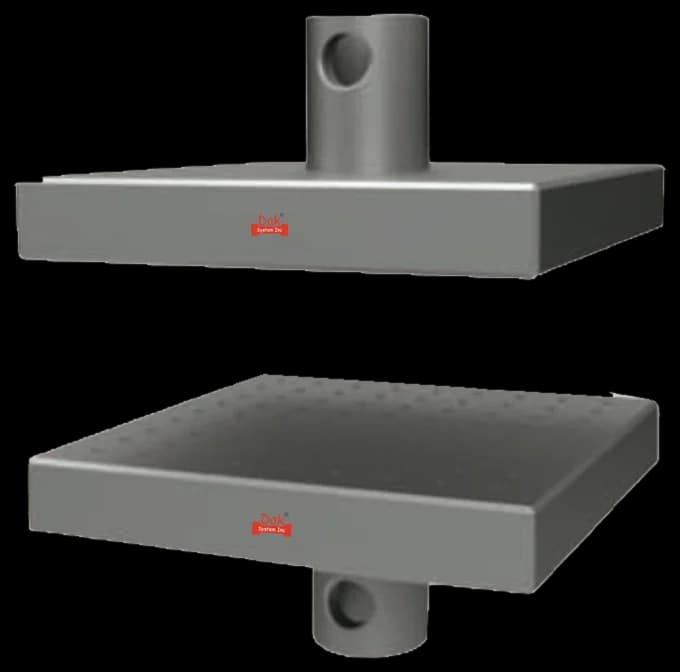
Direct Compression Fixture
Flat platens with the specimen bedded so the load spreads over the whole face. A brick is neither flat nor parallel as fired, and the bedding is what makes it behave as though it were.
Specifications
Testing standard
Burnt Clay Building Bricks — Methods of Tests — Part 1: Determination of Compressive Strength
Written and technically reviewed by Dak System Inc. engineeringLast reviewed
IS 3495 (Part 1) : 2019 determines the compressive strength of burnt clay building bricks. It is the fourth revision, and the parts that were once a single 1992 document covering four tests are now issued separately.
From the test method to your testing system
Explore the DAK machines already listed for IS 3495 (Part 1), then review the grips, measurement and setup requirements below.
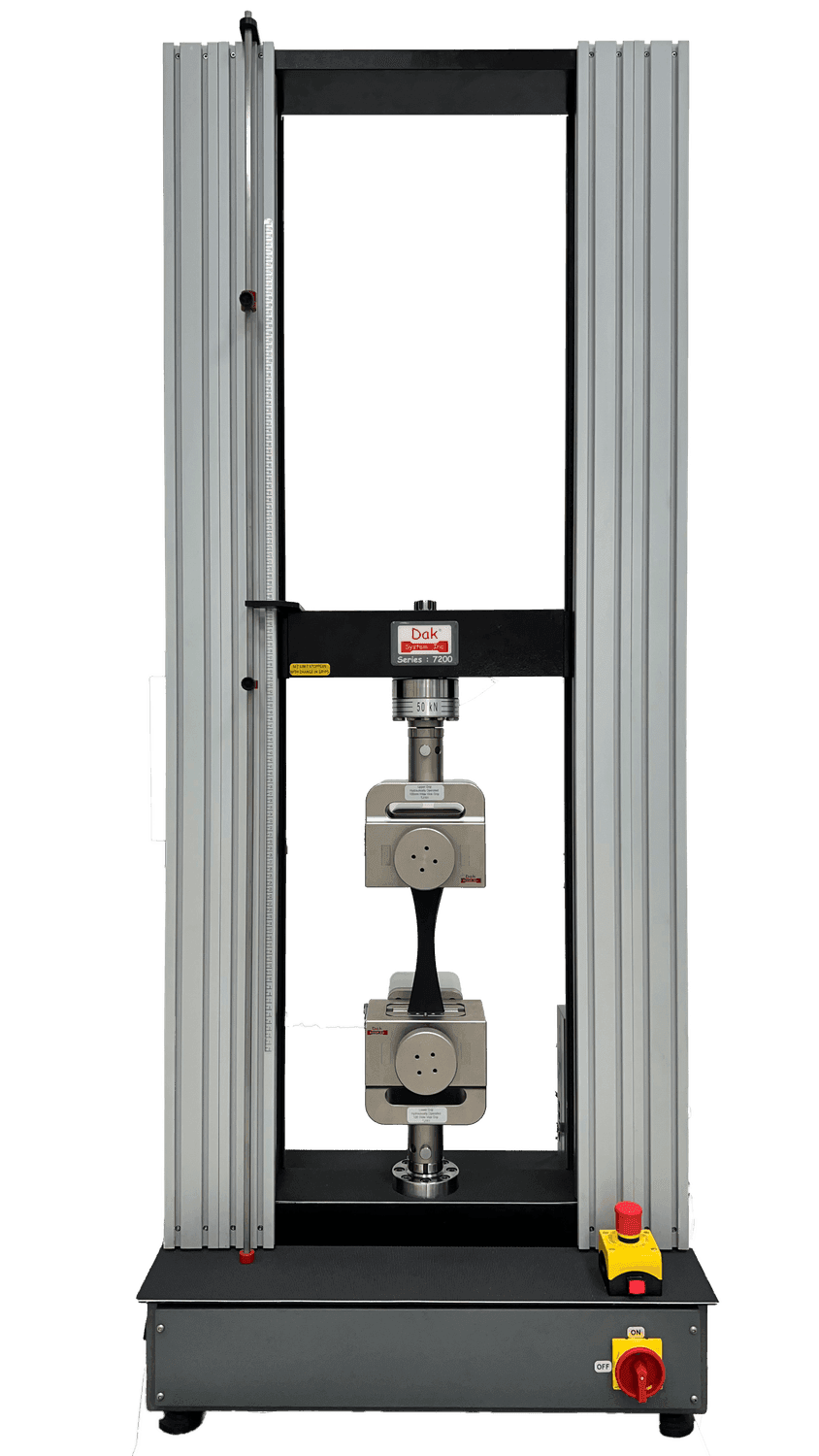 Universal Testing MachineSeries 7200Explore the machine →
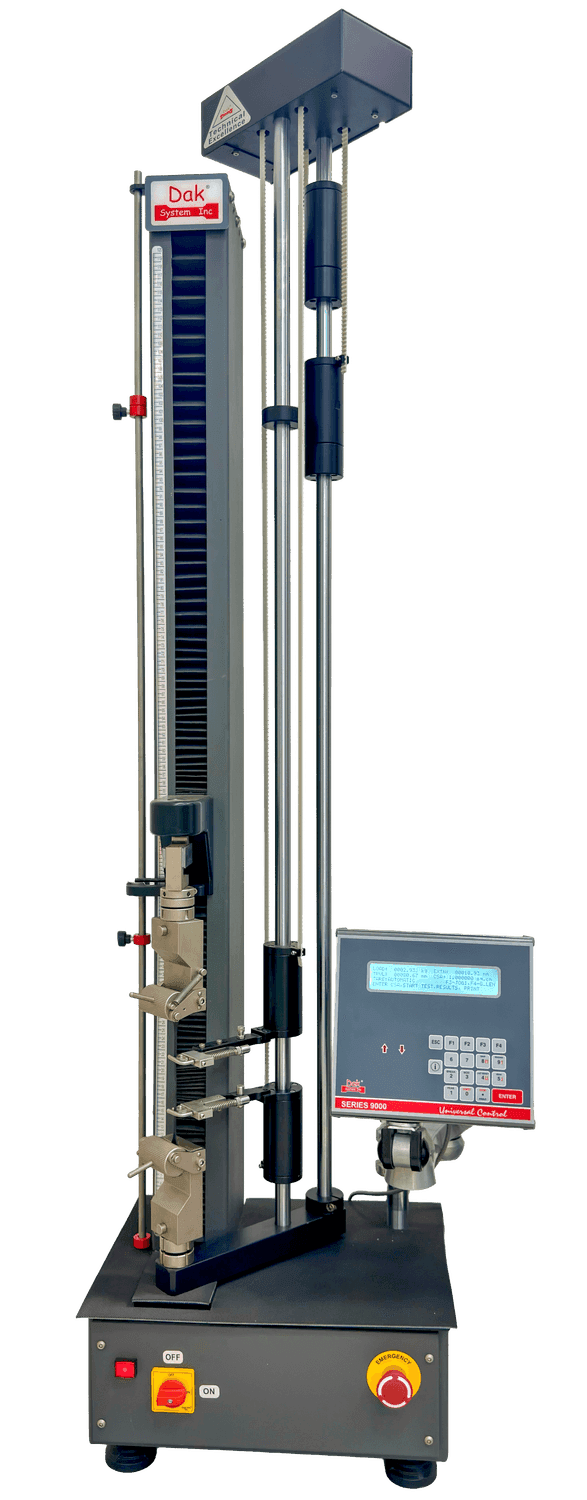 Universal Testing MachineSeries 9000Explore the machine →
01Understand the method
Bricks are selected as a representative sample, conditioned or immersed as the method requires, and their frogs filled. The bearing face is measured to establish the actual area, and the brick is bedded between compression platens so that the load spreads across the whole face rather than onto a high spot. It is then loaded axially at a uniform rate of 7 ± 1 N/mm² per minute until it fails. The maximum load divided by the measured bearing area gives the compressive strength for that brick, and every individual value is reported alongside the average.
How much load a brick carries before it crushes — the property masonry design is built on, and one specified statistically rather than as a single figure because bricks vary widely by nature. That variability is not a defect of the test; it is a property of a fired clay product, and it is why a sample is tested and why the spread matters as much as the mean. A wall is only as strong as its weakest courses, so a mean that conceals one very low unit gives the wrong picture of a batch.
02Prepare the specimen and test settings
What was one document in 1992 is now a series, and Part 1 is only the compressive strength.
Masonry strength is specified statistically. A single brick tells you very little; the sample and its variability are the result, which is why a set is tested rather than one specimen.
03Build the test setup on a DAK machine
Substantial compressive force — a standard brick at 10 N/mm² needs roughly 250 kN, and higher classes proportionally more — through flat platens that stay parallel. This is a dedicated compression frame rather than a general-purpose one. Beyond capacity the requirements are modest: a loading rate held steady at 7 ± 1 N/mm² per minute, and enough stiffness to absorb an abrupt failure, since a brick fails suddenly and throws fragments.
The rate is a stress rate — 7 ± 1 N/mm² per minute, applied axially — so it has to be converted to a force rate for the brick being tested. On the 230 mm by 110 mm bearing face of a conventional brick, 25 300 mm², that is 177 kN per minute, or about 3,0 kN/s, with the tolerance giving 2,5 to 3,4 kN/s; on the 190 mm by 90 mm face of a modular brick, 17 100 mm², it is about 2,0 kN/s. A brick reaching 10 N/mm² therefore takes something under a minute and a half to break. Note the edition: the 1992 text set 14 N/mm² per minute, and the 2019 revision halved it. A frame or a procedure card still running the older figure is loading at twice the rate the current method allows.
Flat platens with the specimen bedded so the load spreads over the whole face. A brick is neither flat nor parallel as fired, and the bedding is what makes it behave as though it were.
SpecificationsDak verifies against whichever standard the method names, and where a class applies our frames sit a class tighter than it asks.
| The method asks for | Dak supplies | |
|---|---|---|
| Capacity | High — a standard brick at 10 N/mm² needs roughly 250 kN, and higher classes more | Load cells from 1 kg to 60 ton on the Series 7200, and 0.5 to 100 kN on the Series 9000 |
| Force accuracy | A compression testing machine conforming to IS 14858 (clause 4.1.1); no accuracy class is expressed, and clause 3.2 requires all apparatus to be calibrated at frequent intervals | ISO 7500-1 Class 0.5 — the method sets no class of its own |
| Gripping | Flat compression platens, with the brick bedded and its frog filled as the method requires | Our compression anvils, built to the specimen |
| Environment | specimens are pre-conditioned by immersion in water at 27 ± 2 °C for 24 h and, after capping, kept under damp jute for 24 h and then immersed in clean water at 27 ± 2 °C for 3 days (clause 4.1.2). The method specifies no laboratory atmosphere for the test itself | 3009 series chambers, −150 °C to +400 °C — temperature only |
04Run the test
05Calculate, report and interpret
Maximum load divided by the bearing area
Measured, not the nominal brick size. Fired clay shrinks unevenly and a brick is rarely its nominal dimension.
Load must spread over the bearing face rather than a high spot
An unbedded brick contacts the platen at three or four points. The stress there is many times the average and the brick spalls long before its section is loaded.
Placing the brick rather than bedding it, so contact happens at three or four high points where the stress is many times the average and the brick spalls at a corner. Leaving the frog unfilled, which puts a void under the platen. Calculating on nominal dimensions when a fired brick rarely matches them. Reporting only a mean, which hides the variability that masonry specification exists to control. And citing IS 3495 without a part number, which after the 2019 restructure no longer identifies a single document, since Parts 5 and 6 arrived in 2021 and 2022 and the 1992 edition bundled four methods together.
06Compare methods and find answers
| IS 3495 (Part 1) — bricks | IS 516 — concrete | |
|---|---|---|
| Specimen | A fired brick as supplied | A cast cube |
| Variability | High and inherent | Lower, and controllable |
| Preparation | Bedding and frog filling | Casting and curing |
| Specified as | A class, statistically | A grade, statistically |
Both are masonry compression tests judged statistically, but a brick arrives as it was fired while a cube is made to be tested. The preparation burden falls in completely different places.
It is the Indian Standard method for the compressive strength of burnt clay building bricks. The current edition is IS 3495 (Part 1) : 2019, the fourth revision. It is one part of a series whose other parts cover water absorption, efflorescence, warpage, initial rate of absorption and modulus of rupture.
Because the structure changed. Until 2019 the tests were published as IS 3495 (Parts 1 to 4) : 1992 — one document containing four methods, reaffirmed in 2016. From the 2019 revision each part is a separate publication, and Parts 5 and 6 were added afterwards in 2021 and 2022. An unqualified reference is therefore ambiguous about which document and which edition is meant.
Because an unfilled frog is a void directly under the platen. The load arrives on a face with a hole in the middle of it, so the brick crushes down into the void instead of resisting across its full bed, and the recorded strength is lower than the brick's own. Filling it restores a continuous bearing surface, which is what the arithmetic assumes.
Because a fired brick is neither flat nor parallel. Placed straight onto a platen it makes contact at three or four high points, and the stress at those points is many times the average, so it spalls at a corner long before its section is properly loaded. Bedding converts an uneven, warped face into a bearing surface — it is the single preparation step that decides whether the number describes the brick.
Because bricks vary widely and the variability is the point. Masonry is specified statistically for that reason. A mean that conceals one very low unit gives a misleading picture of a batch, and a builder needs to know the spread as much as the average — a wall is only as good as its weak courses.
Because fired clay shrinks unevenly and a brick is rarely its nominal dimension. The strength is load over area, so using a nominal figure introduces an error directly into the result, and on a product with the dimensional tolerances of a brick that error is not small.
Usually that the brick was not bedded properly, or that the platens were not parallel. The load concentrated on one corner, which failed locally at a load that says nothing about the brick's capacity across its bed. It is worth recording separately rather than averaging in, because it points at the test set-up rather than at the material.
Discuss your specimen, test requirements and reporting needs with DAK engineering.
This page describes the method as practised. The governing text is the current edition from the issuing body. Tell us what you are testing and we will answer with the machine, the fixture and a quotation.