5 to 400 kNTJ-125
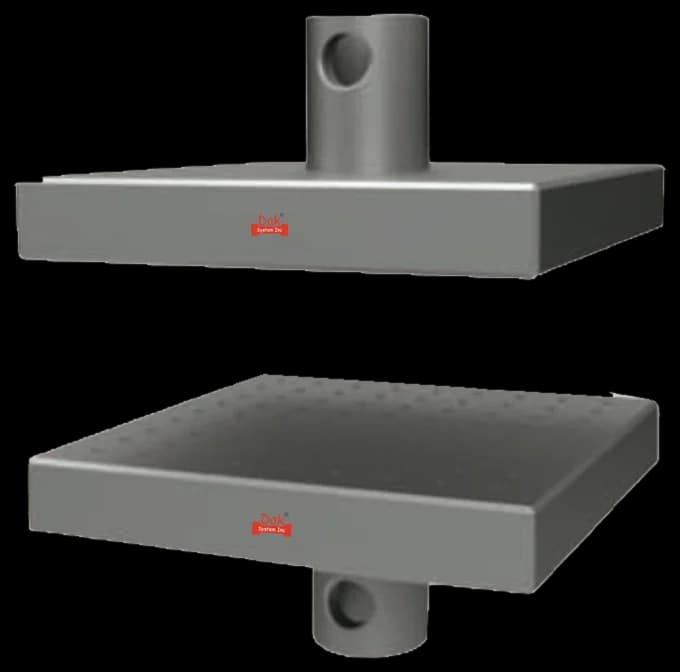
Direct Compression Fixture
Flat parallel platens of a hardness and flatness suited to concrete, with a spherically seated upper platen so the load finds the specimen rather than the specimen finding the platen.
Specifications
Testing standard
Hardened Concrete — Methods of Test — Part 1: Testing of Strength of Hardened Concrete — Section 1: Compressive, Flexural and Split Tensile Strength
Written and technically reviewed by Dak System Inc. engineeringLast reviewed
IS 516 (Part 1, Section 1) : 2021 is the Indian Standard method for the strength of hardened concrete, covering compressive strength on cubes, flexural strength as modulus of rupture, and split tensile strength. It is the first revision of provisions that previously sat in IS 516 : 1959.
From the test method to your testing system
Explore the DAK machines already listed for IS 516 (Part 1/Sec 1), then review the grips, measurement and setup requirements below.
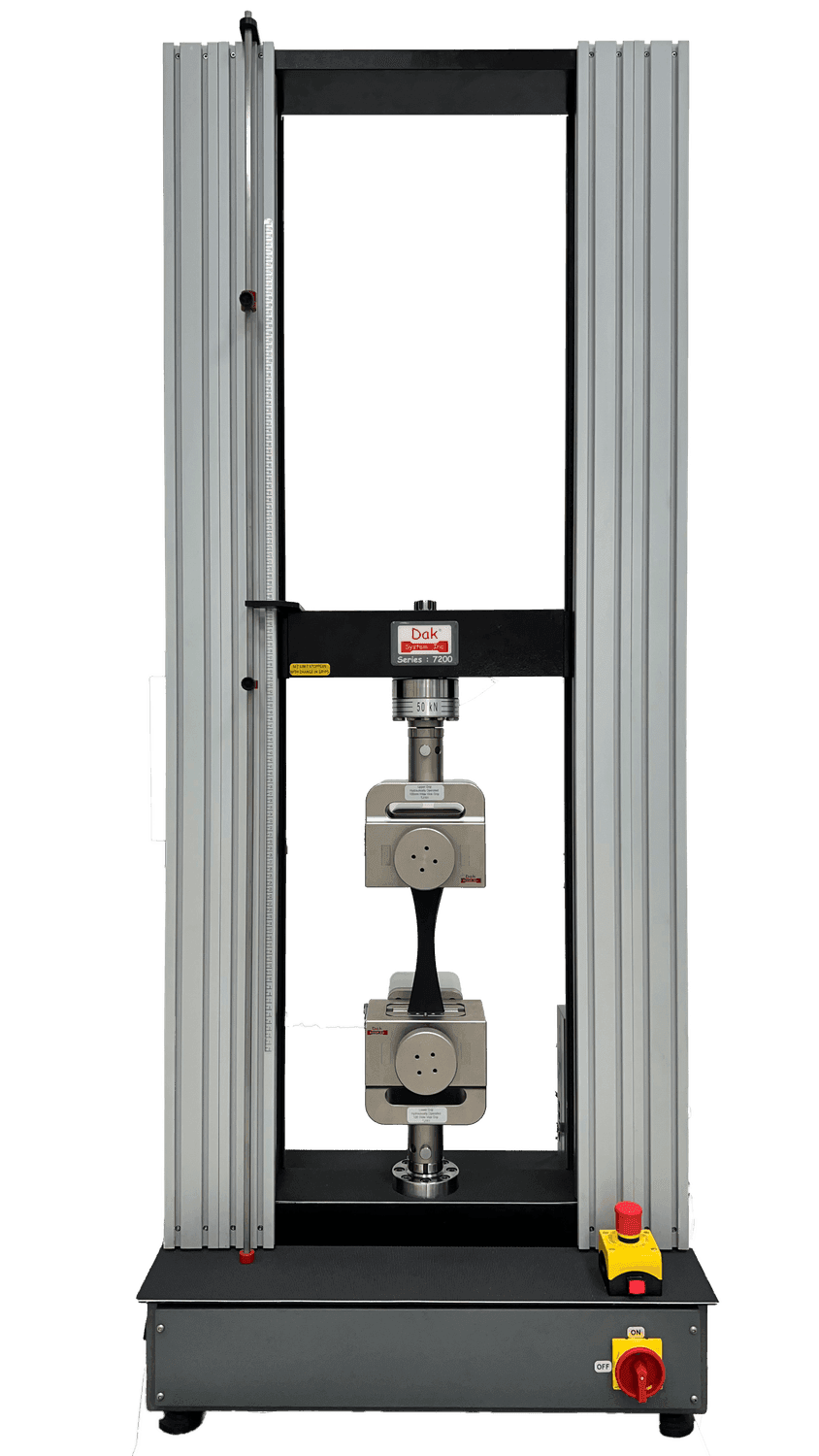 Universal Testing MachineSeries 7200Explore the machine →
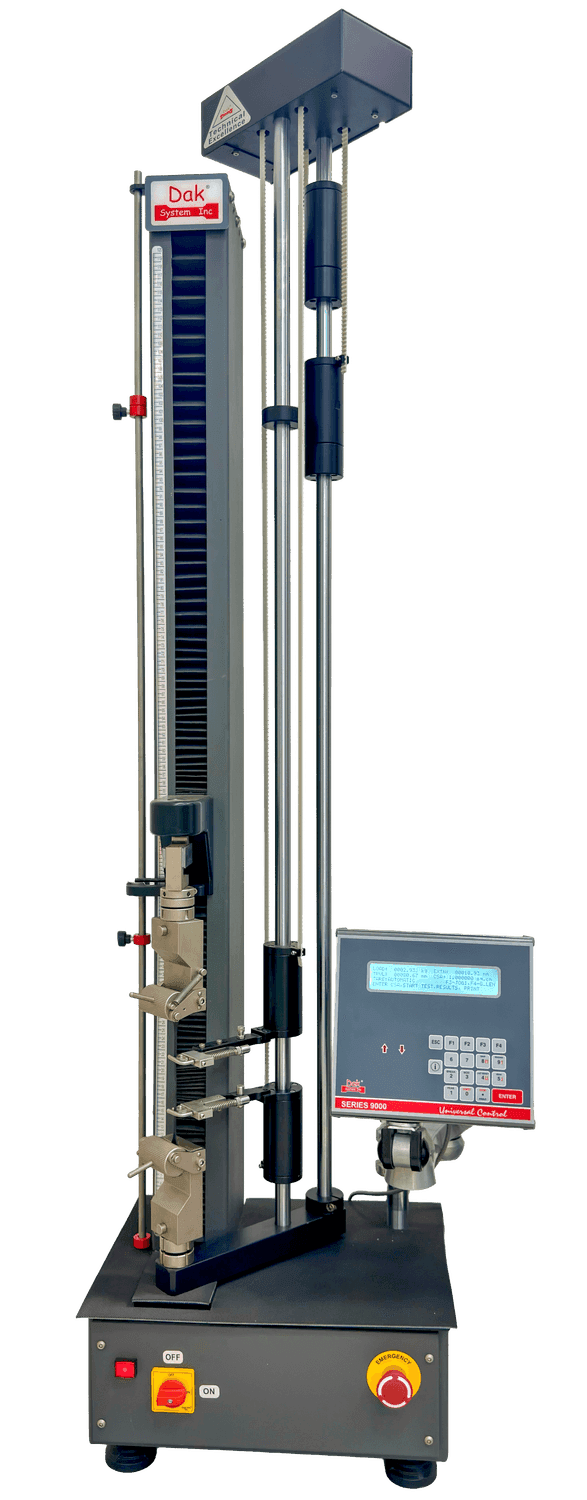 Universal Testing MachineSeries 9000Explore the machine →
01Understand the method
Three strengths in one section, each with its own specimen and loading rate. Compressive strength is measured on 150 mm cubes, three to a sample, cured in water at 27 ± 2 °C and loaded at 14 N/mm² per minute. Flexural strength is measured as modulus of rupture on a beam in third-point loading at 0,7 N/mm² per minute, with the fracture position recorded because it selects which expression applies. Split tensile strength is measured by laying a cylinder on its side between packing strips and loading it until it splits along its vertical diameter.
Whether the concrete that was placed is the concrete that was specified. The point most worth carrying away is that the cube is not a neutral choice. Platen friction restrains the specimen's ends and reaches a fixed distance into it, so it dominates a squat 150 mm cube while largely sparing the mid-height of a 300 mm-tall cylinder — and the cube consequently reads higher for identical concrete. Indian M-grades are cube strengths. Reading one against a cylinder-based specification, or the reverse, misstates the material by a wide margin.
02Prepare the specimen and test settings
Compression, flexure and splitting are all in this section, and each has its own specimen and its own loading rate.
A 150 mm cube reads higher than a 150 x 300 mm cylinder of the same concrete, because platen restraint reaches proportionally further into the squatter specimen. Indian grades are cube strengths; quoting one against a cylinder specification overstates the concrete.
03Build the test setup on a DAK machine
Very high compressive force — a 150 mm cube at M40 needs roughly nine hundred kilonewtons and higher grades more — with bearing platens suited to concrete and enough stiffness to survive an abrupt failure. Two loading rates have to be held accurately and they differ by a factor of twenty, so the control has to work well at both. The flexural test needs a third-point rig with the specified span, and the split tensile test packing strips of the specified material and width.
Flat parallel platens of a hardness and flatness suited to concrete, with a spherically seated upper platen so the load finds the specimen rather than the specimen finding the platen.
SpecificationsDak verifies against whichever standard the method names, and where a class applies our frames sit a class tighter than it asks.
| The method asks for | Dak supplies | |
|---|---|---|
| Capacity | Very high — a 150 mm cube at M40 needs about 900 kN, and higher grades more | Load cells from 1 kg to 60 ton on the Series 7200, and 0.5 to 100 kN on the Series 9000 |
| Force accuracy | A compression testing machine conforming to IS 14858, in calibration at the time of test and calibrated at least once per year (clause 3.2); no accuracy class is expressed | ISO 7500-1 Class 0.5 — the method sets no class of its own |
| Gripping | A compression frame with bearing platens for cubes, and a third-point flexure rig for the beam test | Our compression anvils, built to the specimen |
| Environment | specimens come straight from the curing tank; the method specifies no laboratory atmosphere and requires only that the time out of the tank be as short as possible and the specimen protected from drying while out of it (clause 3) | 3009 series chambers, −150 °C to +400 °C — temperature only |
04Run the test
05Calculate, report and interpret
Maximum load divided by the cross-sectional area of the cube
On the measured area. A worn mould does not produce a 150 mm cube.
From the maximum load and the beam geometry, by the section's formula
The standard gives different expressions according to the fracture position, which is why that position is recorded rather than just the load.
2P / (π l d)
A cylinder loaded on its side splits along its vertical diameter. It is an indirect tensile measure, and it is not the same as a direct tensile strength.
Comparing a cube result against a cylinder specification, which is the error that travels furthest and always in the flattering direction. Bearing on the trowelled face. Reporting a strength without the age at test, which makes it uninterpretable given how long concrete keeps gaining. Loading a flexural beam at the compressive rate, which races past the failure point. And ignoring the fracture position on a beam, when the standard's expression for modulus of rupture depends on whether it broke inside the middle third, and a fracture too far outside it voids the specimen altogether.
06Compare methods and find answers
| IS 516 (Part 1/Sec 1) | ASTM C39/C39M | |
|---|---|---|
| Compressive specimen | 150 mm cube | 150 x 300 mm cylinder or a core |
| Reads | Higher for the same concrete | Lower for the same concrete |
| Also covers | Flexure and split tensile | Compression only |
| Grades quoted against it | Indian M-grades are cube strengths | Specified cylinder strengths |
Indian concrete grades — M25, M40 and the rest — are cube strengths. Reading one against a cylinder-based specification, or the reverse, overstates or understates the concrete by a wide margin.
It is the Indian Standard method for the strength of hardened concrete, covering compressive strength on cubes, flexural strength as modulus of rupture, and split tensile strength. The current edition is the 2021 first revision, which took these provisions out of the long-standing IS 516 : 1959 and reorganised them into parts and sections.
It is a convention rather than a technical necessity, inherited from British practice, and it has a real consequence. Friction between the platens and the specimen restrains the ends and reaches a fixed distance into the concrete, so it dominates a squat 150 mm cube while largely sparing the mid-height of a 300 mm-tall cylinder. The cube therefore reads higher for identical concrete, and Indian M-grades are cube strengths.
Because a beam reaches its peak stress at a far lower load than a cube does. The rates are specified as stress per minute rather than load per minute, and the geometry converts them very differently: a modest load on a beam in third-point bending produces a large extreme-fibre stress. Loading a beam at the compressive rate would race past the failure point and overstate the modulus of rupture.
Because the standard gives different expressions for modulus of rupture depending on whether the beam broke inside the middle third or outside it. Between the two inner load points the moment is constant, so a fracture there is at the maximum stress; outside it the moment is lower and the arithmetic has to account for that. Recording the position is what allows the right expression to be used, and a fracture too far out invalidates the specimen.
A cast face, not the trowelled one. The top surface of a cube as cast is finished by hand and is neither as flat nor as dense as the moulded faces, so bearing on it concentrates load unevenly and reads low. Turning the cube on its side so two moulded faces take the load is standard practice and removes a whole class of spurious results.
A cylinder laid on its side and loaded along its length splits down its vertical diameter, and the load at which it does gives an indirect measure of tensile strength. Concrete is tested this way because gripping it in direct tension is very difficult — the grips crush it before it pulls apart. The split figure is an accepted indirect measure and is not numerically the same as a direct tensile strength.
Because concrete keeps gaining strength for months, and a value without an age is not a result. The method's reference points are 7 days as an early indicator and 28 days for design verification, and comparing a 7-day figure with a 28-day requirement — in either direction — is one of the more common misreadings on site.
Discuss your specimen, test requirements and reporting needs with DAK engineering.
This page describes the method as practised. The governing text is the current edition from the issuing body. Tell us what you are testing and we will answer with the machine, the fixture and a quotation.