5 to 400 kNTJ-125
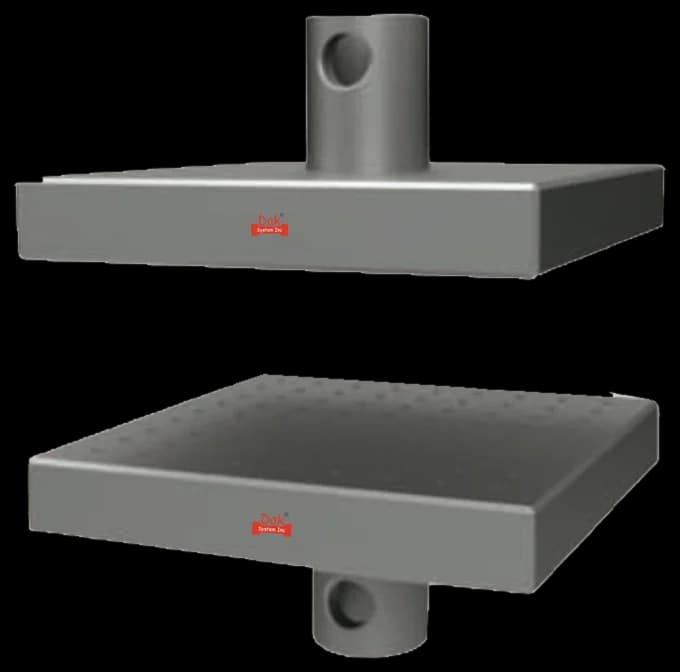
Direct Compression Fixture
Flat, parallel platens taking the ring crush holder centrally. Parallelism is what decides whether the ring collapses evenly or on one side, and it matters more here than platen size.
Specifications
Testing standard
Ring crush of paperboard (rigid support method)
Written and technically reviewed by Dak System Inc. engineeringLast reviewed
TAPPI T822 stands a strip of paperboard on edge in a circular groove so it forms a ring, then crushes it between platens and reports the maximum force. The ring and the rigid support stop the strip buckling so it fails in genuine edgewise compression. It was developed for board between 0.28 mm and 0.61 mm thick, and may be used with higher variability from 0.18 mm to 0.76 mm. The current revision is TAPPI/ANSI T 822 om-22.
From the test method to your testing system
Explore the DAK machines already listed for TAPPI T822, then review the grips, measurement and setup requirements below.
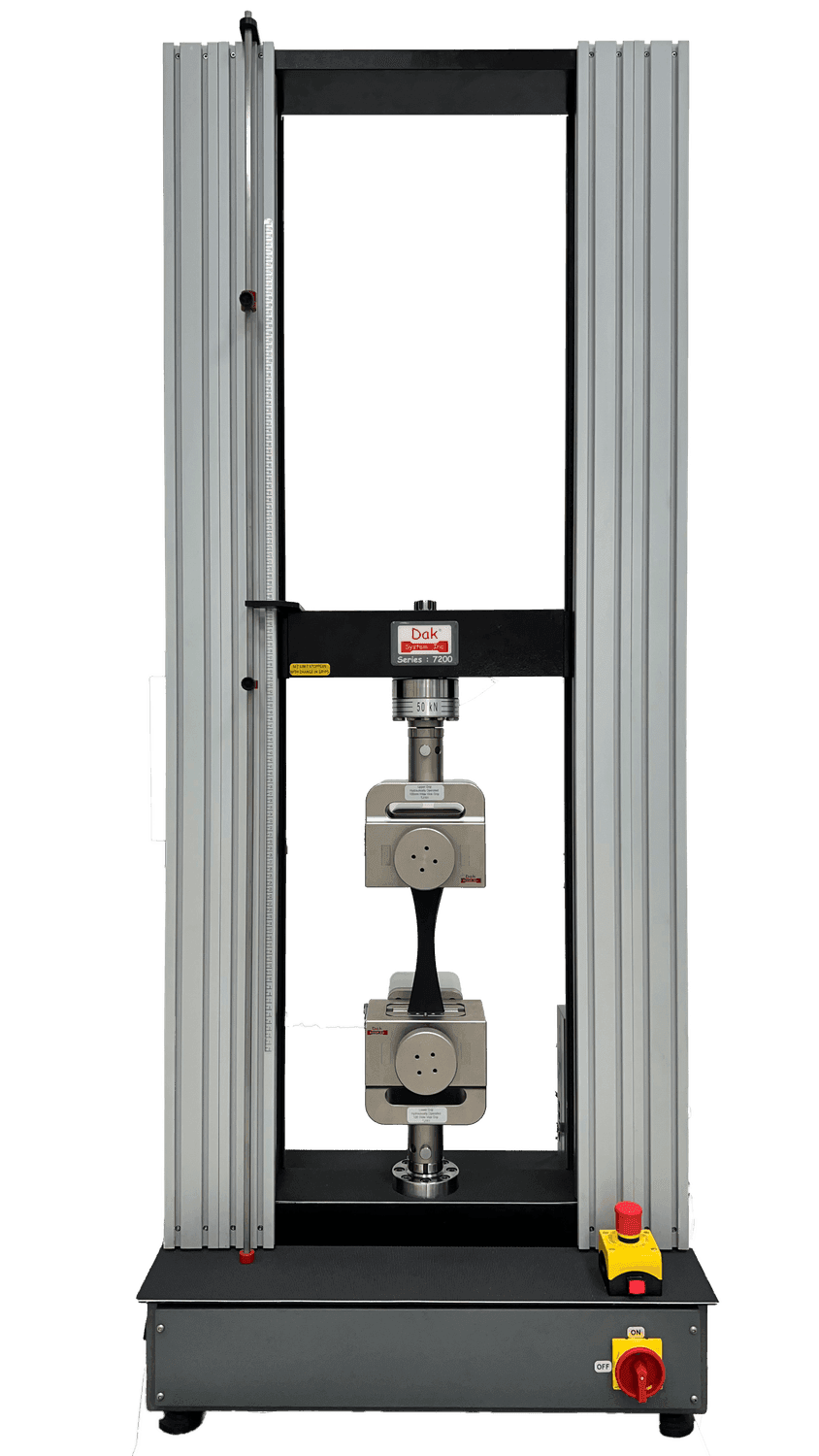 Universal Testing MachineSeries 7200Explore the machine →
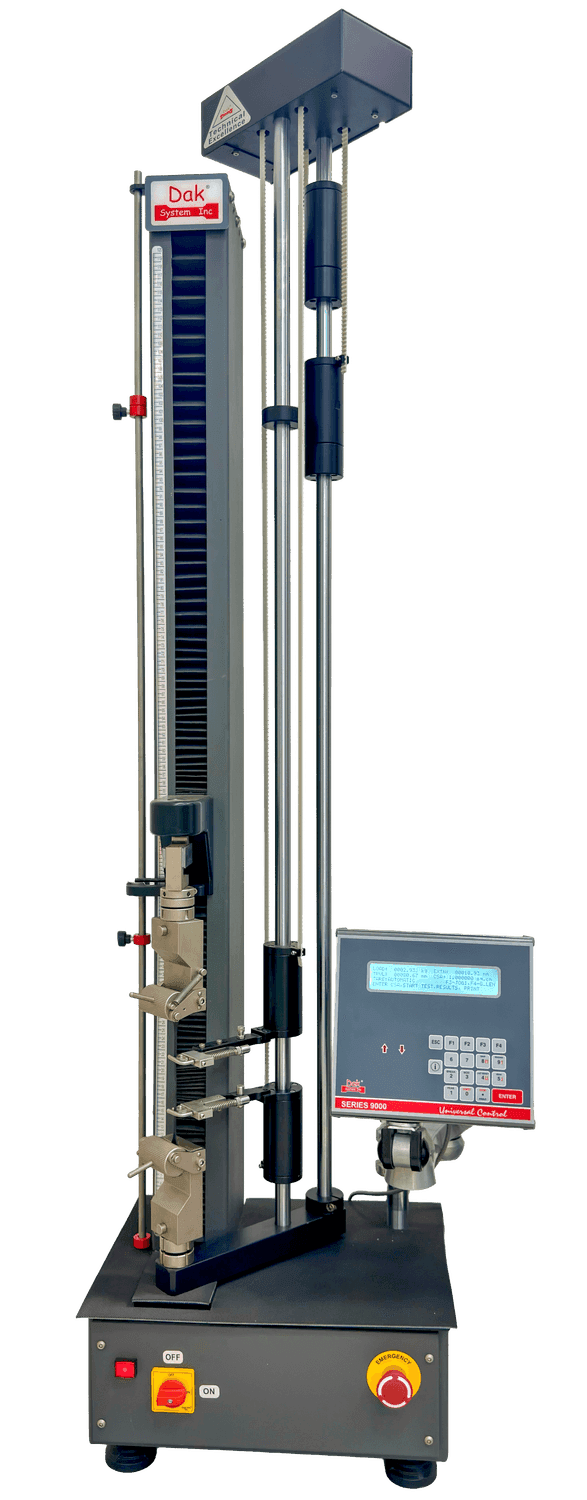 Universal Testing MachineSeries 9000Explore the machine →
01Understand the method
A strip of paperboard is stood on edge in a circular groove in a sample holder, so that it forms a ring. The holder goes between the platens of a compression machine, and the driven platen approaches the rigid one at 12.5 mm/min (0.50 in./min) until the board collapses. The maximum force is the ring crush value, and that one speed is the whole rate specification.
The groove is the whole idea. Paper stood on edge as a flat strip buckles long before it crushes, so the ring form and the rigid support constrain it laterally until it fails in genuine edgewise compression rather than as a column.
Ring crush correlates with the edgewise compressive strength of the paper, and that is what holds a stacked corrugated box up. The chain runs from the component papers through the combined board to the finished container: ring crush of liner and medium feeds the edge crush of the board, which feeds the compression resistance of the box.
That is why the number is bought and sold. Containerboard is specified on ring crush in North America, and a mill that misses the figure has made a grade the converter cannot use, however the paper looks or runs.
The thickness range is stated in two tiers. The method was developed for paperboard 0.28 mm to 0.61 mm thick, where its precision is best, and may be used with higher variability from 0.18 mm to 0.76 mm — which matters, because much paper now in use falls below 0.28 mm. What changes outside the developed tier is the spread, not the validity, so a result taken there should say where the board sat.
02Prepare the specimen and test settings
The cut edges are the loaded surfaces. Everything about specimen preparation follows from that one fact.
03Build the test setup on a DAK machine
Ring crush values run from tens to a few hundred newtons, so this is low-force work. A load cell chosen for the specimen rather than for the frame is essential; a cell sized for a heavy frame turns a 200 N peak into noise.
Platens must be flat, clean and parallel, and the drive must hold 12.5 mm/min — controllable to ± 0.2 mm/min (± 0.008 in./min) over the working range. Because the specimen is short and stiff, small tilts matter: any tilt loads one side of the ring first and it collapses there before the rest.
The sample holder is a consumable in practice. Groove width is specified, and a worn groove no longer restrains the strip, so results drift downward over months in a way that looks like a change in the board. No grips, no extensometer — the result is a peak force.
Flat, parallel platens taking the ring crush holder centrally. Parallelism is what decides whether the ring collapses evenly or on one side, and it matters more here than platen size.
SpecificationsRing crush values run from tens to a few hundred newtons. A cell sized for a heavy compression frame turns a 200 N peak into noise, so the cell is chosen for the specimen.
SpecificationsDak verifies against whichever standard the method names, and where a class applies our frames sit a class tighter than it asks.
| The method asks for | Dak supplies | |
|---|---|---|
| Capacity | Low — commonly tens to a few hundred newtons | Load cells from 1 kg to 60 ton on the Series 7200, and 0.5 to 100 kN on the Series 9000 |
| Force accuracy | unknown — no accuracy class could be confirmed for this method | ISO 7500-1 Class 0.5 — the method sets no class of its own |
| Gripping | A ring crush holder with a groove of specified width, between flat parallel platens | Our compression anvils, built to the specimen |
| Environment | Standard atmosphere for testing paper and board; board compressive strength falls sharply as moisture rises | 3009 series chambers, −150 °C to +400 °C — temperature only |
04Run the test
05Calculate, report and interpret
The maximum force the ring carried before collapse
Reported as a force, and where required as a force per unit length of specimen.
A flat strip on edge buckles long before it crushes
The ring form plus the rigid support constrain the strip laterally, so it fails in edgewise compression rather than as a slender column.
Component ring crush → board edge crush → box compression
Ring crush is the first link and the reason containerboard is bought and sold on it in North America.
Worn groove holders are the slow, invisible fault and cause most argument between mill and converter. Blunt cutters that crush the loaded edge are the fast version of the same problem. Reporting from the wider part of the thickness range without saying so invites comparison against a specification written for the narrower one. And unconditioned specimens, in a humid plant especially, give results that are low, repeatable and blamed on the furnish.
06Compare methods and find answers
Two ways to stop paper buckling while measuring how hard it is to crush. They are not the same measurement.
| Ring crush (TAPPI T822) | Short span (TAPPI T826) | |
|---|---|---|
| Buckling is | Restrained by a groove and a ring form | Eliminated by a 0.70 mm free span |
| Specimen | A strip stood on edge as a ring | A 15 mm strip clamped almost end to end |
| Applies to | Paperboard 0.18 to 0.76 mm thick | Containerboard, roughly 100 to 440 g/m² |
| Regarded as | The traditional specification measure | The cleaner measurement of the two |
| ISO counterpart | ISO 12192 | ISO 9895 |
Ring crush accepts some contamination of the result by residual buckling; the short-span test removes the possibility instead. Both are legitimate and both are specified. Neither substitutes for the other on a purchase specification.
TAPPI T822 is the North American ring crush method for paperboard, using a rigid support. A strip is stood on edge in a circular groove so that it forms a ring, and the holder is crushed between the platens of a compression machine until the board collapses. The maximum force is the ring crush value. The current revision is TAPPI/ANSI T 822 om-22.
To stop it buckling. A flat strip of paper stood on its edge behaves as a very slender column and folds over long before it reaches its compressive strength, so the number that came out would describe the geometry rather than the paper. Curving the strip into a ring and supporting it in a groove restrains it laterally, so it fails by genuine edgewise compression.
The published range has two tiers. The method was developed for paperboard between 0.28 mm and 0.61 mm thick, and that is where it is most precise. It may also be used, with higher variability, on board as thin as 0.18 mm and as thick as 0.76 mm — which matters, because a large part of the paper now in use falls below the 0.28 mm figure. So a thin board is not out of scope; it is measured less repeatably, and the report should say where the board sat so the figure is read against the right expectation of spread.
Because containerboard is specified and traded on it in North America. Edgewise compressive strength of the components is what ultimately holds a stacked box up: component ring crush feeds the edge crush of the combined board, which feeds the compression resistance of the finished container. A mill that misses the ring crush figure has produced a grade its converter cannot use, whatever else the paper does well.
A worn groove in the sample holder. The groove width is specified, and it widens slowly with use until it no longer restrains the strip. Results then fall gradually over months, and because the change is slow and the equipment looks fine, the drift is usually blamed on the furnish or the machine before anyone measures the holder. It is a consumable and should be treated as one.
ISO 12192 is the international ring crush method for the same property, and the two are direct counterparts. As with the tensile methods, that does not make the numbers interchangeable: specimen dimensions and rates differ, and a result obtained to one document should not be reported against a specification written for the other without saying so.
A compression frame with flat, clean, parallel platens and a load cell sized for the specimen rather than the frame — ring crush values run from tens to a few hundred newtons. There are no grips and no extensometer: the result is a peak force, and platen parallelism matters more than capacity.
Discuss your specimen, test requirements and reporting needs with DAK engineering.
This page describes the method as practised. The governing text is the current edition from the issuing body. Tell us what you are testing and we will answer with the machine, the fixture and a quotation.