Testing standard

ISO 17708

Footwear — Test methods for whole shoe — Upper sole adhesion

Written and technically reviewed by Dak System Inc. engineeringLast reviewed

ISO 17708 measures the resistance to separation of the upper from the outsole on a finished shoe. It also covers separation between adjacent layers of the outsole and tear failure of the upper or the sole, and it defines ageing conditions that can be used for production control.

At a glance

Test type
Peel & adhesiona bonded joint is pulled apart
Published by
ISO
Edition
ISO 17708:2018

What the test does

Finished shoes, aged to defined conditions where the specification requires it and then conditioned, have the sole cut into a strip of defined width at the position to be tested. The separation is started at one end to create a tab on each side, the shoe is supported so that the peel front will travel along the bond line, and the upper and the sole strip are gripped separately and drawn apart at a constant rate. The force is recorded throughout and divided by the strip width, and the way the specimen gave way is classified.

What it measures, and why it matters

Whether the sole will stay on — measured on the shoe the factory actually made, over the last it was made on. That is the distinction from a bonded-coupon test, and it is the whole point of the method. A coupon establishes that an adhesive is capable of a given strength under controlled conditions; this establishes whether the roughing, priming, cement application and press time used on the day achieved it on a curved, three-dimensional article. Everything that goes wrong in footwear production lives in the gap between those two, and only a whole-shoe test can see into it.

Three ways it can go

The bond can let go, a sole layer can split, or the upper or sole can tear. Only the first is an adhesion figure.

Bond separation
The upper parts from the outsoleThis is the adhesion measurement the test exists to make.
Sole layer separation
Adjacent layers of the outsole part from each otherA construction problem in the sole unit, not an adhesion problem at the upper.
Material failure
The upper or the sole tearsThe bond was stronger than the material — good news, but not an adhesion value.
Applicability
All types of footwear where the upper is continuously assembledCemented, vulcanised, injection moulded and so on — the construction does not matter, a closed shoe does.
Ageing
Defined conditions, usable for production control
Record which of the three occurred, on every specimen
DakA high force with a torn upper and a high force with an intact bond mean opposite things to a factory.

This is a whole-shoe test, not a coupon test. It measures the bond the factory actually made, on the last it was made over, with the adhesive it was made with.

Test speed

Rate
A constant rate of separation as specified
Reported
Separation force per unit width, with the failure mode
Ageing
Applied where the specification requires itAgeing before testing is what catches an adhesive that bonds well and does not stay bonded.
Cut the sole into a strip of defined width before peeling
DakA whole sole peels unevenly; a defined strip gives a force that can be divided by a width and compared.

Calculations

Upper sole adhesion

Separation force divided by the width of the strip peeled

Force per unit width, so the width has to be defined and measured. A whole-sole force divided by nothing is not comparable with anything.

Failure mode

Bond separation, sole layer separation, or material tear

Reported with the force. Without it the number cannot be acted on, because two of the three modes are not adhesion results at all.

How the test runs

  1. 01Select finished shoes representative of production.
  2. 02Apply the specified ageing where the specification requires it.
  3. 03Condition the shoes as specified.
  4. 04Mark and cut the sole into a strip of defined width at the position to be tested.
  5. 05Start the separation at one end to create a tab on each side.
  6. 06Mount the shoe so the peel front will travel along the bond line.
  7. 07Grip the upper in one jaw and the sole strip in the other.
  8. 08Separate at the specified constant rate.
  9. 09Record the force through the separation.
  10. 10Classify the failure as bond separation, sole layer separation, or material tear.
  11. 11Divide by the strip width and report the mode alongside the value.

The fixture this method needs

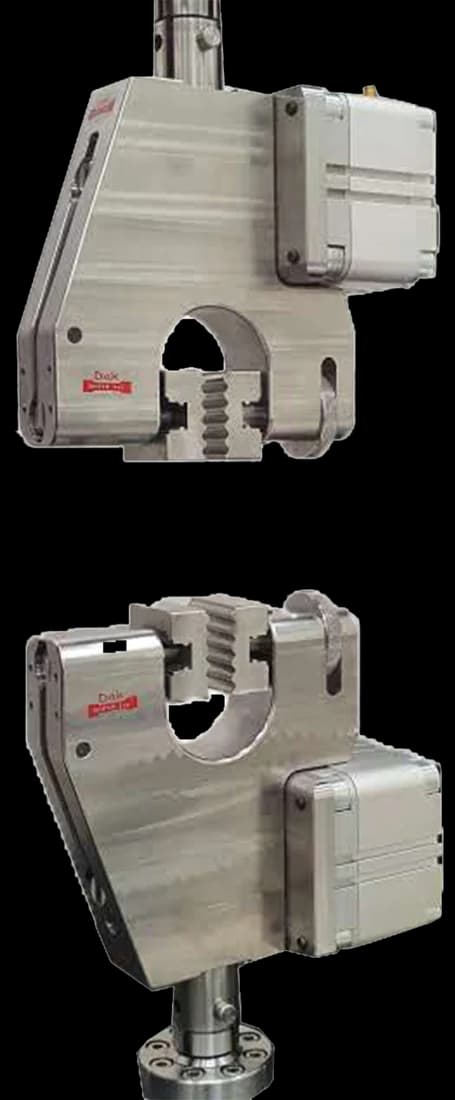
Pneumatic vice action grips with 25 mm square jaw faces
Standard 25 mm

Pneumatic Vice Action Grip

Pneumatic vice action grips hold each arm of the T at a constant pressure through a long peel, which a screw grip does not — a peel test runs for hundreds of millimetres and a slipping grip corrupts the whole trace.

Specifications

What the report has to contain

  • Reference to ISO 17708 and the edition
  • Footwear identification, construction and size
  • Sole and upper materials, and the bonding process
  • Whether ageing was applied, and its conditions
  • Conditioning atmosphere
  • Position on the shoe tested and the strip width
  • Rate of separation
  • Separation force per unit width
  • Failure mode for each specimen
  • Number of specimens tested and any excluded

What the machine must be capable of

Low forces and long, controlled travel — separation typically runs from tens to a few hundred newtons and continues for the length of the bond. The load cell is chosen for that range rather than for the frame. What the set-up needs more than capacity is a way of holding an irregular article so the bond line stays presented to the grips throughout, and grips that hold a flexible upper and a rubber sole strip without cutting either. Ageing to the specified conditions needs an oven or chamber alongside.

What goes wrong in practice

Reporting a force without the failure mode, when two of the three possible modes are not adhesion results at all — a torn upper describes the upper's tear strength, and a sole layer separation describes the sole unit's internal construction, pointing at a different supplier and a different process. Letting the shoe move so the peel angle drifts. Testing fresh shoes only, when the standard supplies ageing conditions precisely because an adhesive that bonds well may not stay bonded through a warehouse and a container.

ISO 17708 or an adhesive coupon test

ISO 17708ISO 8510-2 / ISO 11339
SpecimenA finished shoeA flat bonded coupon
MeasuresThe bond the factory madeThe adhesive itself
GeometryCurved, as manufacturedFlat and controlled
AnswersWill this shoe come apart?How good is this adhesive?

A coupon test tells you the adhesive is capable; this tells you the factory achieved it. Surface preparation, roughing, primer and press time all live in the difference, and only a whole-shoe test sees them.

Questions we are asked about this test

What is ISO 17708?

It is the ISO whole-shoe test for upper-to-sole adhesion. It determines the resistance to separation of the upper from the outsole, and also covers separation between adjacent layers of the outsole and tear failure of the upper or the sole. It applies to all types of footwear — cemented, vulcanised, injection moulded — where the upper is continuously assembled, which is to say a closed shoe. The current edition is ISO 17708:2018.

Why test a whole shoe rather than a bonded coupon?

Because they answer different questions. A coupon test establishes that the adhesive is capable of a given bond strength under controlled conditions. A whole-shoe test establishes whether the factory achieved it on a curved last, with the roughing, priming, cement application and press time actually used that day. Everything that goes wrong in production lives in the gap between those two, and only the whole-shoe test can see it.

What does it mean if the upper tears instead of the bond letting go?

That the bond is stronger than the material — commercially the best possible outcome, and not an adhesion measurement. It should be recorded as a material failure rather than averaged in as an adhesion value, because the number obtained describes the upper's tear strength, not the bond. A specification usually treats it as a pass, but the distinction has to be visible in the report.

What is sole layer separation?

A failure between adjacent layers within the outsole unit itself, rather than at the upper. It is a construction problem in the sole — how the midsole and outsole were bonded or moulded together — and points at a different supplier and a different process from an upper-bond failure. Reporting it as an adhesion result would send a factory to fix the wrong thing entirely.

Why does the standard define ageing conditions?

Because an adhesive that bonds well is not necessarily an adhesive that stays bonded. Heat, humidity and time can weaken a bond that tested perfectly when fresh, and footwear sits in warehouses and containers before it reaches a customer. Ageing to defined conditions before testing catches that, which is why the standard offers it as a production control tool rather than an optional extra.

Why cut the sole into a strip?

So that the force can be divided by a width and compared with something. A whole sole peels unevenly — the bond area is wide, curved and varies in preparation along its length — so the force fluctuates in ways that have nothing to do with the adhesive. A strip of defined width gives a force per unit width, which is the quantity a specification is written against.

What makes gripping a shoe difficult?

That it is not flat. A coupon peels in a plane; a shoe curves in every direction, so unless it is supported the peel front wanders round the shape of the last and the angle changes as the test runs. Since peel force depends on angle, that turns a measurement into an average over a geometry that drifted. Supporting the shoe so the separation front travels along the bond line is the practical heart of the method.

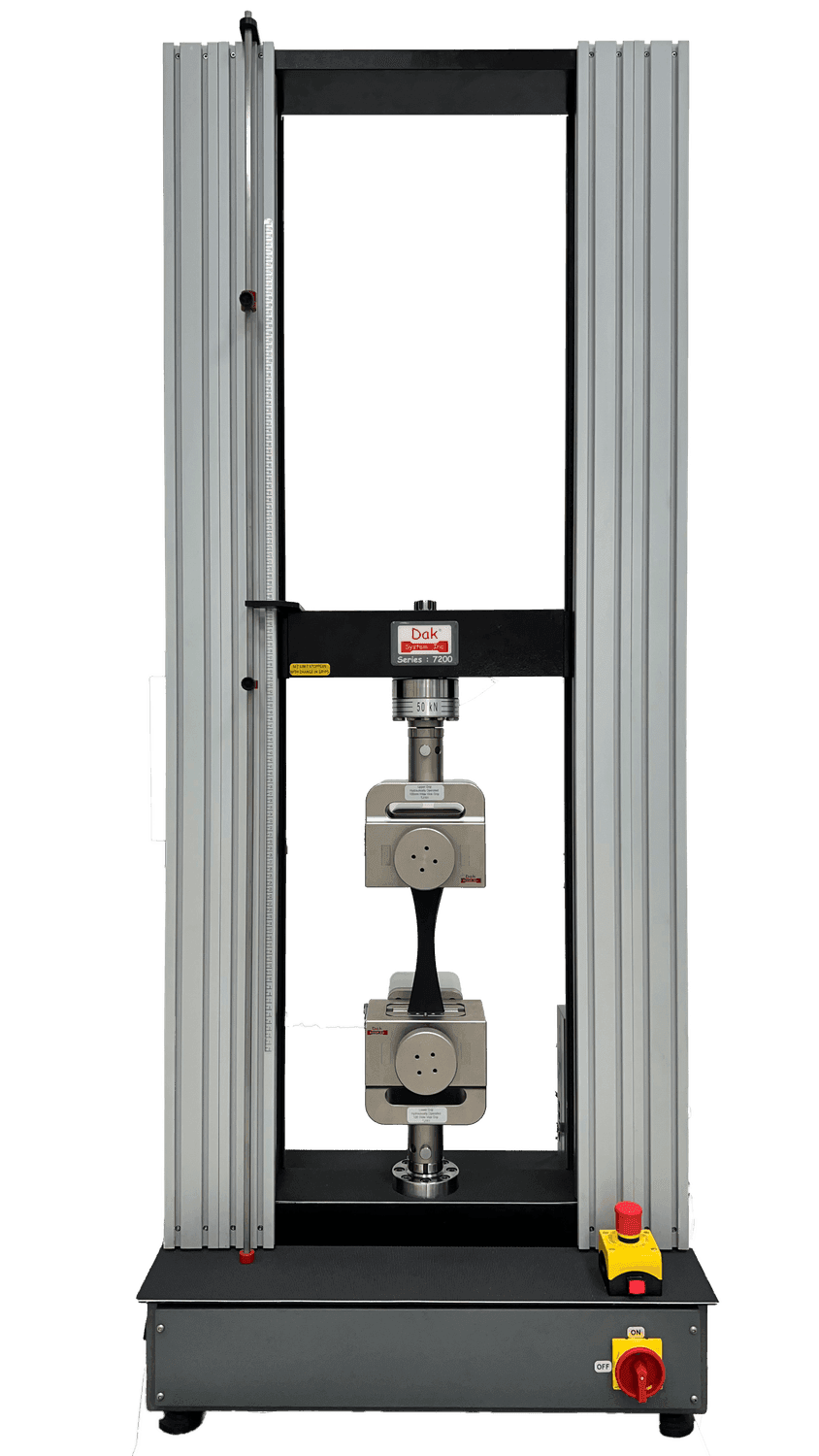
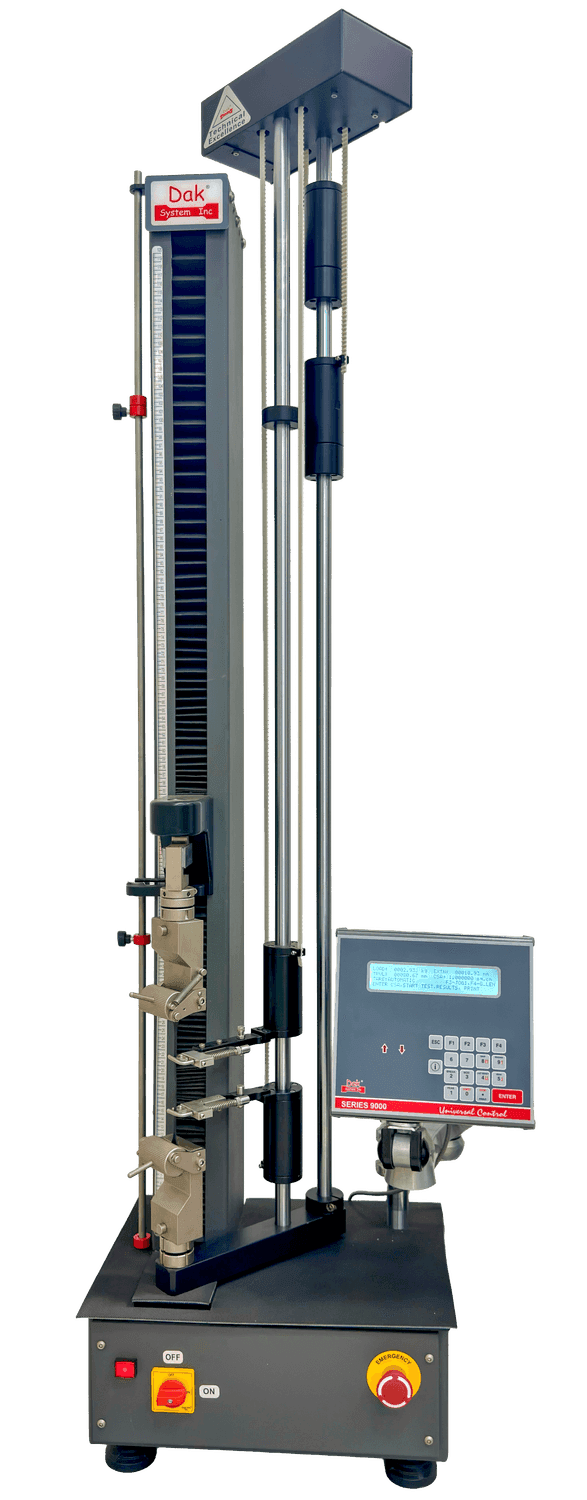
Running ISO 17708 on the Series 7200 and Series 9000

Dak verifies against whichever standard the method names, and where a class applies our frames sit a class tighter than it asks.

The method asks forDak supplies
CapacityLow — upper to sole separation typically runs from tens to a few hundred newtonsLoad cells from 1 kg to 60 ton on the Series 7200, and 0.5 to 100 kN on the Series 9000
Force accuracyClass 1 over the working rangeISO 7500-1 Class 0.5, verified to ASTM E4, DIN 51221 and BS 1610
GrippingGrips taking the upper and the sole separately, with the shoe supported so the peel front stays where it is meant to beOur peel and adhesion fixtures, built to the specimen
Environment23 ± 2 °C standard laboratory atmosphere3009 series chambers, −150 °C to +400 °C — temperature only

This page describes the method as practised. The governing text is the current edition from the issuing body. Tell us what you are testing and we will answer with the machine, the fixture and a quotation.

The test it standardises

Other standards explained