Testing standard

ISO 252

Conveyor belts — Adhesion between constitutive elements — Test methods

Written and technically reviewed by Dak System Inc. engineeringLast reviewed

ISO 252 peels the layers of a conveyor belt apart on a testing machine and reports the adhesion strength as force per unit width. Two interfaces are covered — ply to ply inside the carcass, and cover to carcass — and two test methods, A and B, are defined. The current edition is ISO 252:2023, superseding ISO 252:2007.

At a glance

Test type
Peel & adhesiona bonded joint is pulled apart
Published by
ISO
Edition
ISO 252:2023

What the test does

A strip is cut from a conveyor belt and the layers inside it are separated. One layer is clamped in the fixed grip, the other in the moving grip, and the machine peels them apart at a controlled rate while recording the force. Two test methods are defined, A and B, and both report an adhesion strength as force per unit width.

Two interfaces matter and both are covered: ply-to-ply, which is the bond between the fabric layers of the carcass, and cover-to-carcass, which is the bond holding the rubber cover onto the fabric beneath it.

What it measures, and why it matters

Adhesion is what stops a conveyor belt coming apart in service, and it is a different property from tensile strength. A belt with ample longitudinal strength and poor interply adhesion will fail by delamination long before it fails in tension: the plies separate at a pulley, the cover lifts at a damaged edge, and moisture and dust get into the carcass and finish the job.

The peel record is read for a mean force over a length of peel rather than a single peak, because delamination is a progressive process and one point on the trace says nothing about the bond as a whole. One of the defined procedures makes a record of the force required to peel off enough length to obtain eight or more peak force points, at a driven-grip speed of 100 ± 10 mm/min.

Adhesion figures are also process figures. Low interply adhesion points at the calendering or the curing rather than at the fabric, and it is one of the few belt properties that can be traced back to a specific step on the production line.

Specimen, and where it is cut from

Adhesion is not uniform across a belt. Where the specimen came from is part of the result, not an administrative detail.

Material
Conveyor belt, textile carcass
Interfaces covered
Ply to ply, and cover to carcass
Methods
Two, A and B
Specimen
A strip of specified width with clean, parallel edges
Starter separation
The layers separated at one end far enough to clampStart it without cutting into the ply beneath. A knife that scores the next layer has weakened the interface before the machine touched it.
Conditioning
In the standard atmosphere, and tested in itRubber adhesion moves with temperature. A specimen brought straight from a cold store or a hot press measures the store or the press.
Take specimens across the belt width
DakCalendering and curing vary from edge to centre. Specimens cut only from one edge describe that edge.

Rate, and how much peel is enough

Driven grip speed
100 ± 10 mm/minQuoted in the publisher description of the procedure that makes a record of the peel force.
Peel length
Enough to obtain eight or more peak force pointsThis is the requirement that decides how long the test runs, and it is the one most often shortened.
Reported
Adhesion strength as force per unit width
Log the whole peel, not samples of it
DakThe result is a mean over the peaks. A logger that samples at intervals produces a mean of the wrong thing.

Reading the peel trace

Adhesion strength

Mean peel force divided by specimen width

mean peel force
averaged across eight or more peaks, N
width
specimen width, mm

Reported per unit width so specimens of different widths compare.

Why a mean and not a peak

Delamination is progressive, not a single event

One point on the trace says nothing about the bond along the belt. A peak reported as an adhesion figure is an anecdote.

What a low figure points at

The calendering and the cure, not the fabric

Interply adhesion is one of the few belt properties that traces back to a specific step on the production line.

How the test runs

  1. 01Take specimens from across the width of the belt.
  2. 02Cut to the specified width with clean, parallel edges.
  3. 03Separate the chosen interface at one end without cutting the layer beneath.
  4. 04Condition in the standard atmosphere and test in it.
  5. 05Clamp one layer in the fixed grip and the other in the driven grip.
  6. 06Peel at 100 ± 10 mm/min.
  7. 07Continue until at least eight peak force points have been recorded.
  8. 08Take the mean peel force from those peaks.
  9. 09Divide by the specimen width to get adhesion strength.
  10. 10Report which interface was peeled, and where the specimen came from.

Grips and fixtures for this method

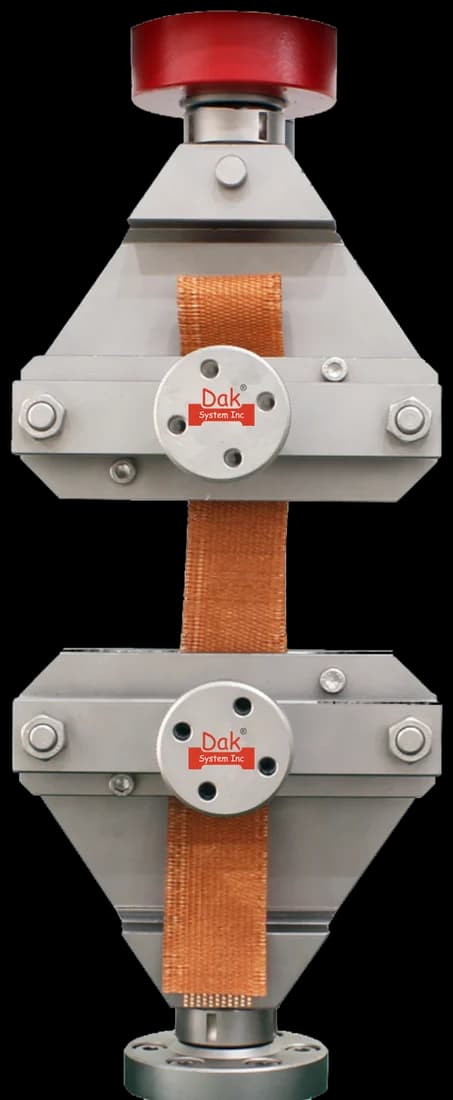
100 mm wide vice action grips holding a woven belt specimen
Two face setsTJ-26

100mm Wide Vice Action Grips

A wide vice-action face holds a rubber strip across its full width without cutting it. Slippage on rubber shows as a creeping specimen rather than a jump, so a grip that holds the whole width is worth more here than clamping force alone.

Specifications
Self-identifying

Load Cells

Peel forces on belting are commonly a few hundred newtons. A cell sized for the specimen rather than the frame is what makes eight peaks readable rather than eight ripples on a flat line.

Specifications

What the report has to contain

  • Reference to ISO 252 and the edition
  • Which test method was used, A or B
  • Belt construction, number of plies and cover thicknesses
  • Which interface was peeled — ply to ply, or cover to carcass
  • Where across the belt width the specimens were taken
  • Specimen width
  • Conditioning atmosphere
  • Peel rate
  • Adhesion strength for each specimen, as force per unit width
  • Mean and the number of specimens

What the machine must be capable of

Peel forces on conveyor belting are moderate — commonly a few hundred newtons per specimen, more on heavy multi-ply constructions. A frame of 5 to 50 kN is more than adequate and resolution at the low end matters far more than capacity, so the load cell should be chosen for the specimen rather than for the frame. Force accuracy to ISO 7500-1 Class 1 is the normal requirement.

The machine needs a driven grip capable of a steady 100 ± 10 mm/min and, critically, continuous logging over a long travel. The result is a mean over eight or more peaks, so the trace has to be recorded through the whole peel and not sampled at intervals. Grips must hold a rubber-faced strip without slipping and without cutting it: vice-action jaws with a face that grips the rubber are the usual choice.

A long crosshead travel is worth having. Peeling far enough to collect eight peaks on a wide specimen consumes stroke, and a short-stroke frame forces the operator to restart the peel, which puts an artefact in the record.

What goes wrong in practice

Slipping grips are the commonest fault, and on rubber they are easy to miss because the specimen creeps rather than jumping. Peeling too short a length and averaging over two or three peaks gives a number with no stability. Starting the separation with a knife that cuts into the ply below weakens the interface before the test begins. And reporting a peak instead of a mean turns a progressive measurement into an anecdote.

The four belting methods, and what each answers

Adhesion (ISO 252)Tear propagation (ISO 505)Cord bond (ISO 7623)Fastening strength (ISO 1120)
Belt typeTextile carcassTextileSteel cordTextile, mechanically fastened
What failsThe interface between layersA tear that is made to runThe cord-to-rubber bondThe joint
ResultForce per unit widthA forceA pull-out forceA peak force
Force neededLowLow to moderateLowHigh — tens to hundreds of kN
PredictsDelamination in serviceLongitudinal rippingSplice performanceWhether a fastener is fit to consider

These four are not alternatives and a specification naming one is not satisfied by another. A belt can have excellent adhesion and poor tear resistance, or the reverse.

Questions we are asked about this test

What is ISO 252?

ISO 252 is the international method for the adhesion between the constitutive elements of a conveyor belt. A strip is cut from the belt, the layers are separated, and one is peeled from the other on a testing machine while the force is recorded. It covers both the ply-to-ply bond inside the carcass and the cover-to-carcass bond, and defines two test methods, A and B. The current edition is ISO 252:2023.

Why does adhesion matter more than tensile strength on a belt?

Because they are different failure modes and adhesion usually arrives first. A belt with ample longitudinal strength and poor interply adhesion delaminates: the plies separate at a pulley, the cover lifts at a damaged edge, and dust and moisture get into the carcass and finish it. Tensile strength describes what the belt could carry; adhesion describes whether it stays in one piece while carrying it.

Why does the test need eight peaks?

Because delamination is progressive. The peel force rises and falls as the front passes through the structure of the fabric, and a single peak is a point on that oscillation rather than a description of the bond. Averaging across eight or more peaks gives a figure with some stability. Peeling too short a length and averaging over two or three is the commonest way to produce an adhesion number that will not repeat.

What speed is the test run at?

The published procedure description gives a driven-grip speed of 100 ± 10 mm/min, and the record is taken over enough peel length to give eight or more peak force points. That speed and that length together are what make the result comparable between laboratories; changing either invalidates the comparison even though the test still produces a number.

Does it apply to steel cord belts?

No. Steel cord belts have their own method, ISO 7623, which pulls a single cord out of the surrounding rubber rather than peeling layers apart. The geometry, the fixture and the failure being measured are all different. ISO 252 is for textile-carcass constructions, where there are genuine layers to separate.

What machine does it need?

A modest frame with good low-end resolution and a long stroke. Peel forces are commonly a few hundred newtons, so a 5 to 50 kN frame with a load cell sized for the specimen and force accuracy to ISO 7500-1 Class 1 is right. The two requirements that catch people out are a driven grip that will hold a steady 100 mm/min and enough travel to peel far enough for eight peaks without restarting.

What does a low adhesion figure tell a belt maker?

Usually that the problem is in processing rather than in materials. Interply adhesion is set by the calendering and the cure, so a low figure points at compound tack, dwell, temperature or pressure rather than at the fabric or the cover formulation. It is one of the few belt properties that traces cleanly back to a single step, which is why it is a routine production check and not only an acceptance test.

Running ISO 252 on the Series 7200 and Series 9000

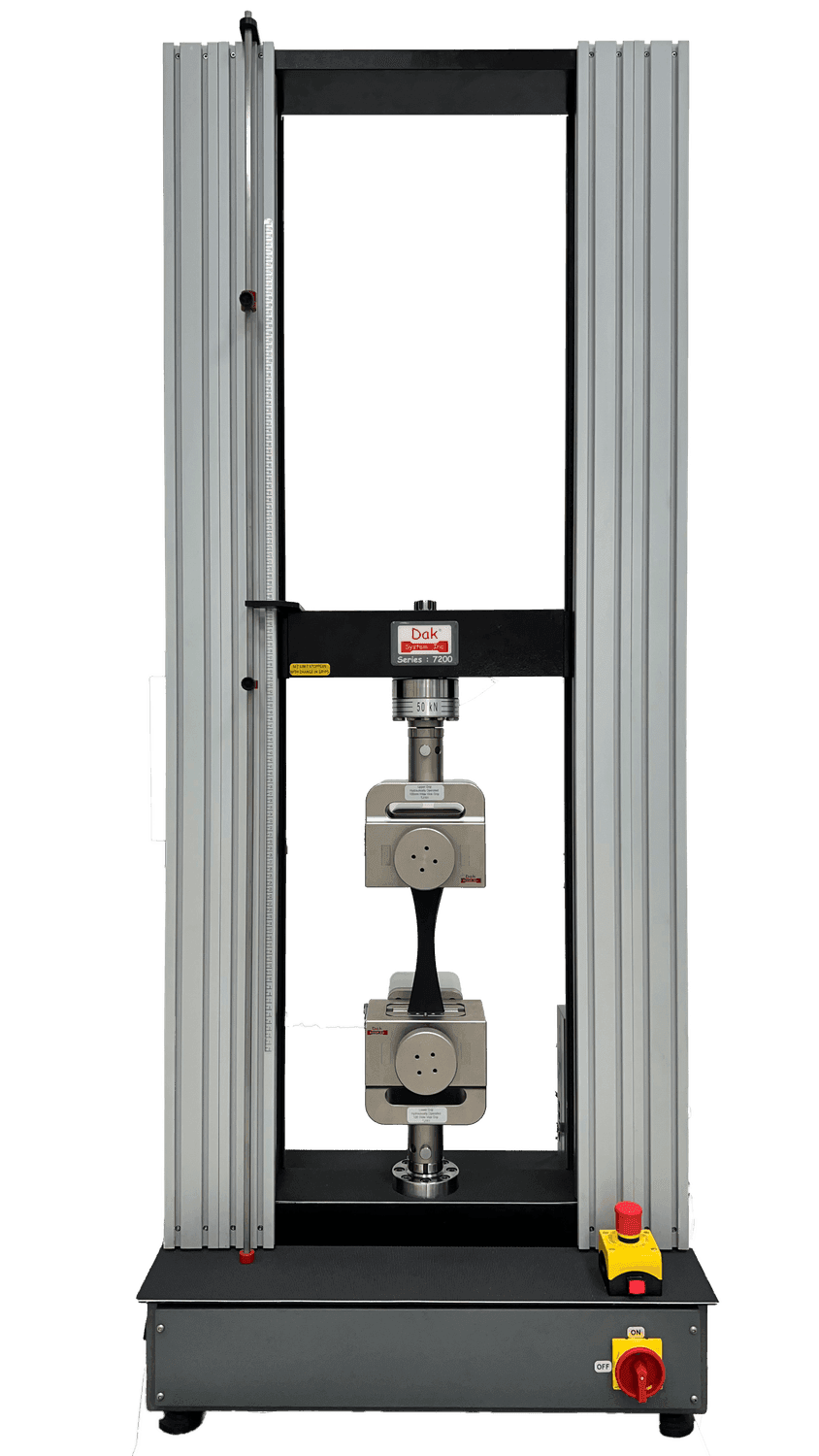
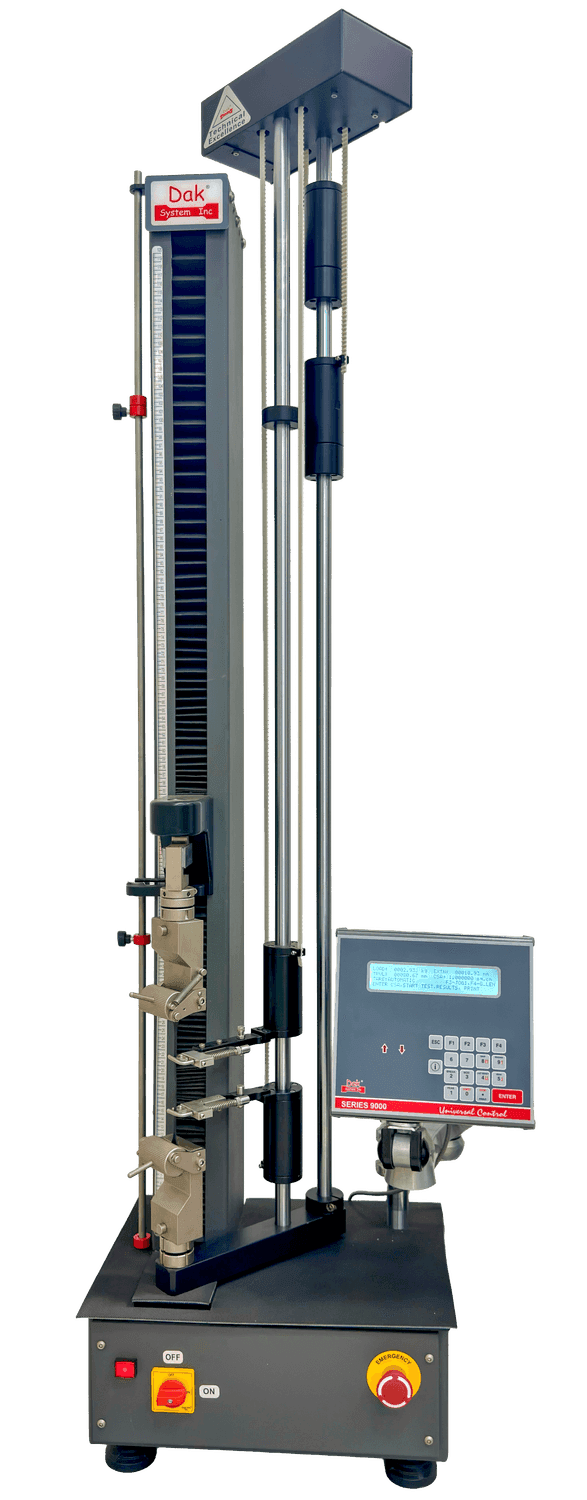
Dak verifies against whichever standard the method names, and where a class applies our frames sit a class tighter than it asks.

The method asks forDak supplies
CapacityLow — commonly a few hundred newtons per specimen, more on heavy multi-ply constructionsLoad cells from 1 kg to 60 ton on the Series 7200, and 0.5 to 100 kN on the Series 9000
Force accuracyISO 7500-1 Class 1ISO 7500-1 Class 0.5 — a class tighter than the method asks
GrippingVice-action grips holding the two separated layers, with a driven grip at controlled speedOur vice-action grips or peel and adhesion fixtures, built to the specimen
EnvironmentStandard atmosphere for conveyor belt testing; conditioned and tested in it3009 series chambers, −150 °C to +400 °C — temperature only

This page describes the method as practised. The governing text is the current edition from the issuing body. Tell us what you are testing and we will answer with the machine, the fixture and a quotation.

Materials tested to it

The test it standardises

Other standards explained