Testing standard

ISO 2411

Rubber- or plastics-coated fabrics — Determination of coating adhesion

Written and technically reviewed by Dak System Inc. engineeringLast reviewed

ISO 2411 determines how well a rubber or plastics coating holds to the fabric beneath it. A strip is prepared with the coating separated at one end, the two layers are pulled apart at a constant rate, and the mean force over the separation is reported per unit width.

At a glance

Test type
Peel & adhesiona bonded joint is pulled apart
Published by
ISO
Edition
ISO 2411:2024

What the test does

Strips are cut in the warp and weft directions and conditioned. The coating is separated from the base fabric at one end to a consistent length, and where it cannot be lifted by hand an intermediate strip is bonded to it so that there is something to grip. The separated coating goes into one jaw and the base fabric into the other, and the two are pulled apart at a constant rate so the delamination advances progressively. The mean force over the steady portion — excluding the higher force needed to start it — is divided by the specimen width to give the coating adhesion.

What it measures, and why it matters

Whether the coating stays on. This is the failure mode a tensile test cannot see, and it is independent of strength: a coated fabric can pass ISO 1421 comfortably and still delaminate in service, because the yarns carrying load and the bond holding the coating to them are separate things. A membrane whose coating lifts has failed as completely as one that tore. That is why coated fabric specifications carry both a tensile requirement and an adhesion requirement, and why neither can be inferred from the other.

Starting the separation

The hardest part is beginning the peel, and how it is begun affects the whole test.

Principle
Coating separated from the base fabric progressively
Result
Mean separation force per unit specimen width
Where the coating cannot be lifted by hand
An intermediate bonded strip is usedA strip is bonded to the coating so that it can be gripped, and the peel is then taken through that bond.
Directions
Warp and weft, tested separatelyCoating adhesion follows the surface the coating met, which differs between the two faces of a weave.
Conditioning
Standard atmosphere
Start the separation cleanly and to the same length every time
DakA ragged or uneven start makes the first part of the trace meaningless and shifts the mean.

This is the failure mode a tensile test cannot see. A coated fabric can be perfectly strong in ISO 1421 and still delaminate in service, because strength and adhesion are independent properties.

Test speed

Rate
A constant rate of separation as specified
Reported
Mean force over the separation, per unit width
Failure mode
Whether the coating separated, tore, or took substrate with itCoating that lifts yarns out of the weave has adhesion higher than the fabric's own cohesion, which is a different finding.
Keep the trace
Adhesion traces are rarely smoothDak

Calculations

Coating adhesion

Mean separation force divided by the specimen width

Force per unit width, commonly N/mm or per 50 mm of width. State which, since both conventions are in circulation.

Start-up

Excluded from the mean

Beginning a separation costs more force than continuing one, and the excess depends on how the start was made.

How the test runs

  1. 01Cut strips in the warp and weft directions to the specified dimensions.
  2. 02Condition them in the standard atmosphere.
  3. 03Separate the coating from the base fabric at one end, to a consistent length.
  4. 04Where the coating cannot be lifted, bond an intermediate strip to it and use that.
  5. 05Grip the separated coating in one jaw and the base fabric in the other.
  6. 06Select a load cell suited to a few tens of newtons.
  7. 07Separate at the specified constant rate.
  8. 08Run far enough past the start to establish a steady trace.
  9. 09Take the mean force over the steady portion and divide by the specimen width.
  10. 10Record whether the coating separated cleanly, tore, or removed substrate.
  11. 11Report warp and weft separately, stating the width convention used.

The fixture this method needs

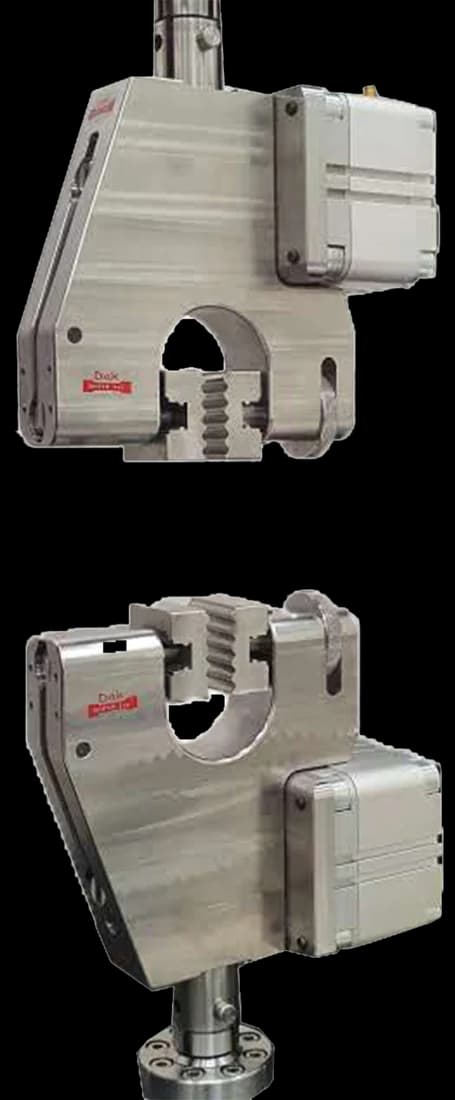
Pneumatic vice action grips with 25 mm square jaw faces
Standard 25 mm

Pneumatic Vice Action Grip

Pneumatic vice action grips hold each arm of the T at a constant pressure through a long peel, which a screw grip does not — a peel test runs for hundreds of millimetres and a slipping grip corrupts the whole trace.

Specifications

What the report has to contain

  • Reference to ISO 2411 and the edition
  • Fabric identification, coating type and mass per unit area
  • Direction tested and specimen dimensions
  • Conditioning applied
  • Whether an intermediate bonded strip was used, and what it was
  • Rate of separation
  • Length over which the force was averaged
  • Mean adhesion per unit width, with the width convention stated
  • Failure mode observed
  • Number of specimens rejected and why

What the machine must be capable of

Very small forces measured well, and long travel. Coating adhesion commonly sits between a few newtons and a few tens of newtons per specimen width, so the load cell is chosen for that range rather than for the frame — an accuracy class applies only down to a stated fraction of capacity. Both the lifted coating and the base fabric are thin and easily damaged, so grip pressure has to hold them without cutting either, and it must hold for the whole length of the separation rather than only at the start.

What goes wrong in practice

Quoting adhesion without the width convention, when both newtons per millimetre and force per 50 mm are in circulation and they differ by a factor of fifty — a mistake that passes unnoticed into specifications. Reporting a substrate failure as an adhesion value, when what was actually overcome was the cohesion of the weave. Inconsistent starts, which move the mean. And losing the intermediate bond before the coating separates, which measures the wrong adhesive entirely.

ISO 2411 or ISO 1421

ISO 2411ISO 1421
QuestionDoes the coating stay on?How strong is the fabric?
Failure modeDelaminationBreak
Predicts the otherNoNo
Run togetherUsuallyUsually

These are the two halves of specifying a coated fabric, and neither implies the other. A strong fabric whose coating peels is a failed product, and a well-bonded coating on a weak base is equally useless.

Questions we are asked about this test

What is ISO 2411?

It is the ISO method for the coating adhesion of rubber- or plastics-coated fabrics — how firmly the coating holds to the textile beneath it. A strip is prepared with the coating separated at one end, the two layers are pulled apart at a constant rate, and the mean separation force over the steady part of the run is reported per unit width. The current edition is ISO 2411:2024, the fifth.

Why test adhesion when the fabric has already been tensile tested?

Because they are independent properties and both can fail a product. ISO 1421 asks how much load the fabric carries before it breaks; this asks whether the coating stays attached to it. A membrane or tarpaulin whose coating delaminates has failed just as completely as one that tore, and nothing in a tensile result gives any warning of it. The two are specified together for that reason.

What happens when the coating cannot be lifted by hand?

The method provides for bonding an intermediate strip to the coating so that there is something to grip, and taking the peel through that bond. It has to be recorded in the report, because the result then depends on the bonded strip holding — if that bond fails first, the measurement is of the intermediate adhesive rather than of the coating, and the specimen is lost.

Why is the start of the separation excluded from the mean?

Because beginning a peel costs more force than continuing one, and the excess depends entirely on how the start was made — how far the coating was lifted, whether the lift was clean or ragged, whether any substrate came away with it. Including that region reports the specimen preparation. Running far enough to establish a steady trace and averaging only that portion removes it.

What does it mean if the coating tears the fabric?

That the adhesion is higher than the cohesion of the base fabric itself — the bond is stronger than the weave. It is a legitimate finding and often a good one, but it is not a measurement of adhesion, because what was overcome was the fabric. It should be recorded as substrate failure rather than reported as an adhesion value, since a stronger coating bond would not change the number.

Why do warp and weft give different adhesion?

Because the coating meets a different surface in each direction. A woven base presents a different pattern of crimp, float length and yarn exposure along the warp than across it, so the mechanical key the coating forms differs, and the peel travels through a different geometry. Testing and reporting the two separately follows the same logic as it does for tensile strength.

What are the units?

Force per unit width — but two conventions are in circulation, newtons per millimetre and force per 50 mm of specimen width, and they differ by a factor of fifty. Stating which was used is not pedantry: an adhesion figure quoted without its width convention is a number that could be either, and the two are far enough apart that the mistake passes unnoticed in a specification.

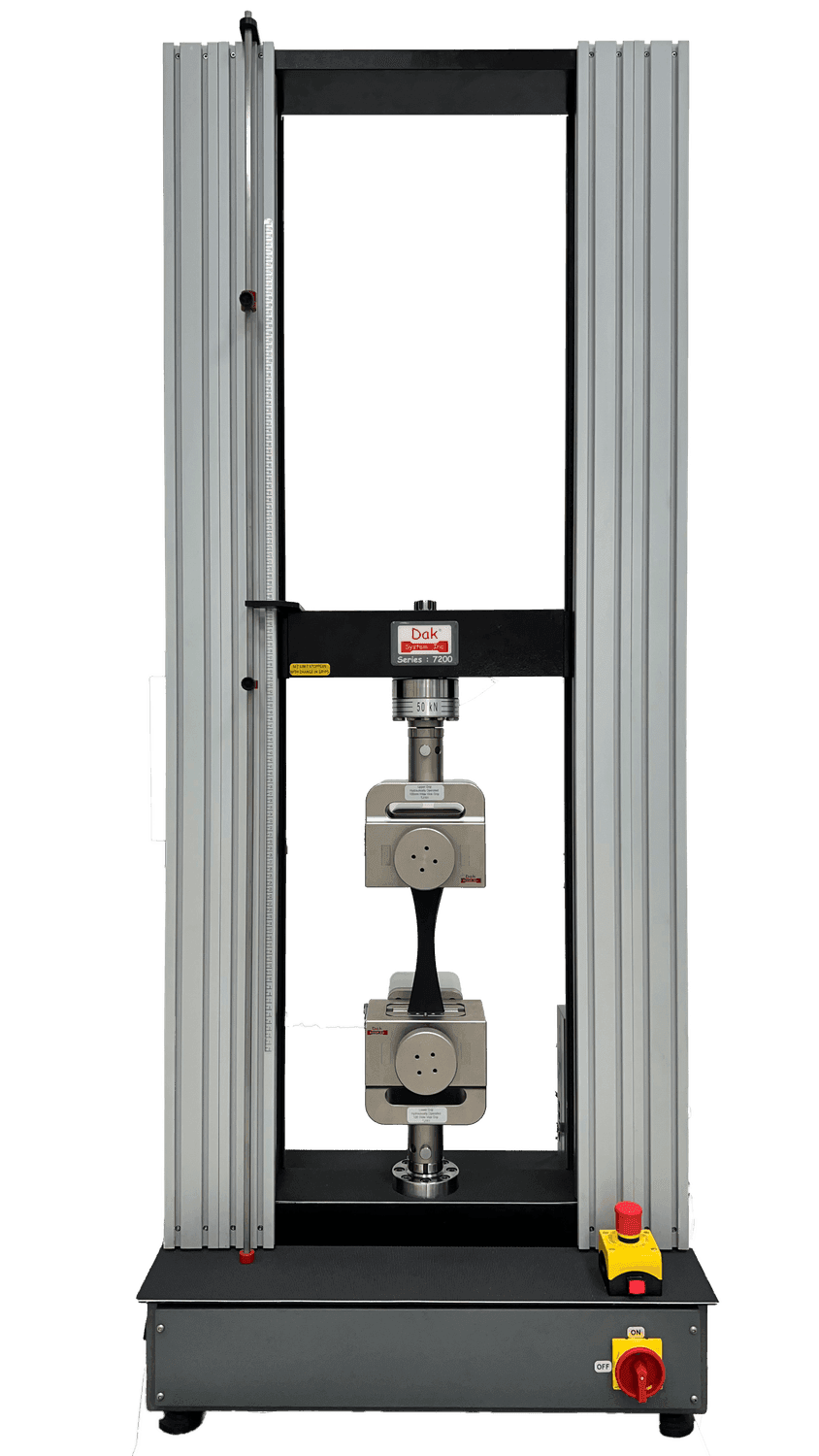
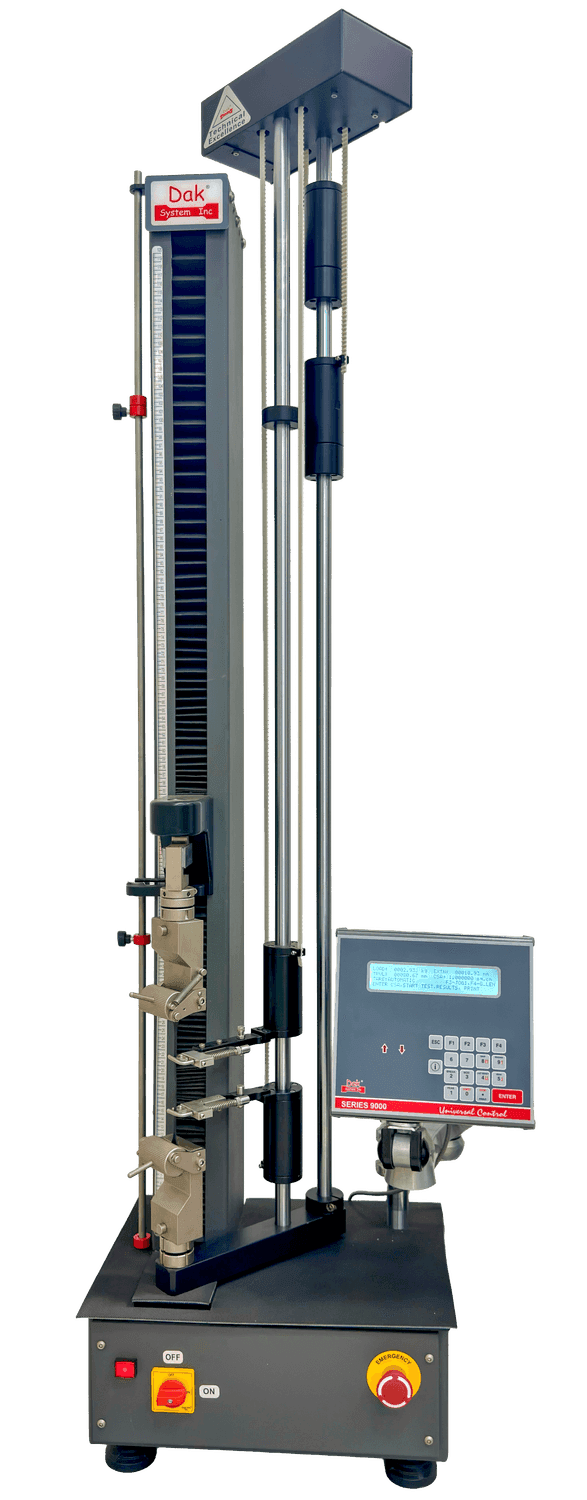
Running ISO 2411 on the Series 7200 and Series 9000

Dak verifies against whichever standard the method names, and where a class applies our frames sit a class tighter than it asks.

The method asks forDak supplies
CapacityVery low — coating adhesion is commonly a few newtons to a few tens of newtons per specimen widthLoad cells from 1 kg to 60 ton on the Series 7200, and 0.5 to 100 kN on the Series 9000
Force accuracyISO 7500-1 Class 1 at the actual separation forceISO 7500-1 Class 0.5 — a class tighter than the method asks
GrippingGrips taking the separated coating in one jaw and the base fabric in the otherWedge, vice-action, pneumatic and hydraulic grips, built to the specimen
Environment23 ± 2 °C standard laboratory atmosphere3009 series chambers, −150 °C to +400 °C — temperature only

This page describes the method as practised. The governing text is the current edition from the issuing body. Tell us what you are testing and we will answer with the machine, the fixture and a quotation.

Materials tested to it

The test it standardises

Other standards explained