Polymeric materials, cellular flexible — Determination of stress-strain characteristics in compression
Written and technically reviewed by Dak System Inc. engineering·Last reviewed
ISO 3386 measures the compression stress-strain behaviour of flexible cellular materials. A foam cube is compressed between parallel platens through four cycles to 70 % strain, and the stress is read on the fourth cycle — most often at 40 % strain, the value quoted as CV40. Part 1 covers low-density materials and Part 2 high-density ones.
A cube of flexible foam — 50 mm on a side under Part 1 — is stood between two plane parallel platens, the lower of which is vented so displaced air can escape. The platens close at the rate the standard specifies — a figure worth reading from the edition in force, since secondary sources disagree on it — and compress the specimen to 70 % of its original height before returning fully to the contact datum. This is repeated for four cycles without pause. Force is recorded against platen separation throughout, and the reported values are taken from the fourth cycle only. The first three exist to remove the extra stiffness that a flexible foam shows on its first compressions and never shows again.
What it measures, and why it matters
The result is a compression stress-strain curve, from which the value at 40 % strain — universally known as CV40 — is read. This is the number most cushioning and technical foams are bought and sold on, and it is the property that governs load-bearing behaviour in seating, packaging, gaskets and vibration pads. Unlike an indentation hardness figure, which describes how a whole article responds to something pressing into it, CV40 describes the material itself under uniform compression. That makes it the right input for engineering calculation and the right control for a foam producer, where indentation hardness is the right acceptance test for a finished cushion.
Specimen and platens
Unlike the indentation test, this one uses a small specimen and measures the material rather than the article. That makes specimen geometry and platen overhang the things that decide the answer.
Part 1 specimen
50 × 50 × 50 mm, for densities up to 250 kg/m³
Part 2 specimen
Smaller section, for densities above 250 kg/m³Higher-density material needs less area to reach a measurable stress, and a full 50 mm cube would need more force than the test intends.
Cut from block interior
Skin removedSkin is denser than the core and stiffens the early part of the curve disproportionately.
Platen overhang
Larger than the specimen at full bulge
Lower platen
Perforated or otherwise ventedPracticeTrapped air under an open-cell specimen adds a rate-dependent stiffness that belongs to the apparatus.
Conditioning
At least 16 h at 23 ± 2 °C, 50 ± 5 % RH
Check the cube is square
Before loadingDakAn out-of-square cube seats progressively and puts a false toe on the curve, which then depresses everything read from the low-strain region.
The reported figure comes from the fourth cycle, not the first. A first-cycle curve on a filled or freshly made foam is higher than anything the material will produce again, and quoting it as CV40 overstates the foam.
Speed and cycling
Platen speed
Set by the part in force — verify against the current editionSecondary sources disagree on this figure: some quote a slow uniform rate of the order of 5 mm/min, others 100 mm/min, and ISO 3386-2 uses a lower rate than Part 1. We have not been able to confirm it against the standard itself, so it is deliberately not stated here rather than stated wrongly. Read the rate from the edition you are working to.
Cycles
Four, each to 70 % strain
Reading cycle
The fourthThe first three are conditioning. This is the whole reason the method is cyclic rather than a single compression.
Return fully between cycles
To the contact datum, not part-wayDakA cycle that does not fully unload leaves residual strain and the next cycle starts from a compressed state.
Calculations
Compression stressσ
σ = F / A₀
F
force, N
A₀
original cross-sectional area, mm²
Original area. The cube bulges considerably at high strain and none of that increase enters the figure.
Compression strainε
ε = Δh / h₀ × 100
Δh
reduction in height, mm
h₀
original height, mm
Compression stress value at 40 %CV40
CV40 = σ at 40 % strain on the fourth cycle
The figure foams are commonly specified on. It is meaningless without the cycle number, because the first cycle reads materially higher.
How the test runs
01Cut a cube from the block interior, avoiding skin, to the size for the relevant part.
02Measure the section and height, and check the faces are square.
03Condition at least 16 h at 23 ± 2 °C and 50 ± 5 % RH.
04Check platen parallelism and that the lower platen is vented.
05Stand the cube centrally and close to the contact datum.
06Compress to 70 % strain at the rate the current edition specifies, and return fully.
07Repeat for a total of four cycles without pause.
08Record force against platen separation throughout the fourth cycle.
09Read the stress at 40 % strain, and at any other strains the specification names.
10Report the cycle number alongside every value.
The fixture this method needs
5 to 400 kNTJ-125
Direct Compression Fixture
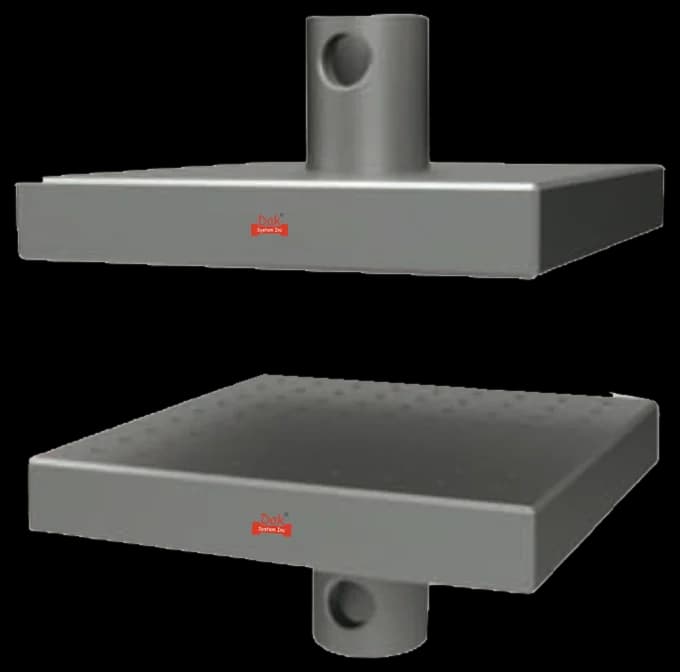
Direct compression platens. What the method needs from them is parallelism and overhang at full bulge, plus a vented lower face so an open-cell specimen can expel air rather than sitting on a trapped cushion.
Compression stress at 40 % strain, and at any other specified strains
Number of specimens, mean and standard deviation
What the machine must be capable of
Modest force and careful control. A 50 mm cube of low-density foam commonly reaches 70 % strain under a few hundred newtons, so the load cell must be small enough to resolve that accurately rather than merely large enough to survive it; accuracy to ISO 7500-1 Class 1 is needed over the working range, not at full scale. The crosshead must hold the specified rate steadily in both directions and return cleanly to the contact datum between cycles. Platens must be parallel and must overhang the specimen at full bulge, and the lower one should be vented. Strain is derived from platen separation, so the contact datum has to be established under a defined light load rather than by eye.
What goes wrong in practice
The most common reporting error is quoting a first-cycle stress as CV40. It is higher than the fourth-cycle value on any filled or freshly made foam, and it overstates the material by a margin that can comfortably exceed a specification tolerance. The most common measurement error is a false toe from an out-of-square specimen or a contact datum set with a gap, which shifts the strain axis and depresses the value read at a fixed strain. Testing on a solid lower platen inflates results for open-cell grades, particularly at high strain. And cutting specimens too near the block surface leaves skin on a face, which stiffens the early curve.
ISO 3386 or ISO 2439
ISO 3386
ISO 2439
What is loaded
A small cube, whole face
A 200 mm foot into a large slab
Specimen
50 mm cube (Part 1)
380 × 380 mm minimum
Result
Stress-strain curve, CV40
Force at 25 %, 40 %, 65 % indentation
Describes
The material
The article as it is used
These are not alternatives to one another. ISO 3386 characterises the foam as a material under uniform compression; ISO 2439 characterises how a cushion responds to something pressing into it. A specification asking for hardness means the indentation test, and substituting a CV40 figure does not answer it.
Questions we are asked about this test
What is ISO 3386?+
It is the ISO method for compression stress-strain characteristics of flexible cellular materials. A foam cube is compressed between parallel platens through four cycles to 70 % strain, and stress is read from the fourth cycle. Part 1 covers materials up to 250 kg/m³ and Part 2 those above it.
What is CV40?+
The compression stress value at 40 % strain, taken on the fourth cycle. It is the figure most flexible foams are specified and traded on. Because it comes from the fourth cycle rather than the first, quoting a CV40 without the cycle number is ambiguous — the first-cycle stress on a filled foam is noticeably higher.
Why four cycles?+
Because flexible foam softens over its first compressions and then stabilises. The first three cycles are conditioning; they remove the first-compression stiffness that the material will never show again. Reading on the fourth gives the behaviour the foam will actually have in service, and — just as importantly — a value another laboratory can reproduce.
What is the difference between ISO 3386 and ISO 2439?+
They measure different things and are not substitutes. ISO 3386 compresses a small cube over its whole face and characterises the foam as a material, giving a stress-strain curve. ISO 2439 presses a 200 mm foot into a large slab and characterises how the article responds to something pressing into it. A specification calling for hardness means the indentation test; a CV40 figure does not answer it.
Which part applies to my foam?+
Part 1 for densities up to 250 kg/m³, which covers most cushioning and upholstery grades, and Part 2 above that, which covers high-density and integral-skin materials. The split exists because a 50 mm cube of high-density foam would need considerably more force than the test is designed around, so the specimen section is reduced.
Why does the lower platen need to be vented?+
An open-cell foam expels air as it is compressed. If the lower face sits on a solid plate, that air has nowhere to go and contributes a stiffness that depends on how fast you compress rather than on the polymer. The effect is largest at high strain and high speed — exactly where the fourth-cycle reading is taken.
Why does my curve start soft?+
Usually a specimen that is not square, or a contact datum set with a gap. Either way the cube seats progressively rather than all at once, and that early softness is a toe on the curve. Since CV40 is read at a fixed strain measured from the datum, a false toe shifts the whole strain axis and depresses the reported stress.
This page describes the method as practised. The governing text is the current edition from the issuing body. Tell us what you are testing and we will answer with the machine, the fixture and a quotation.