ASTM D1414 — read the full explanation
TensileTesting of rubber O-rings (tensile strength, elongation using spool fixtures).

Evaluate rubber compounds and finished-product specimens with equipment selected for the property you need to measure. DAK universal testing machines cover mechanical tests such as tensile, tear, compression and adhesion. The MDR and RPA address cure behaviour and rubber compound characterisation.
Mechanical testing, cure testing and processing studies answer different questions about rubber. Start with your test objective, then select the machine and configuration.
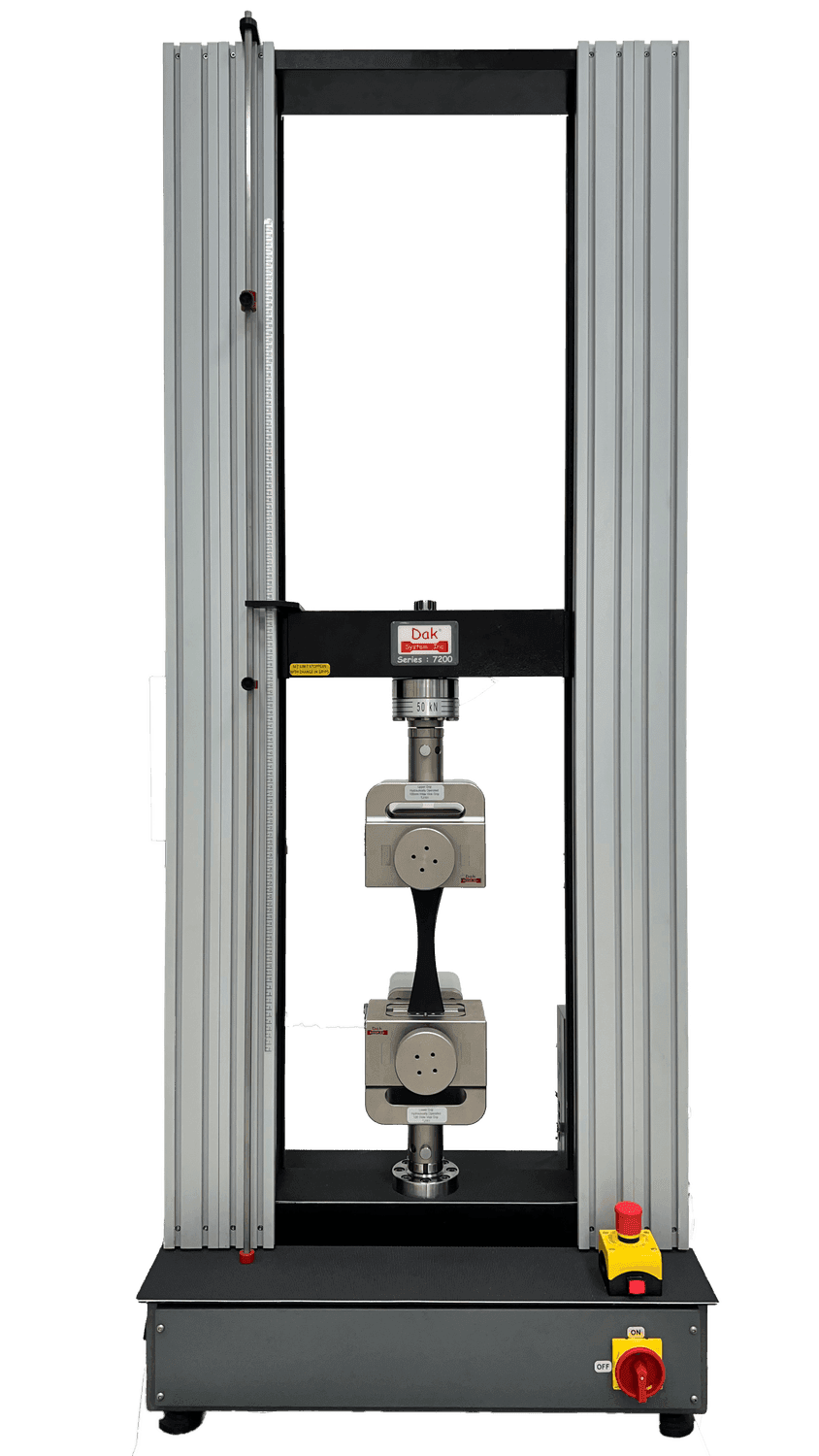
Measure how a rubber specimen stretches, tears, compresses or separates at a bonded interface. A UTM records force and deformation through the test, with grips, fixtures and elongation measurement selected for the specimen. Explore the flagship Series 7200 and the Series 9000 for your mechanical testing workflow.
Listed first: universal testing machines.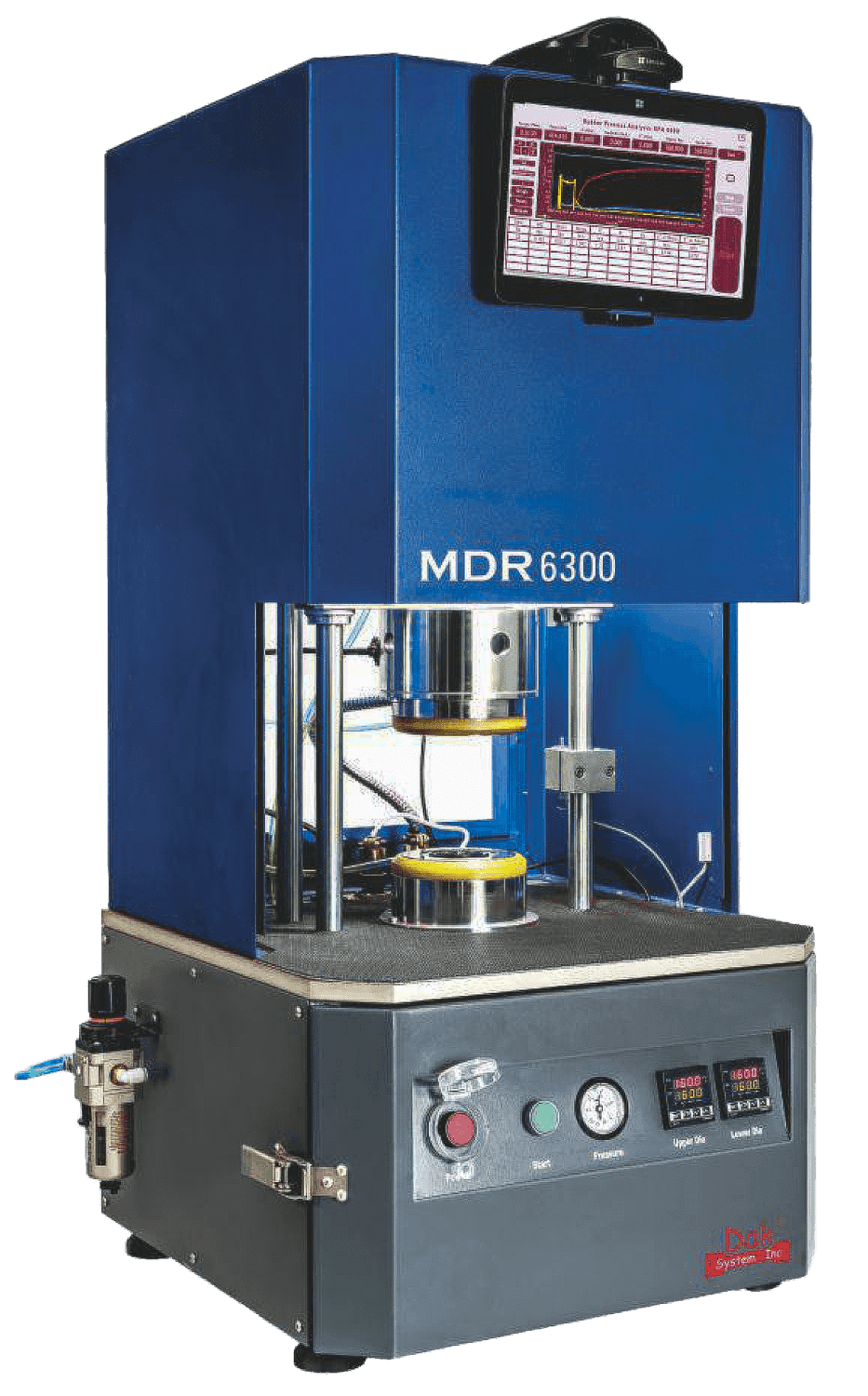
Characterise the cure behaviour of rubber compounds, including scorch, cure rate and state of cure. The Moving Die Rheometer supports compound development and batch quality control by following the cure response under defined test conditions.
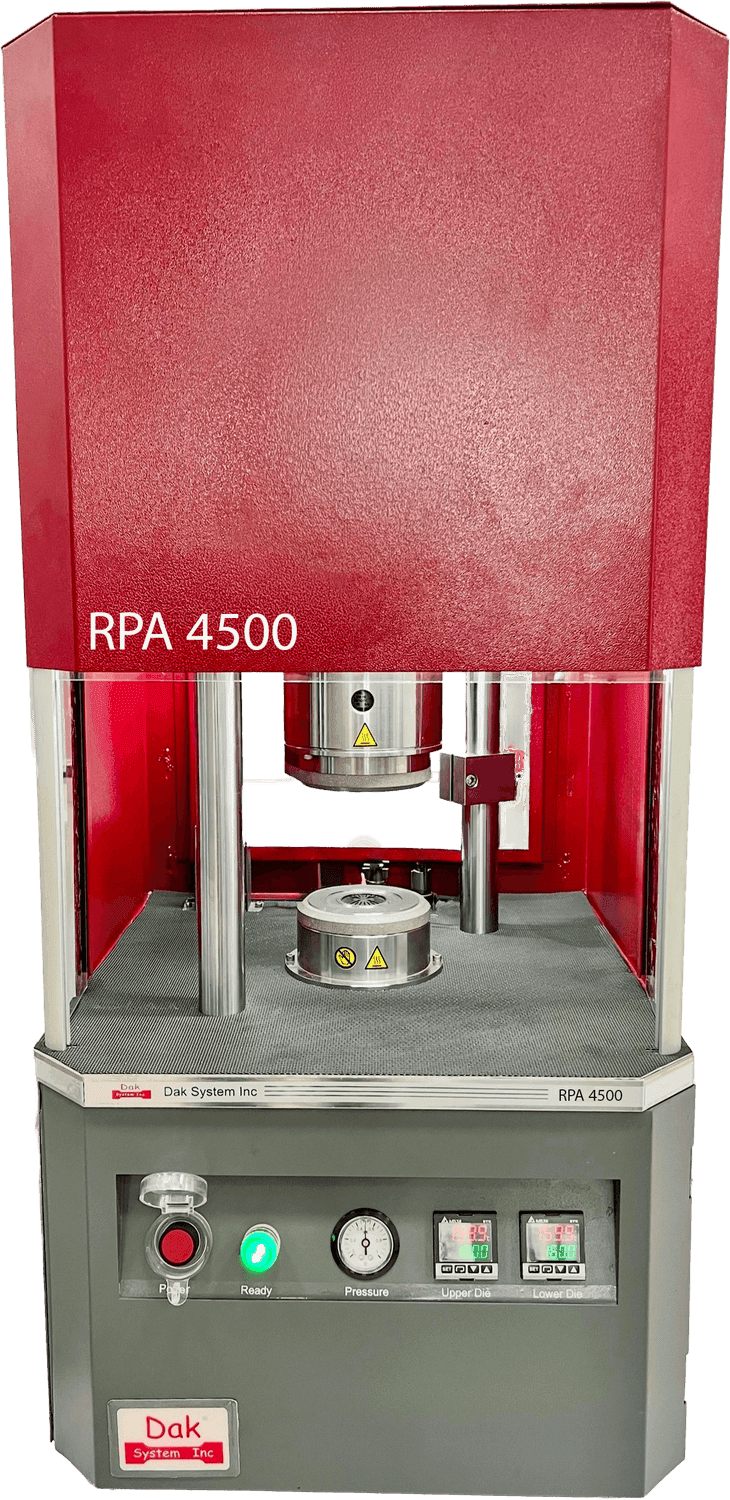
Study rubber before, during and after cure using variable strain, frequency and temperature. The Rubber Process Analyser supports investigation of processability, cure behaviour and the properties of the cured compound within one testing platform.
Use the specimen and required result to identify the test. A material cut from a tyre, a hose construction and a moulded rubber component can require different fixtures and measurements.
For rubber specimens stretched in tension, evaluate tensile strength, elongation at break and stress at specified elongations. Specimen geometry and gauge-length measurement are central to interpreting the result.
Assess resistance to tearing using the specimen geometry defined by the test method. Tear results answer a different question from tensile strength; select the method around the tear behaviour you need to compare.
Examine the force required to compress a rubber specimen and its resulting deflection. This helps characterise compressive behaviour relevant to rubber components such as seals, pads and cushioning elements.
Evaluate the bond between rubber and a rigid substrate. Select the fixture and loading arrangement around the bonded specimen and the required method, rather than treating every adhesion test as the same pull test.
Measure separation between rubber and a flexible substrate in layered constructions. The specimen preparation and separation geometry determine the test arrangement and how the adhesion result is reported.
A compound can meet a mechanical specification yet behave differently during processing or cure. Match the investigation to the result you need, then connect it with tensile, tear, compression or adhesion testing of the finished material.
Use the MDR Elite-6300 to compare scorch, cure development and torque response under the same test conditions. Its elastic torque, viscous torque and tan δ curves add information beyond a single cure-time result. For routine quality control, assess repeated tests alongside the complete cure curve.
Use the RPA 4500 when incoming polymers or mixed batches behave differently despite similar routine results. Strain and frequency sweeps help compare filler-network behaviour, stiffness and energy loss. Evaluate the findings alongside the formulation, mixing history and production conditions.
Use an RPA programme to study the cured compound at selected strain, frequency and temperature conditions. Compare elastic stiffness and energy loss for your application, then use mechanical tests on suitable specimens to evaluate strength, elongation and other required properties.
As rubber stretches, its thickness changes. Grip selection therefore considers specimen shape, surface, thickness and the way clamping force is maintained. DAK offers pneumatic grips for rubber and self-tightening roller grips for suitable specimens, alongside fixtures for other mechanical tests.
Specimen elongation and crosshead movement are different measurements. For high-extension rubber tests, consider the gauge length, expected extension and whether contact or non-contact measurement suits the specimen. Explore DAK high-elongation and advanced video extensometers for the available measurement options.
Specify the expected test forces as well as the largest load you need to apply. Pair the frame and load cell with the working force range, then allow for the specimen, grips and extension within the available test space. Highly extensible rubber makes travel an important selection consideration.
Define the specimen dimensions, test sequence, speed, conditioning and results your laboratory needs to report. Bring these requirements into the system discussion so that the machine, measurement accessories and software are specified together.
DAK’s flagship universal testing machine combines flexible test programming with intuitive specimen setup. Follow Me mode, Safe Jog and sample protection support setup, while live displays, analysis and synchronised video bring the test and its results together. Explore it for laboratories with varied testing and analysis requirements.
For routine quality-control testing, the Series 9000 offers standalone console operation or PC-based testing, analysis and reporting. Explore the available frames, grips and extensometry to configure the system around your rubber specimens and test methods.
Search the methods already listed for this industry, or filter by material, test type and standards body. Open a method guide for specimen, procedure and equipment information.
Testing of rubber O-rings (tensile strength, elongation using spool fixtures).
Bead wire and tyre cord adhesion/tensile for tyre plants.
Compression set under constant force — fixture loading via UTM.
Tension testing of vulcanized rubber and thermoplastic elastomers (dumbbell and ring specimens).
Adhesion of rubber to fabric or flexible substrate (ply separation).
Adhesion of rubber to rigid substrates (Methods A, B, C — tension and 90° peel).
Rubber properties in compression (deflection at load / load at deflection).
Tear strength of conventional vulcanized rubber and thermoplastic elastomers (Die A, B, C and trouser).
Rubber hose — tensile of tube/cover, adhesion between layers (burst tests via hydraulic rigs).
Compound QC — tensile stress-strain of every production batch. Equivalent to: ISO 37
Rubber hose — tensile of tube/cover, adhesion between layers (burst tests via hydraulic rigs).
BIS tensile stress-strain method for vulcanized rubber, aligned with ISO 37.
Rubber- or plastics-coated fabrics (belt carcass materials) — tensile strength and elongation.
Tensile strength and elongation at break of flexible cellular polymers.
Shear modulus and adhesion of rubber to rigid plates — quadruple-shear method (anti-vibration mounts).
Adhesion of bead wire to rubber; tensile of tyre cords and dipped fabrics.
Coated fabrics — coating adhesion (peel of coating from substrate).
Stress-strain characteristics in compression of flexible cellular polymers (low- and high-density).
Tear resistance of compounds for tyres, belts and moulded goods.
Adhesion of rubber to textile fabrics.
Determination of tensile stress-strain properties of vulcanized and thermoplastic rubber. Equivalent to: IS 3400-1
Determination of compression stress-strain properties of rubber.
Adhesion of rubber to rigid substrate — 90° peel and tension methods.
Rubber-to-metal bond strength — mounts, bushings, rollers, linings.
Vulcanization characteristics with a rotorless cure meter — ML, MH, ts2 and t90 read from the cure curve. Equivalent to: ISO 6502-3, DIN 53529
Measurement of vulcanization characteristics with rotorless curemeters. Equivalent to: ASTM D5289, DIN 53529
Vulcanization characteristics and cure behaviour of rubber compounds. Equivalent to: ASTM D5289, ISO 6502-3
Viscosity and stress relaxation of unvulcanized rubber using a rotorless sealed shear rheometer.
Processability of unvulcanized rubber with a rotorless shear rheometer — strain and frequency sweeps.
Cure and after-cure dynamic properties with a rotorless shear rheometer.
Showing 1–8 of 30 standards
Tell us whether you need to assess a rubber compound, a finished product or both. Share your test objective, required methods, daily workload and installation country so DAK Engineering can recommend the appropriate equipment and configuration.
Include the material or product, specimen dimensions or drawing, expected force and extension, and any environmental requirements. These details guide selection of the UTM, grips or fixtures, extensometry and software.
Include the polymer or compound family, the batch or processing question, and the test conditions and results you need. For an RPA programme, also describe the required strain, frequency, temperature and cooling needs.
Define the complete testing scope before comparing quotations, including the instrument, relevant options, reporting, installation and support.
DAK System has manufactured material testing equipment since 1982. Based in Mumbai, India, we serve customers in India and international markets, with installation, calibration, maintenance and software support.