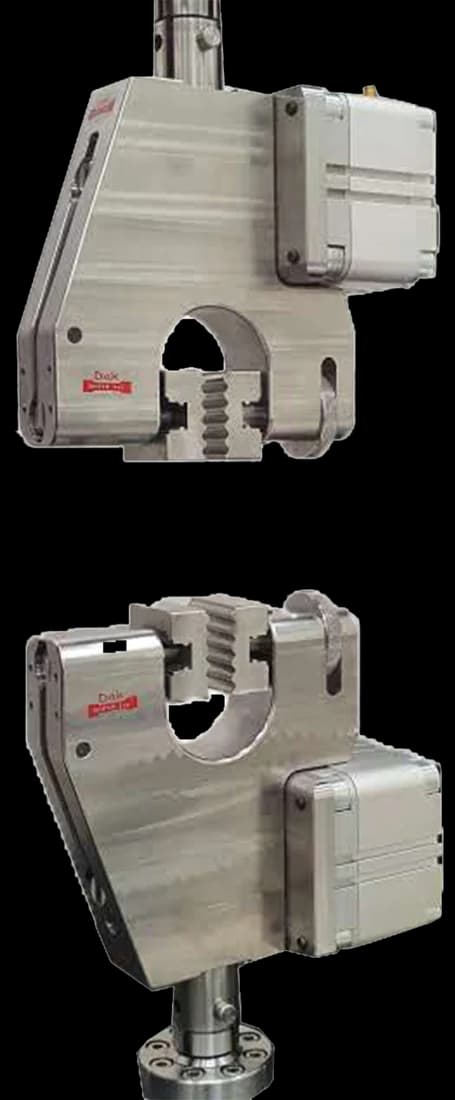
Standard 25 mm
Pneumatic Vice Action Grip
Light grips holding a soft, wet substrate. Whatever holds the substrate must not crush it, and on tissue or a tissue analogue that window is narrow.
Specifications
Testing standard
Standard Test Method for Wound Closure Strength of Tissue Adhesives and Sealants
Written and technically reviewed by Dak System Inc. engineeringLast reviewed
ASTM F2458 provides a means of comparing the wound closure strength of tissue adhesives used to hold soft tissue in apposition. With an appropriate substrate it can also serve as a quality-control test in the manufacture of medical devices used as tissue adhesives.
From the test method to your testing system
Explore the DAK machines already listed for ASTM F2458, then review the grips, measurement and setup requirements below.
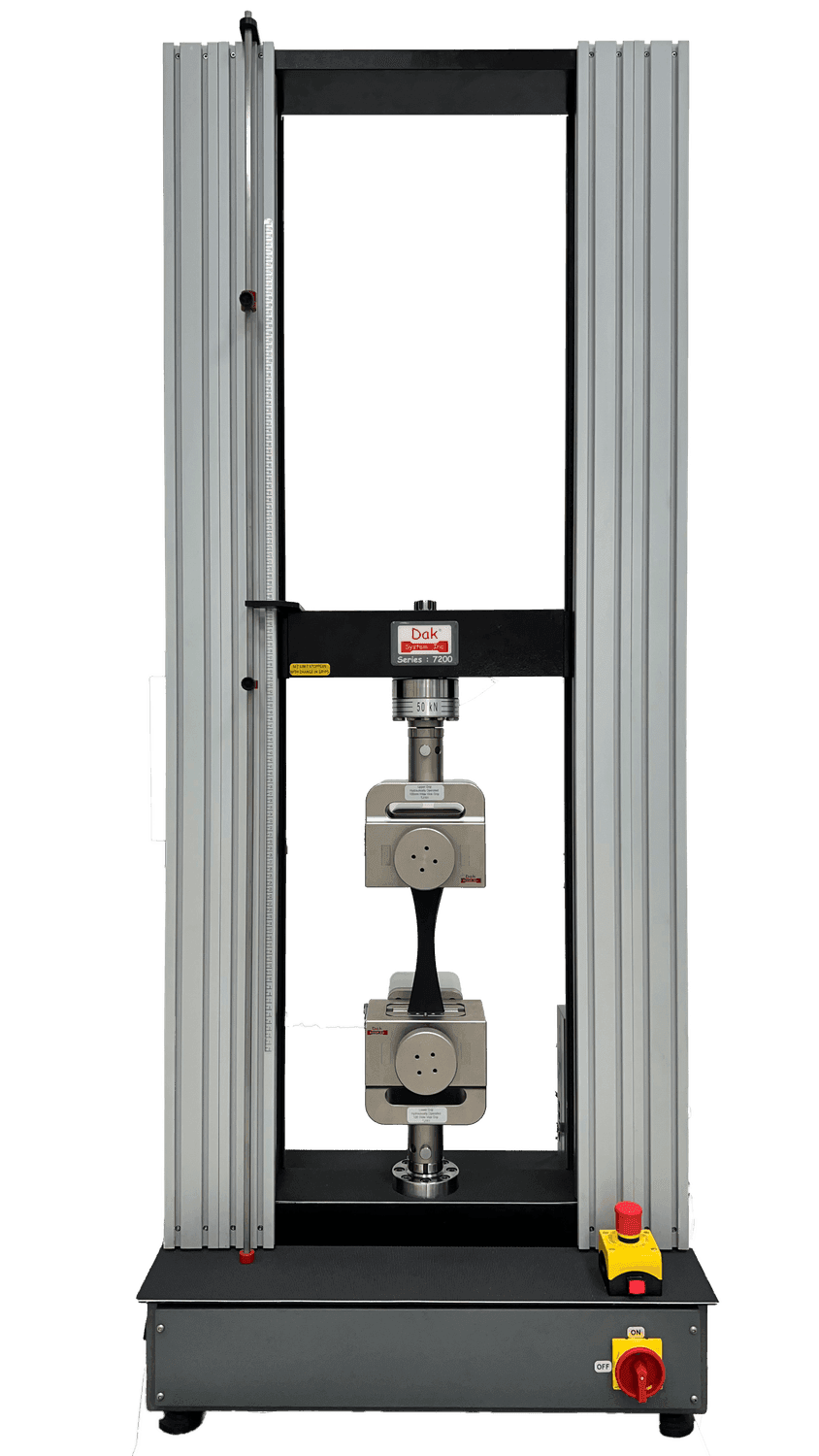 Universal Testing MachineSeries 7200Explore the machine →
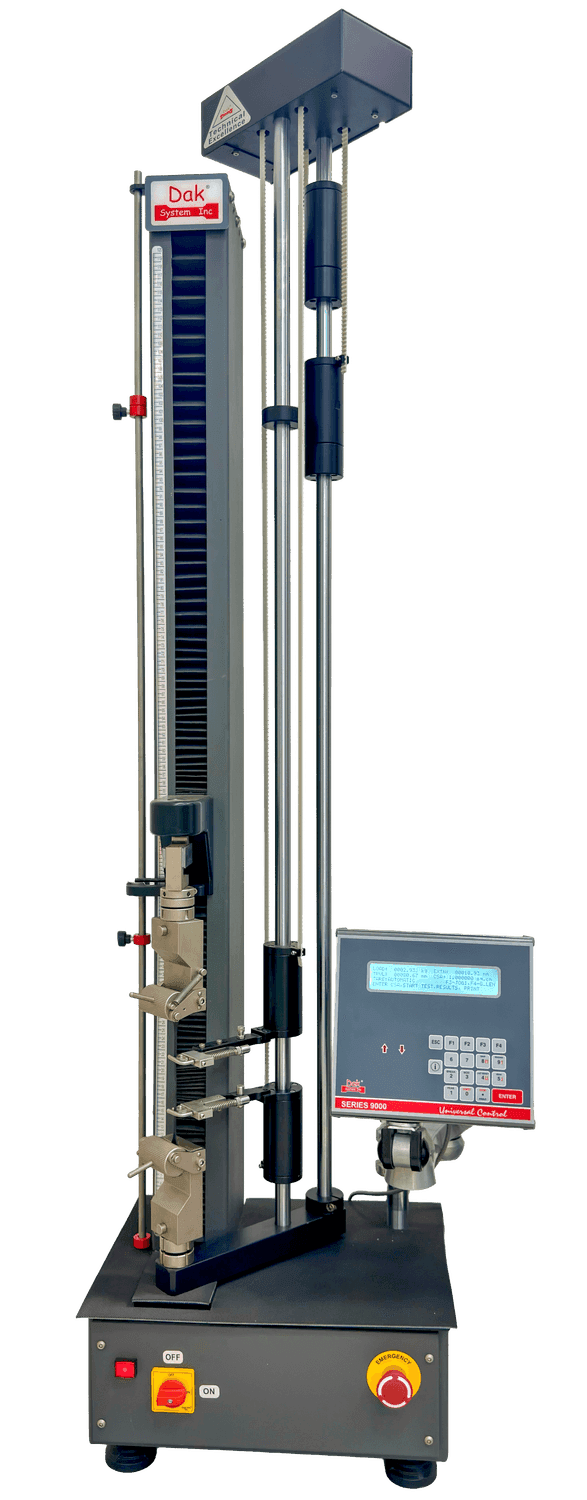 Universal Testing MachineSeries 9000Explore the machine →
01Understand the method
A substrate is selected and kept in the moisture condition that represents its use, then cut to create the wound to be closed. The adhesive or sealant is applied exactly as the product's instructions direct and allowed its specified cure time. The two halves are gripped without crushing the substrate and separated at a constant rate until the closure fails. The failure force is recorded along with the failure mode — adhesive, cohesive or substrate — and the substrate and its condition are reported alongside every value.
How much force it takes to pull a glued wound open, as a comparison between products. Tissue adhesives are increasingly used as adjuncts to sutures and staples or as replacements for them, and while the forces a real wound sees vary enormously with the indication and with the patient, all such uses depend on the material resisting mechanical force — so the adhesive properties are central to judging fitness for use. The standard is explicit that it provides a means of comparison, and with an appropriate substrate a quality-control tool, rather than a clinical prediction.
02Prepare the specimen and test settings
The method is written for comparing products. What it is compared on is chosen, and that choice governs the number.
The standard notes that the forces involved vary greatly with the indication and with patient-specific circumstances. It compares products under one defined condition; it does not predict clinical holding strength.
03Build the test setup on a DAK machine
Very small forces, measured traceably. Wound closure strengths are commonly a few newtons, and an accuracy class applies only down to a stated fraction of a load cell's capacity, so a frame's own cell is almost certainly working outside the range its certificate covers — the same constraint that governs catheter, closure and label testing. Grips must hold a soft and often wet substrate without crushing it, which is a narrow window, and a substrate that slips makes the bond look weaker than it is.
The rate of grip separation is part of the method rather than a free choice, but it is one of the figures held in the purchased text: it appears on none of the catalogue records for the -05(2024), -05(2015) or -05(2010) editions, and no independent source reproducing it was found. That gap shows in the literature. Published work run in analogy to this family of tissue-adhesive methods reports crosshead speeds ranging from 20 mm/min to 50 mm/min — a factor of more than two on a substrate whose response is rate-dependent, and enough on its own to explain a disagreement between two laboratories. Read the figure from the standard, set it, hold it across every specimen in a comparison, and report it beside the failure force. A wound closure strength quoted without the rate that produced it is not comparable with anyone else's.
Light grips holding a soft, wet substrate. Whatever holds the substrate must not crush it, and on tissue or a tissue analogue that window is narrow.
SpecificationsA cell matched to a bond that fails at a few newtons, verified at that load rather than at frame capacity.
SpecificationsDak verifies against whichever standard the method names, and where a class applies our frames sit a class tighter than it asks.
| The method asks for | Dak supplies | |
|---|---|---|
| Capacity | Very low — wound closure strengths are commonly a few newtons | Load cells from 1 kg to 60 ton on the Series 7200, and 0.5 to 100 kN on the Series 9000 |
| Force accuracy | Verified at the actual working load, which is very small | ISO 7500-1 Class 0.5, verified to ASTM E4, DIN 51221 and BS 1610 |
| Gripping | Grips holding two substrate halves that the adhesive has joined across a cut | Wedge, vice-action, pneumatic and hydraulic grips, built to the specimen |
| Environment | 23 ± 2 °C standard laboratory atmosphere | 3009 series chambers, −150 °C to +400 °C — temperature only |
04Run the test
05Calculate, report and interpret
The force at which the joined substrate separates
Reported as a force, normalised by the bonded dimension where the specification requires it.
Adhesion depends on the surface it is made to
A tissue adhesive bonds by wetting and interacting with a specific surface chemistry. Change the substrate and you change the mechanism, not just the magnitude.
Reporting a value without the substrate, its source and its condition, which makes it incomparable with anyone else's result and with your own previous batch. Drying a substrate that is used wet. Averaging in substrate tears, which describe the tissue's tear resistance rather than the bond. Oversized load cells. And presenting a comparative figure as a clinical holding strength, which is exactly the reading the standard's own framing is written to prevent, since the forces a real wound sees vary enormously with the indication, the site and the patient.
06Compare methods and find answers
| F2458 — wound closure | F2255 / F2256 | |
|---|---|---|
| Geometry | Tension across a closed cut | Lap shear and T-peel |
| Question | Does the wound stay shut? | How strong is the bond in shear or peel? |
| Substrate dependence | High | High |
| Together | Describe the adhesive's behaviour | Describe the adhesive's behaviour |
Three geometries for the same family of products, because a tissue adhesive is loaded in all of them. A wound gapes, slides and peels, and no single test covers the three.
It is the ASTM method for comparing the wound closure strength of tissue adhesives and sealants — the materials used to hold soft tissue in apposition, either alongside sutures and staples or in place of them. Two substrate halves are joined across a cut by the adhesive and then pulled apart. The current designation is ASTM F2458-05(2024).
Because a tissue adhesive bonds by wetting and interacting with a particular surface, so changing the substrate changes the bonding mechanism rather than just the magnitude. A tissue analogue and real tissue give different answers, and one tissue gives a different answer from another. The substrate, its source, its preparation and its moisture condition therefore belong in the report — without them a result cannot be compared even with your own previous batch.
No, and the standard is careful about it. It notes that the nature and magnitude of the forces involved vary greatly with the indication and with patient-specific circumstances. What the method provides is a comparison between products under one defined condition, and with an appropriate substrate a quality-control tool for manufacture. Presenting it as a clinical holding strength claims more than it supports.
That the adhesive was stronger than the tissue or analogue it was applied to. Commercially that is a good outcome, but it is not a wound closure strength — the number obtained describes the substrate's tear resistance. It should be recorded as a substrate failure rather than averaged in, and if the intention was to characterise the adhesive, a stronger substrate is needed.
Because most tissue adhesives are applied to moist tissue, and moisture is not incidental to how they work — several cure in response to it, and all of them have to displace or tolerate it to reach the surface. A dried substrate presents a different surface chemistry and a different wetting problem, so the bond formed on it is not the bond formed in use.
A small one, verified at the working load. Wound closure strengths are commonly a few newtons, and an accuracy class applies only down to a stated fraction of capacity, so a frame's own cell is almost certainly outside the range its certificate describes. This is the same constraint that governs catheter, closure and label testing, and it is the commonest measurement error in low-force medical work.
They cover the three ways a wound loads an adhesive. F2458 pulls the closure apart in tension, which is a wound gaping. ASTM F2255 measures lap shear, which is tissue sliding. ASTM F2256 measures T-peel, which is an edge lifting. A real wound does all three, so a product is characterised across the set rather than by any one of them.
Discuss your specimen, test requirements and reporting needs with DAK engineering.
This page describes the method as practised. The governing text is the current edition from the issuing body. Tell us what you are testing and we will answer with the machine, the fixture and a quotation.