ISO 7864 — read the full explanation
TensileRequirements and test methods for sterile single-use hypodermic needles, including cannula-to-hub bond strength.

Connect the behaviour of a restorative material, bonded interface or pharmaceutical component to a clear mechanical measurement. DAK testing systems support tensile, compression, flexural and bond-testing programmes with the loading arrangement selected around the specimen and the result.
Examine flexural behaviour using the specimen preparation, support geometry and loading arrangement required by the material’s test method. Plan specimen dimensions and the required strength or stiffness result together.
A bar specimen and a disc require different support and loading geometries. Define the material and flexural method first, then select the fixture dimensions and force measurement for that specimen.
Shear and tensile bond tests load the interface differently. Specify the bonded materials, area, specimen geometry and loading direction so the fixture examines the connection you want to compare.
Wire tension or bending and implant repeated-loading tests address different mechanical behaviours. Include the wire or assembled component geometry, the loading mode and the method in the testing brief.
Examine plunger movement, pull-out or penetration forces using the arrangement appropriate to the component. Our biomedical guide explains these test distinctions and links to DAK’s syringe and needle fixtures.
For a needle penetrating a closure or a bonded specimen being separated, define the contact geometry, loading direction and required force result. Keep the mechanical question explicit when planning the fixture.
A tablet breaking-force measurement, a blister push-through test and a package-seal peel test need different specimen supports and loading tools. Share the product form, expected load and required method to define the configuration.
Small bars, discs, wires and bonded assemblies need loading contacts suited to their dimensions. Specify support spans, contact geometry and the position of the interface or region under test.
Match force measurement to the loads of interest. State whether you need breaking force, a load–deflection curve, flexural behaviour or bond strength; specimen dimensions and bonded area matter when reporting stress.
Include specimen preparation, storage or conditioning, test speed and loading direction in the brief. For cyclic work, include the required loading programme and environment so the complete setup can be discussed.
Select the machine and specimen tooling together, taking account of both current tests and the materials you plan to investigate.
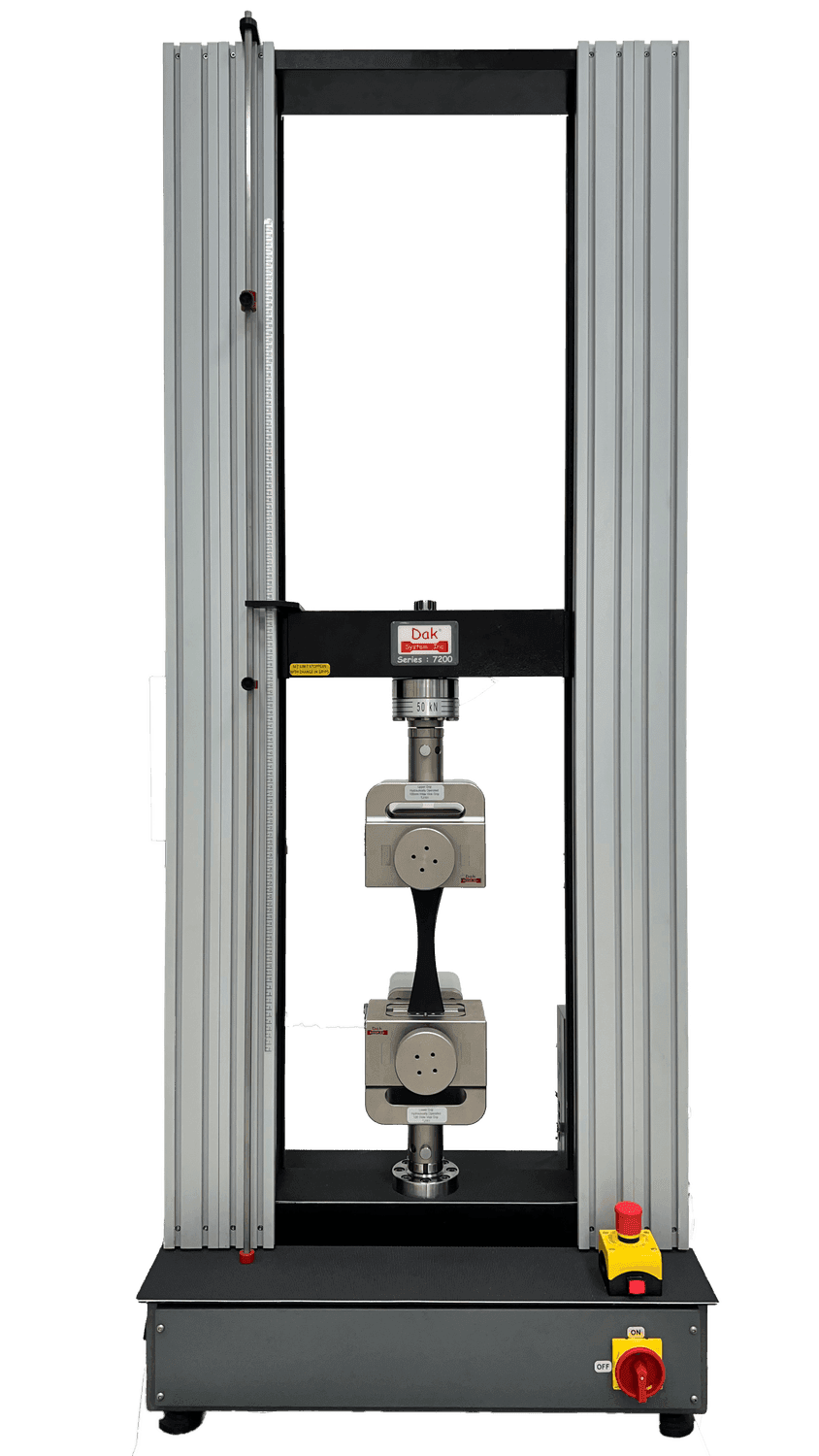
DAK’s flagship UTM
DAK’s flagship platform for laboratories combining routine measurements with research and development. Bring the specimen, fixture, force measurement and test programme together around your application.
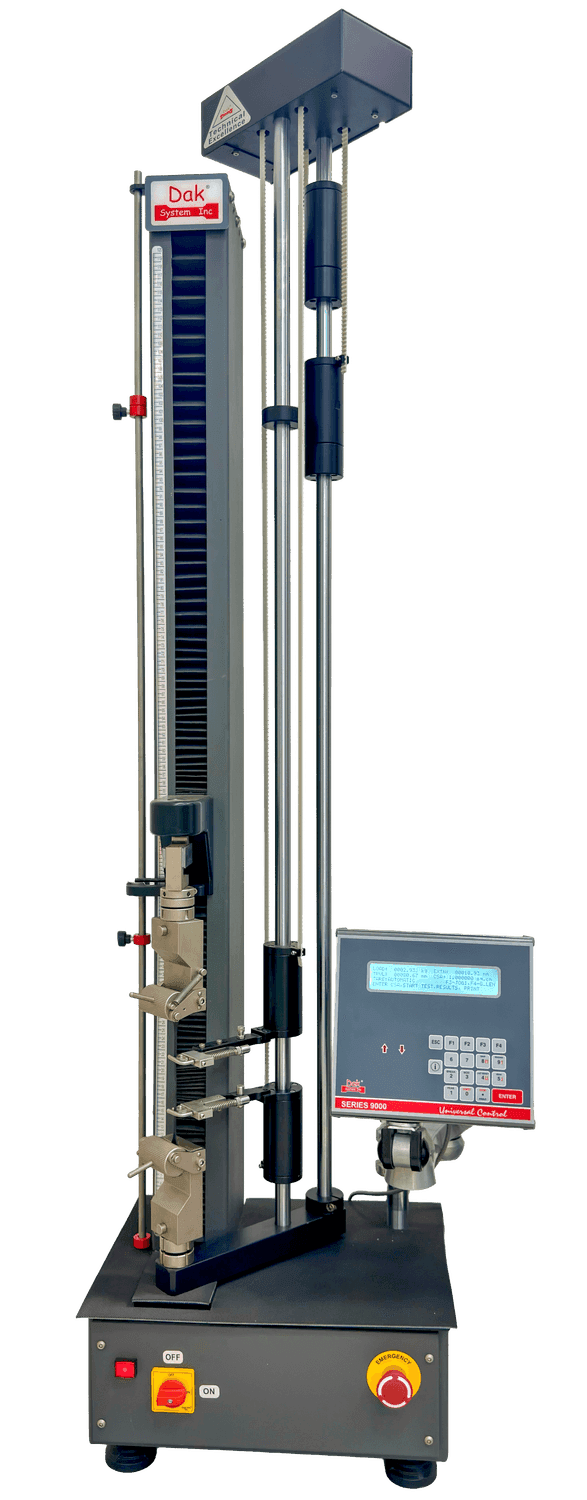
Explore the Series 9000 alongside the flagship platform when defining your laboratory’s tensile, compression and flexural testing requirements. Compare the current machine specifications, controls and accessories against the tests you need.
Explore DAK fatigue testing systems for repeated-loading requirements. Specify the implant assembly, loading arrangement, test programme and environment; a static strength test and a fatigue test are different parts of the evaluation.
A published dental study used a DAK Model 1500 to measure shear bond strength between ceramic and core materials. The measurements helped the researchers compare the bonded interfaces; the work is an in-vitro materials study.
NIPER uses DAK universal testing equipment for a range of medical and biomedical investigations, including syringe and needle testing. See how different fixtures bring these component-level measurements onto the testing platform.
Use the existing dental and pharmaceutical library to locate relevant methods. Specify the applicable method and required mechanical result when discussing the testing configuration.
Requirements and test methods for sterile single-use hypodermic needles, including cannula-to-hub bond strength.
Wound closure strength of tissue adhesives and sealants.
Tension testing of Nickel-Titanium (Nitinol) superelastic materials (upper/lower plateau strength).
Child-resistant packaging opening-force evaluation and blister push-through force.
Prefilled syringes — glass barrel flange breakage resistance, luer cone breakage, needle pull-out force.
Needle-based injection systems (pen injectors) — dose accuracy companion with activation-force measurement.
Dental implants — static compression-bending prior to fatigue qualification.
Orthodontic wires — three-point bend and tensile characterization.
Denture base polymers — flexural strength and modulus.
Polymer-based restorative materials (dental composites) — three-point flexural strength (2×2×25 mm bars).
Dental ceramics — flexural strength (3-point, 4-point and biaxial piston-on-three-balls).
Elastomeric closures for parenterals — penetration force, fragmentation and self-sealing.
Tablet hardness/breaking force — performed on dedicated hardness testers or low-capacity UTM compression.
Showing 1–8 of 13 standards
Send a specimen drawing or photograph and describe the material, component or bonded assembly. Include the details below where available, and our engineers can discuss the platform, fixtures and measurement together.