Standard Test Method for Strength Properties of Tissue Adhesives in T-Peel by Tension Loading
Written and technically reviewed by Dak System Inc. engineering·Last reviewed
ASTM F2256 bonds two strips of soft tissue substrate — normally frozen or split pig skin — with the tissue adhesive under test and peels them apart in a T configuration under position control. It exists to compare surgical adhesives and sealants with one another, not to produce absolute design values. The current edition is ASTM F2256-24.
Two strips of soft tissue substrate are bonded along part of their length with the tissue adhesive under test. The unbonded ends are bent apart to form a T, clamped in the machine, and drawn apart under position control so the bond is peeled open progressively from one end. The force through the separation is recorded.
The substrate is the unusual part. Tissue adhesives are intended to bond living soft tissue, so the specimens are grafts of frozen or split pig skin rather than metal or plastic coupons. The adhesive is being tested against something that behaves like what it will be used on.
What it measures, and why it matters
Surgical adhesives and sealants close wounds and seal openings against leakage. What matters clinically is whether the bond survives the movement, the wetness and the pressure of a real site — and peel is the loading that finds a weak bond fastest, because it concentrates the whole force on a moving line rather than spreading it over the bonded area.
The standard's stated purpose is comparison: it provides a means for comparison of the adhesive strengths of tissue adhesives intended for use as surgical adhesives or sealants, or both, on soft tissue. With an appropriate choice of substrate it can also be used for quality control in the manufacture of tissue-adhesive-based devices.
Comparison is the right word for it. Pig skin varies from animal to animal and from site to site on the same animal, and a T-peel figure on tissue carries more scatter than the same test on an engineered substrate. The method is a ranking and screening tool, not a source of absolute design values, and treating it as the latter is the main way it is misused.
The substrate is the difficult part
Testing an adhesive against tissue rather than against metal is what makes the result relevant, and it is also what makes it variable.
Substrate
Grafts of frozen or split pig skinChosen because it behaves like the soft tissue the adhesive is intended for.
Geometry
Two bonded strips with unbonded ends bent apart to form a T
Adhesive
Applied over a defined bonded area and cured as the product requiresMany tissue adhesives cure by moisture, by light or as a two-part reaction. Cure state is part of the specimen.
Hydration
Neither dried out nor waterloggedPracticeBoth change the substrate mechanics more than a real difference between two adhesives would.
Test wet where the product is for a wet field
DakWhich is most of them. A dry T-peel figure on an adhesive meant for a bleeding surface is not the number anyone needs.
Raise the specimen count
DakPig skin varies between animals and between sites on the same animal. Scatter is managed by numbers, not eliminated by care.
Position control, and a slow steady rate
Control mode
Position controlled
Rate
As specified in the method; the figure sits in the purchased text
Travel
Enough to peel the full bonded length in one passPractice
Set the clamping force rather than guessing it
DakToo much and the wet skin is damaged at the jaw; too little and the specimen creeps out during the peel, adding travel that reads as peel.
What the number is good for
T-peel adhesive strength—
Average peel force over the bonded length, per unit width
average force
over the peel, N
width
the bonded width, mm
An average, not a peak. A peak on a tissue substrate is as likely to be a feature of the skin as of the adhesive.
Why peel rather than tension or shear—
Peel concentrates the load on a moving line
It is the loading that finds a weak bond fastest, which is what a screening method wants.
A ranking tool, not a design value—
The stated purpose is comparison between adhesives
Biological substrate variability is large. Using a T-peel figure as an absolute design strength is the main way this method is misused.
How the test runs
01Prepare pig skin grafts to a consistent thickness.
02Keep them in the intended hydration state throughout.
03Apply the adhesive over the defined bonded area on one strip.
04Bring the second strip into contact and cure as the product requires.
05Bend the unbonded ends apart to form the T.
06Clamp both tails at a set, recorded clamping force.
07Peel under position control at the specified rate.
08Log the force through the whole separation.
09Take the average over the peel length.
10Report with the substrate condition, the cure conditions and the specimen count.
Grips and fixtures for this method
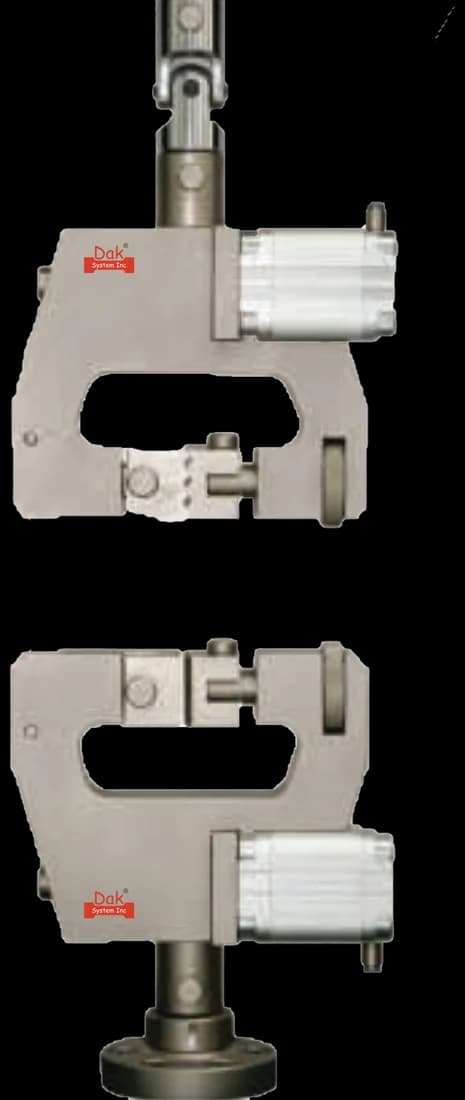
HJ-42
Light Duty Pneumatic Grip
Light jaws with a soft face, holding wet slippery skin without crushing it or letting it slide. Clamping force is set and recorded rather than left to the operator, because both errors move the result and neither is obvious in the trace.
Peel forces here are commonly a few newtons or less. A cell sized in newtons is not a refinement on this method — it is the difference between a measurement and a flat line.
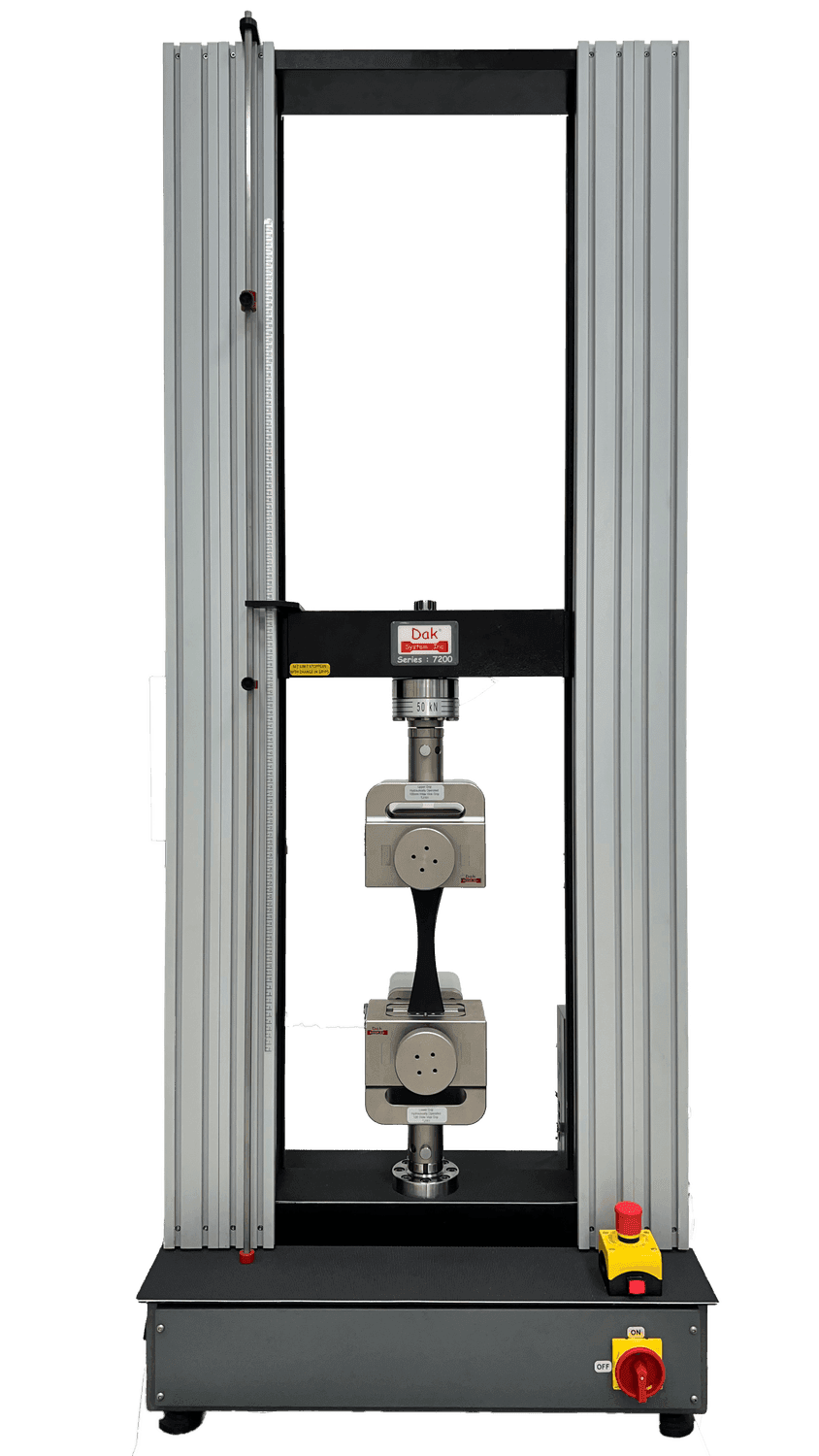
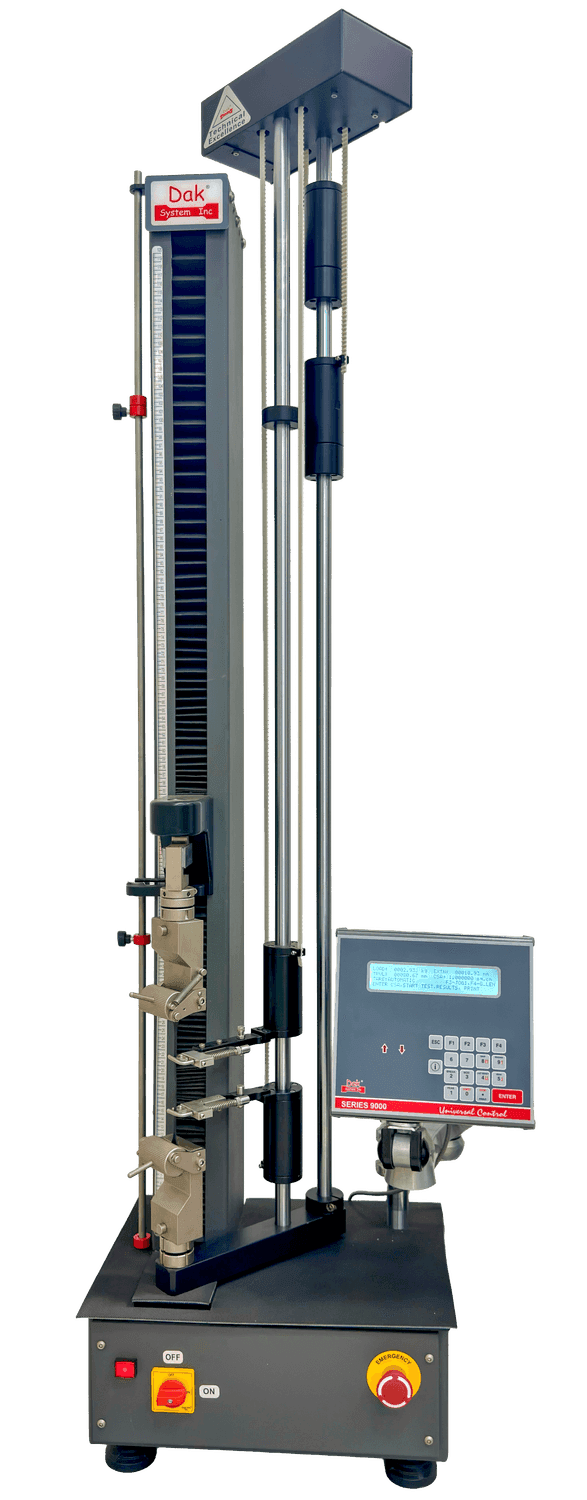
Forces are very low — commonly a few newtons or less — so a small frame with a load cell sized in newtons and force accuracy to ASTM E4 over that range is essential. Resolution, not capacity, is the whole requirement.
The test is position controlled, so a machine that holds a steady low crosshead speed is needed, together with enough travel to peel the full bonded length in one pass.
Grips have to hold wet, slippery pig skin without crushing it or letting it slide. Light pneumatic jaws with a soft face are the usual answer, and clamping force is set rather than guessed: too much and the substrate is damaged at the jaw, too little and the specimen creeps out during the peel.
Where the specimen is tested wet at body temperature, a heated bath or an environmental enclosure around the fixture is needed, and that is separate equipment from the frame.
What goes wrong in practice
Substrate variability dominates and is managed by specimen count rather than eliminated. Skin allowed to dry between preparation and test stiffens and reads differently. Specimens that slip in the jaws add travel that looks like peel. And a peak force reported instead of an average over the peel exaggerates the bond, on a test where the average is the meaningful quantity.
The tissue adhesive test family
Three ASTM methods load a tissue adhesive bond three ways, and a product is normally characterised on more than one.
T-peel (F2256)
Tension (F2258)
Lap shear (F2255)
Loading
Progressive peel from one end
Straight tension across the bond
Shear along the bond
Finds
A weak bond fastest
Bulk bond strength
Resistance to sliding
Substrate
Soft tissue
Soft tissue
Soft tissue
Force needed
Very low
Low
Low
Clinically resembles
A wound edge lifting
A sealed opening under pressure
Tissue planes sliding
All three carry the variability of a biological substrate. They rank adhesives against one another reliably and they do not produce absolute strengths that can be carried into a design calculation.
Questions we are asked about this test
What is ASTM F2256?+
ASTM F2256 is the standard test method for the strength properties of tissue adhesives in T-peel by tension loading. Two strips of soft tissue substrate are bonded with the adhesive under test, the unbonded ends are bent apart to form a T, and they are drawn apart under position control while the force is recorded. The current edition is ASTM F2256-24, which revised F2256-05(2015).
Why is pig skin used as the substrate?+
Because the adhesive is intended to bond living soft tissue, and a bond to steel or plastic tells you very little about that. Frozen or split pig skin behaves closely enough to human soft tissue to make the comparison meaningful. The trade-off is variability: skin differs between animals and between sites on one animal, and that scatter is inherent to the method rather than a sign of poor technique.
What is the method actually for?+
Comparison. The standard states its purpose as providing a means for comparison of the adhesive strengths of tissue adhesives intended for use as surgical adhesives or sealants on soft tissue, and notes that with an appropriate choice of substrate it may also be used for quality control in manufacturing tissue-adhesive-based devices. It ranks products against one another; it does not produce absolute strengths for a design calculation, and treating it as though it does is the commonest misuse.
Why peel rather than a straight pull?+
Because peel is the harshest loading and therefore the most efficient screen. A T-peel concentrates the whole force on a moving line at the edge of the bond rather than spreading it over the bonded area, so a weak or uneven bond shows up quickly and at a low force. Tension and lap shear methods exist alongside it — F2258 and F2255 — and a product is normally characterised on more than one.
Should the test be run wet?+
For most products, yes. Surgical adhesives are applied to tissue that is wet and often bleeding, and a bond formed and tested dry is not the bond the surgeon gets. Where the product is intended for a wet field the specimens are conditioned and tested wet, and where body-temperature performance matters a heated bath or enclosure around the fixture is needed. The condition is reported either way, because it moves the result substantially.
What machine does it need?+
A small frame with a load cell sized in newtons and force accuracy to ASTM E4 over that range — peel forces are commonly a few newtons or less, so resolution is the entire requirement. The test is position controlled, so a machine that holds a steady low crosshead speed is needed, with enough travel to peel the full bonded length in one pass. Grips have to hold wet skin without crushing it.
How is the scatter managed?+
By specimen count and by consistent substrate preparation, not by trying to eliminate it. Skin thickness, site and hydration all contribute, so laboratories fix what they can — one animal batch, one anatomical site, one preparation method, one hydration protocol — and then run enough specimens that the comparison between adhesives is bigger than the noise. A report giving a mean without a spread and a specimen count is not usable.
This page describes the method as practised. The governing text is the current edition from the issuing body. Tell us what you are testing and we will answer with the machine, the fixture and a quotation.