Ceramic tiles — Part 4: Determination of modulus of rupture and breaking strength
Written and technically reviewed by Dak System Inc. engineering·Last reviewed
ISO 10545-4 bends a whole ceramic tile in three-point flexure until it breaks, reporting two things: breaking strength, which is a force and scales with thickness, and modulus of rupture, which is a stress and describes the ceramic body. The current edition is ISO 10545-4:2019, the fourth edition, which cancels and replaces ISO 10545-4:2014.
A whole tile is supported on two parallel rods and loaded through a third rod along its centreline, so the tile is bent in three-point flexure until it breaks. Force is applied at a specified rate. Two quantities come out: the breaking strength, which is a force, and the modulus of rupture, which is a stress derived from that force and the tile geometry.
The 2019 revision changed how specimens are selected, testing tiles in different format sizes according to their work size and thickness.
What it measures, and why it matters
A floor tile spans between the high points of an imperfect bed of adhesive and is walked on, loaded by furniture and occasionally struck. What resists that is the tile's ability to carry a bending load, and this is the method that quantifies it.
The two reported quantities answer different questions and this is the distinction that matters most on this page. **Breaking strength** is the force the tile carried, and it scales with thickness: it is the practical number for whether a given tile will survive a given duty, and it is what product classifications in ISO 13006 use. **Modulus of rupture** is a stress, normalised for the tile's dimensions, and it describes the ceramic material rather than the article. A thin porcelain tile can have a very high modulus of rupture and a modest breaking strength; a thick, coarser tile can be the reverse.
Specifying the wrong one is a real commercial error. A specification that quotes only modulus of rupture has said something about the body and nothing directly about whether the tile will break underfoot.
Whole tiles, not coupons
This is a product test. The article that is sold is the article that is broken, which is unusual among flexural methods and is the point.
Specimen
A whole tile, glazed face up
Scope
All ceramic tiles
Format selection
Tiles are tested in different format sizes according to their work size and thicknessThis is the technical revision the 2019 fourth edition introduced. Read that edition rather than the 2014 one on specimen selection.
Drying
To constant mass before testA ceramic body that has absorbed water behaves differently, and untried tiles read low and variably.
Rod covering
A resilient material of specified dimensions on the supports and the loading rodIt lets a tile that is not perfectly flat bear evenly rather than sitting on one high point.
Replace the rod coverings when they harden
DakA worn or set covering stops distributing the load and the tile breaks at a contact line instead of at its weakest section.
Rate and span
Loading
Three-point bending through a central rod, at a specified rate
Rate
As specified in the standard; the figure sits in the purchased text
Span
Set by the tile size, as the method definesSpan appears in the modulus of rupture formula, so a span set for a different tile size changes the reported stress directly.
Reported
Breaking strength in newtons, and modulus of rupture in N/mm²
Two quantities, and why both are reported
Breaking strengthS
The breaking load multiplied by the span, divided by the specimen width
breaking load
the force at which the tile broke, N
span
the distance between the support rods, mm
width
the tile width, mm
A force-based quantity that scales with thickness. It is what ISO 13006 classifications use and what answers whether a tile will survive a duty.
Modulus of ruptureR
Breaking strength divided by the square of the minimum tile thickness along the fracture
thickness
the minimum thickness measured along the broken edge, mm
A stress, normalised for the tile geometry. It describes the ceramic material rather than the article.
Why the two can point opposite ways—
A thin porcelain tile: high modulus of rupture, modest breaking strength
And a thick, coarser tile can be the reverse. Quoting only one of them is where specification errors start.
How the test runs
01Select whole tiles, in the format the method requires for that work size and thickness.
02Dry to constant mass.
03Check the resilient coverings on all three rods.
04Set the span for the tile size.
05Place the tile glazed face up, centred on the supports with the specified overhang.
06Load through the central rod at the specified rate until the tile breaks.
07Record the breaking load.
08Measure the minimum thickness along the fracture.
09Compute breaking strength and modulus of rupture.
10Report both, with the number of tiles.
Grips and fixtures for this method
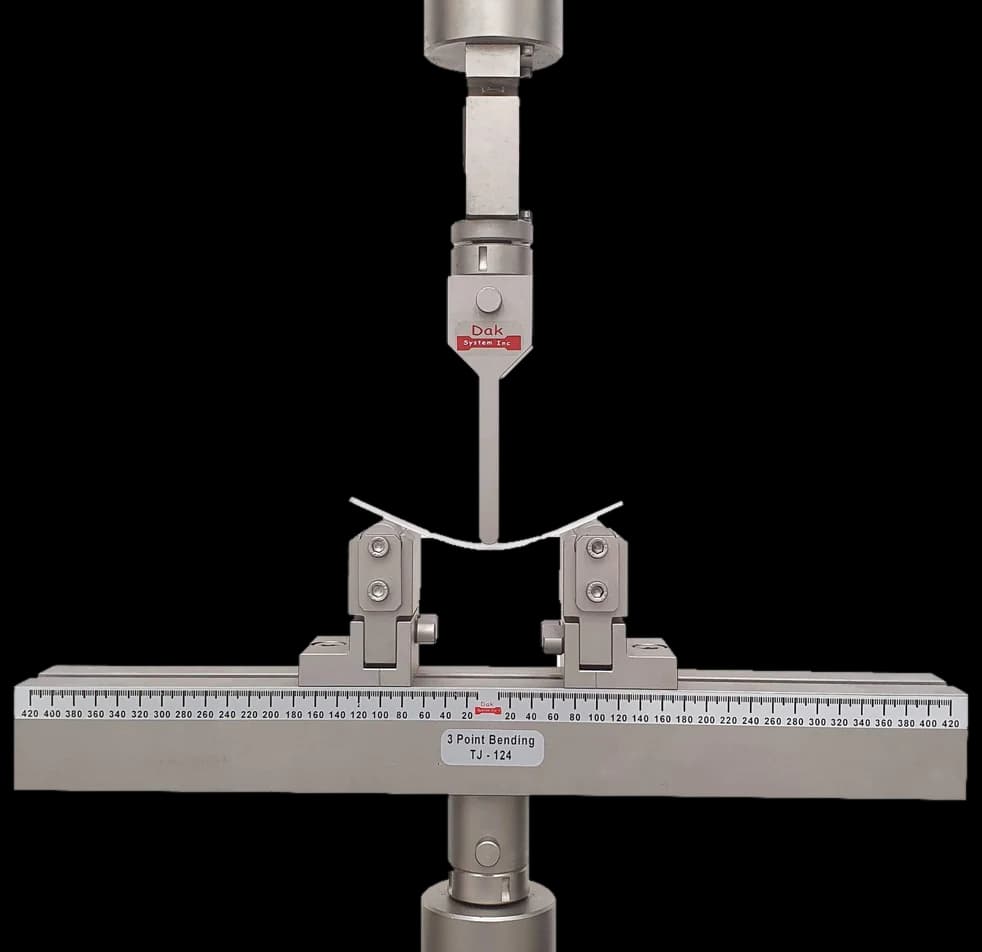
Adjustable spanTJ-124
Three Point Bend Fixture
Two support rods and a central loading rod, all covered in a resilient material of specified dimensions so an imperfectly flat tile bears evenly. The fixture has to be wide enough for a whole tile — large-format porcelain is a real constraint, and a fixture built for a 300 mm tile will not take a 1200 mm slab.
Breaking forces run from a few hundred newtons on a thin wall tile to several kilonewtons on thick porcelain. A cell chosen for the product range keeps the low end resolved rather than sizing everything for the heaviest tile.
Breaking strength and modulus of rupture, both reported
What the machine must be capable of
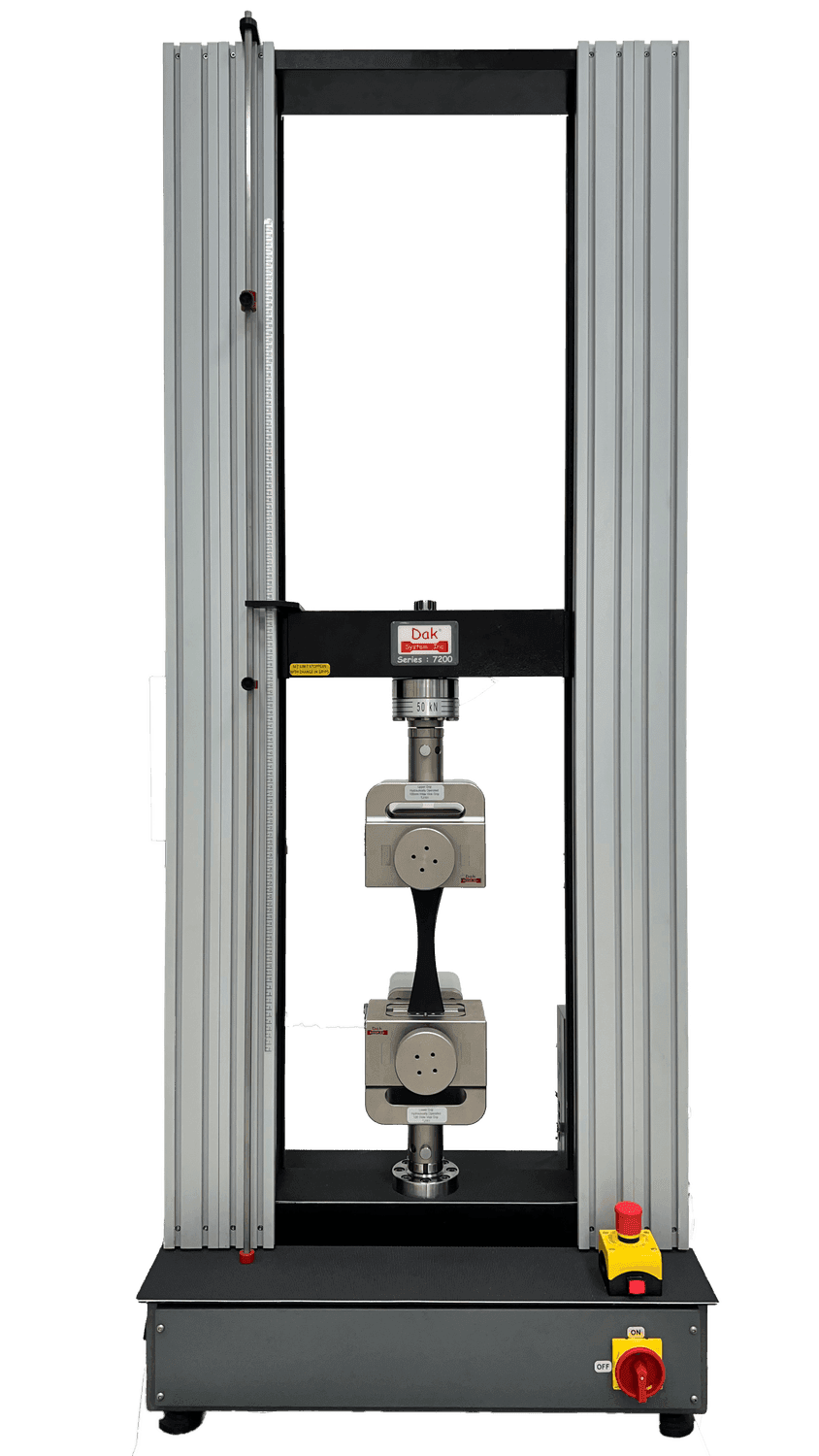
Breaking forces range from a few hundred newtons for a thin wall tile to several kilonewtons for a thick porcelain floor tile, so a frame of 10 to 50 kN with a load cell chosen for the product range and force accuracy to ISO 7500-1 Class 1 is appropriate.
The fixture is a three-point bend arrangement with a span set by the tile size, and it has to be wide enough to take a full tile — large-format porcelain makes this a real constraint, and a fixture sized for a 300 mm tile will not take a 1200 mm slab. Rod diameters, the resilient covering and the overhang beyond the supports are all specified and are measured rather than assumed.
Deflection is not part of the result; the reported quantities come from the breaking force and the geometry.
What goes wrong in practice
Rod coverings that have hardened or worn stop distributing the load and the tile breaks at a contact line. A span set for a different tile size changes the modulus of rupture directly, because span is in the formula. Tiles tested without drying read low and variably. And reporting modulus of rupture alone, when the specification wanted breaking strength, is a reporting error that reaches purchase decisions.
Breaking strength or modulus of rupture
The single most useful distinction on this page, and the one most often collapsed into a single number.
Breaking strength
Modulus of rupture
Is a
Force-based quantity
Stress
Scales with thickness
Yes
No — it is normalised for it
Describes
The tile as an article
The ceramic body
Used by
ISO 13006 product classification
Material comparison and development
Answers
Will this tile survive the duty
How good is this body
A specification quoting only modulus of rupture has said something about the ceramic and nothing directly about whether the tile will break underfoot. Where a floor duty is being judged, breaking strength is the quantity that matters.
Questions we are asked about this test
What is ISO 10545-4?+
ISO 10545-4 is the international method for the modulus of rupture and breaking strength of ceramic tiles. A whole tile is supported on two rods and loaded through a third at its centreline until it breaks. The current edition is ISO 10545-4:2019, published on 30 April 2019; it is the fourth edition and cancels and replaces ISO 10545-4:2014, which was technically revised.
What is the difference between breaking strength and modulus of rupture?+
Breaking strength is a force-based quantity and it scales with tile thickness — it answers whether a particular tile will survive a particular duty, and it is what the ISO 13006 product classifications use. Modulus of rupture is a stress, normalised for the tile geometry, and it describes the ceramic body rather than the article. A thin porcelain tile can have a very high modulus of rupture and a modest breaking strength, and a thick coarser tile the reverse.
Which one should a specification quote?+
For a floor or wall duty, breaking strength, because that is the question being asked: will this tile carry the load. Modulus of rupture belongs in body development and material comparison. A specification quoting only modulus of rupture has characterised the ceramic and left the article unspecified, and it is a common enough error to be worth checking before an order rather than after a failure.
Why are whole tiles tested rather than cut coupons?+
Because it is a product test. The tile as sold — its glaze, its edges, its thickness variation, its as-fired flatness — is what has to survive service, and cutting a coupon out of it removes exactly those features. It also makes the test awkward for large formats, since the fixture has to span a whole tile, and that is a real limitation rather than an oversight.
Why do the rods have a resilient covering?+
Because a fired tile is never perfectly flat. On bare steel rods a slightly bowed tile bears on two or three high points and breaks at one of them, which measures the flatness rather than the strength. A resilient covering of specified dimensions spreads the contact so the tile is loaded along a line. Those coverings harden and wear, and replacing them is routine maintenance, not a repair.
Does the span matter to the result?+
Directly. Span appears in the breaking strength expression and therefore in the modulus of rupture derived from it. The method sets the span from the tile size, and a fixture left at the setting used for the last product will produce numbers that are internally consistent and wrong. Span is checked with the tile format, every time the format changes.
What machine does it need?+
A frame of 10 to 50 kN with force accuracy to ISO 7500-1 Class 1 and a load cell chosen for the product range. The constraint is usually the fixture rather than the frame: it must take a whole tile at the correct span, with rods of the specified diameter and covering, and large-format porcelain needs a physically large fixture and a machine with the daylight to hold it.
This page describes the method as practised. The governing text is the current edition from the issuing body. Tell us what you are testing and we will answer with the machine, the fixture and a quotation.