Testing standard

ISO 17706

Footwear — Test methods for uppers — Tensile strength and elongation

Written and technically reviewed by Dak System Inc. engineeringLast reviewed

ISO 17706 determines the force required to break a test specimen taken from a footwear upper, irrespective of the material it is made from, together with the tensile elongation. Jaws are set 100 mm apart and separate at 100 mm/min. The current edition is ISO 17706:2003, confirmed on review in 2021 and republished in Europe as EN ISO 17706:2018.

At a glance

Test type
Tensilethe specimen is pulled apart
Published by
ISO
Edition
ISO 17706:2003

What the test does

A rectangular strip cut from a footwear upper is clamped with the jaws 100 mm ± 1 mm apart and pulled at 100 mm/min ± 5 mm/min until it fails. Both the breaking force and the tensile elongation are taken from the same pull. The strip is marked with two lines 100 mm ± 1 mm apart before mounting, and those lines are aligned with the clamping edges of the jaws, so the operator can see afterwards whether the specimen crept out of the grips during the test rather than stretching in the gauge.

What it measures, and why it matters

Whether the upper is strong enough for the job, whatever it is made of. The scope is written around the component rather than the material — leather, coated textile, woven textile and laminate all go through the same procedure — because a shoe designer choosing between them needs numbers produced the same way. The method also allows the complete upper assembly to be tested: the finished, seamed, lined construction including interlinings, adhesives, membranes, foams and reinforcements, but excluding toe puffs and stiffeners. That distinction is the useful part. A lining permanently attached to the outer material changes what the upper does, and testing the outer alone describes a material the shoe does not contain.

Specimen, and the fraying rule

Two preparation routes, decided by whether the material frays. Both end at the same 25 mm test width, and the route taken has to be right for the material.

Specimen length
160 mm ± 10 mm
Materials that can be frayed
Cut at 35 mm ± 2 mm, then frayed back to 25,0 mm ± 0,5 mmThreads are removed from both long edges, roughly the same number from each, so the remaining width is intact rather than cut.
Materials that cannot be frayed
Cut directly at 25,0 mm ± 0,5 mm
Number of specimens
Six — three along the material, three across it
Leather sampling
From the butt region of the skin or side, with the along direction taken as the backbone direction
Marking
Two lines 100 mm ± 1 mm apart, at 90° to the long edges, symmetrical about the centreThe along direction is marked on each specimen as well.
Width measurement
Recorded to the nearest 0,5 mm on every specimen
Conditioning
At least 48 h in the footwear standard atmosphere, and tested in it
Complete upper assembly
Tested as a whole where the lining is permanently attached to the upper materialThe assembly includes linings, interlinings, adhesives, membranes, foams and reinforcements, but excludes toe puffs and stiffeners.
Avoid seams and perforations
A specimen cut across a seam measures the seam. Seam strength is a different method.

Where a shoe is too small to yield a full-size specimen — children's footwear especially — the specimen size shall not be reduced. The materials themselves are tested instead.

Test speed and gauge

Jaw separation at start
100 mm ± 1 mm
Rate of jaw separation
100 mm/min ± 5 mm/min
Reported
Breaking force, and tensile elongation at break
Atmosphere
The footwear standard atmosphere used for conditioning
Align the marked lines with the clamping edges
Doing so makes slippage visible after the test: the lines move relative to the jaw faces if the specimen crept.

Calculations

Breaking strength

The maximum tensile stress recorded in extending the specimen to breaking point

The method's own definition. The width of every specimen is measured and recorded to 0,5 mm, which is why the width matters even though every specimen is nominally 25 mm.

Tensile elongation

The tensile strain in the test length at breaking

test length
the 100 mm ± 1 mm between the marked lines, which is also the initial jaw separation
Direction

Along and across reported separately

Three specimens in each direction. Uppers are anisotropic whether they are leather, coated fabric or textile, and a single figure hides which way the weakness runs.

How the test runs

  1. 01Choose sampling positions on the upper that contain no seams or perforations.
  2. 02For leather, take the position from the butt region and mark the backbone direction as along.
  3. 03Cut six specimens 160 mm long — three along, three across.
  4. 04Fray textile specimens back from 35 mm to 25,0 mm by removing threads from both edges.
  5. 05Mark two lines 100 mm apart on each specimen, and mark the along direction.
  6. 06Measure and record each specimen's width to the nearest 0,5 mm.
  7. 07Condition for at least 48 h in the footwear standard atmosphere.
  8. 08Set the jaws 100 mm ± 1 mm apart.
  9. 09Clamp each end so the marked lines sit at the clamping edges, neither taut nor slack.
  10. 10Separate the jaws at 100 mm/min ± 5 mm/min until the specimen fails.
  11. 11Examine the failure position and whether the lines moved relative to the jaws.
  12. 12Reject and repeat where a specimen slipped asymmetrically by more than 2 mm or failed within 5 mm of a jaw.
  13. 13Report along and across results separately.

The rejection rule has an exception that matters: if three specimens cut in the same direction all fail within 5 mm of a jaw, the results are not rejected. At that point the failure position is a property of the material rather than a grip problem.

Grips and fixtures for this method

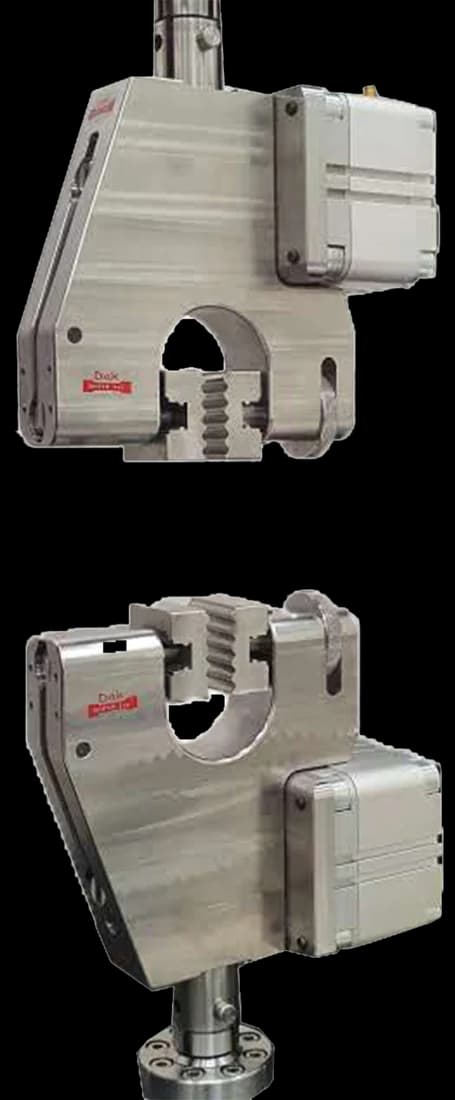
Pneumatic vice action grips with 25 mm square jaw faces
Standard 25 mm

Pneumatic Vice Action Grip

A 25 mm specimen width with a 100 mm gauge, held at a constant clamping pressure. The standard's own footnote makes the point: the clamping force and jaw type must suit the specimen, because slipping and failure at the clamping edge are what invalidate the test.

Specifications
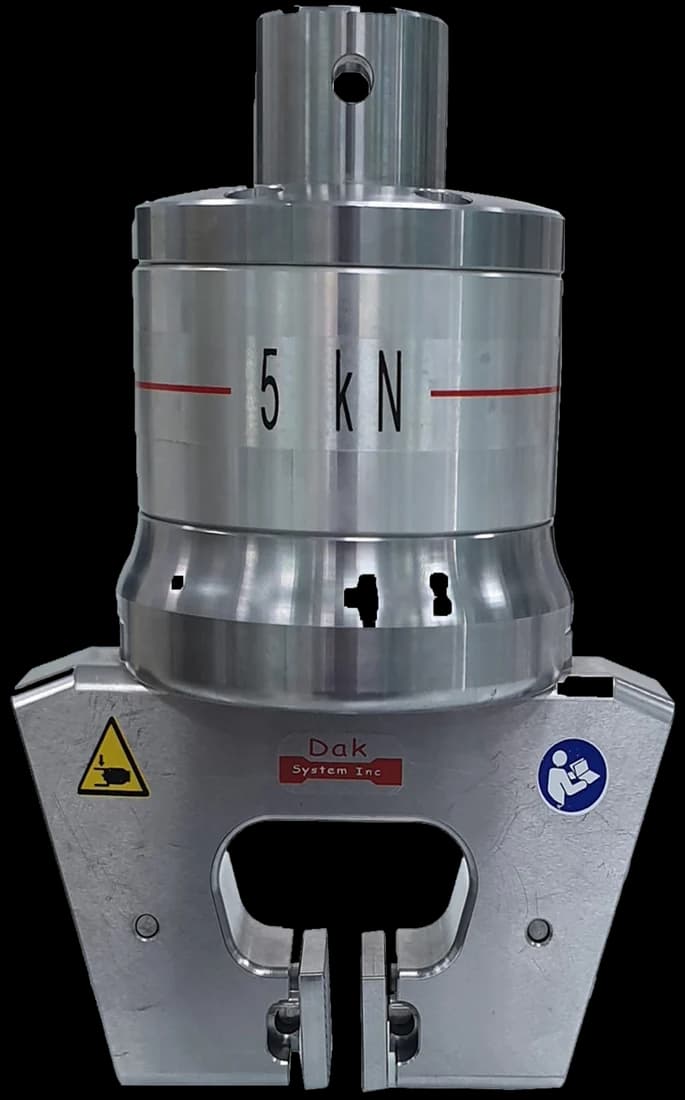
5 kN pneumatic vice action grip

5 kN Pneumatic Grip

The force range has to be chosen for the material. The standard states it will usually be under 1 kN for textile and coated textile uppers, but may be as high as 5 kN for thick leathers — leather over 2 mm.

Specifications

What the report has to contain

  • Reference to ISO 17706 and the edition
  • Identification of the footwear or material, and where the specimens were taken
  • Whether specimens were taken from the material or from a complete upper assembly
  • Whether the material was frayed back or cut to width directly
  • Measured width of each specimen
  • Test length and rate of jaw separation
  • Conditioning atmosphere and duration
  • Breaking force for each specimen, along and across
  • Tensile elongation for each specimen, along and across
  • Failure position, and any specimen rejected for slippage or a jaw failure

What the machine must be capable of

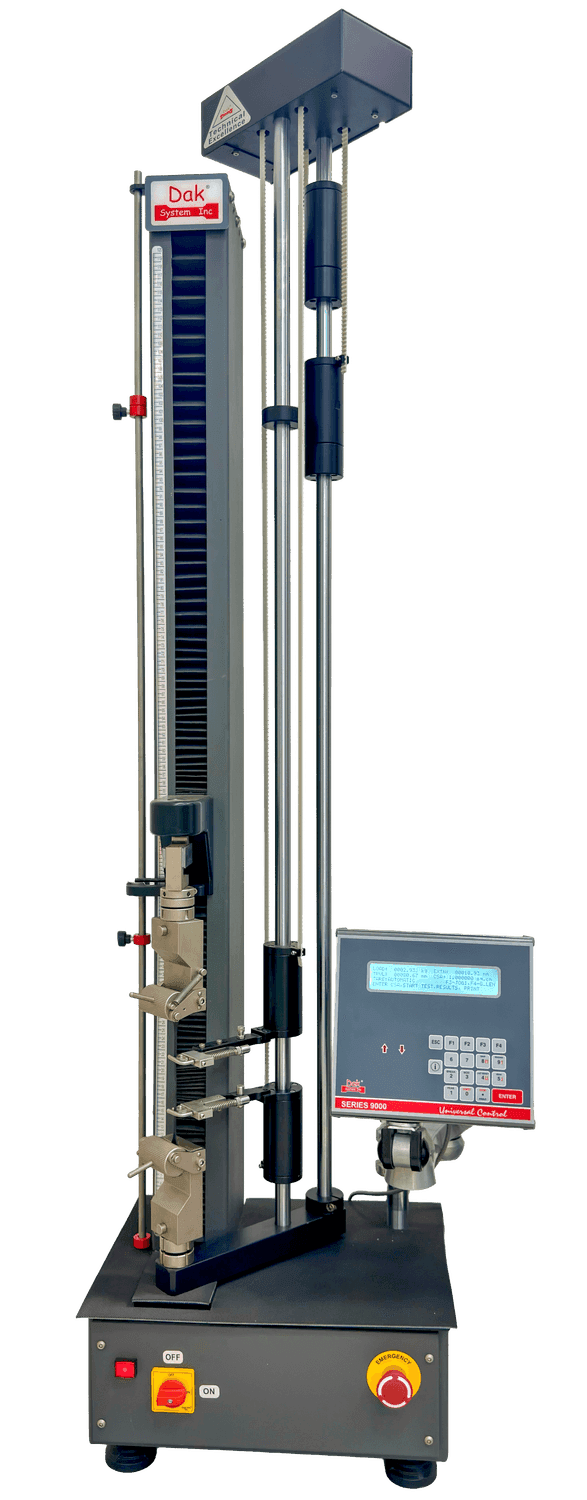
A modest frame, precisely controlled. Jaw separation must run at 100 mm/min ± 5 mm/min, and the force-measuring system must be accurate to better than 2 %, which the standard states as class 2 of EN ISO 7500-1. The force range has to suit the specimen: the standard notes it will usually be under 1 kN for textile and coated textile upper materials, but may reach 5 kN for thick leathers, meaning leather over 2 mm. The clamping force and jaw type must be chosen for the material, because the specimen has to be held without being cut or crushed at the clamping edge.

What goes wrong in practice

Grip failures, mostly, and the standard is unusually specific about them. If a specimen slips asymmetrically by more than 2 mm, or fails within 5 mm of either jaw, the result is rejected and the test repeated on fresh pieces — but if three specimens cut in the same direction all fail within 5 mm of a jaw, the results are not rejected, because at that point the failure is telling you something about the material rather than the grip. Beyond that: skipping the fraying step on a textile and testing a 35 mm strip; cutting a specimen smaller to make it fit a child's shoe, which the method forbids outright and answers by saying test the materials instead; and testing the outer material when the lining is permanently attached to it.

Which footwear method answers which question

ISO 17706ISO 17708ISO 23910
SubjectA strip cut from the upperThe finished shoeA slit test piece of leather
MeasuresBreaking force and elongation of the upperUpper to sole adhesionForce to tear leather away from a stitch hole
Fails atThe material, in tensionThe bond between upper and soleThe leather between hole and edge
Speed100 mm/min ± 5 mm/minA constant rate of separation as specified100 mm/min ± 20 mm/min

Three separate failure modes on the same shoe. A strong upper says nothing about the sole bond, and neither says anything about whether the seams will hold.

Questions we are asked about this test

What is ISO 17706?

ISO 17706 specifies a test method for determining the force required to break a test specimen taken from a footwear upper, irrespective of the material, in order to assess its suitability for the end use. The tensile elongation is measured in the same pull. The current edition is ISO 17706:2003, the first, confirmed on systematic review in 2021.

Why does the standard exist if ISO 3376 already tests leather?

Because an upper is not always leather, and often is not only leather. ISO 17706 is written around the component: textile, coated textile, laminate and leather uppers all go through the same procedure, so the numbers can be compared when a designer is choosing between them. The method descends from IULTCS/IUP 6 and the 1976 edition of ISO 3376, which is where its 100 mm gauge and 25 mm width come from.

What is a complete upper assembly, and when is it tested?

It is the finished upper — fully seamed, joined or laminated, comprising the centre material and any linings together with interlinings, adhesives, membranes, foams and reinforcements, but excluding toe puffs and stiffeners. It is tested rather than the outer material alone when the lining is permanently attached, because at that point the outer material on its own is not something the shoe contains.

Why are textile specimens cut oversize and then frayed?

So the 25 mm test width is made of whole yarns rather than cut ones. A textile cut straight to 25 mm has severed yarns along both edges that carry no load and shed no load into their neighbours, which lowers the result and raises its scatter. Cutting at 35 mm and removing threads from both edges until the width is 25,0 mm ± 0,5 mm leaves a specimen whose edges are the natural ends of continuous yarns.

When is a result rejected?

If a specimen slips asymmetrically in the jaws by more than 2 mm, or fails within 5 mm of either jaw, the result is rejected and the test repeated with fresh specimens. There is one exception, and it is important: if three specimens cut in the same direction all fail within 5 mm of a jaw, the results are not rejected. Consistent failure near the jaws is behaviour of the material, not evidence of a gripping problem.

What speed and gauge does it use?

The jaws start 100 mm ± 1 mm apart and separate at 100 mm/min ± 5 mm/min. The two lines marked on the specimen are also 100 mm ± 1 mm apart and are aligned with the clamping edges when the specimen is mounted, so after the test the lines show whether the specimen crept out of the jaws instead of stretching between them.

What accuracy does the machine need?

The standard asks for force measurement to better than 2 %, stated as class 2 of EN ISO 7500-1. The force range must suit the specimen: usually less than 1 kN for textile and coated textile upper materials, but potentially as high as 5 kN for thick leathers, which the method defines as leather over 2 mm.

What if the shoe is too small to cut a full specimen from?

The specimen is not made smaller. The method notes explicitly that it may not be possible to cut a specimen of sufficient size from certain footwear, especially children's, and says the specimen size should not be reduced — the materials themselves are tested instead. A shortened specimen has a different gauge length and is not comparable with anything.
Is ISO 17706 the same as EN 13522?

In content, yes. ISO 17706 was prepared by CEN as EN 13522:2001 and adopted by ISO/TC 216 under a fast-track procedure, which is why the published ISO text carries the EN clause numbering alongside the ISO reference. CEN has since republished the same technical content as EN ISO 17706:2018. Quote the designation the specification asks for.

Running ISO 17706 on the Series 7200 and Series 9000

Dak verifies against whichever standard the method names, and where a class applies our frames sit a class tighter than it asks.

The method asks forDak supplies
CapacityUsually under 1 kN for textile and coated textile upper materials, but as high as 5 kN for thick leathers, which the method defines as leather over 2 mmLoad cells from 1 kg to 60 ton on the Series 7200, and 0.5 to 100 kN on the Series 9000
Force accuracyBetter than 2 %, stated as class 2 of EN ISO 7500-1ISO 7500-1 Class 0.5 — a class tighter than the method asks
GrippingGrips whose clamping force and jaw type suit the material, so it is neither cut nor allowed to slipWedge, vice-action, pneumatic and hydraulic grips, built to the specimen
EnvironmentThe footwear standard atmosphere of EN 12222, for at least 48 h before the test and during it3009 series chambers, −150 °C to +400 °C — temperature only

This page describes the method as practised. The governing text is the current edition from the issuing body. Tell us what you are testing and we will answer with the machine, the fixture and a quotation.

Materials tested to it

The test it standardises

Other standards explained