Testing standard

TAPPI T494

Tensile properties of paper and paperboard (using constant rate of elongation apparatus)

Written and technically reviewed by Dak System Inc. engineeringLast reviewed

TAPPI T494 stretches a strip of paper or paperboard to break on constant-rate-of-elongation equipment and reports four properties from one curve: tensile strength, stretch, tensile energy absorption and tensile stiffness. It does not apply to combined corrugated board. The current revision is TAPPI/ANSI T 494 om-22.

At a glance

Test type
Tensilethe specimen is pulled apart
Published by
TAPPI
Edition
TAPPI/ANSI T 494 om-22

What the test does

A strip of paper or paperboard of specified width is clamped between two jaws a set distance apart and stretched at a constant rate of elongation until it breaks. Force and extension are recorded throughout, so the whole load–elongation curve is available and not only the breaking point.

Four properties come out of that curve: tensile strength, stretch, tensile energy absorption and tensile stiffness. The method applies to all types of paper and paperboard within the limits of the instrument, whether the machine tests horizontally or vertically and whether it is manually operated or computer controlled.

What it measures, and why it matters

Tensile strength is the property a converting line feels most directly. A web that breaks on a press, a bag that splits at the gusset, a label that tears off its liner — all of them are tensile events, and this is the number quoted against them.

Stretch and tensile energy absorption matter more than they look. Stretch is the elongation at break, and it separates a paper that will absorb a shock from one that will simply snap. Tensile energy absorption is the area under the curve up to break, which is the work the sheet can absorb — the property that governs whether a sack survives being dropped rather than merely being lifted.

Direction is fundamental. Paper is anisotropic because the fibres align with the machine direction during forming, so machine-direction and cross-direction results differ substantially on the same sheet, and the ratio between them describes the forming. A tensile figure quoted without its direction is not a result.

The method does not apply to combined corrugated board, and it is applicable to handsheets only with the modifications given in TAPPI T 220.

Specimen, direction and conditioning

Two things have to be recorded before the strip is cut: which direction it came from, and what atmosphere it was conditioned in. Neither can be recovered afterwards.

Material
All types of paper and paperboard, within the limits of the instrument
Not applicable to
Combined corrugated board
Handsheets
Applicable only with the modifications in TAPPI T 220
Specimen
A strip of specified width with clean, parallel edgesA nicked or fibrous edge starts the break and the result is low.
Direction
Machine and cross direction, both recordedFibres align with the machine direction during forming, so the two differ substantially and the ratio describes the forming.
Conditioning
In the standard atmosphere for testing paper, and tested in it
Determine grammage on the same material where index is reported
DakTensile index is strength divided by grammage. Taking grammage from a data sheet rather than from the sheet tested is where index figures quietly stop agreeing.

Constant rate of elongation — the name of the method

Loading mode
Constant rate of elongationThe method is named for it. Results from a constant-rate-of-loading instrument are not equivalent; the two were historically different machines and the distinction survives in the title.
Rate and span
As specified in the method; the figures sit in the purchased text
Orientation of the instrument
Horizontal or vertical, manual or computer controlled — all covered
Reported
Tensile strength, stretch, tensile energy absorption, tensile stiffness

Four properties from one curve

Tensile strength

Maximum force divided by specimen width

maximum force
the peak recorded before the strip breaks, N
width
the specimen width, mm

Reported per unit width. Divided again by grammage it becomes tensile index.

Stretch

Elongation at break as a percentage of the test span

Separates a sheet that absorbs a shock from one that snaps.

Tensile energy absorptionTEA

The area under the load–elongation curve up to break, per unit area

The work the sheet can absorb. This is the property that governs whether a sack survives being dropped rather than merely lifted.

Tensile stiffness

The slope of the initial straight part of the curve, per unit width

The in-plane elastic response, used in converting and runnability work.

How the test runs

  1. 01Sample across the width of the reel or sheet.
  2. 02Cut strips to the specified width in both machine and cross direction.
  3. 03Condition in the standard atmosphere for testing paper.
  4. 04Determine grammage on the same material if index is to be reported.
  5. 05Set the test span and clamp the strip square in both jaws.
  6. 06Stretch at the specified constant rate of elongation until the strip breaks.
  7. 07Record force and elongation throughout.
  8. 08Discard and replace any specimen breaking at the jaw line.
  9. 09Calculate strength, stretch, energy absorption and stiffness.
  10. 10Report each property against its direction.

Grips and fixtures for this method

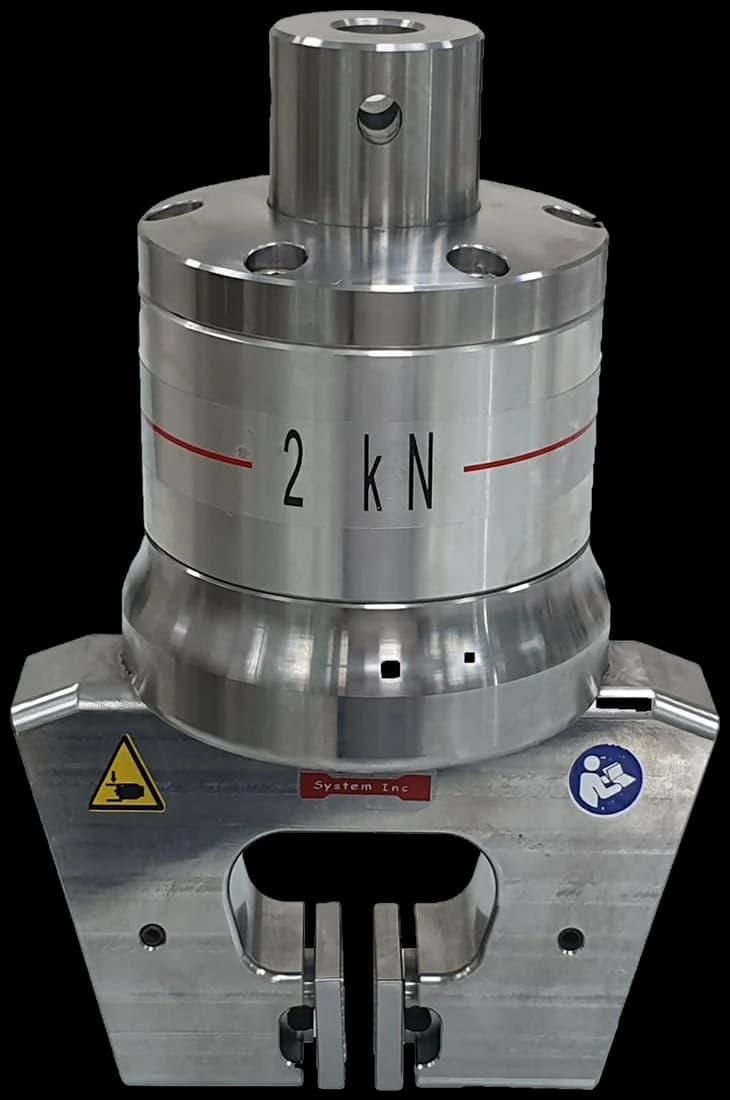
2 kN pneumatic vice action grip with its capacity engraved on the body

2 kN Pneumatic Grip

Air-actuated vice jaws at a capacity matched to paper and board. Foot-pedal closure lets the strip be positioned with both hands and clamped without being disturbed, which is what keeps a specimen square in the jaws.

Specifications
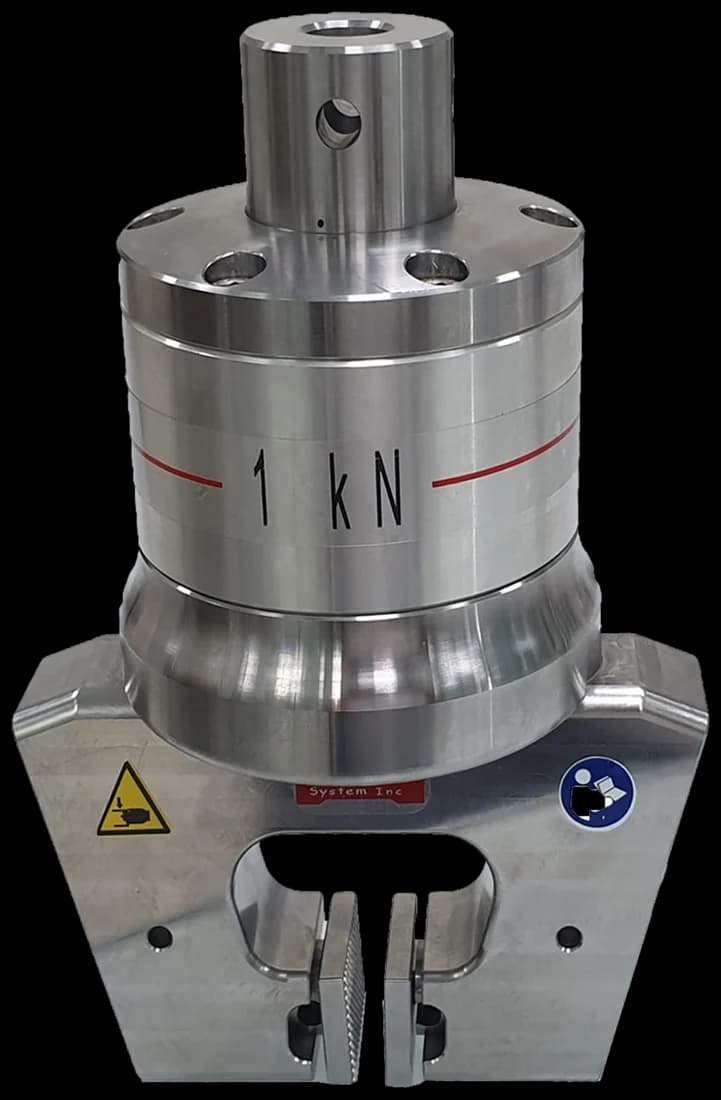
1 kN pneumatic vice action grip

1 kN Pneumatic Grip

For tissue and light grades, where a face that grips a heavy liner would cut the sheet. Breaking loads of a few newtons need a grip that closes gently and a cell sized to match.

Specifications
Self-identifying

Load Cells

A cell chosen for the grade rather than the frame. The range from tissue to heavy board spans two orders of magnitude, and one cell will not resolve both ends of it.

Specifications

What the report has to contain

  • Reference to TAPPI T 494 and the revision
  • Grade, grammage and thickness of the paper
  • Direction of each set of specimens
  • Specimen width and test span
  • Rate of elongation
  • Conditioning atmosphere
  • Tensile strength, stretch, tensile energy absorption and tensile stiffness
  • Mean and the number of specimens for each direction
  • Number of specimens discarded for jaw breaks

What the machine must be capable of

Breaking loads run from a few newtons on tissue to a few hundred newtons on heavy board, so the load cell has to be chosen for the grade rather than for the frame. A low-capacity frame with clean resolution at the bottom of its range is right for this work, and force accuracy to ASTM E4 is the normal requirement.

Constant rate of elongation is the defining requirement. The method is named for it, and results from a constant-rate-of-loading instrument are not equivalent — the two families of machine were historically different pieces of equipment and the distinction survives in the title for that reason.

Grips must hold paper without cutting it and without letting it slip. Pneumatic vice-action jaws with a face suited to the grade are the usual choice: serrations that grip a heavy liner will cut a tissue. Elongation is normally taken from grip separation over the defined span rather than from a clip-on extensometer, which would load the sheet.

What goes wrong in practice

Slippage that looks like stretch is the classic error and it inflates both stretch and tensile energy absorption while leaving the strength almost untouched. Breaks at the jaw line are discarded, not recorded. Edges cut with worn blades give a spread of low results that looks like variable paper. And conditioning skipped for speed produces figures that are internally consistent, entirely plausible and simply describing the wrong humidity.

Tensile methods for paper

Three documents cover the same physical test and give numbers that are not interchangeable.

TAPPI T494ISO 1924-2ISO 1924-3
LoadingConstant rate of elongationConstant rate of elongationConstant rate of elongation
Rate basisSpecified in the methodA defined elongation per minute100 mm/min, short span
RegionNorth AmericaInternationalInternational
Reports TEA and stiffnessYesYesYes
InterchangeableNoNoNo

Quoting a T494 figure against an ISO 1924-2 specification, or the reverse, is the commonest error in this area. The tests are the same in principle and the rates are not, and paper is rate-sensitive.

Questions we are asked about this test

What is TAPPI T494?

TAPPI T494 is the North American method for the tensile properties of paper and paperboard using constant-rate-of-elongation equipment. A strip is stretched to break and four properties are taken from the one curve: tensile strength, stretch, tensile energy absorption and tensile stiffness. The current revision is TAPPI/ANSI T 494 om-22.

Why does the title specify constant rate of elongation?

Because the alternative exists and gives different answers. Constant-rate-of-loading instruments increase force at a fixed rate; constant-rate-of-elongation instruments increase displacement at a fixed rate. Paper is rate-sensitive, so the two produce different strengths and very different stretch figures. Historically they were different machines, and the distinction is carried in the method title so that nobody assumes equivalence.

What is tensile energy absorption, and why is it reported?

It is the area under the load–elongation curve up to break, expressed per unit area — the work the sheet absorbs before it fails. Strength alone describes a peak; TEA describes toughness. It is the property that separates a sack paper that survives a drop from one that has the same breaking load and splits, which is why it is specified on packaging grades and largely ignored on printing grades.

Why must the direction be recorded?

Because paper is strongly anisotropic. Fibres align with the machine direction as the sheet forms, so machine-direction strength is typically much higher than cross-direction strength on the same paper, and stretch usually runs the other way. A tensile figure without its direction cannot be compared with anything. The ratio between the two directions is itself useful, because it describes how the sheet was formed and dried.

Does it apply to corrugated board?

No. Combined corrugated board is explicitly outside the scope — the structure is not a sheet in tension and the result would describe the geometry rather than the material. The component papers are tested by this method before they are corrugated, and the board itself is characterised by crush tests instead: edgewise, flat and ring crush.

What machine does it need?

A low-capacity frame with clean resolution at the bottom of its range and a load cell chosen for the grade. Breaking loads run from a few newtons on tissue to a few hundred newtons on heavy board, which no single cell resolves well. Grips have to hold paper without cutting it: pneumatic vice-action jaws with a face suited to the grade are the usual answer, and elongation is normally taken from grip separation rather than from a clip-on gauge that would load the sheet.

What causes disputed results between mill and customer?

Conditioning, more often than anything else. Paper is hygroscopic and loses strength as moisture content rises, so a sheet tested straight off a warm machine and the same sheet tested after conditioning in a damp plant will differ by more than most people expect. The figures look plausible in both cases. Where two laboratories disagree, the atmosphere each conditioned in is the first thing to compare, before the paper is questioned.

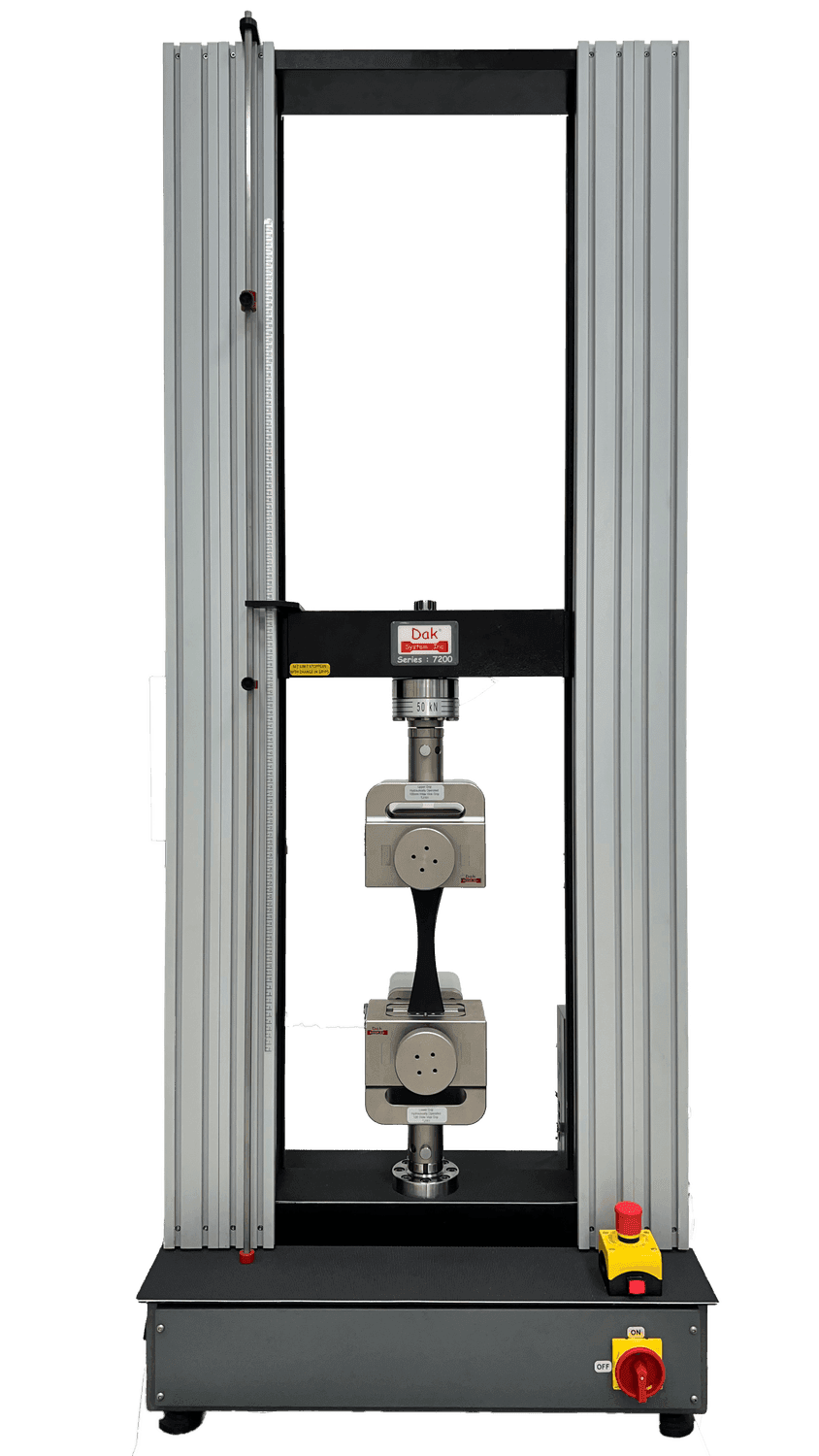
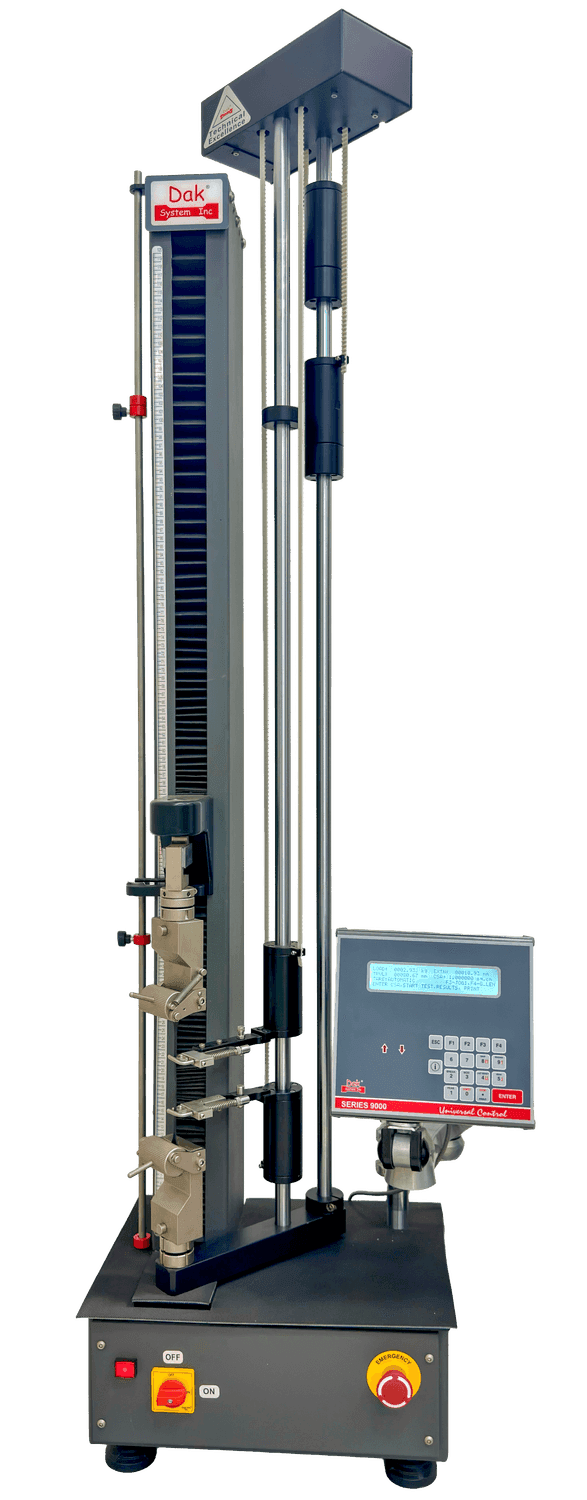
Running TAPPI T494 on the Series 7200 and Series 9000

Dak verifies against whichever standard the method names, and where a class applies our frames sit a class tighter than it asks.

The method asks forDak supplies
CapacityA few newtons on tissue to a few hundred newtons on heavy board — no single load cell resolves both endsLoad cells from 1 kg to 60 ton on the Series 7200, and 0.5 to 100 kN on the Series 9000
Force accuracyASTM E4Verified to ASTM E4, and to ISO 7500-1 Class 0.5
GrippingPneumatic vice-action grips with a face suited to the gradeOur vice-action grips, built to the specimen
EnvironmentStandard atmosphere for testing paper; conditioned and tested in it3009 series chambers, −150 °C to +400 °C — temperature only

This page describes the method as practised. The governing text is the current edition from the issuing body. Tell us what you are testing and we will answer with the machine, the fixture and a quotation.

Materials tested to it

The test it standardises

Other standards explained